A status page is often the first place a customer looks when something feels broken. For SaaS teams, it doubles as a trust signal, a support deflector, and a record of how incidents were handled. The tools below approach that job from different angles: some bundle status pages into broader observability stacks, some focus on communicating incidents, and some watch the third-party services your product depends on. This list is a plain overview of what each one does and who it tends to suit, not a verdict on which is best.
How We Picked These Tools
Each tool here offers a status page or incident communication capability aimed at software teams, and each has a public homepage describing its features. The list mixes standalone status page products with platforms where status pages are one part of a larger monitoring or incident response offering. Descriptions stick to what the source pages say, and prices appear only where the company publishes them.
| Provider | Best For |
|---|---|
| Better Stack | SaaS teams wanting status pages inside a full observability stack |
| UptimeRobot | Teams wanting monitoring and status pages in one simple tool |
| Instatus | SaaS teams that want a dedicated, fast-to-launch status page |
| Statuspal | Teams weighing security certification and status page depth |
| Status.io | SaaS teams needing heavily customized, access-controlled status pages |
| StatusGator | SaaS providers dependent on many third-party services |
| OpenStatus | SaaS teams running incident response from Slack or AI agents |
The 7 Tools in Focus
#1 Better Stack
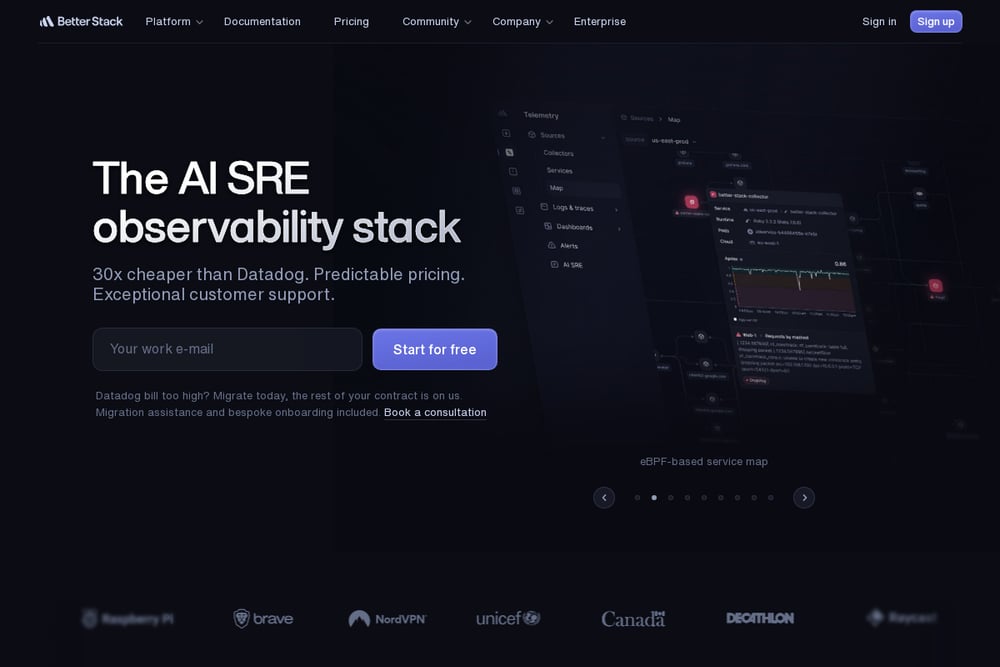 A screenshot of the Better Stack website.
Better Stack presents itself as an AI SRE observability stack, and its status page sits alongside incident management, uptime monitoring, tracing, log management, and error tracking. The status page is framed around communicating downtime and building trust, and it connects to Slack-based incident workflows and AI-written post-mortems. It suits SaaS teams that want status communication tied directly to the same telemetry and on-call tooling they use to detect problems. Teams already juggling several separate monitoring vendors may find the consolidated approach appealing.
#2 UptimeRobot
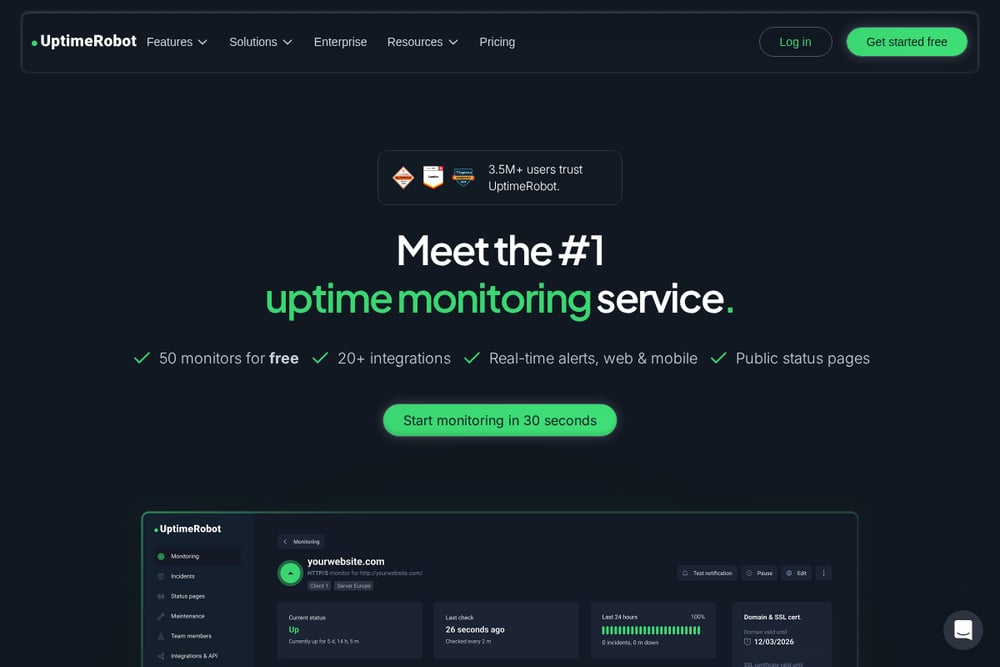 A screenshot of the UptimeRobot website.
UptimeRobot is an uptime monitoring service that includes public status pages as part of its feature set. The status pages are described as branded and real-time, sharing uptime, incidents, and maintenance updates, with custom domains, incident history, and password protection. Monitoring covers websites, APIs, servers, keywords, ports, cron jobs, and DNS records, with alerts flowing into chat and mobile. It suits SaaS teams that want monitoring and a customer-facing status page from a single, approachable dashboard.
#3 Instatus
 A screenshot of the Instatus website.
Instatus is built around the status page itself, with a flow that moves from monitoring services to fixing incidents with your team and then sharing status with customers. It emphasizes publishing updates, integrating with tools teams already use, and collaborating on incidents from Slack and Teams. Status pages can be kept private or shared publicly, and the product advertises a free plan with no card required. It suits SaaS companies that want a focused, quick-to-set-up status page rather than a sprawling monitoring suite.
#4 Statuspal
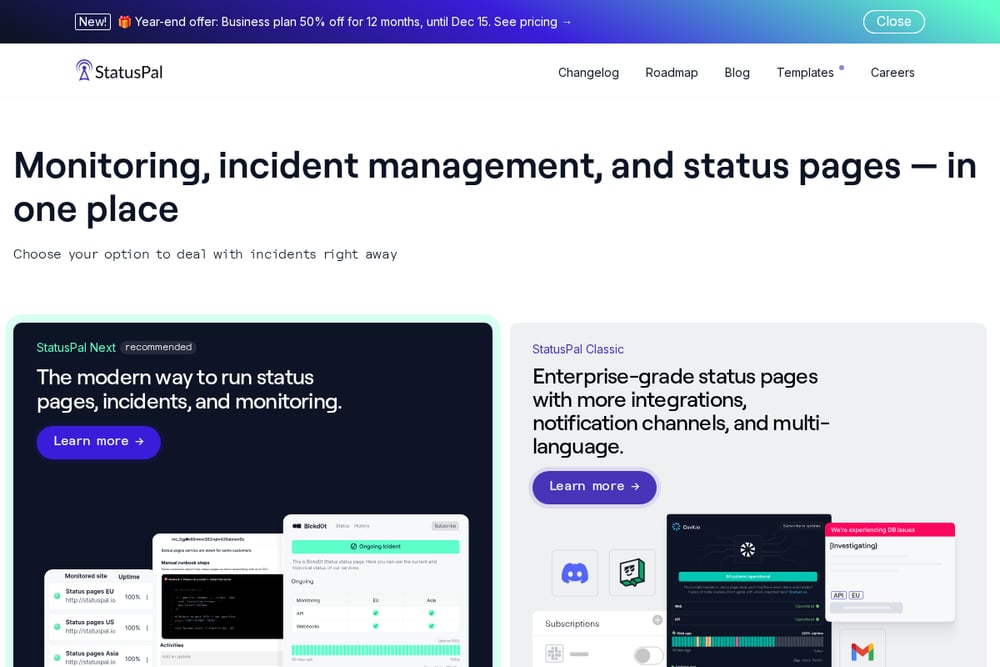 A screenshot of the Statuspal website.
Statuspal positions itself as monitoring, incident management, and status pages in one place, offered in two flavors: StatusPal Next for a modern approach and StatusPal Classic for enterprise-grade status pages with more integrations, notification channels, and multi-language support. The company states it is certified to ISO/IEC 27001:2022 for information security management. It suits SaaS teams that care about security posture and want a choice between a streamlined and a more feature-heavy status page product.
#5 Status.io
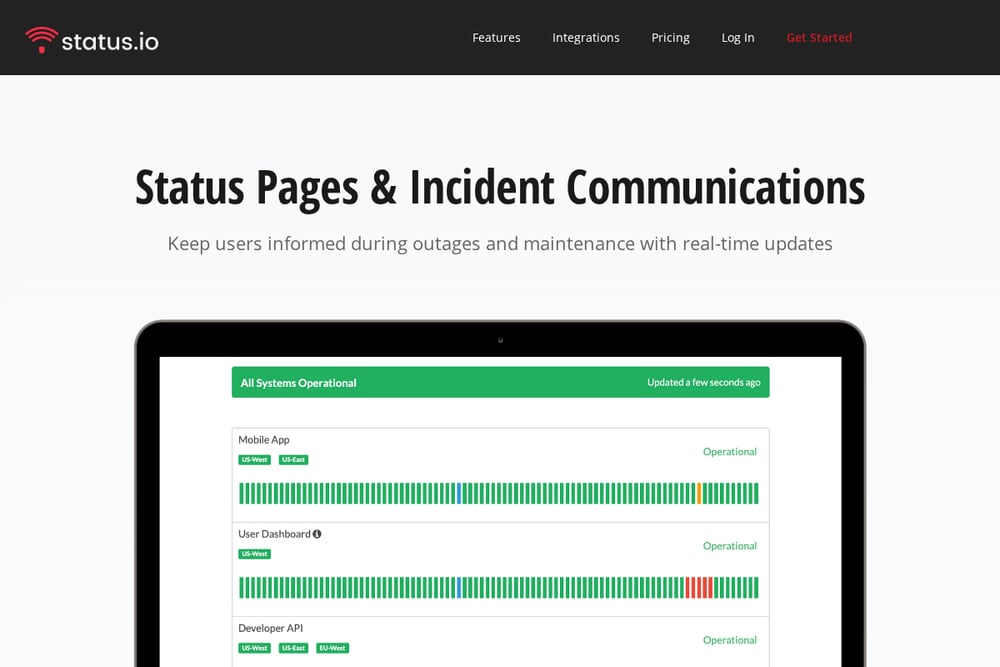 A screenshot of the Status.io website.
Status.io focuses on status pages and incident communications, with incidents and maintenance that trigger notifications and update component statuses automatically. Notifications can go out through email, SMS, webhook, RSS, iCalendar, IRC, Microsoft Teams, Slack, and Twitter/X. The product emphasizes customization, including custom HTML, JavaScript, and CSS, plus private status pages gated by SSO or IP access control. It suits SaaS teams that want deep control over how their status page looks and who can see it.
#6 StatusGator
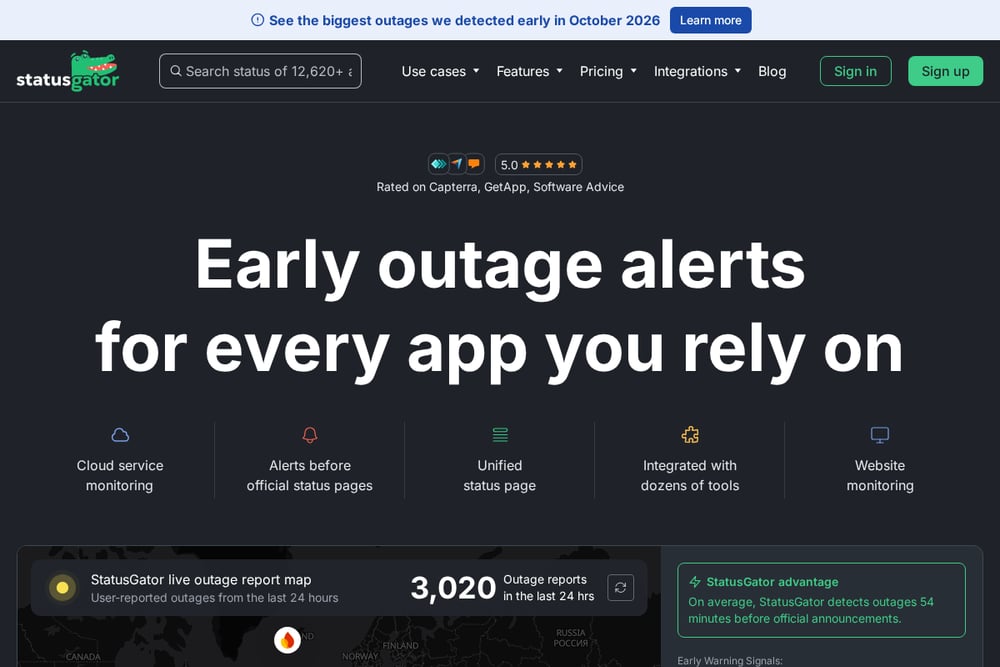 A screenshot of the StatusGator website.
StatusGator watches the third-party services your product depends on and aggregates their status into a unified status page. It collects status from cloud infrastructure, hosted applications, and SaaS tools, and sends Early Warning Signals when possible outages are detected through crowdsourced reports. It also includes website monitoring and incident communication for your own infrastructure. It suits SaaS providers that want one place to see both their own systems and the vendors they rely on, and to publish that view to customers.
#7 OpenStatus
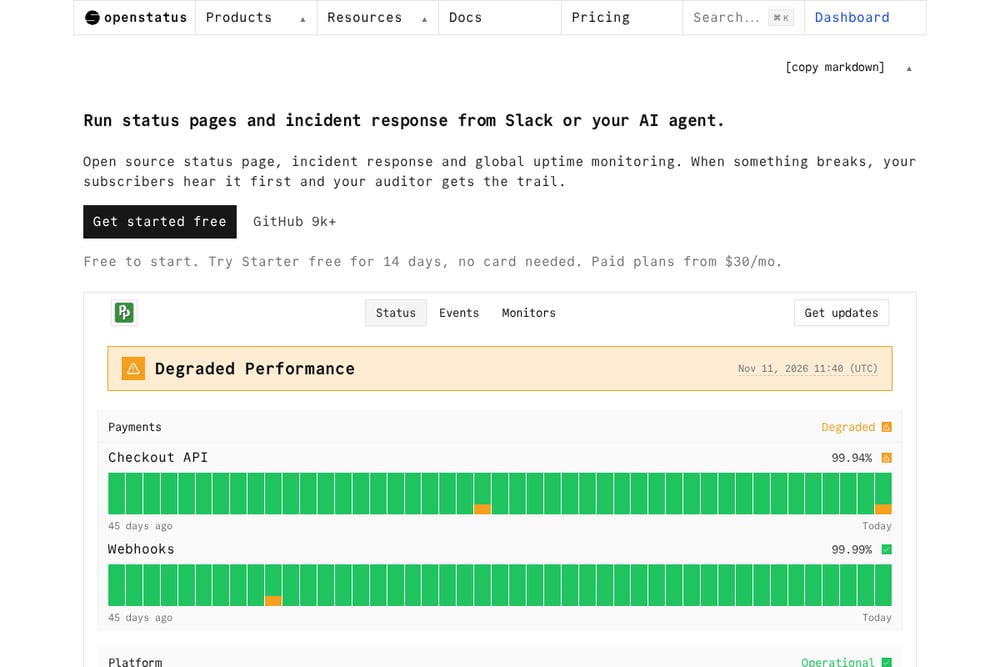 A screenshot of the OpenStatus website.
OpenStatus is an open source status page, incident response, and global uptime monitoring product that can be run from Slack or an AI agent. Incidents can be declared, updated, and mitigated with slash commands, and status reports can be drafted and approved without opening a dashboard. It also offers an MCP server for connecting AI assistants and drafts blameless postmortems from the incident timeline. It suits SaaS teams that want incident response and status publishing to happen where their engineers already work.
Which One Should You Choose?
Start with where your incidents already live. If your team works in Slack and wants status updates to follow the same flow, tools built around chat commands and incident channels may fit naturally. If you already run monitoring and observability in one platform, a status page that plugs into that telemetry avoids a second silo. Consider who needs to see the page: public customers, private stakeholders, or both, and check whether private access, custom domains, and branding are supported. Think about dependencies too. SaaS products lean on third-party services, so a tool that aggregates vendor status can surface problems your own monitors miss. Finally, weigh the operational model you want, from a focused status page product to a broader suite, and confirm the pricing structure matches how your team will actually use it.
Final Thoughts
There is no single right answer here, because these tools solve overlapping but distinct problems. Better Stack and UptimeRobot tie status pages to monitoring and incident workflows. Instatus and Statuspal keep the status page closer to the center of the product. Status.io leans into customization and access control. StatusGator adds visibility into the vendors you depend on. OpenStatus brings incident response into Slack and AI-assisted workflows. The useful move is to map each option against how your team detects, discusses, and communicates incidents today, then pick the one that reduces friction rather than adding another place to check.
Know a company that belongs on this list? Email us at editorial@peekwire.com.