SaaS support teams juggle product questions, billing tickets, and technical escalations, often across chat, email, and in-app channels. The help desk you pick shapes how quickly those conversations get resolved and how much context your team keeps. This list covers seven platforms worth knowing in 2026, each with a different center of gravity. None is declared the best here; the goal is to help you match a tool to how your team actually works.
How We Picked These Tools
These tools were chosen because their own product pages describe capabilities relevant to subscription software businesses: omnichannel intake, ticketing, AI assistance, knowledge management, and integrations with engineering and CRM systems. Each entry is backed by quotes copied from the company's provided source page. The order is a plain list, not a quality ranking.
| Provider | Best For |
|---|---|
| Zendesk | SaaS teams wanting a broad, AI-first service platform |
| Intercom | SaaS teams that want AI and human support in one system |
| Zoho Desk | SaaS teams already invested in the Zoho app ecosystem |
| Help Scout | Customer-first SaaS teams focused on personal support |
| Front | SaaS teams coordinating support, sales, and AI agents together |
| HappyFox | SaaS teams wanting guided setup and managed migration |
| Pylon | B2B SaaS teams running agentic, multi-channel support |
The 7 Tools in Focus
#1 Zendesk
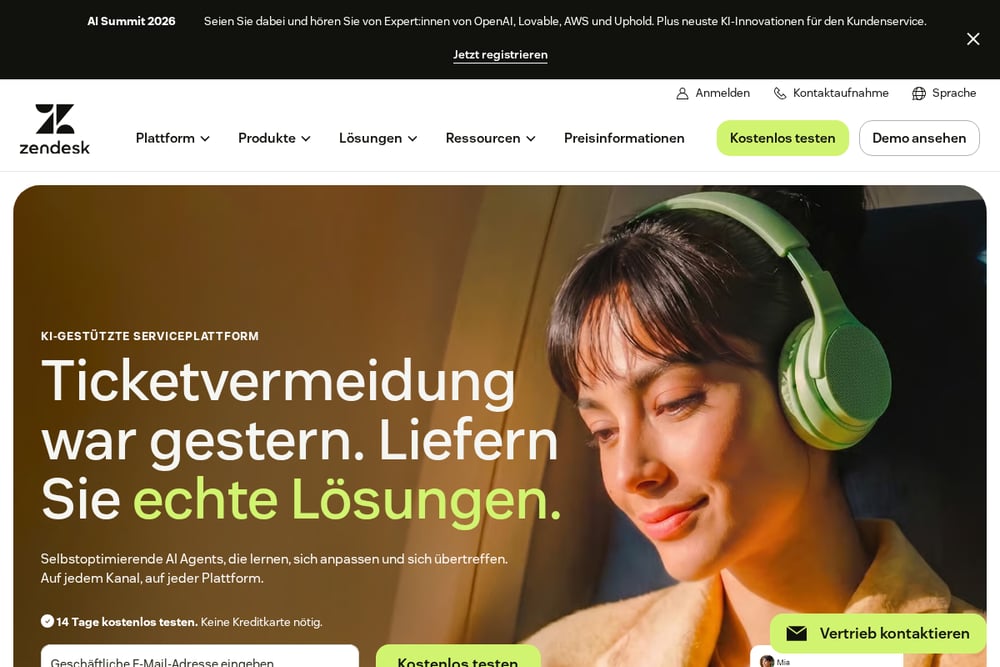 A screenshot of the Zendesk website.
Zendesk presents itself as an AI-first service platform for managing customer requests across channels. Its product set spans ticketing, messaging and live chat, a knowledge base, voice, and workforce management. It also offers AI agents and a Copilot assistant aimed at service teams. The company positions itself for organizations of many sizes and industries, including technology companies that want support to drive retention.
#2 Intercom
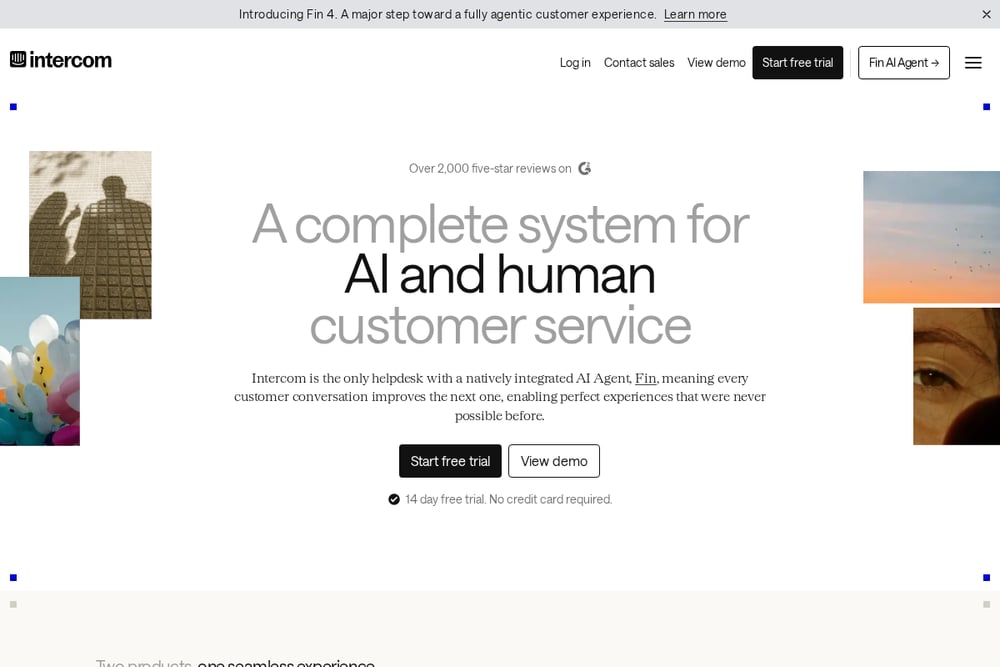 A screenshot of the Intercom website.
Intercom combines a helpdesk with a natively integrated AI agent called Fin. The helpdesk includes an omnichannel inbox, AI-powered ticketing, a Help Center, and Copilot working alongside human reps. Fin is trained for customer service and can be deployed across phone, email, chat, and Slack. The company says its products share the same record, knowledge, and inbox so conversations feed back into the system.
#3 Zoho Desk
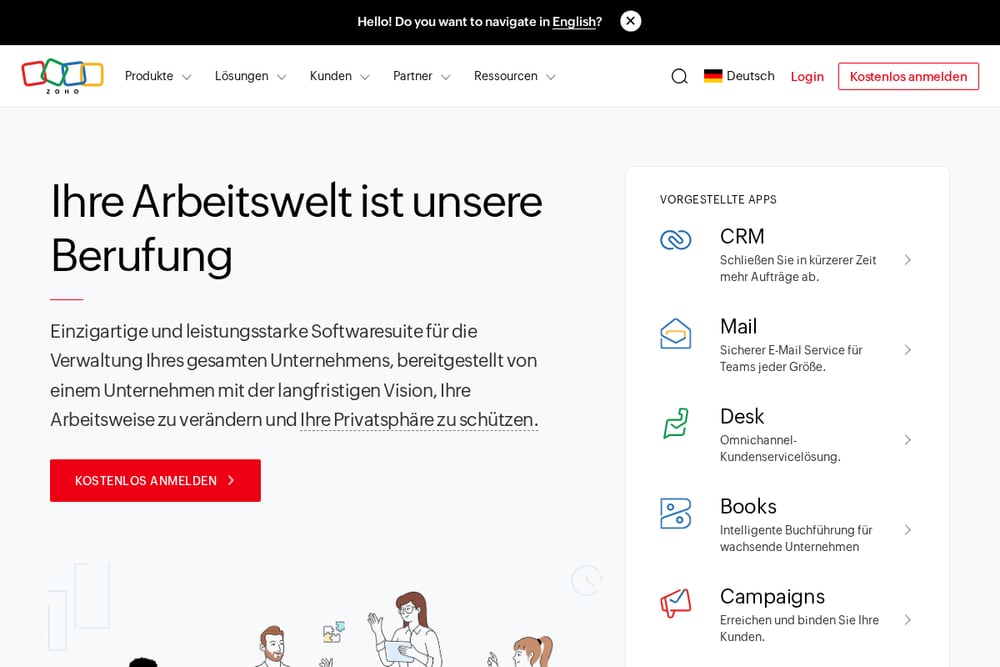 A screenshot of the Zoho Desk website.
Zoho Desk sits inside the wider Zoho suite of business applications, which the company describes as an integrated software suite for running a company. Zoho One bundles many integrated applications for managing, connecting, and automating business processes. The company emphasizes privacy, saying it does not own or sell customer data and earns money through software license fees. This setup can suit SaaS teams already using other Zoho apps.
#4 Help Scout
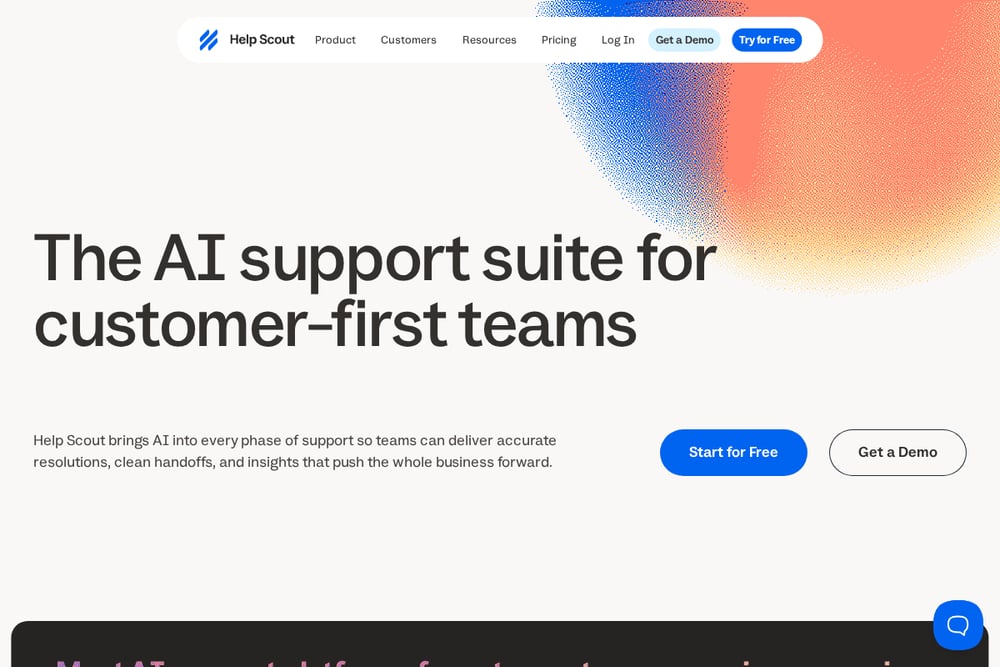 A screenshot of the Help Scout website.
Help Scout describes itself as an AI support suite for customer-first teams. Its products include Inbox for email, SMS, social, chat, and voice; Envoy, which powers the Scout AI agent; Copilot for assistance; and Signal for surfacing trends. The company emphasizes keeping context through handoffs and treating customers like people rather than tickets. It also notes HIPAA and SOC 2 Type II compliance for businesses with data to protect.
#5 Front
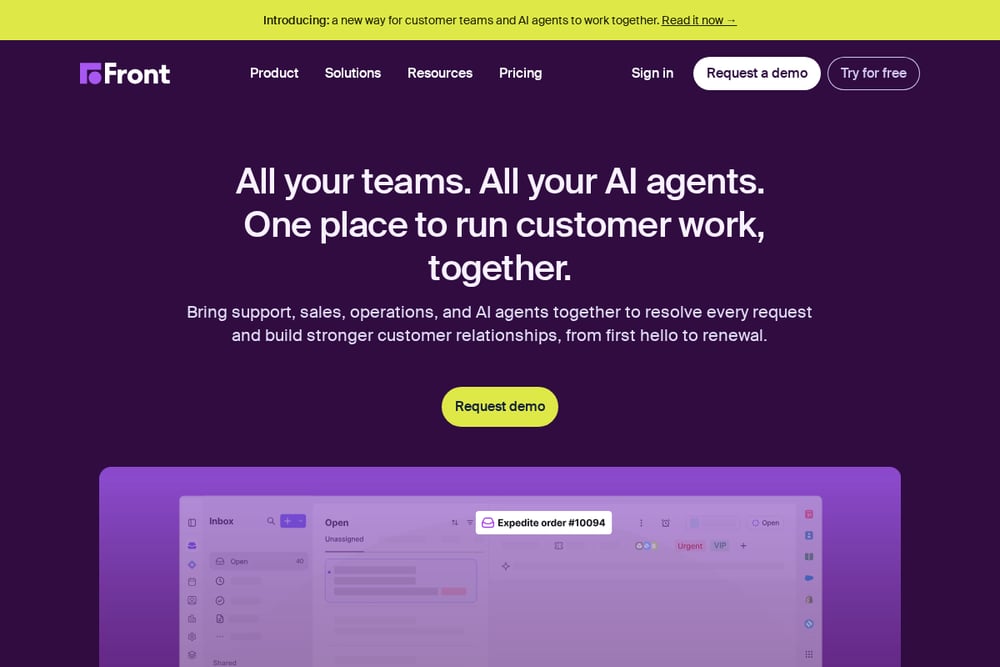 A screenshot of the Front website.
Front positions itself as a place for teams and AI agents to run customer work together. It brings email, chat, SMS, and WhatsApp into shared workflows, with ticketing, a knowledge base, and AI tools like Autopilot and Copilot. Teams can assign AI agents to conversations or mention them like teammates. Front also emphasizes visibility across the customer relationship and enterprise security certifications.
#6 HappyFox
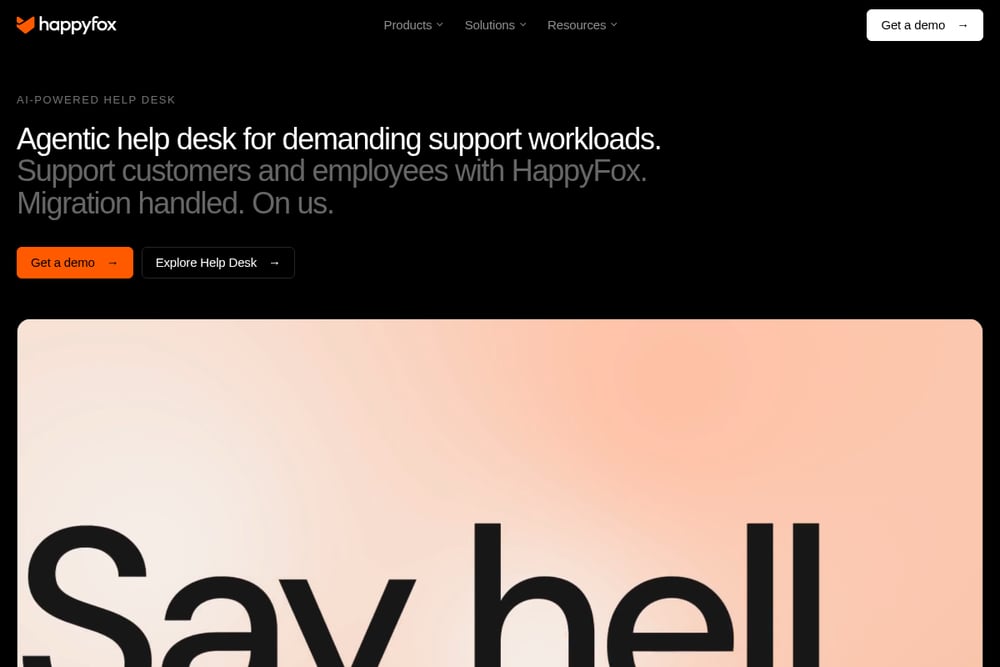 A screenshot of the HappyFox website.
HappyFox offers an AI-powered help desk for support workloads, with omnichannel intake, ticketing, self-service, automation, and reporting. It adds AI features for summarizing tickets and drafting replies, plus Autopilot agents and a chatbot. The company also highlights guided setup and a fully managed migration included with annual Help Desk subscriptions. It lists B2B SaaS among the sales motions it serves.
#7 Pylon
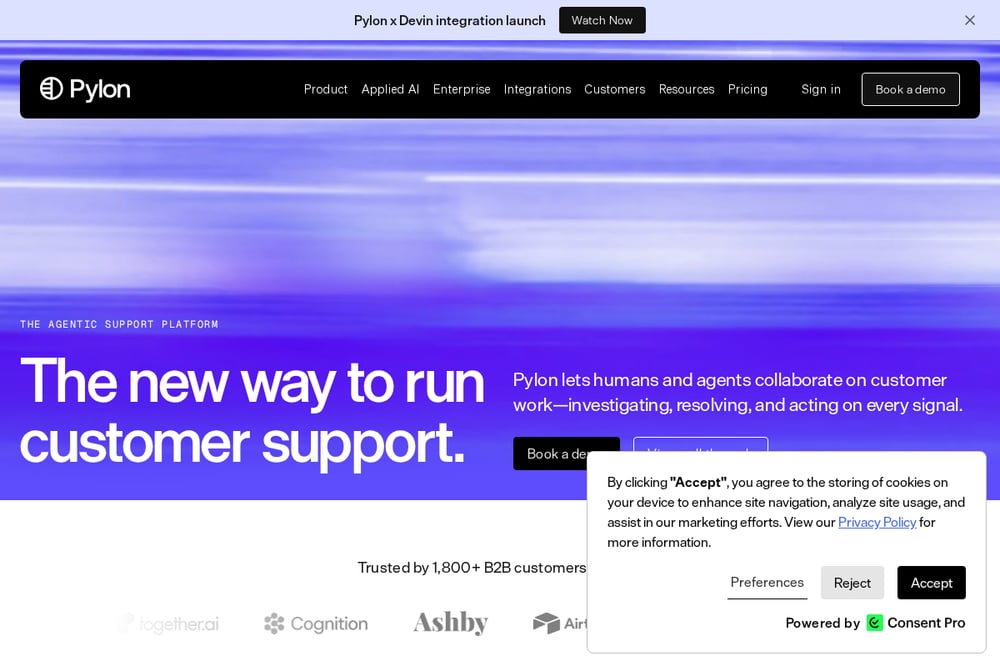 A screenshot of the Pylon website.
Pylon calls itself an agentic support platform built for B2B. It lets humans and AI agents collaborate on customer work, with intake across Slack, Microsoft Teams, email, chat, SMS, WhatsApp, and phone. Agents can investigate issues, use connected tools, and hand off to people when judgment is needed. The platform also connects to CRM, issue tracking, data warehouses, and product analytics systems.
Which One Should You Choose?
Start with where your customers already talk to you. If most conversations happen in-app or in chat, prioritize a tool with strong omnichannel intake and a shared inbox. If your support leans technical, look at how deeply the platform connects to issue trackers, product analytics, and CRM data. Consider how much you want AI to handle versus assist: some tools center on an AI agent that resolves requests, while others focus on copilots that help human reps. Check migration support and setup guidance if you are switching. Finally, review security and compliance statements against your own requirements, and confirm pricing details directly with each vendor.
Final Thoughts
Each platform on this list approaches SaaS support from a different angle. Zendesk and Intercom lean into AI-first service and integrated agents. Zoho Desk appeals to teams already inside the Zoho suite. Help Scout emphasizes customer-first, context-rich support. Front focuses on coordinating teams and AI agents across customer work. HappyFox highlights guided setup and managed migration. Pylon is built around agentic B2B support. The right fit depends on your channels, your technical depth, and how much automation you want, not on a single ranking.
Know a company that belongs on this list? Email us at editorial@peekwire.com.