In-house legal teams are being asked to do more contracting with the same headcount, and the software market has responded with platforms that lean heavily on AI. This list covers tools worth knowing if you are evaluating contract management software for a legal department in 2026. It is a plain reading list, not a ranking of quality. Each entry describes what the product does and who it tends to suit, with facts drawn from the vendors' own pages.
How We Picked These Tools
We looked for platforms that explicitly address legal teams or in-house counsel, that describe contract lifecycle work from intake through signature and renewal, and that publish enough detail on their own site to describe their capabilities accurately. We included a mix of enterprise-focused and smaller-team-focused products so the list reflects different shapes of legal department. No product was scored or ordered by quality; the numbers are simply list order.
| Provider | Best For |
|---|---|
| Ironclad | Legal departments wanting a full lifecycle CLM platform |
| LinkSquares | Legal teams focused on contract intelligence and AI-assisted review |
| Icertis | Large enterprises with complex, global contracting operations |
| Agiloft | Teams needing a highly configurable enterprise CLM |
| Concord | Legal teams wanting self-serve contracting for the business |
| SpotDraft | In-house legal teams wanting AI-native CLM with Word-based review |
| Contractbook | Smaller legal teams wanting a centralized contract hub |
The 7 Tools in Focus
#1 Ironclad
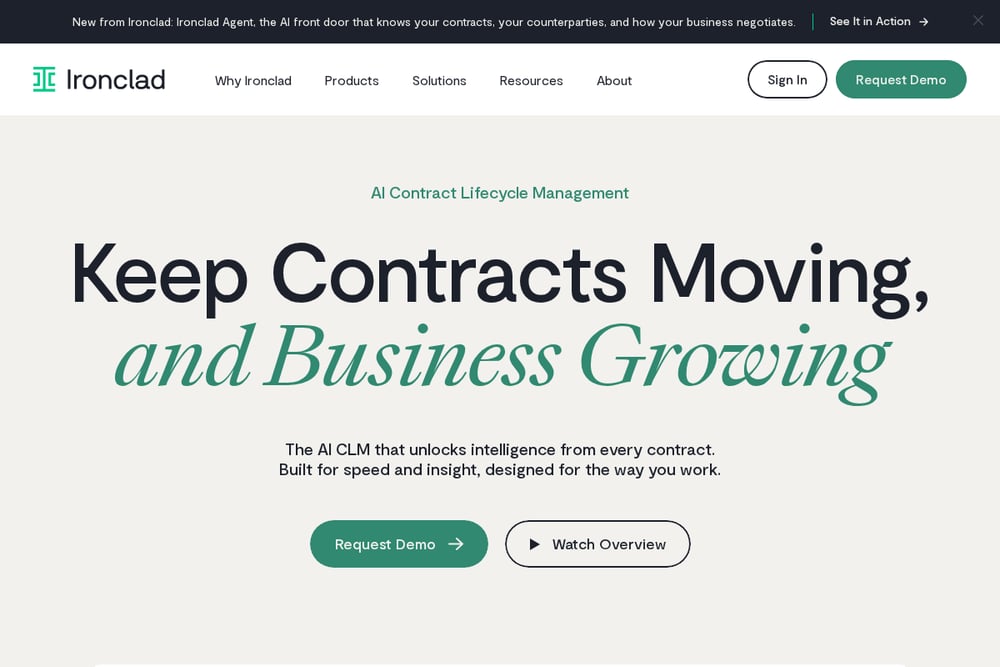 A screenshot of the Ironclad website.
Ironclad describes itself as an AI contract lifecycle management platform, with modules spanning create, review, sign, store, analyze, and fulfill. It positions its offering around legal ops, general counsel, procurement, IT, and sales use cases, and highlights an agent that draws on contracts, deal history, and negotiation knowledge. The company also emphasizes integrations with tools such as Salesforce, Coupa, and Ramp. It is aimed at organizations that want a broad CLM platform covering the whole contracting process.
#2 LinkSquares
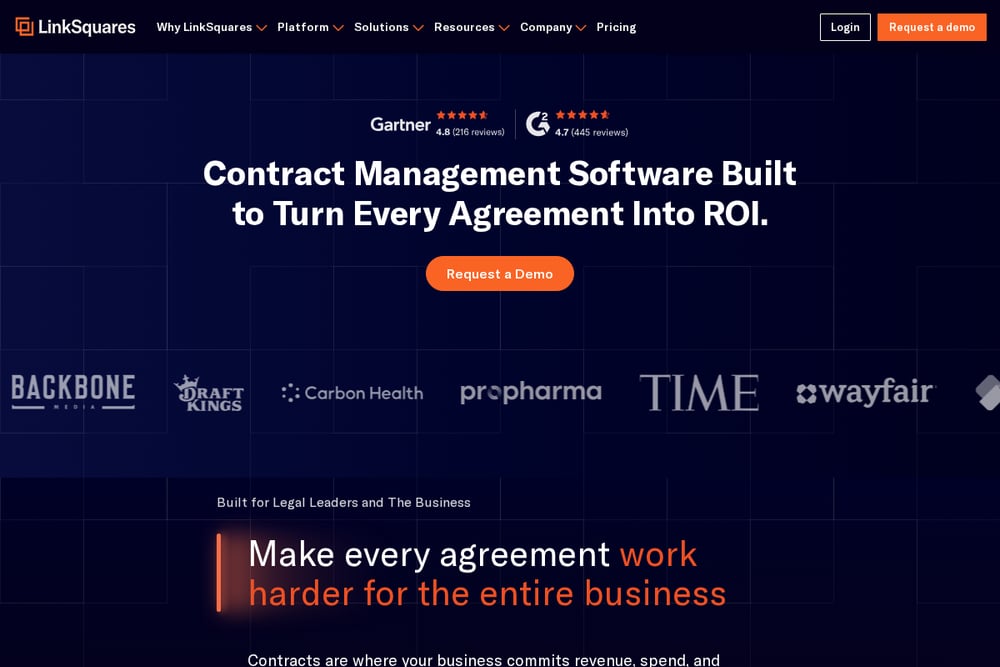 A screenshot of the LinkSquares website.
LinkSquares presents itself as contract management software built to turn agreements into business value, with an AI legal assistant that drafts, redlines, and researches. The platform includes contract intelligence, automation and workflows, playbooks and libraries, analytics, and an API. It is organized around legal, procurement, finance, and sales departments, and emphasizes keeping every agreement in one governed home. It suits teams that want contract intelligence and drafting support alongside lifecycle management.
#3 Icertis
 A screenshot of the Icertis website.
Icertis offers an AI-native contract intelligence platform organized into engage, operate, and analyze stages, with a copilot called Vera. Its engage tools cover agent-driven drafting, redlining, playbook creation, and risk review, while operate covers contract management and obligation tracking. The company lists solutions by industry and by department, including legal, procurement, finance, sales, and IT. It is oriented toward large, global enterprises with complex contracting needs.
#4 Agiloft
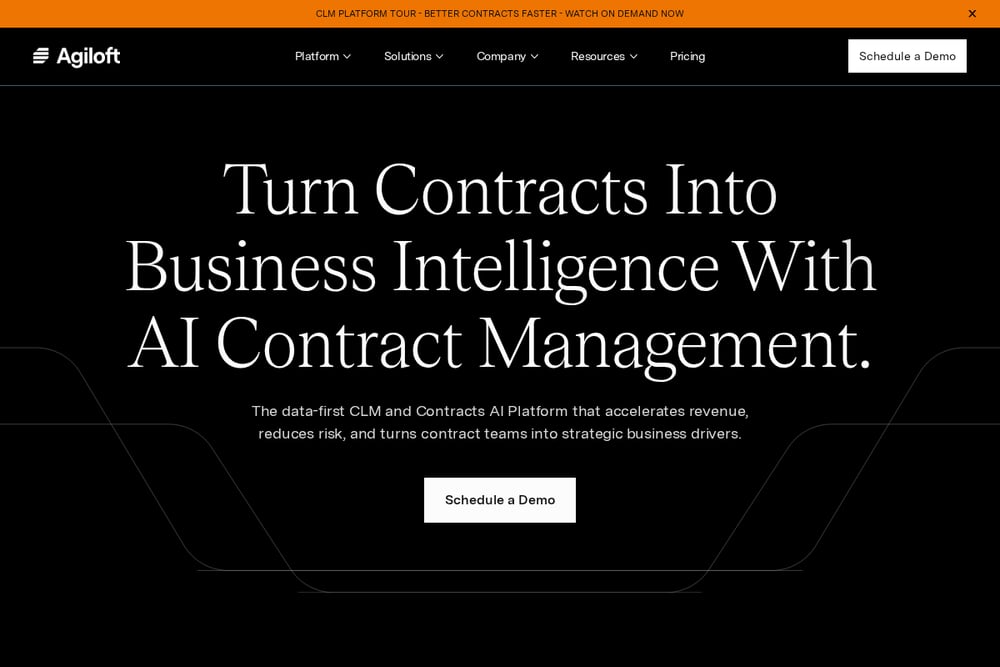 A screenshot of the Agiloft website.
Agiloft describes a data-first agreement platform and enterprise CLM that adapts to your business, with a separate contracts AI product called Astra. The platform covers pre-signature and post-signature work, including creation, negotiation, obligation tracking, and renewal management, plus real-time dashboards and reporting. Agiloft emphasizes configuration without code and integrations with enterprise systems. It suits teams that want a customizable CLM spanning the full contract lifecycle.
#5 Concord
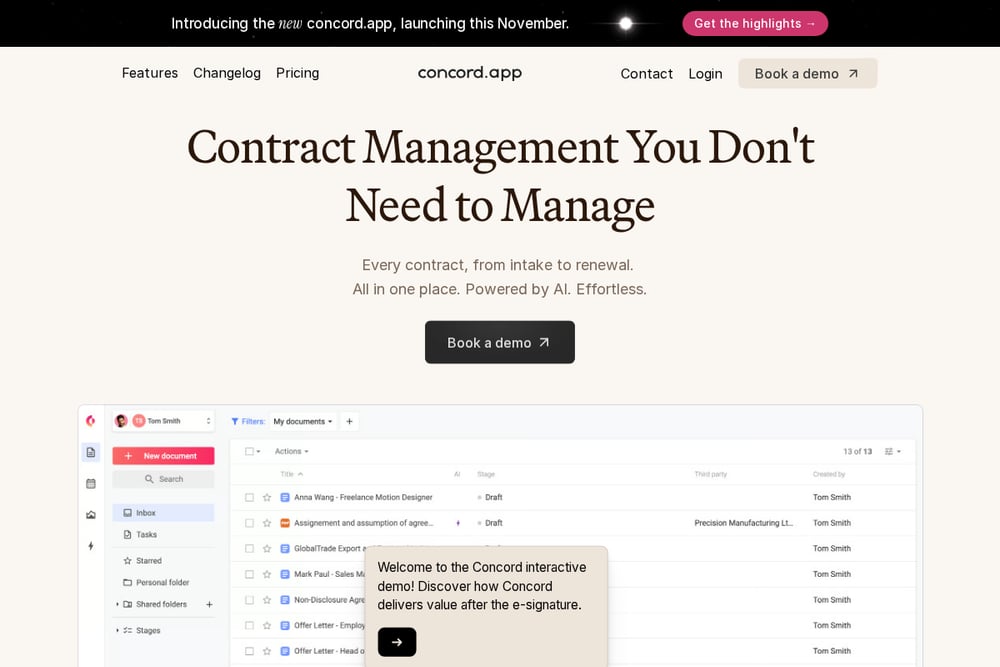 A screenshot of the Concord website.
Concord presents contract management as something you do not need to manage, covering intake through renewal in one place with AI support. Its features include proactive alerts and reporting, AI-assisted review that explains risks and obligations, self-serve intake with legal-approved templates, and built-in redlining, version control, comments, and e-signature. It is designed for legal as well as procurement, finance, sales, HR, operations, and IT teams. It suits organizations that want business teams to self-serve contracts while legal focuses on higher-stakes work.
#6 SpotDraft
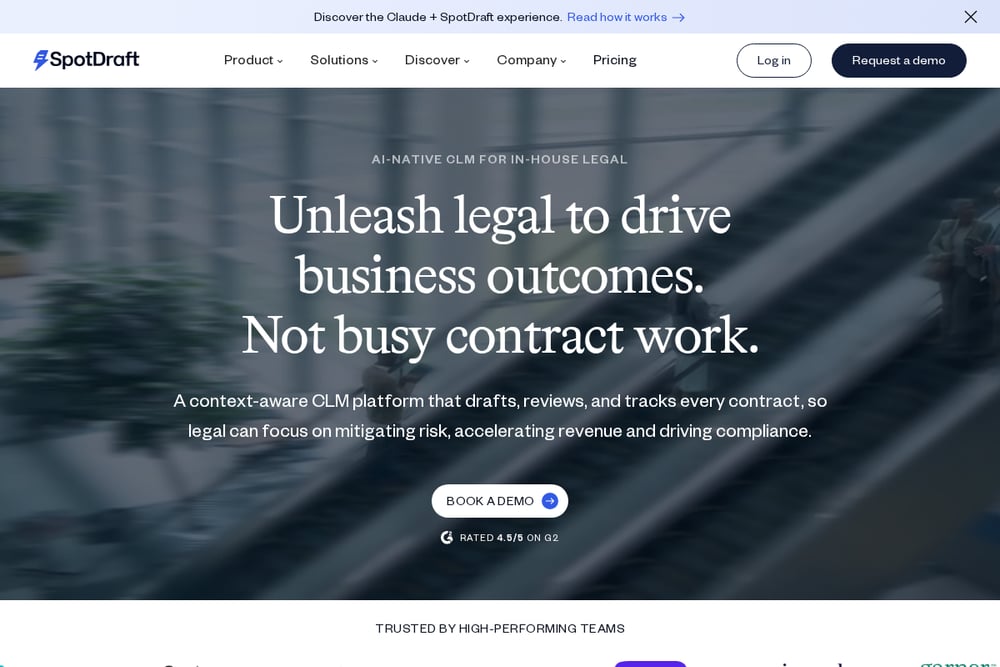 A screenshot of the SpotDraft website.
SpotDraft describes itself as AI-native CLM for in-house legal, with a platform that drafts, reviews, and tracks contracts. Features include VerifAI for reviewing contracts inside Microsoft Word, workflows, templates, a contract editor, e-signatures, a repository, reporting, and contract analytics. It also offers negotiation and collaboration tools for legal and business teams working in Word, Slack, or within SpotDraft. It suits in-house legal teams that want AI-assisted review and workflow automation in one platform.
#7 Contractbook
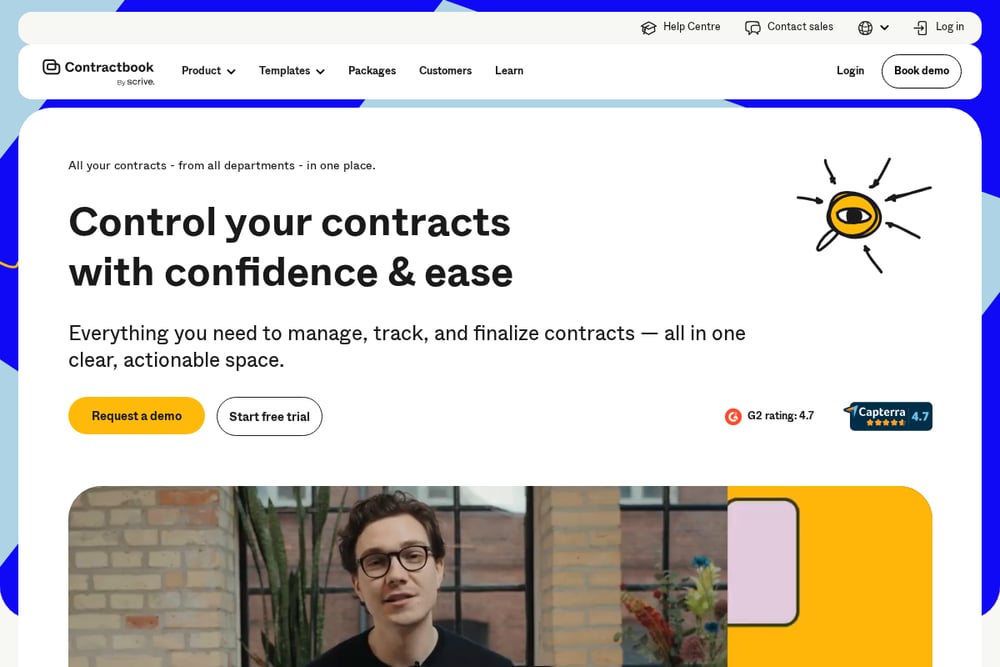 A screenshot of the Contractbook website.
Contractbook focuses on centralizing agreements and using AI to extract data, answer questions, and summarize key terms and obligations. It includes templates for drafting, collaboration and secure signing, reminders for deadlines, and access controls across teams. The company emphasizes visibility across contracts from all departments and confidence in renewals and obligations. It suits smaller legal and compliance teams that want a straightforward, centralized contract hub with AI assistance.
Which One Should You Choose?
Start with the shape of your contracting work. If your team handles high volumes of routine agreements, look at how each platform handles templates, self-serve intake, and approval workflows. If review is the bottleneck, examine the AI review and drafting features and where they operate, such as inside Microsoft Word. If obligations and renewals are the pain point, check post-signature tracking, reminders, and reporting. Consider how the tool fits your existing systems, since several vendors emphasize integrations with CRM, procurement, and productivity tools. Finally, weigh configuration and implementation effort against your team's capacity to administer the platform.
Final Thoughts
The tools on this list overlap in ambition but differ in emphasis. Some are built as broad enterprise CLM platforms with deep configuration and industry solutions, while others concentrate on AI-assisted review, self-serve contracting for business teams, or a simple centralized hub. For an in-house legal team in 2026, the useful question is not which product is best but which combination of review support, workflow control, and post-signature visibility matches how your department actually works.
Know a company that belongs on this list? Email us at editorial@peekwire.com.