Customer service websites are increasingly expected to answer instantly, around the clock, and in the customer's own language. AI chatbots now handle everything from simple FAQs to complex, multi-step resolutions. This list covers seven platforms worth knowing if you are evaluating options for your site in 2026. Each entry describes what the product does and who it tends to suit, based on the companies' own published information.
How We Picked These Tools
We looked at platforms that present themselves as tools for customer service or customer experience on websites. Each entry includes at least two facts drawn directly from the company's homepage or provided source page, with exact quotes. We focused on what the product does, how it is deployed, and who it is designed for. No company is ranked as better or worse; the numbers are simply a list order.
| Provider | Best For |
|---|---|
| Intercom | Teams seeking a unified helpdesk with a natively integrated AI agent |
| Tidio | Small to mid-sized businesses blending support automation with sales |
| Zendesk | Enterprises needing a comprehensive service platform with AI governance |
| Chatbase | Teams building custom AI agents for support and sales |
| Botpress | Support teams handling complex, action-oriented tickets |
| Landbot | Marketing and sales teams converting visitors with conversational flows |
| Voiceflow | Product and CX teams building and testing chat and voice agents collaboratively |
The 7 Tools in Focus
#1 Intercom
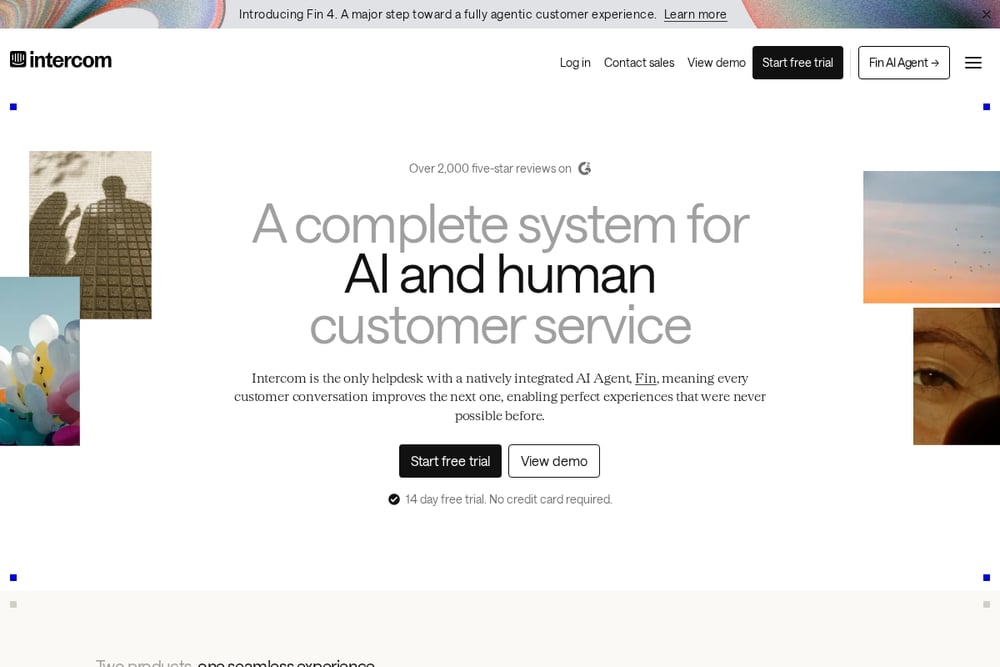 A screenshot of the Intercom website.
Intercom combines a helpdesk with an AI agent called Fin that is trained specifically for customer service. Fin can be deployed across phone, email, chat, Slack, and more, and it shares the same inbox and customer record as human agents. The platform includes ticketing, a knowledge hub, and AI-powered insights for monitoring performance. It is aimed at teams that want a tightly integrated system where AI and human support work together.
#2 Tidio
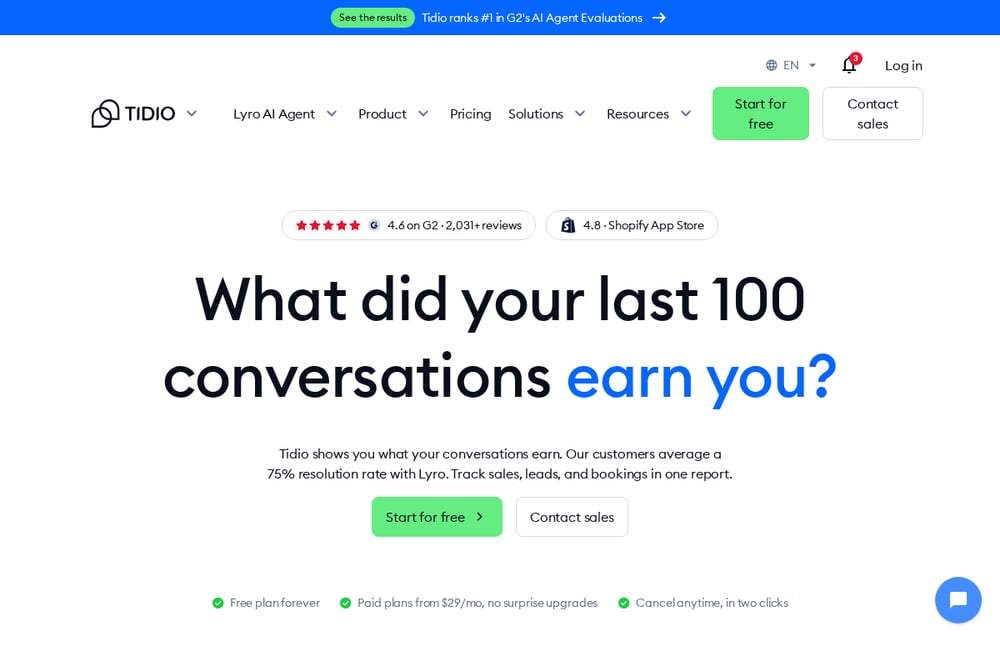 A screenshot of the Tidio website.
Tidio offers an AI agent called Lyro that answers customer questions using verified store data and can recommend products directly in the chat. It includes a help desk that centralizes messages from email, live chat, WhatsApp, Instagram, and Facebook Messenger. Sales Flows trigger proactive conversations at key moments, and Lyro hands complex cases to human agents with full context. Tidio is designed for businesses that want to combine support automation with proactive sales on their website.
#3 Zendesk
 A screenshot of the Zendesk website.
Zendesk provides a service platform with AI agents that can resolve customer requests autonomously across channels. It includes a marketplace with many apps and integrations, plus tools for messaging, live chat, ticketing, and voice. The platform emphasizes enterprise security and AI governance. Zendesk suits organizations looking for a broad, established service platform with AI capabilities built in.
#4 Chatbase
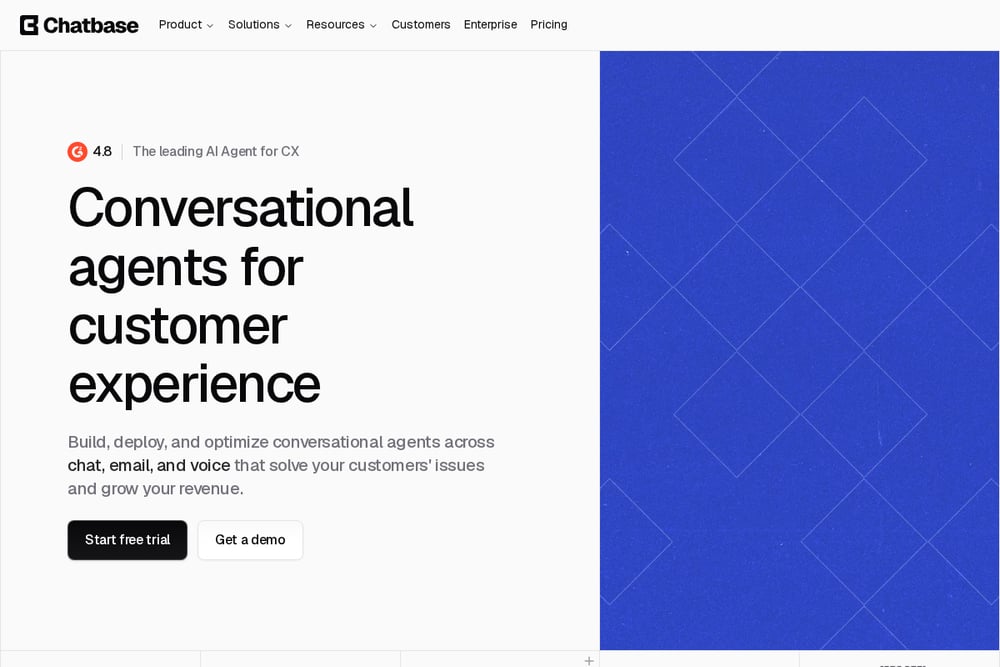 A screenshot of the Chatbase website.
Chatbase lets you build, deploy, and optimize conversational AI agents for customer experience across chat, email, and voice. Agents can answer questions, take actions like looking up orders or creating tickets, and hand off to humans with full context. The platform includes a helpdesk built for AI and humans working from the same conversation, plus analytics on topics and sentiment. It is aimed at teams that want a focused tool for creating customer-facing agents without code.
#5 Botpress
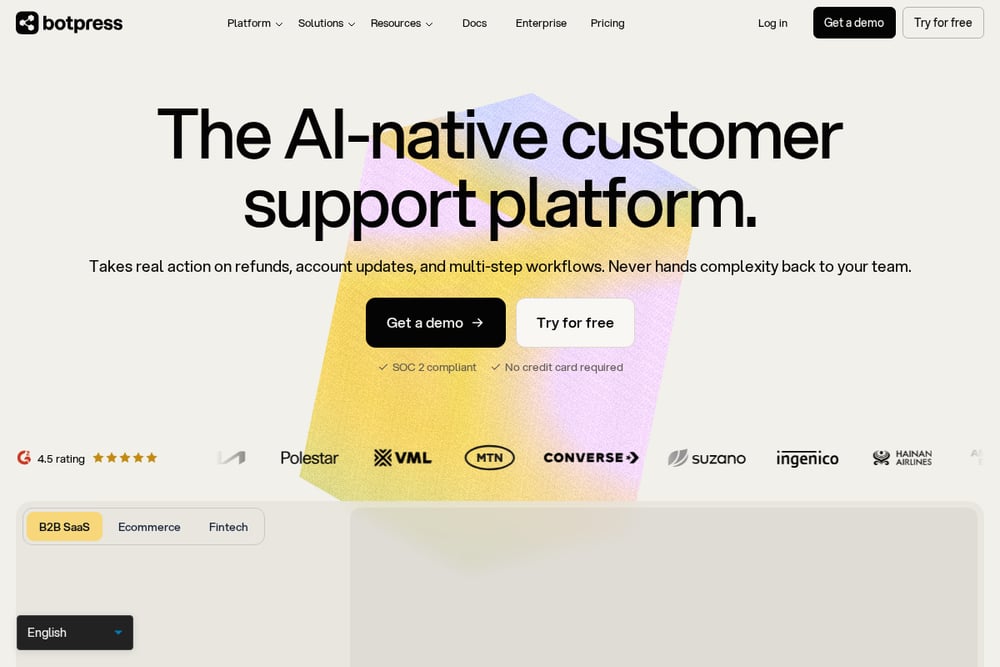 A screenshot of the Botpress website.
Botpress is an AI-native customer support platform that builds agents to handle complex tickets, including actions like refunds and account updates. It can work on top of your existing helpdesk or as a standalone helpdesk called Botpress Desk. The platform emphasizes no per-seat costs and includes AI usage. Botpress is suited for teams that need agents to take real action on multi-step workflows without handing complexity back to humans.
#6 Landbot
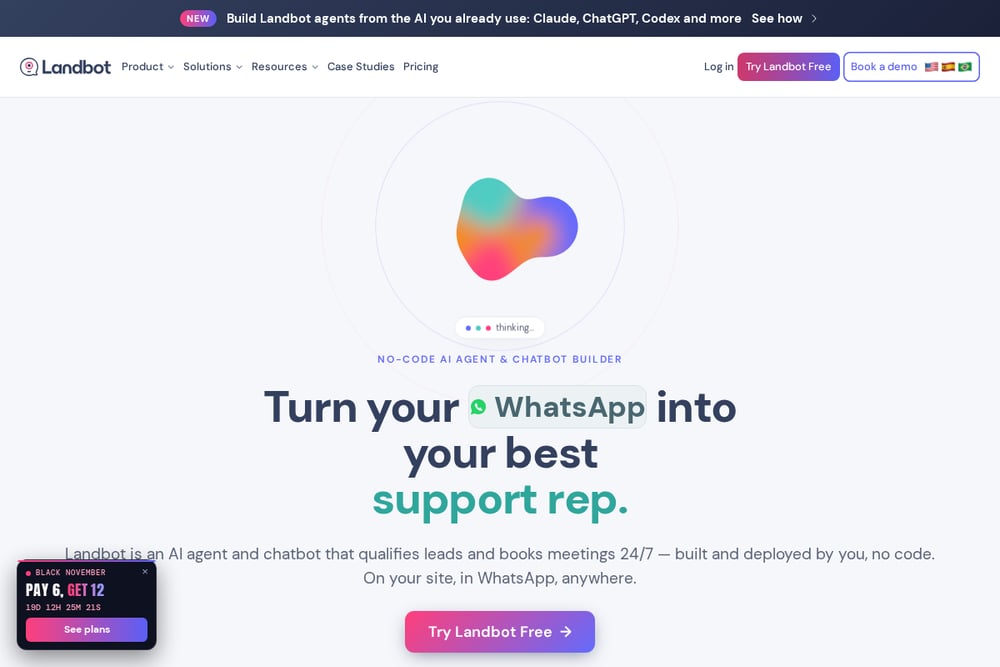 A screenshot of the Landbot website.
Landbot is a no-code AI agent and chatbot builder for websites and WhatsApp, focused on sales, support, and bookings. It lets you build conversational flows that qualify leads and book meetings around the clock. Landbot also offers Agent Studio, a service to build, run, and optimize your agent. It is designed for marketing and sales teams that want to turn website visitors into customers through conversational experiences.
#7 Voiceflow
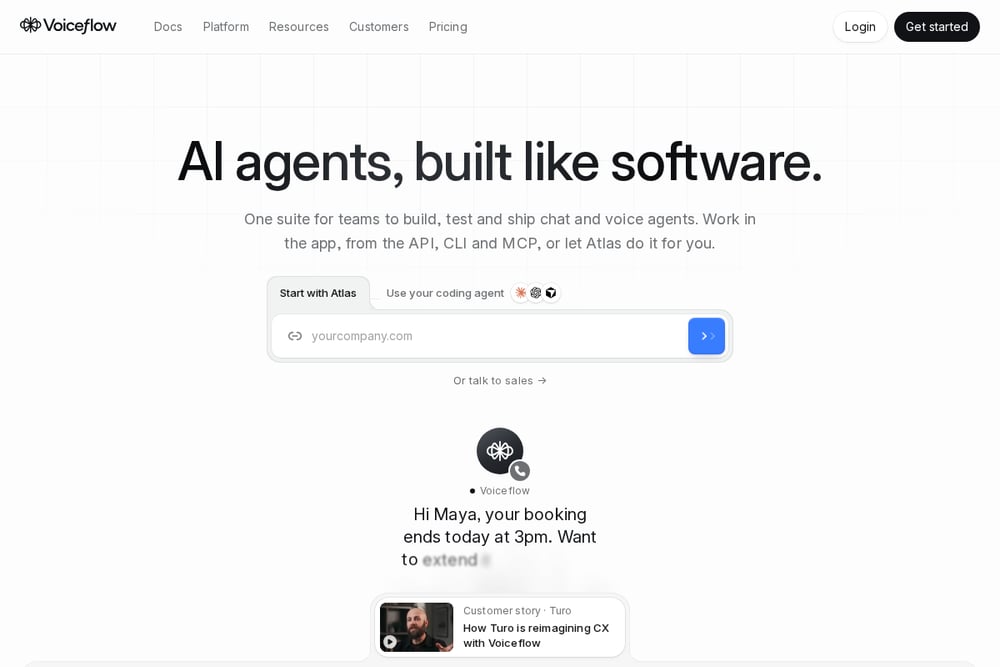 A screenshot of the Voiceflow website.
Voiceflow provides a suite for teams to build, test, and ship chat and voice agents. It includes tools for designing conversation flows, simulating conversations, and analyzing performance. Agents can use knowledge bases, workflows, and API tools to resolve customer questions and take action. Voiceflow is aimed at product, development, and CX teams that want a collaborative, software-like approach to building agents.
Which One Should You Choose?
Start by mapping your support volume and the types of questions you receive. If most inquiries are simple FAQs, a platform with strong knowledge-base grounding and easy setup may be enough. If you need agents to perform actions like refunds or order updates, look for tools that support multi-step workflows and integrations with your existing systems. Consider whether you want a standalone helpdesk or an AI layer on top of your current one. Also check channel coverage: some platforms emphasize website chat, while others extend to email, phone, WhatsApp, and social messaging. Finally, review pricing structures and whether AI usage is included or billed separately.
Final Thoughts
The AI chatbot landscape for customer service websites in 2026 offers a range of approaches, from tightly integrated helpdesk-plus-agent systems to no-code builders focused on sales and conversion. Each platform on this list brings different strengths: some prioritize autonomous resolution of complex tickets, others excel at conversational lead generation or collaborative agent building. There is no single best choice; the right fit depends on your team's workflow, the complexity of your customer inquiries, and how you want AI and human agents to work together. Use the facts above as a starting point for your own evaluation.
Know a company that belongs on this list? Email us at editorial@peekwire.com.