Customer feedback only creates value when it reaches the people who can act on it. The tools below approach that problem from different directions: some focus on conversational forms, some on in-app microsurveys, some on enterprise experience programs, and some on closing the loop across support and location teams. This list is a plain overview of what each one does and who it tends to suit. It is not a quality ranking, and no company here is presented as the best choice.
How We Picked These Tools
Each tool was included because its own site describes capabilities aimed at collecting or acting on customer feedback, such as survey distribution channels, feedback analytics, or integrations with customer data and support systems. Descriptions stick to what the source pages state. Prices appear only where a company's provided text includes them word for word, and no tool is ranked as better or worse than another.
| Provider | Best For |
|---|---|
| SurveyMonkey | Teams that want a broad, template-driven survey platform |
| Typeform | Teams that want conversational forms tied to automated workflows |
| Qualtrics | Enterprises running structured experience management programs |
| Alchemer | Buyers who want to evaluate Alchemer directly |
| Survicate | Teams consolidating feedback from many channels into themes |
| Refiner | Product-led SaaS teams wanting in-app surveys |
| Zonka Feedback | Teams connecting feedback to support and frontline workflows |
The 7 Tools in Focus
#1 SurveyMonkey
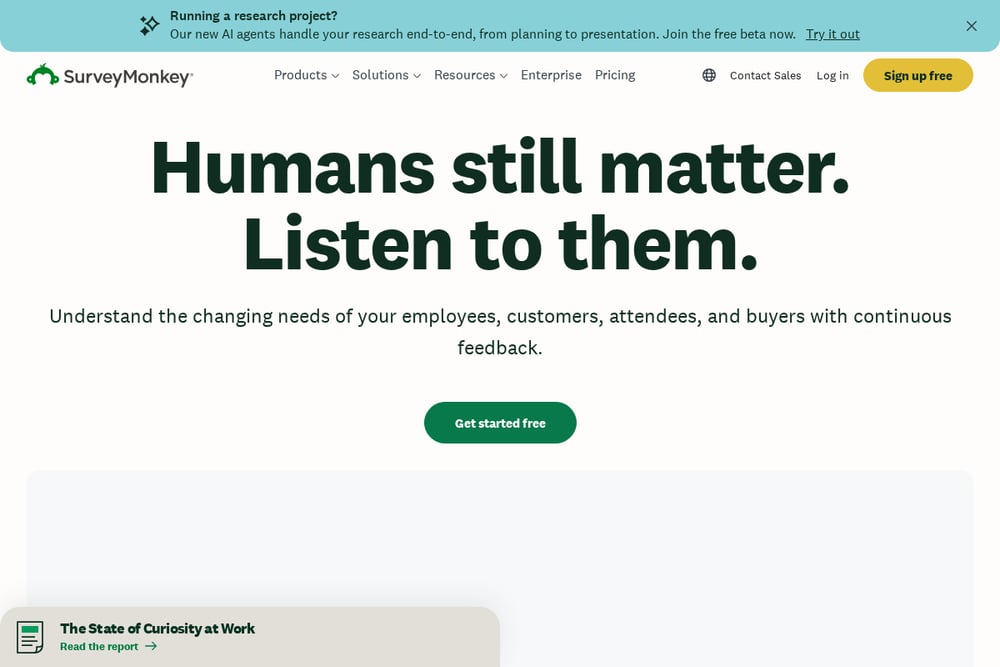 A screenshot of the SurveyMonkey website.
SurveyMonkey is a survey platform used for employee feedback, customer feedback, market research, product development, event management, and online forms. Its site highlights templates for customer satisfaction surveys and Net Promoter Score use cases, along with AI features and integrations. It also offers a rewards program where people can take surveys and earn cash or donate to charity. It suits teams that want a general-purpose survey builder with a wide template library.
#2 Typeform
 A screenshot of the Typeform website.
Typeform builds forms and surveys with conversational logic that adapts to each respondent, and it also offers AI-moderated research studies. Its platform covers intelligent forms, automated growth workflows, and research flows with qualitative and quantitative interviews. It supports video and audio responses plus AI-generated follow-up questions. It suits teams that care about respondent experience and want forms that feed into automated follow-up.
#3 Qualtrics
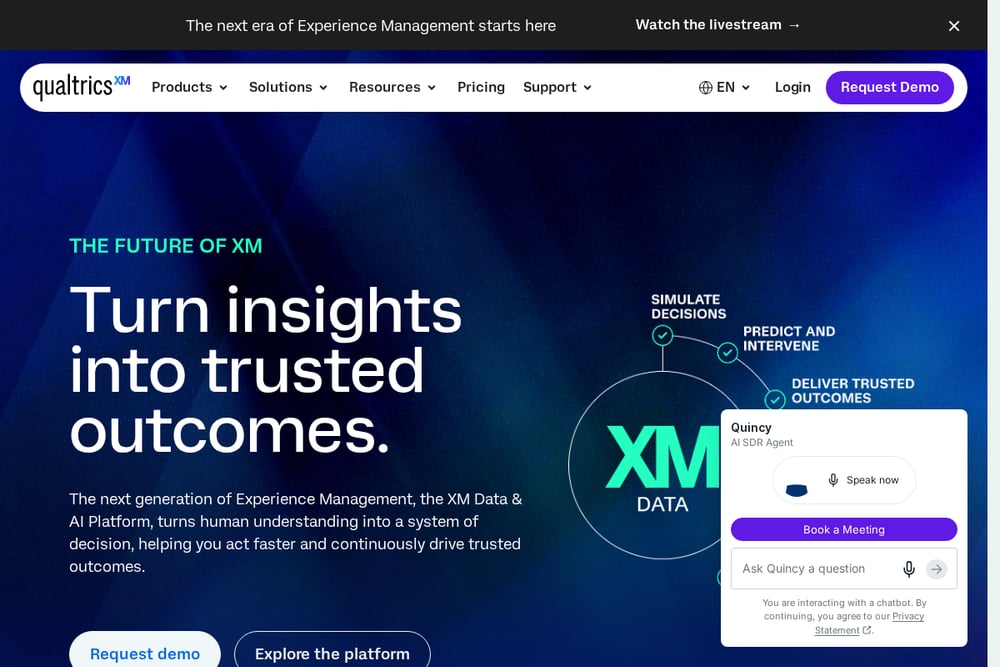 A screenshot of the Qualtrics website.
Qualtrics positions itself around experience management, combining experience data with AI to help organizations understand what matters to people. Its platform covers research, customer experience, and employee experience programs, with features for simulation, prediction, and automated responses. It describes omnichannel feedback for voice-of-the-customer programs and routing of complex cases to the right teams. It suits larger organizations running structured experience programs across customers and employees.
#4 Alchemer
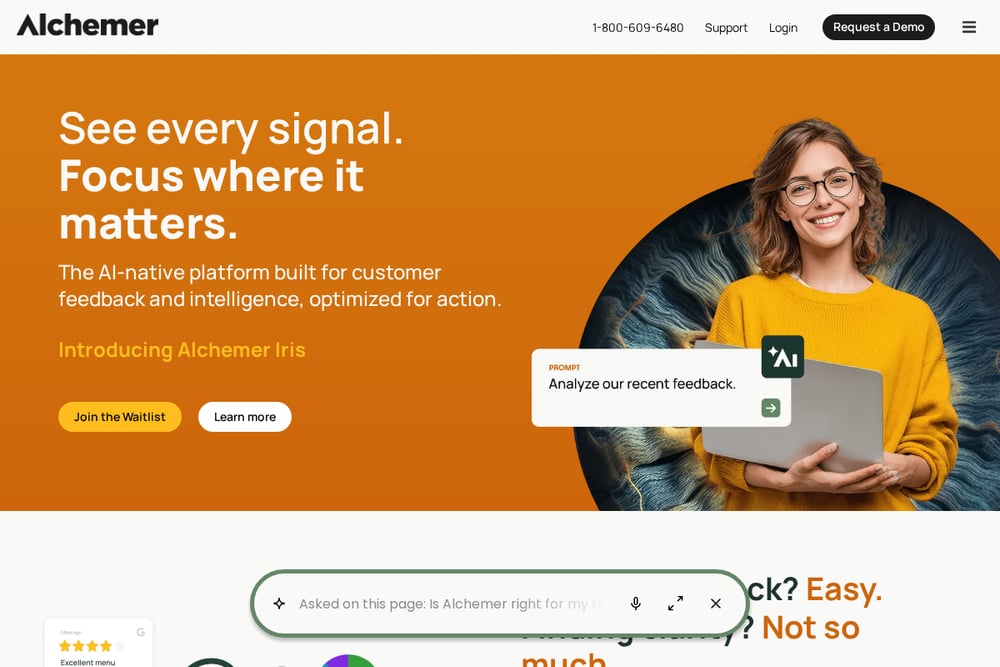 A screenshot of the Alchemer website.
Alchemer is a survey platform listed here for teams evaluating customer feedback options. The provided source page for Alchemer consists mainly of cookie consent and preference details rather than product descriptions, so this entry is limited to what that page shows. Buyers should review Alchemer's own product and pricing pages directly to understand its survey and feedback capabilities.
#5 Survicate
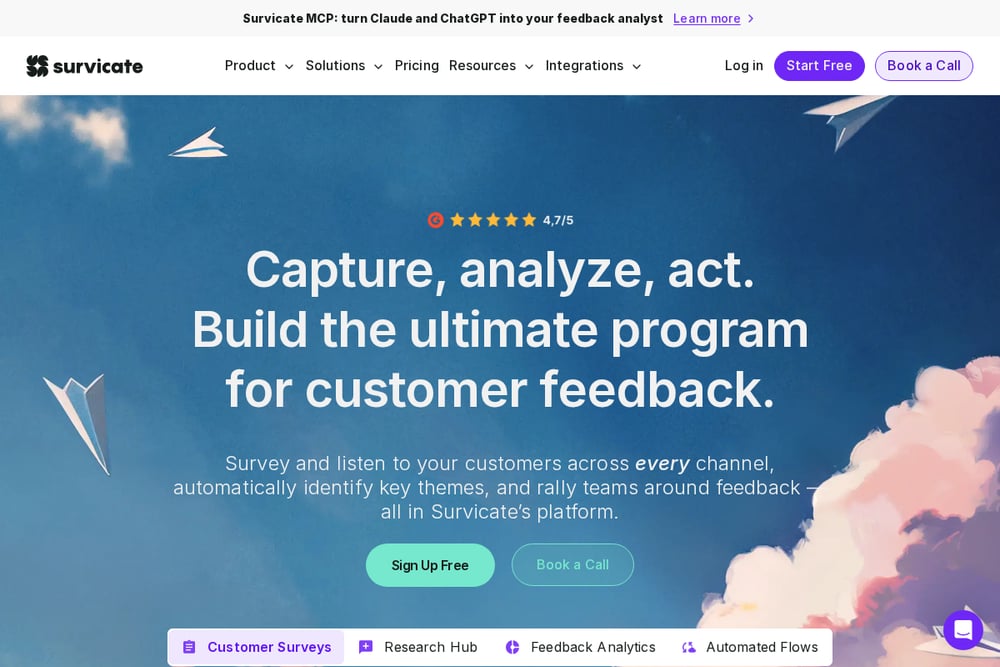 A screenshot of the Survicate website.
Survicate describes itself as a platform for building a customer feedback program, with surveys across email, website, app, and in-product channels. It unifies feedback from surveys, support tickets, call recordings, and reviews, then sorts it into topics and dashboards. It also offers CRM and product data enrichment, precise targeting, and an AI research chatbot. It suits teams that want to collect feedback in many places and consolidate it into themes.
#6 Refiner
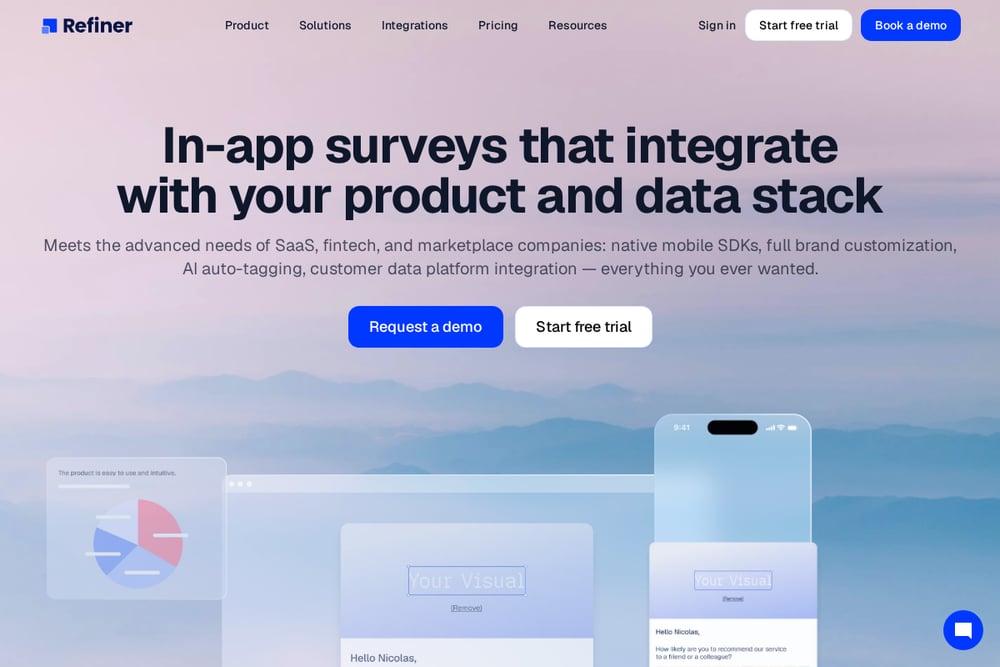 A screenshot of the Refiner website.
Refiner is customer feedback software aimed at SaaS, fintech, and marketplace teams, specializing in contextual in-app and mobile surveys. It offers native SDKs for iOS, Android, React Native, and Flutter, along with email surveys and shareable survey links. Responses flow into dashboards with NPS, CSAT, and CES charts, segmentation, and AI-powered auto-tagging of open text. It also connects responses to tools like Segment, Amplitude, Mixpanel, HubSpot, and Slack. It suits product-led teams that want surveys embedded in their product and data stack.
#7 Zonka Feedback
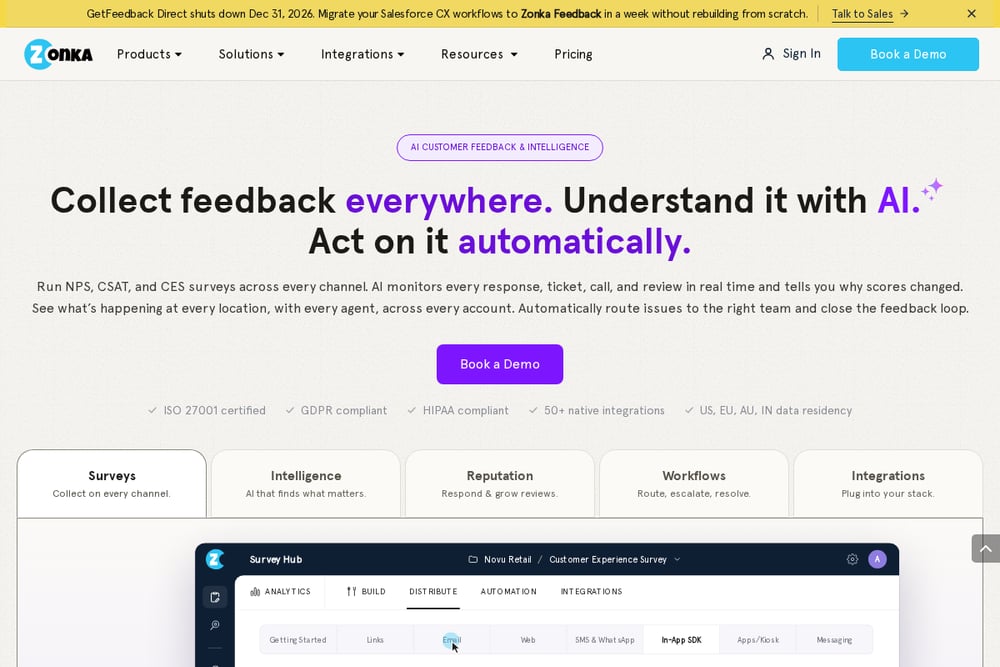 A screenshot of the Zonka Feedback website.
Zonka Feedback combines customer feedback surveys with an AI feedback intelligence platform. It supports NPS, CSAT, and CES surveys across offline, email, SMS, WhatsApp, website, in-product, and in-app channels. Its AI monitors responses, tickets, calls, and reviews in real time and routes issues to the right team to close the feedback loop. It also covers online reputation management and location-based and agent-based CX. It suits teams that want feedback collection and analysis tied to support and frontline workflows.
Which One Should You Choose?
Start with where your feedback actually happens. If most of it arrives inside a web or mobile product, look at tools built around in-app and SDK-based surveys. If it arrives across support tickets, reviews, and calls, look at platforms that unify those sources and sort them into themes. If you need structured research alongside ongoing feedback, consider tools that combine surveys with moderated studies. If you run experience programs across customers and employees at scale, weigh platforms built for enterprise experience management. Also check how each tool connects to the systems your team already uses, such as CRMs, helpdesks, and analytics, and confirm current pricing and plan details on each vendor's own site before deciding.
Final Thoughts
These seven tools overlap in purpose but differ in emphasis. SurveyMonkey leans on templates and general survey use cases, Typeform on conversational forms and automated follow-up, Qualtrics on enterprise experience management, Survicate on consolidating multi-channel feedback into themes, Refiner on in-app and mobile surveys for product-led teams, and Zonka Feedback on connecting feedback to support and frontline workflows. Alchemer appears here as an option to evaluate directly, since its provided page did not include product details. The right fit depends on where your customer feedback originates and what your team needs to do with it next, not on any single ranking.
Know a company that belongs on this list? Email us at editorial@peekwire.com.