HubSpot is a common starting point, but plenty of teams want a CRM that fits a different shape: a pipeline-first tool, a Google Workspace-native workspace, or something built around agents and automation. This list covers seven CRM platforms people often look at when they want to move in a different direction. Each entry sticks to what the vendor says about itself, so you can judge fit rather than hype. None of these is presented as the best choice; the right one depends on how your team sells and what it already uses.
How We Picked These Tools
We picked platforms that appear on vendor comparison pages or position themselves as distinct CRM approaches, and that publish enough public detail to describe honestly. Every claim below is backed by a quote from the company's own site. We did not test the products or score them. The order is a plain list, not a quality ranking.
| Provider | Best For |
|---|---|
| Pipedrive | Sales teams that want a pipeline-first CRM |
| Zoho CRM | Businesses that want a CRM within a larger app suite |
| Close | Teams that sell through calls, email, and SMS |
| Copper | Google Workspace teams managing clients and projects |
| Attio | Revenue teams that want an AI-agent-driven CRM |
| folk | Teams prospecting across many channels with AI help |
| Capsule CRM | Small businesses that want a simple, affordable CRM |
The 7 Tools in Focus
#1 Pipedrive
 A screenshot of the Pipedrive website.
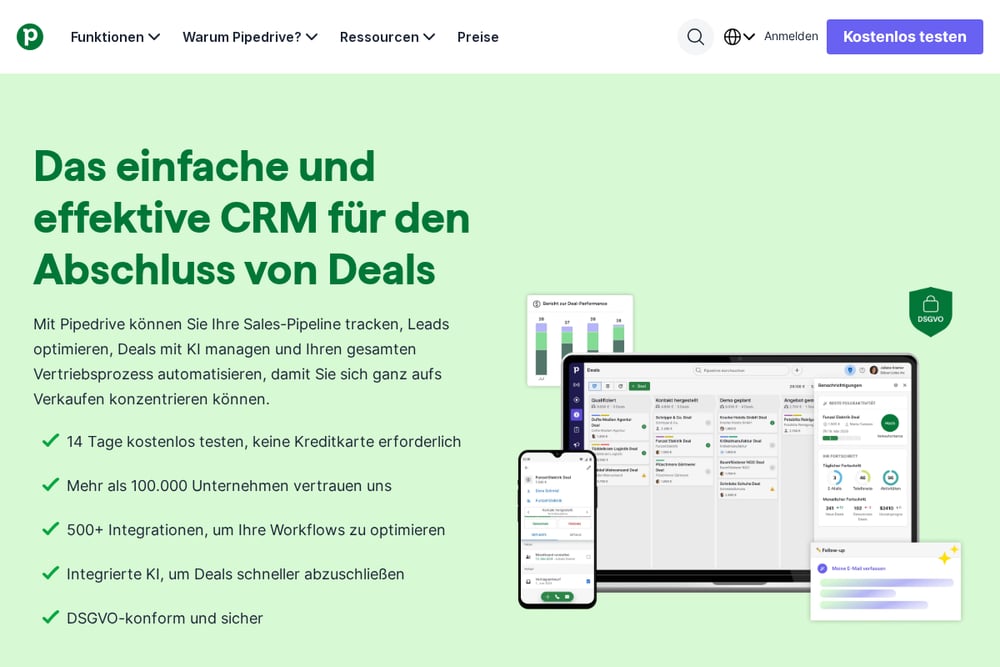
Pipedrive is a sales-focused CRM built around a visual pipeline. It lets teams track deals, manage leads, and automate follow-ups, with AI features folded into the workflow. The company describes it as a tool for closing deals rather than a full marketing suite. It suits sales teams that want a clear view of their funnel and less admin around each opportunity.
#2 Zoho CRM
 A screenshot of the Zoho CRM website.
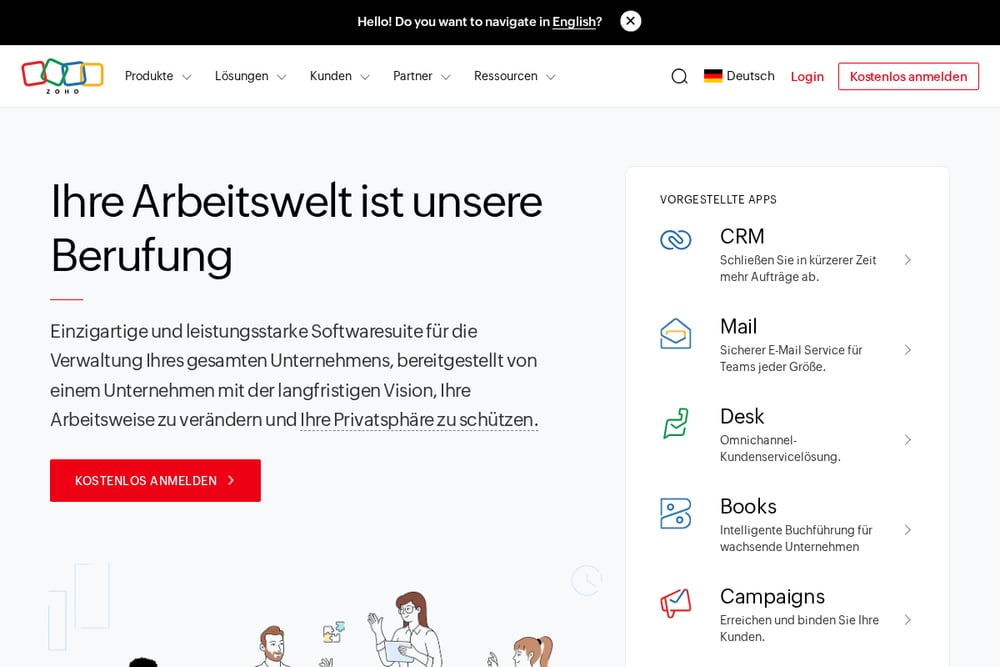
Zoho CRM is part of a broad software suite from Zoho, which describes it as a fully customizable end-to-end CRM for growing businesses and larger organizations. It sits alongside other Zoho apps such as Books, Mail, People, and Projects, and can be bundled through Zoho One. The company emphasizes privacy and a long-term approach to building software. It suits teams that want a CRM inside a wider business app ecosystem.
#3 Close
 A screenshot of the Close website.
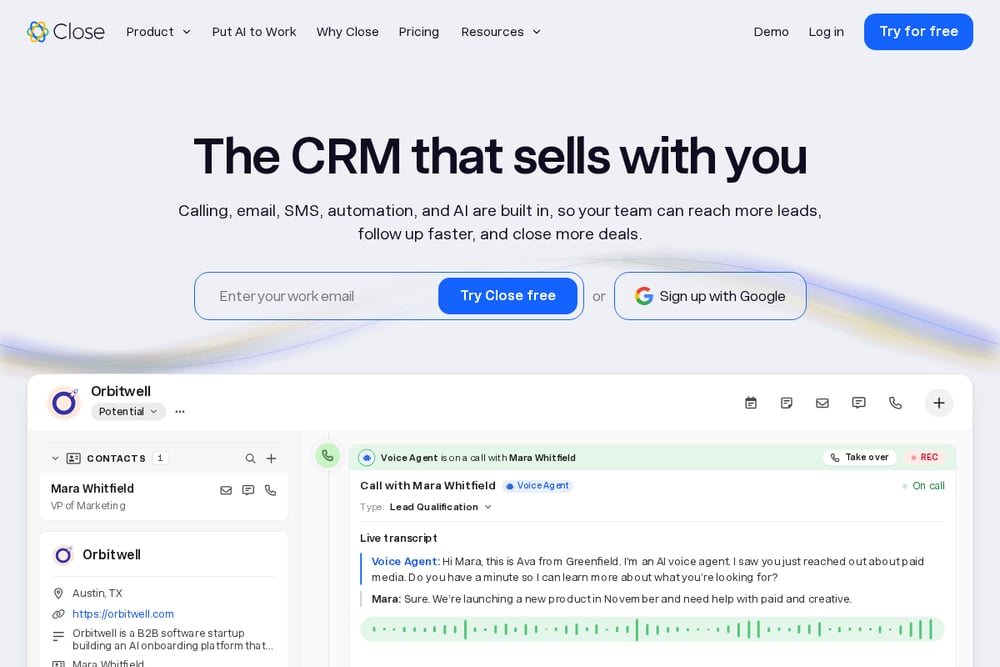
Close is a CRM built for action, with calling, email, SMS, automation, and AI combined in one place. It includes a shared inbox for communication, pipelines for deals, and workflows for follow-up. The company also offers AI agents in beta that handle tasks like lead qualification and follow-up. It suits teams that sell heavily through calls, messages, and fast outreach.
#4 Copper
 A screenshot of the Copper website.
Copper is a CRM designed to live inside Google Workspace, so contacts, deals, and tasks sit alongside Gmail and Calendar. It covers pipelines, project delivery, reporting, and automation, and it can turn a closed deal into a project for service delivery. The company highlights fast setup for small teams. It suits relationship-driven businesses that already work in Google's tools.
#5 Attio
 A screenshot of the Attio website.
Attio describes itself as a platform for agentic revenue, building pipeline and advancing deals with AI agents and automation. It offers a flexible data model, enrichment, call intelligence, reporting, and workflows, plus agents that research and act on leads. It also connects with tools like Slack, ChatGPT, and Claude. It suits revenue teams that want a highly configurable, automation-heavy CRM.
#6 folk
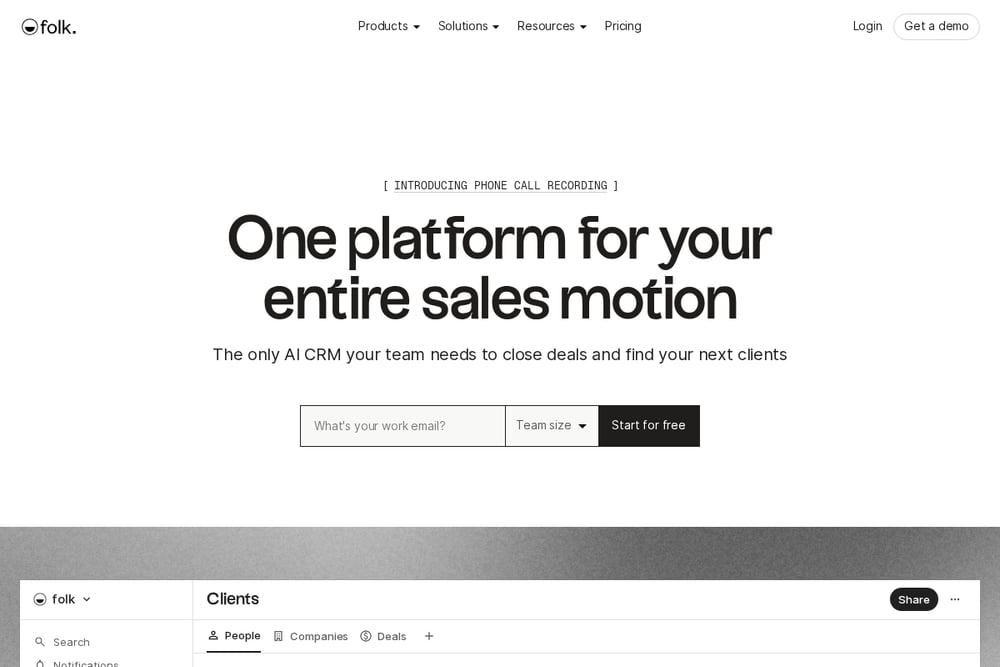 A screenshot of the folk website.
folk presents itself as an AI CRM for managing the whole sales motion, from prospecting and enrichment to outreach and pipeline management. It includes assistants, sequences, messages, and call recording, and it works across channels like LinkedIn, Gmail, Outlook, and WhatsApp. The company positions it for teams, agencies, startups, and partnership groups. It suits teams that prospect and sell across many channels and want AI help along the way.
#7 Capsule CRM
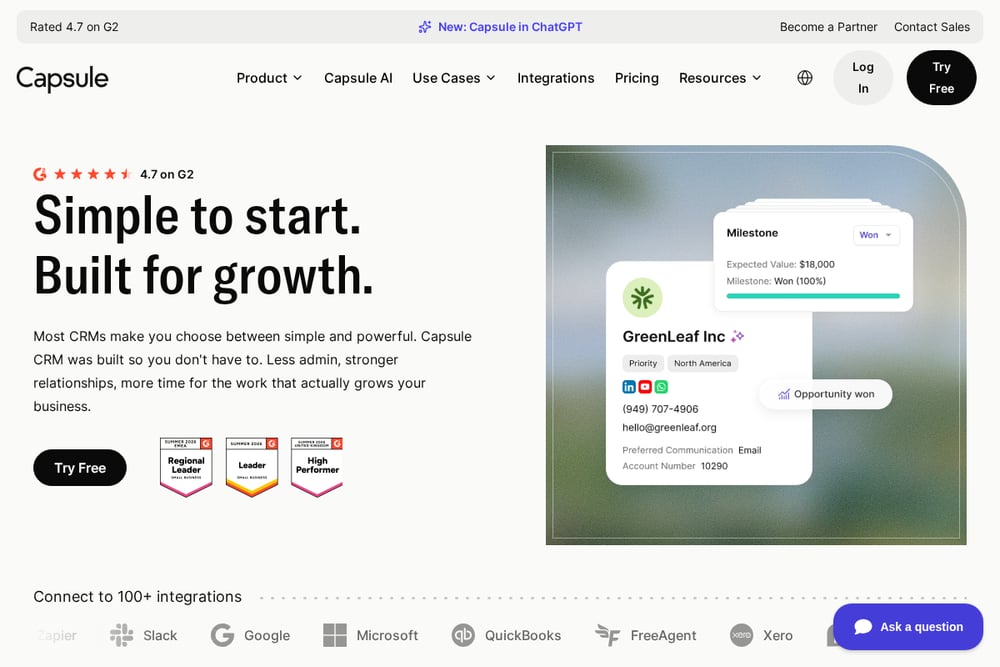 A screenshot of the Capsule CRM website.
Capsule CRM is a simple-to-start CRM that covers contact management, sales pipelines, projects, tasks, and marketing. It includes automations, reports, and a mobile app, plus AI features the company describes as deliberately sensible. It connects to a range of integrations including Zapier, Slack, Google, and accounting tools. It suits small and growing businesses that want straightforward CRM without heavy setup.
Which One Should You Choose?
Start with how your team actually sells. If the pipeline is the center of your day, look at pipeline-first tools. If you live in Gmail and Calendar, a Google Workspace-native CRM may reduce tab-switching. If outreach happens across calls, SMS, and social channels, check which channels a CRM builds in natively. Consider whether you want a standalone CRM or one inside a larger app suite, and whether AI agents and automation are central to your workflow or a nice extra. Finally, check setup effort and integrations against the tools you already use, and use free trials to test the fit before committing.
Final Thoughts
There is no single right answer here. Pipedrive leans into pipeline selling, Zoho CRM offers breadth inside a larger suite, Close centers on communication and outreach, Copper fits Google Workspace teams, Attio pushes agentic automation, folk spans multi-channel prospecting, and Capsule keeps things simple for smaller businesses. The useful move is to match the CRM's shape to your team's habits, then trial the shortlist with real deals before you decide.
Know a company that belongs on this list? Email us at editorial@peekwire.com.