Privacy-first website analytics tools help you understand traffic without collecting personal data or requiring cookie banners. This list covers seven options worth knowing in 2026, each with different hosting models, features, and audiences. Every fact below is quoted directly from the companies' own pages.
How We Picked These Tools
We selected tools that explicitly describe themselves as privacy-friendly or privacy-first, avoid cookies or personal data collection, and offer clear documentation of their approach. Each entry includes at least two verified facts with exact quotes from the source pages. The order is a plain list, not a quality ranking.
| Provider | Best For |
|---|---|
| Plausible | Teams wanting a simple, EU-hosted, cookie-free analytics dashboard |
| Fathom Analytics | European companies and agencies seeking cookieless analytics with EU data isolation |
| Matomo | Organizations requiring full data ownership and advanced analytics features |
| Simple Analytics | Teams needing a cookieless baseline alongside Google Analytics |
| Umami | Teams wanting open-source product analytics without personal data collection |
| Pirsch | Agencies and enterprises needing German-hosted, cookie-free analytics |
| GoatCounter | Personal sites and small businesses wanting free, open-source analytics |
The 7 Tools in Focus
#1 Plausible
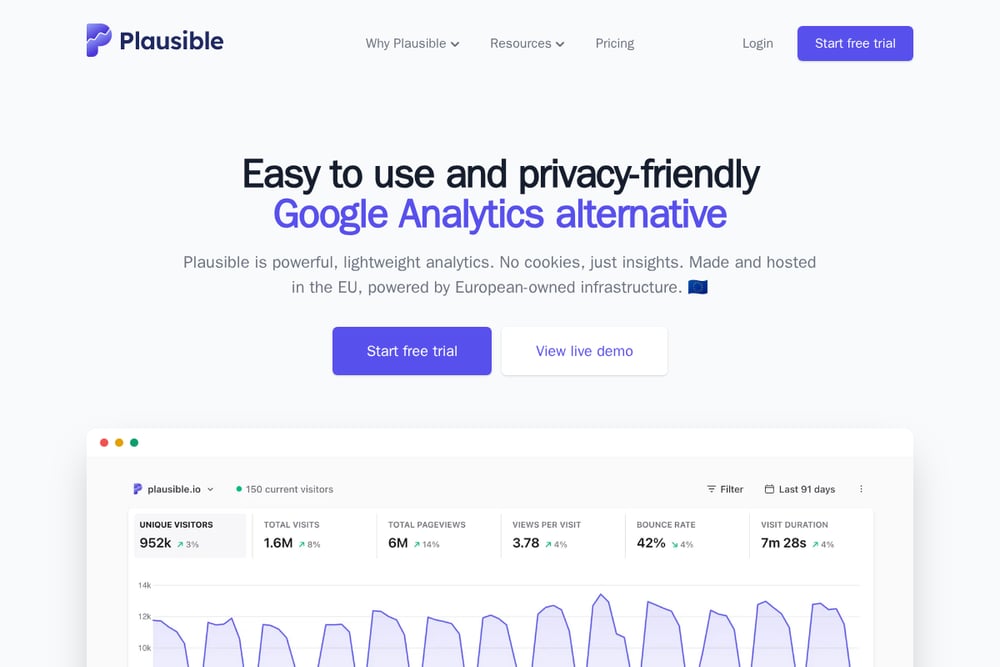 A screenshot of the Plausible website.
Plausible is a lightweight, open-source web analytics platform built as a privacy-friendly alternative to Google Analytics. It provides a simple dashboard with key metrics, automatic scroll depth tracking, and codeless goal tracking. The tool is EU-hosted and designed for teams that want clear insights without complexity. It suits ecommerce, SaaS, agencies, creators, and public sector organizations.
#2 Fathom Analytics
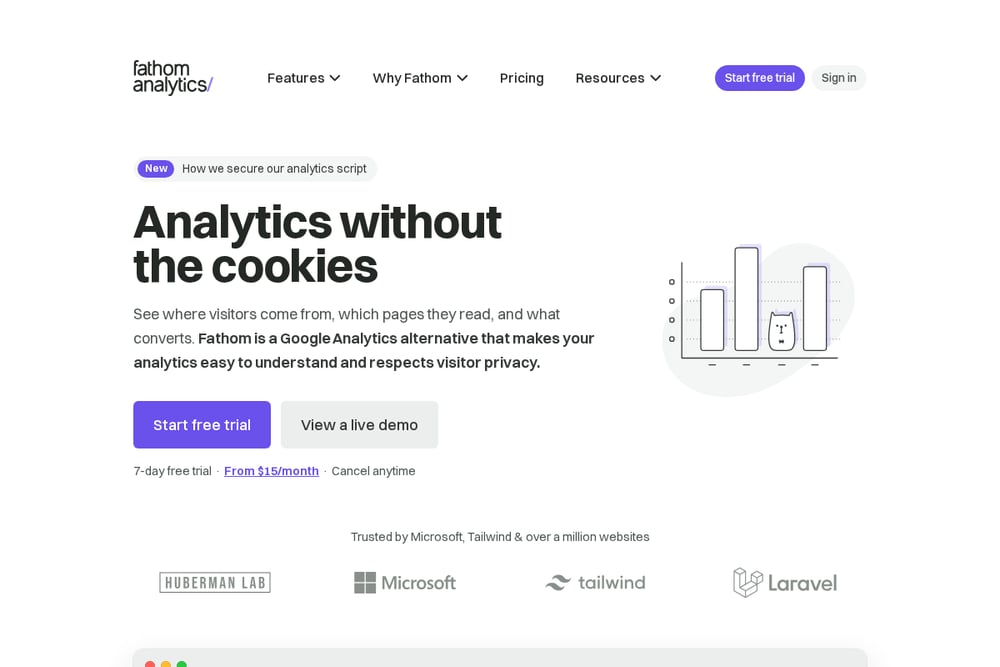 A screenshot of the Fathom Analytics website.
Fathom Analytics is a privacy-focused web analytics tool that provides a simple, single-page dashboard. It uses no cookies, so no consent banner is required for analytics, and it offers unlimited data retention. The company emphasizes EU data isolation and compliance with GDPR, CCPA, ePrivacy, and PECR. It suits European companies, agencies, and anyone wanting an easy-to-understand Google Analytics alternative.
#3 Matomo
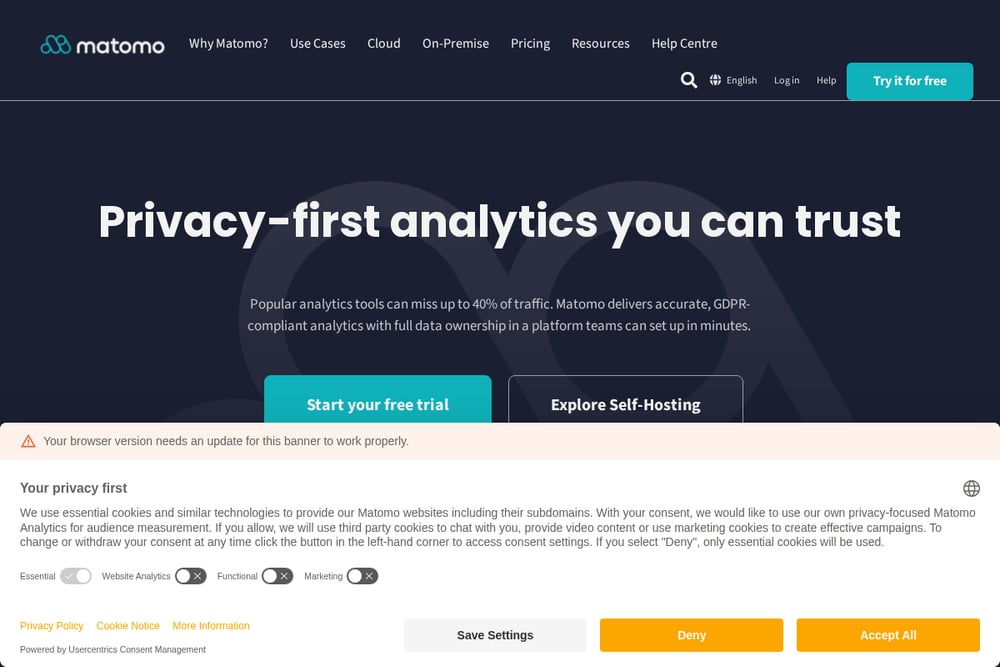 A screenshot of the Matomo website.
Matomo is a full-featured analytics platform that emphasizes 100% data ownership and privacy protection. It can be self-hosted or used in the cloud, offers cookieless tracking, and provides unsampled data with raw data access. The platform includes advanced features like heatmaps, session recordings, funnels, and A/B testing. It suits organizations that need complete control over their analytics data and compliance with GDPR.
#4 Simple Analytics
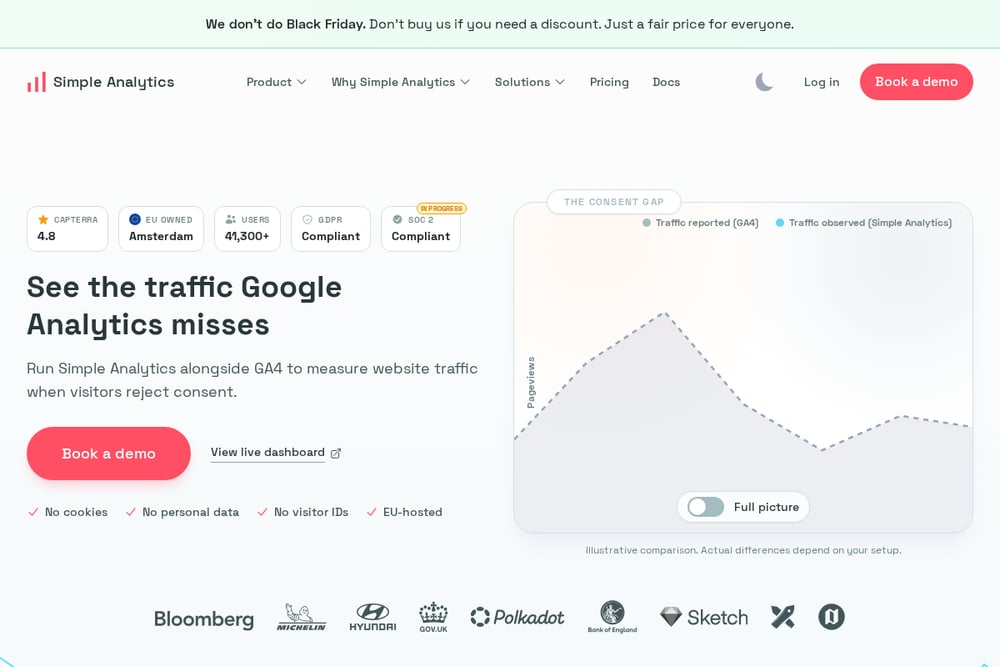 A screenshot of the Simple Analytics website.
Simple Analytics is a focused web analytics tool that measures traffic without tracking individuals. It uses no cookies, collects no personal data, and stores no IP addresses, making it compliant with major privacy laws. The tool can run alongside Google Analytics to fill visibility gaps when visitors reject consent. It suits agencies, enterprise teams, and white-label partners needing a clearer picture of traffic.
#5 Umami
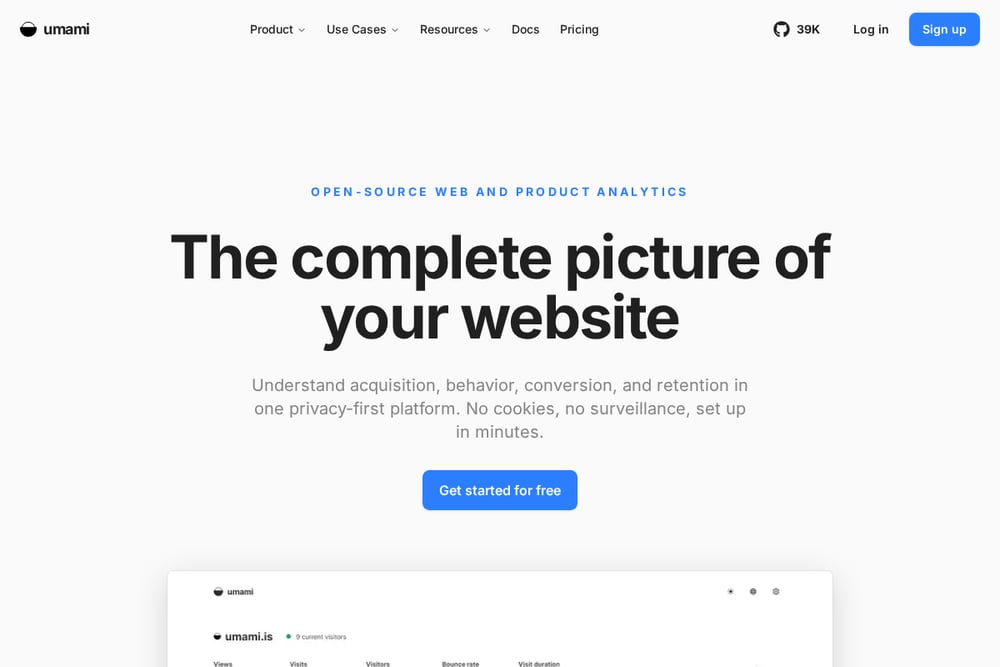 A screenshot of the Umami website.
Umami is an open-source web and product analytics platform that combines acquisition, behavior, conversion, and retention metrics in one privacy-first tool. It uses no cookies and collects no personal data, so most sites can drop the cookie banner. The platform includes features like funnels, journeys, retention reports, and revenue tracking. It suits teams wanting a complete analytics picture without surveillance.
#6 Pirsch
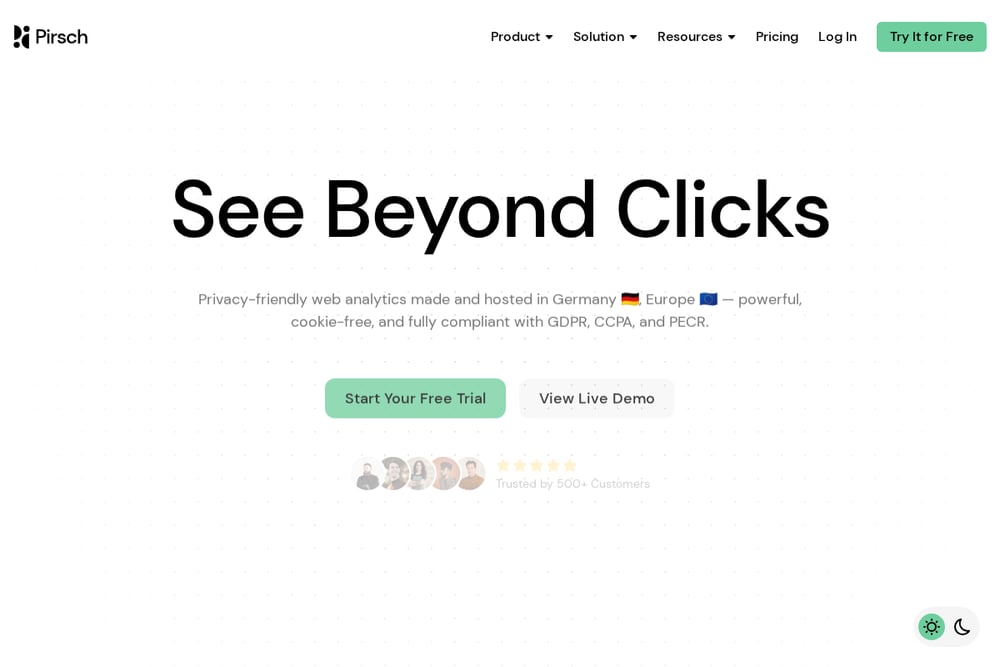 A screenshot of the Pirsch website.
Pirsch is a privacy-friendly web analytics platform made and hosted in Germany. It works without cookies, never stores personally identifiable information, and is compliant with GDPR, CCPA, PECR, and Schrems II. The tool offers advanced features like events, A/B testing, funnels, and white labeling. It suits agencies, enterprises, and developers looking for a cookie-free Google Analytics alternative.
#7 GoatCounter
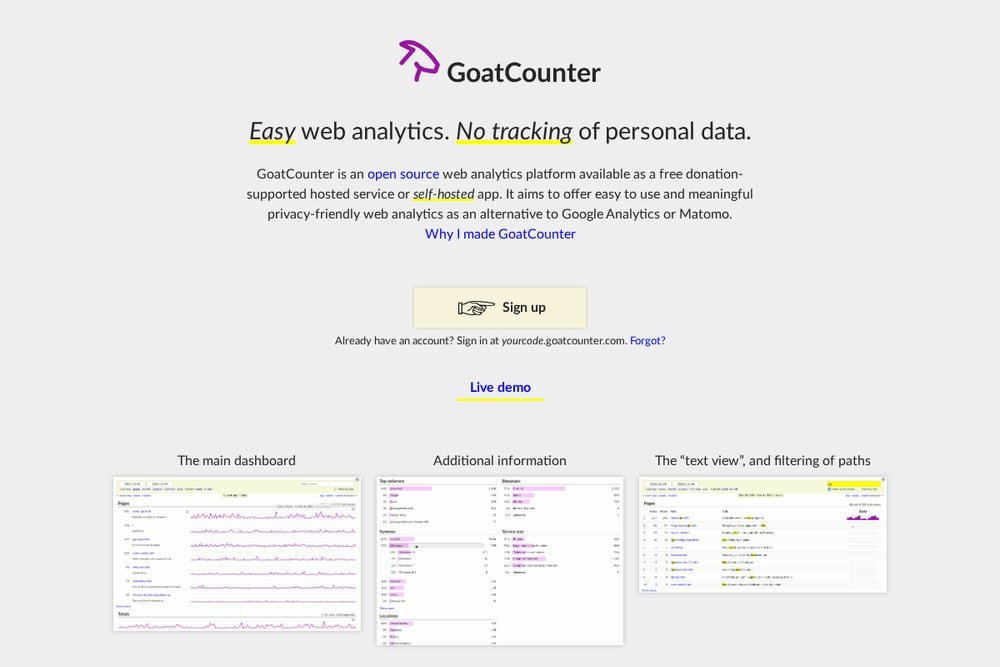 A screenshot of the GoatCounter website.
GoatCounter is an open-source web analytics platform available as a free hosted service or self-hosted app. It is privacy-aware, does not track users with unique identifiers, and does not require a GDPR notice. The tool is lightweight, offers a JavaScript-free tracking option, and prioritizes accessibility. It suits personal websites and small-to-medium businesses wanting simple, privacy-friendly analytics.
Which One Should You Choose?
Consider your hosting needs: self-hosted options like Matomo, Umami, and GoatCounter give you full control, while cloud services like Plausible, Fathom, Simple Analytics, and Pirsch handle infrastructure for you. Check data residency requirements if you need EU or German hosting. Evaluate feature depth: some tools focus on simple dashboards, while others offer funnels, heatmaps, and revenue tracking. Finally, confirm that the tool's privacy approach matches your compliance obligations and whether it requires a cookie banner.
Final Thoughts
Each of these seven tools takes a different approach to privacy-first analytics, from simple open-source projects to full-featured platforms with advanced reporting. The right choice depends on your need for data ownership, hosting location, feature set, and budget. All listed tools avoid cookies or personal data collection, making them worth knowing as you evaluate privacy-friendly analytics in 2026.
Know a company that belongs on this list? Email us at editorial@peekwire.com.