Webinars remain one of the few channels where B2B marketers can educate an audience and capture intent signals in the same session. The platforms below approach that job from different angles: some lean on engagement analytics, some on content repurposing, some on event scale. This list is a plain overview of what each one does and who it tends to suit. It is not a quality ranking, and no company here is being called the best.
How We Picked These Tools
Each platform was included because its own public pages describe capabilities aimed at marketers running webinars, virtual events, or video-led demand programs. Descriptions stick to what the companies say about themselves, with quotes taken directly from their sites. Prices appear only where a company states them in its own text. The order is a simple list order, not a judgment of quality.
| Provider | Best For |
|---|---|
| Zoom Webinars | Teams already working inside the Zoom ecosystem |
| Livestorm | Marketing teams running repeatable webinar programs |
| Demio | Demand teams focused on attendee intent data |
| BigMarker | Teams running multi-format event programs |
| Goldcast | B2B teams repurposing webinar content at scale |
| WebinarGeek | Teams prioritizing interactive, easy-to-run sessions |
| Riverside | Marketers producing video-first webinar content |
The 7 Tools in Focus
#1 Zoom Webinars
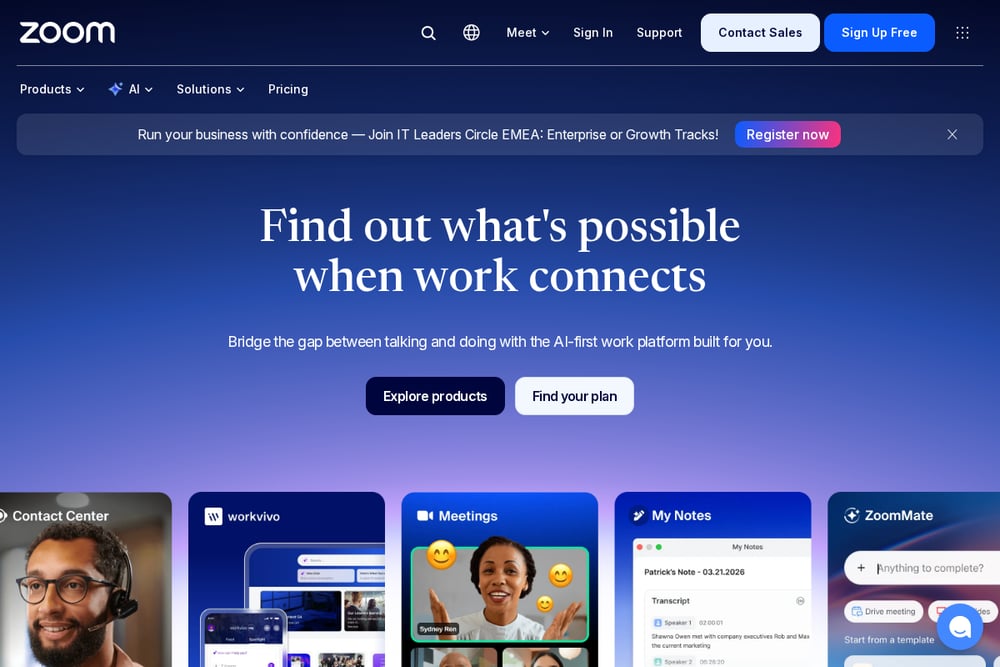 A screenshot of the Zoom Webinars website.
Zoom is a broad communications platform, and its Webinars and Events offering sits inside that wider suite. The company positions webinars as a way to capture leads with branded sessions that build pipeline, alongside meetings, chat, phone, and contact center tools. Because it shares a platform with everyday meeting and collaboration software, it can suit teams already standardized on Zoom. It is a reasonable fit for organizations that want webinars connected to a larger workplace toolset.
#2 Livestorm
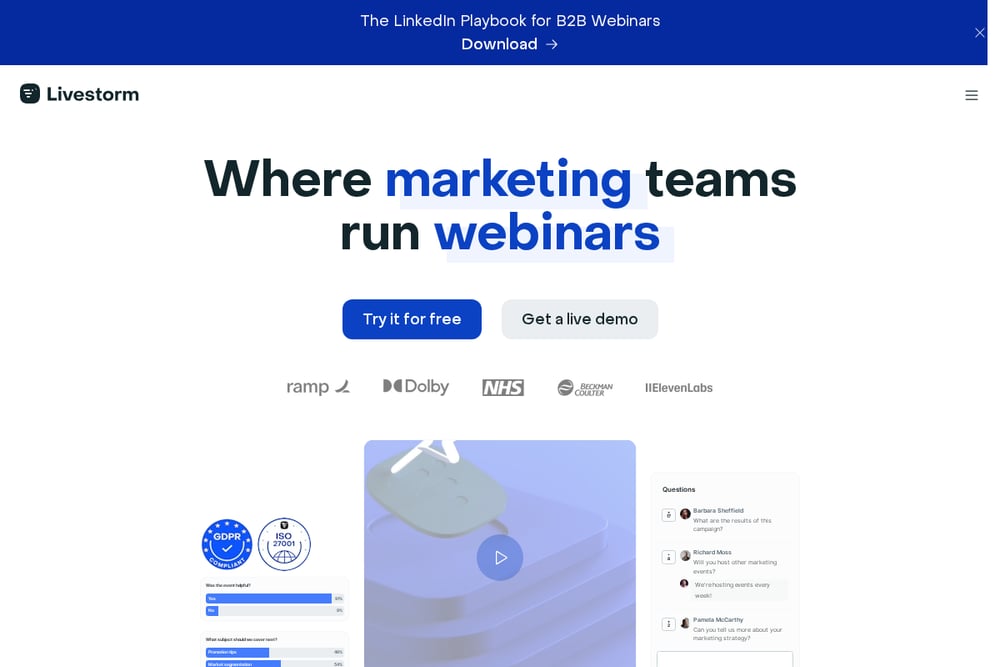 A screenshot of the Livestorm website.
Livestorm describes itself as a browser-based webinar and virtual event platform aimed at marketing teams. It covers live, on-demand, and automated webinars, plus restreaming and AI features. The company emphasizes CRM and marketing automation integrations, custom registration pages, and analytics such as UTM tracking and attendance rate. It suits marketing teams that want registration, engagement, and follow-up in one workflow.
#3 Demio
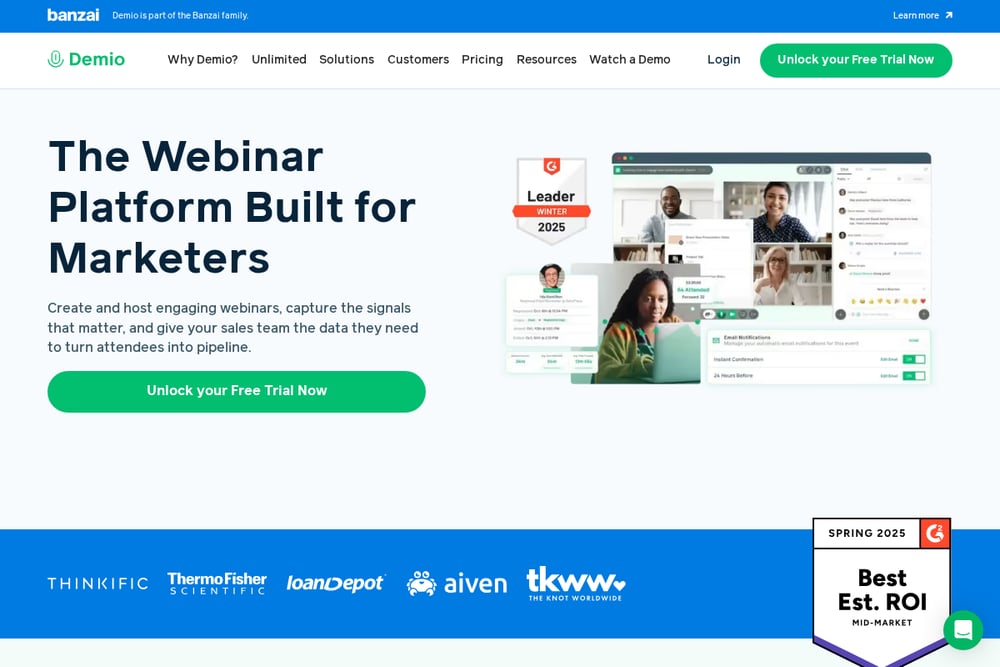 A screenshot of the Demio website.
Demio presents itself as a webinar platform built for marketers, with an emphasis on engagement analytics and intent signals. The company describes tools like polls, featured actions, handouts, and chat, and says its analytics show who downloaded handouts, joined polls, and clicked calls to action. It also supports automated and on-demand events and integration with marketing automation platforms and CRMs. It suits revenue and demand teams that want to feed engaged attendees into sales follow-up.
#4 BigMarker
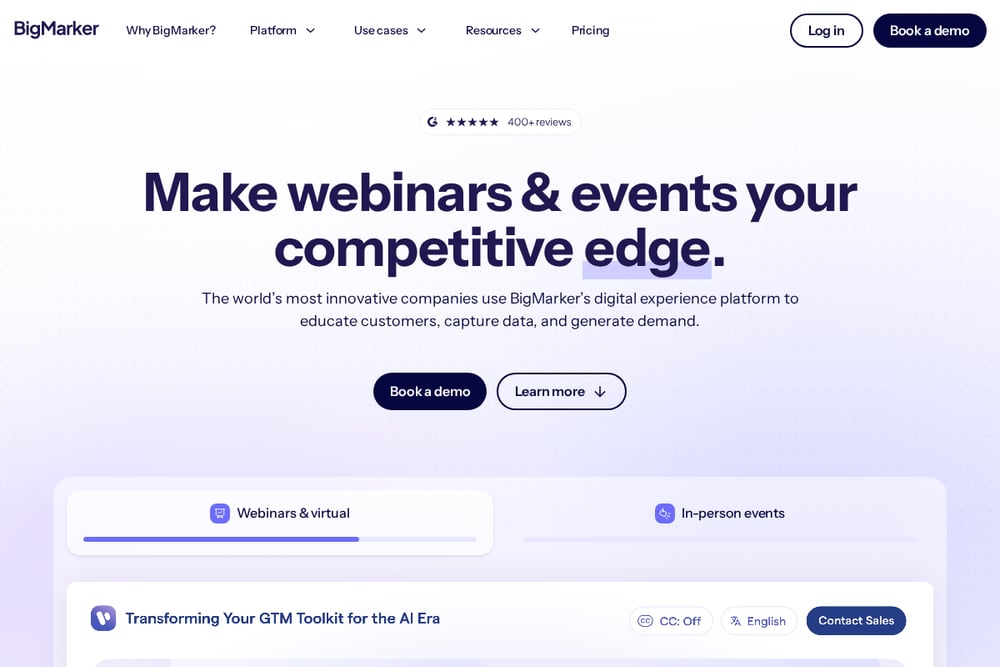 A screenshot of the BigMarker website.
BigMarker describes itself as a digital experience platform for webinars, in-person events, virtual and hybrid events, on-demand hubs, and eLearning. For marketers, it emphasizes custom audience experiences, CRM profile enrichment, simulive webcasts, interactive engagement, and full-service email. It also lists AI features for personalization and content generation. It suits teams running larger or more varied event programs that span live, hybrid, and on-demand formats.
#5 Goldcast
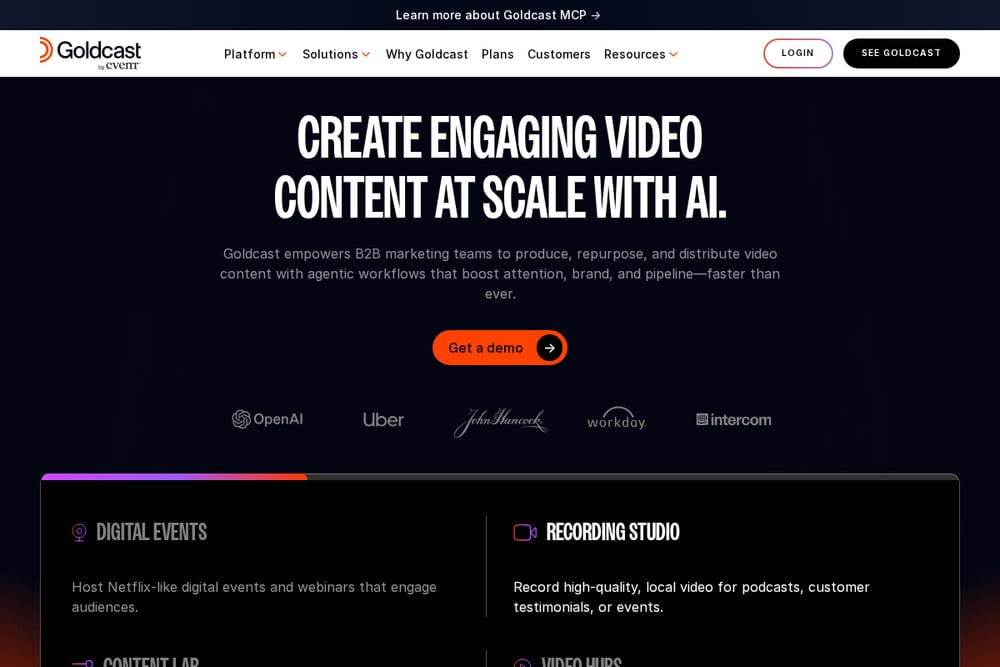 A screenshot of the Goldcast website.
Goldcast positions itself as a video content platform for B2B marketing teams, combining digital events with a recording studio and a content lab. The company says its AI agents help repurpose long-form video into clips, blogs, emails, and social posts. It also emphasizes engagement data and native integrations that deliver account-level signals for ABM plays. It suits B2B marketing teams that want webinars to feed an ongoing content engine.
#6 WebinarGeek
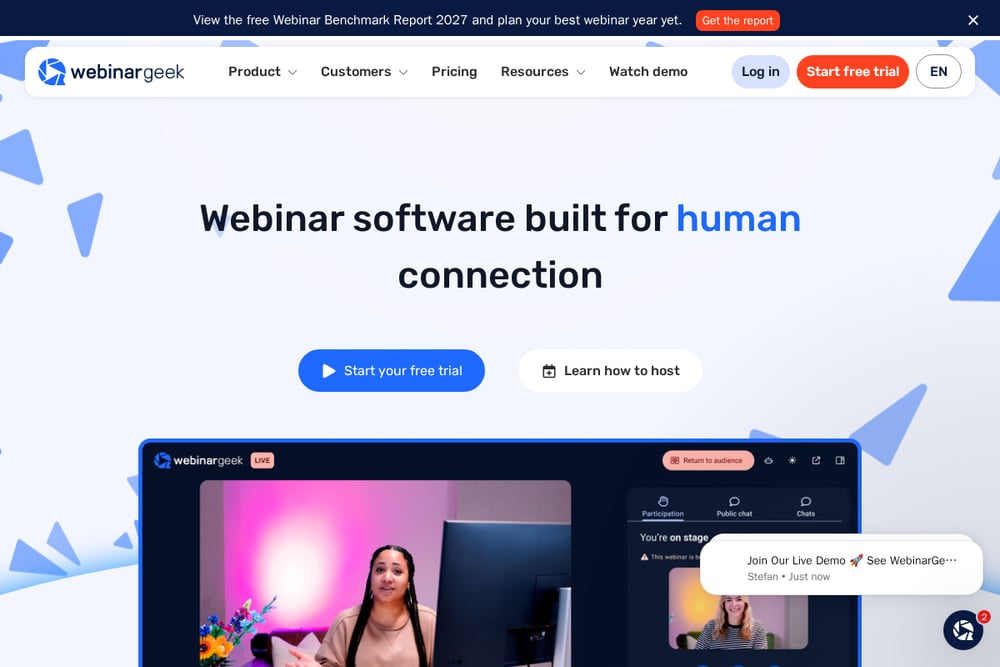 A screenshot of the WebinarGeek website.
WebinarGeek describes its software as built for human connection, with live chat, Q&A, polls, and stage participation to turn viewers into participants. It supports live, automated, on-demand, paid, and hybrid webinars, and connects to CRMs and marketing platforms so registration and engagement data keep moving. The company also offers AI features for preparing content and surfacing insights. It suits teams that want an approachable workflow from registration through follow-up.
#7 Riverside
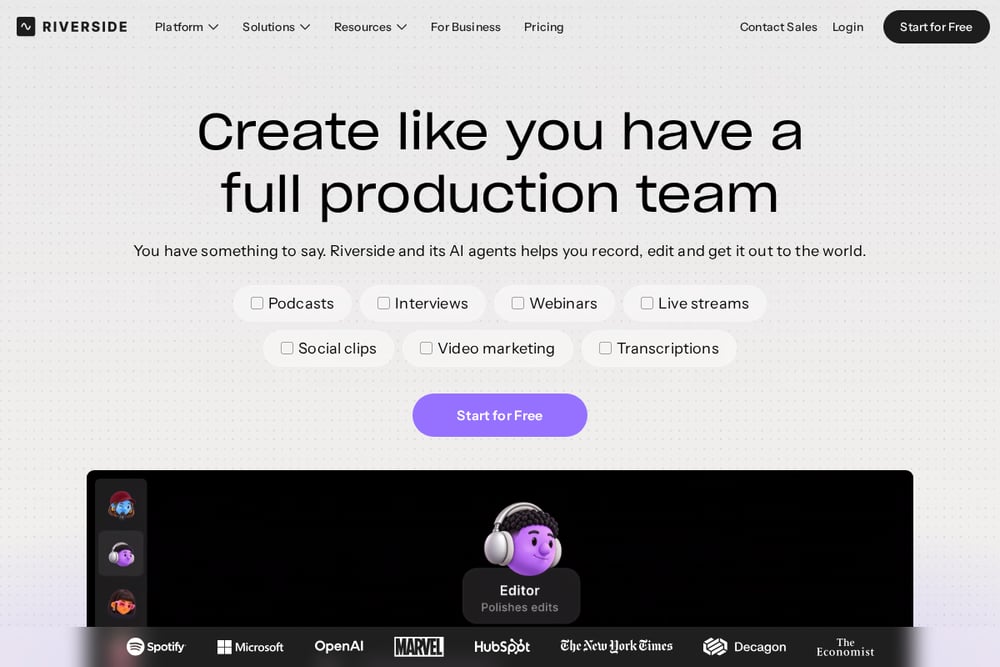 A screenshot of the Riverside website.
Riverside describes itself as an AI-powered platform for recording, editing, repurposing, and distributing studio-quality content. Its webinar offering includes full HD streaming to multiple destinations, audience call-ins, Q&As, chat management, and custom branding. The company also notes built-in registration with automated email reminders and a HubSpot connection that syncs registrant details. It suits marketers and producers who treat webinars as source material for broader video content.
Which One Should You Choose?
Start with the job your webinar program needs to do. If the priority is capturing intent signals and handing engaged attendees to sales, look at platforms that emphasize engagement analytics and CRM sync. If the priority is turning each session into clips, blogs, and social posts, look at platforms built around content repurposing. If you run many formats, from live to hybrid to on-demand, check which platforms cover those formats natively. Also consider how the tool fits your existing stack: a platform that connects cleanly to your CRM and marketing automation saves manual work later. Finally, confirm the engagement features your audience responds to, such as polls, Q&A, and chat, and check whether registration and follow-up email are included.
Final Thoughts
The B2B webinar platforms above overlap in core features but differ in emphasis. Some are built around analytics and pipeline signals, others around content repurposing or event scale, and others around simplicity and interaction. None of them is being declared the best; the right choice depends on whether your team needs intent data, content output, multi-format events, or an easy workflow. Match the platform to your program's main goal, verify the integrations you rely on, and test the engagement features your audience actually uses.
Know a company that belongs on this list? Email us at editorial@peekwire.com.