Employee training has moved well beyond a folder of slides and a sign-in sheet. The systems below each approach workplace learning from a different angle: some lean on AI to build courses, some focus on documenting how work gets done, and others are built for reaching distributed or external audiences. This list is a plain starting point for teams comparing options, not a verdict on which one wins. Every entry is described using only what the vendors themselves publish, so you can see the shape of each platform before you book a demo.
How We Picked These Tools
These systems were picked because each one explicitly addresses employee training as a core use case and publishes enough detail on its own site to describe what it does. The list favors variety over sameness: authoring-first tools, AI-heavy platforms, operations-focused systems, and extended-enterprise options all appear. No company is ranked as better or worse. The numbers are simply an order for reading. Prices and feature claims are only included where the vendor states them directly.
| Provider | Best For |
|---|---|
| TalentLMS | Growing businesses that want fast, simple setup |
| Docebo | Enterprises juggling multiple training audiences |
| 360Learning | Global enterprises that want experts creating courses |
| Absorb LMS | Teams that want AI help for learners and admins |
| iSpring Learn | Small L&D teams building courses from PowerPoint |
| Trainual | Small businesses documenting processes and onboarding |
| Continu | Enterprises training employees, partners, and customers |
The 7 Tools in Focus
#1 TalentLMS
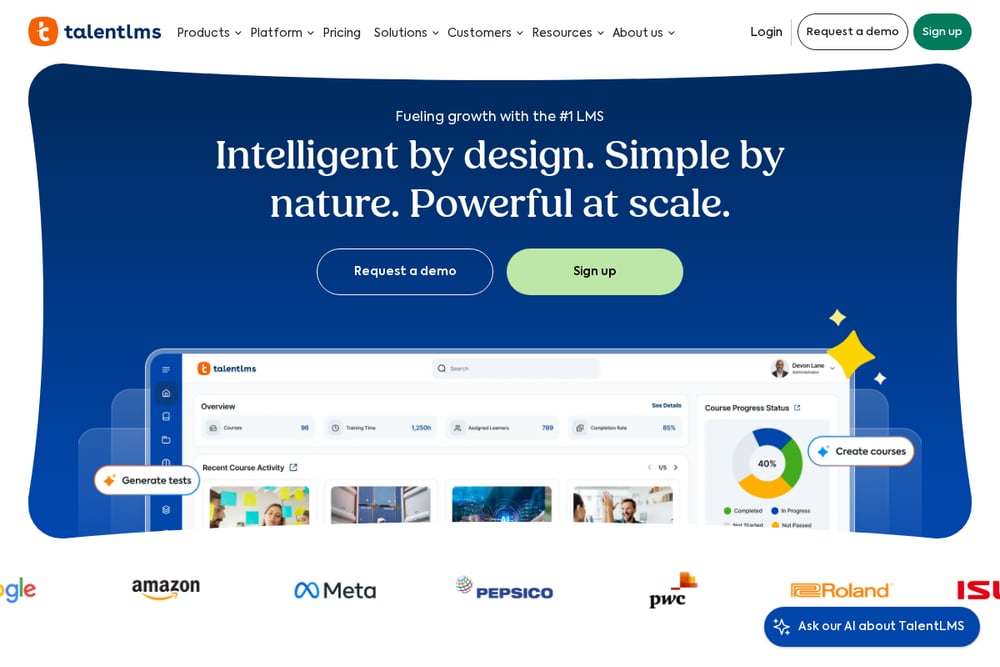 A screenshot of the TalentLMS website.
TalentLMS is an all-in-one learning management system aimed at growing businesses that want to launch training without a heavy IT project. It emphasizes a fast setup, with the vendor describing sign-up in seconds and no complex buying process. Built-in AI helps create courses and assessments, translate them for global teams, and turn learner data into a view of skills and progress. Separate training portals let a company serve employees, partners, or customers while keeping everything centralized. It suits teams that want simplicity first and room to scale later.
#2 Docebo
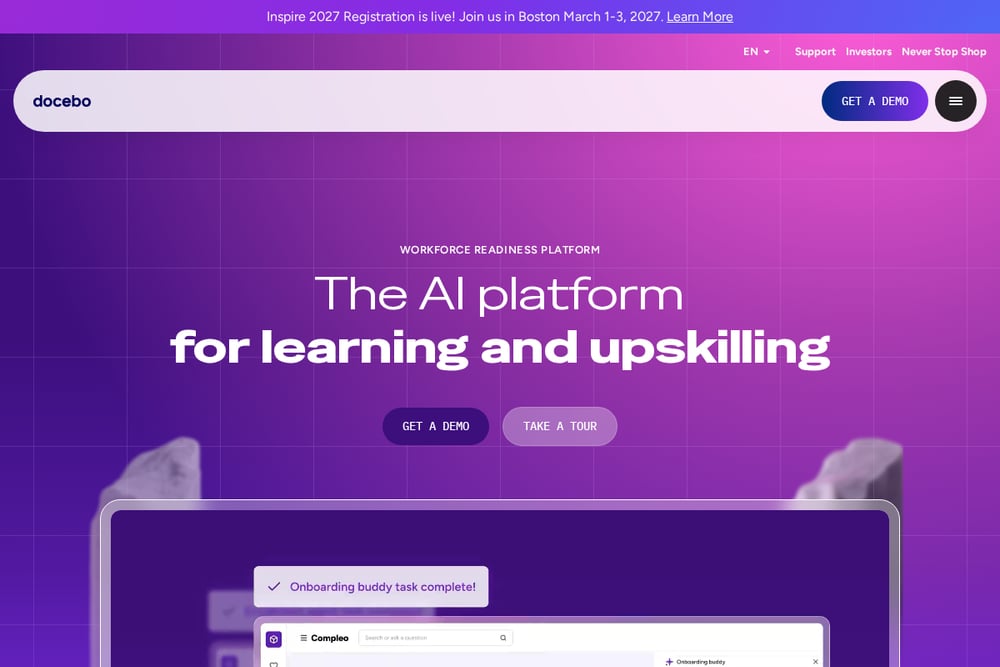 A screenshot of the Docebo website.
Docebo describes itself as an AI-powered LMS that creates, delivers, and measures learning at scale. The platform bundles learning, skills intelligence, and enterprise knowledge, with AI agents handling busywork across workflows. It supports employee onboarding, talent development, compliance training, sales enablement, and frontline workforce training, and extends to customers, partners, and members. Branded portals and access rules let one platform serve multiple audiences. It suits larger organizations that want learning, skills data, and AI assistance in one place.
#3 360Learning
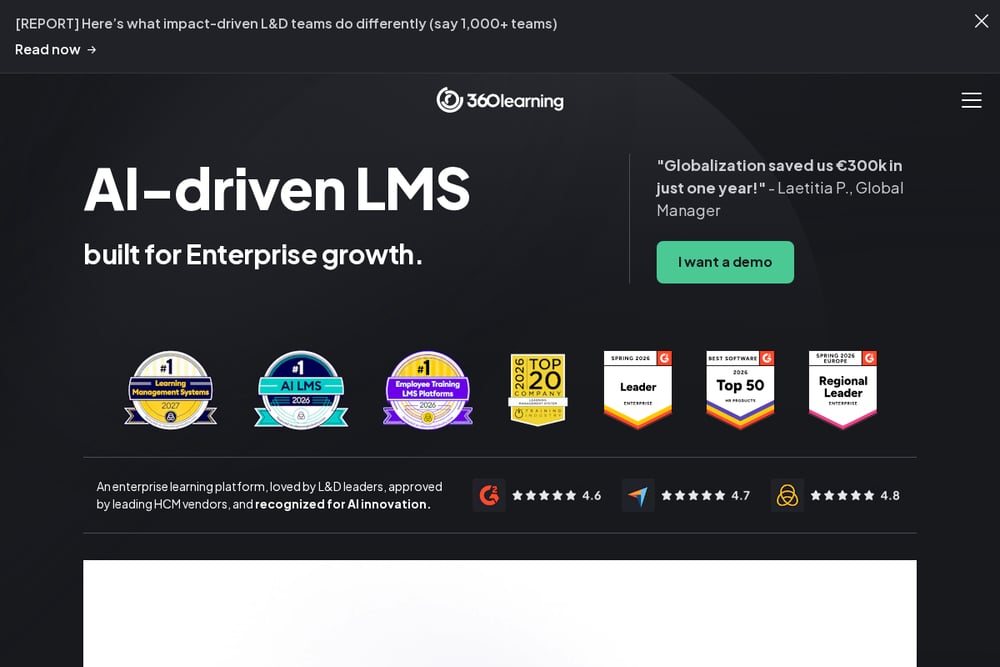 A screenshot of the 360Learning website.
360Learning is an AI-driven LMS built for enterprise growth, with a strong emphasis on collaborative learning. Subject matter experts create content while L&D validates it, so courses and coaching draw on expert-vetted knowledge. The platform covers compliance training, employee onboarding, sales enablement, and frontline staff training, and it offers a mobile app for teams on the move. Agentic automation handles enrollment, translation, and catalog management, synced to HR data. It suits international companies that want their own experts producing training at scale.
#4 Absorb LMS
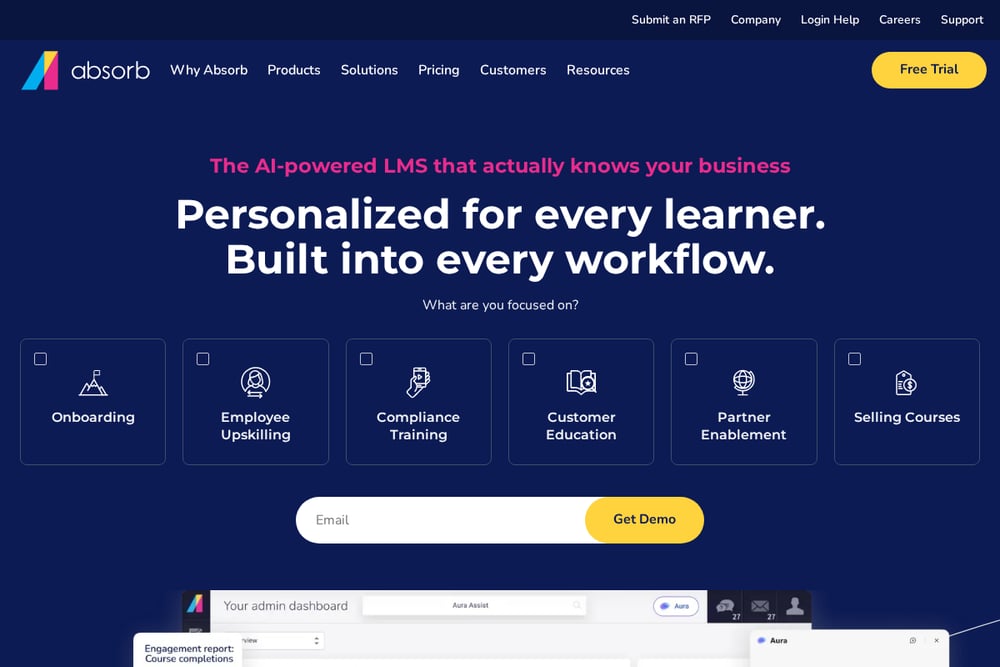 A screenshot of the Absorb LMS website.
Absorb LMS is an AI-powered strategic learning system designed for internal and external learning needs. Its Aura agents provide guidance to learners, managers, and admins where work happens, and Aura Create can turn an updated document into a draft course. The platform supports onboarding, employee upskilling, compliance training, customer education, and partner enablement, with separated portals for external audiences. It also offers eCommerce for selling courses. It suits organizations that want AI assistance woven through both learning and administration.
#5 iSpring Learn
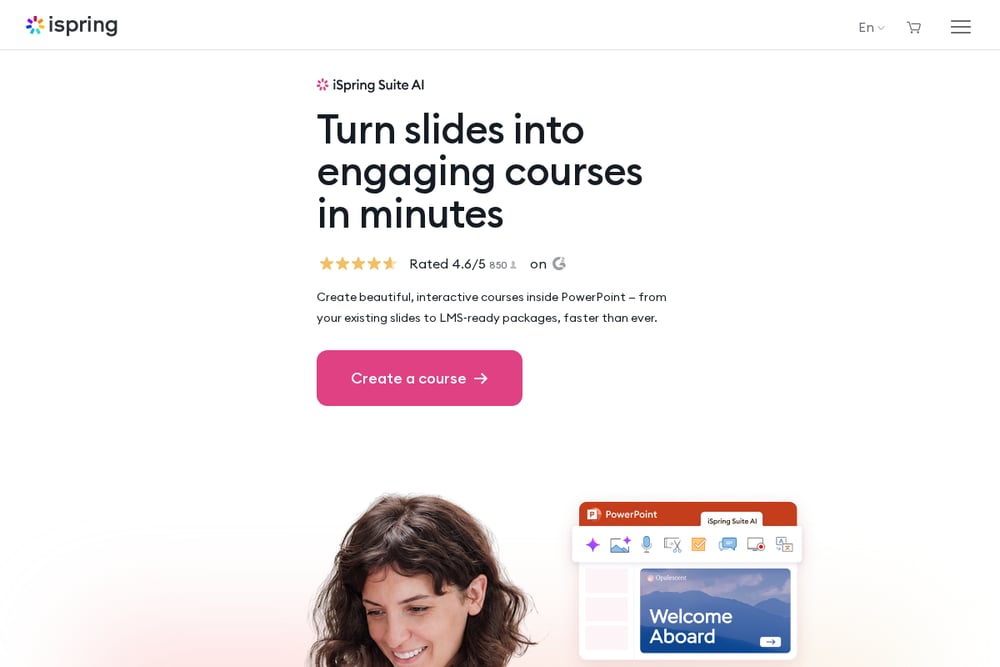 A screenshot of the iSpring Learn website.
iSpring is best understood through its authoring roots: it turns PowerPoint slides into interactive, LMS-ready courses with quizzes, interactions, role-plays, and training videos. AI assists with generating course text, images, and quiz questions, and can translate courses and create voiceovers. Content is published as standards-compliant SCORM packages that work in a range of LMSs, and the company also offers its own LMS. It suits small L&D teams without designers who already work in PowerPoint and want polished training quickly.
#6 Trainual
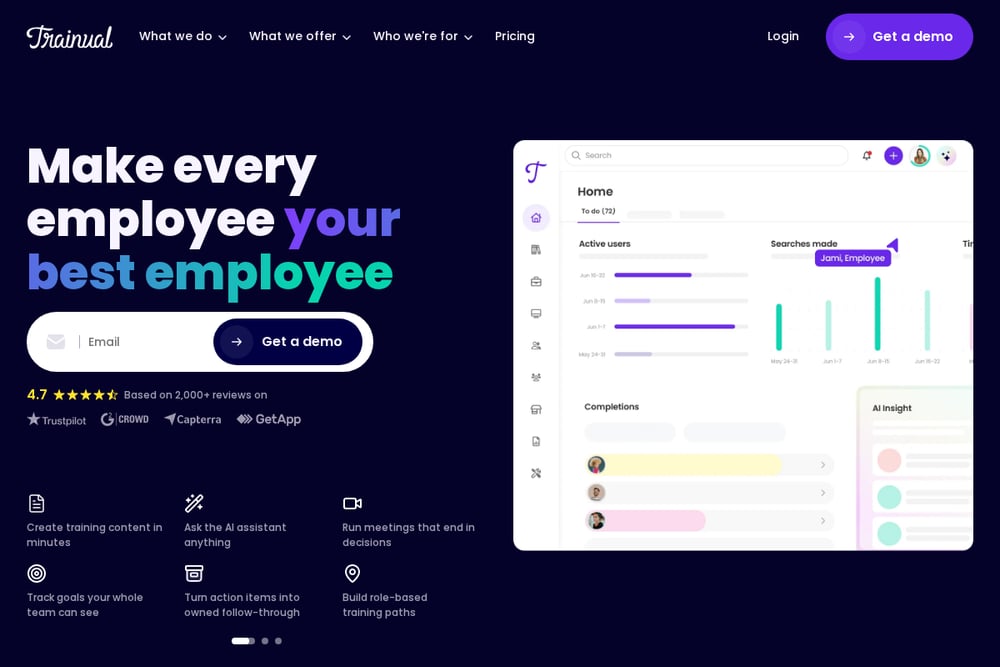 A screenshot of the Trainual website.
Trainual approaches employee training from the operations side, standardizing how work gets done with automated training that keeps everyone aligned. It combines training paths and onboarding with process documentation, SOPs, checklists, and a software and tools hub. An AI assistant surfaces what the team knows and helps draft content, while testing, tracking, and reporting show completions and gaps. It also covers meetings, goals, and performance reviews. It suits small and mid-sized businesses that want training and operational know-how in one system.
#7 Continu
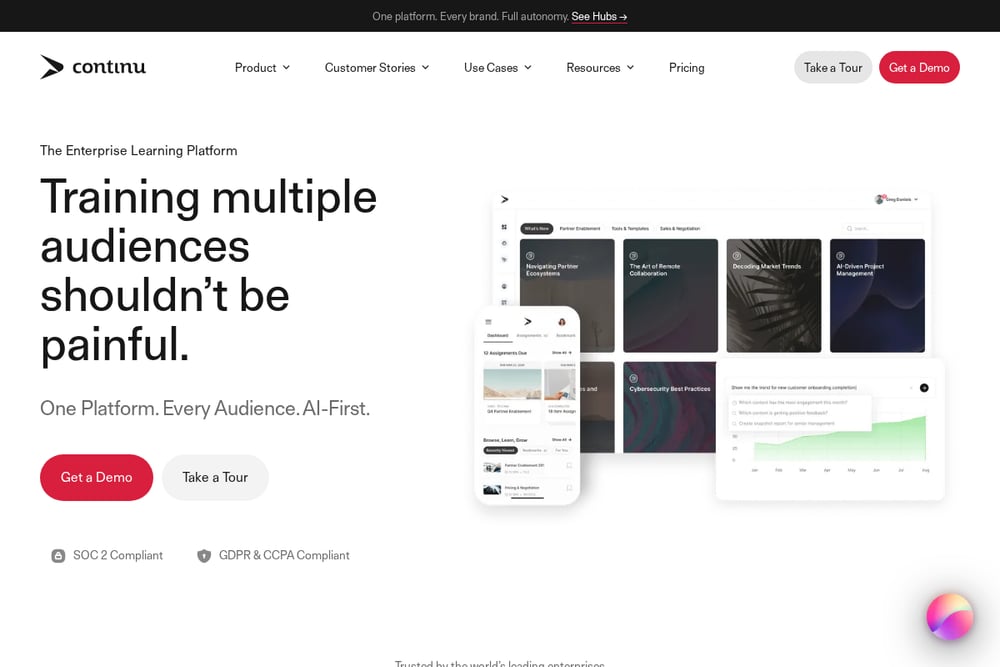 A screenshot of the Continu website.
Continu positions itself as an enterprise learning platform for training multiple audiences without pain. It covers employee training, onboarding, compliance, sales training, customer education, and partner enablement, with audience segmentation so each group gets its own experience. Hubs give every brand its own training space while keeping oversight, and Extend offers branded portals for any audience. Eddy, its AI learning agent, brings answers and training into tools like Slack, Teams, and SMS. It suits enterprises that train employees, partners, and customers from a single platform.
Which One Should You Choose?
Start with the audience. If you only train employees, a system built around internal onboarding and upskilling may be enough. If you also train partners or customers, look for platforms that describe separate portals or audience segmentation. Next, decide where content comes from. Teams with strong subject matter experts may prefer collaborative authoring, while teams already living in PowerPoint may want an authoring-first tool. Consider how much AI assistance you actually want for course creation and admin work, and whether you need skills tracking or process documentation alongside training. Finally, check integrations with the HR and business tools you already run, and ask each vendor for a demo against your own use case rather than a generic tour.
Final Thoughts
There is no single right answer here, and that is the point. TalentLMS leans toward simplicity and fast setup, Docebo toward skills and AI across multiple audiences, and 360Learning toward expert-driven collaborative content. Absorb LMS puts AI agents in front of learners and admins, iSpring Learn excels at turning existing slides into courses, Trainual blends training with operational documentation, and Continu focuses on serving many audiences from one place. Match the platform to how your team actually works, test it with real content, and let your own requirements decide.
Know a company that belongs on this list? Email us at editorial@peekwire.com.