Small businesses often need HR software that is easy to set up, covers the essentials, and grows with the team. This list highlights seven options worth knowing, each with different strengths and approaches. The aim is to help you understand what each tool does and who it suits, not to declare a winner.
How We Picked These Tools
We looked for HR software that explicitly serves small businesses or offers features relevant to them, such as onboarding, time off, payroll, and employee records. Each entry includes verified facts from the company's own website. The order is a plain list, not a quality ranking.
| Provider | Best For |
|---|---|
| BambooHR | Small businesses seeking an all-in-one HR platform |
| Rippling | Small businesses wanting HR and IT in one system |
| HiBob | Small businesses looking for a modern HRIS with analytics |
| Factorial | Small businesses wanting HR, finance, and IT together |
| Namely | Small businesses that may want managed HR services |
| CharlieHR | UK small businesses and startups |
| Breathe | Small and medium businesses up to 250 people |
The 7 Tools in Focus
#1 BambooHR
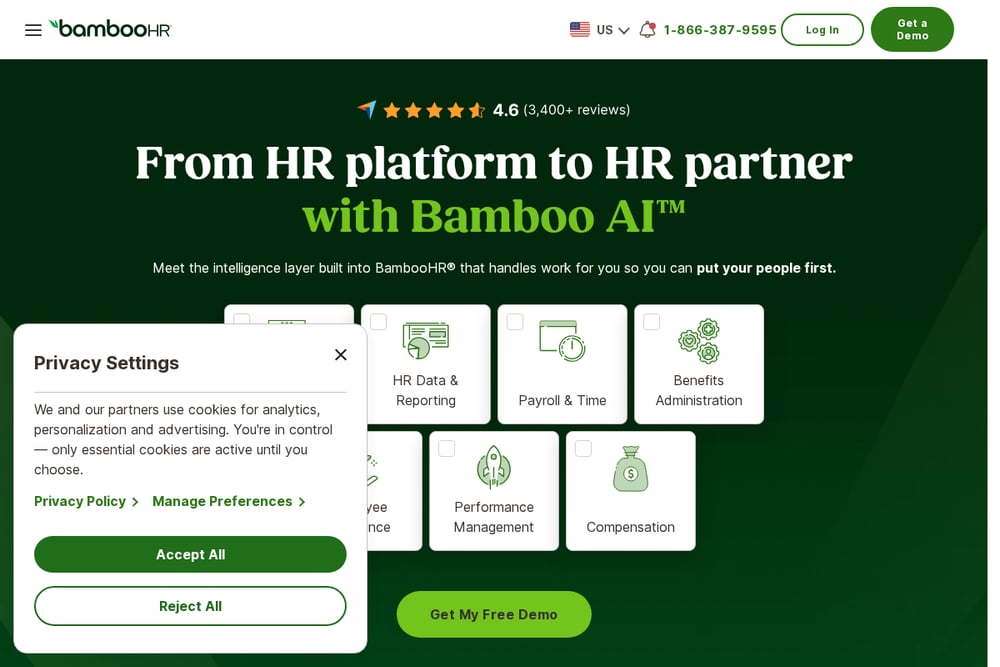 A screenshot of the BambooHR website.
BambooHR is an HR platform that brings employee data, payroll, time, and benefits together. It includes hiring and onboarding tools, performance management, and compensation planning. The company says it serves businesses in many countries and offers pre-built integrations. It suits small businesses that want a single system for core HR tasks and are ready to move beyond spreadsheets.
#2 Rippling
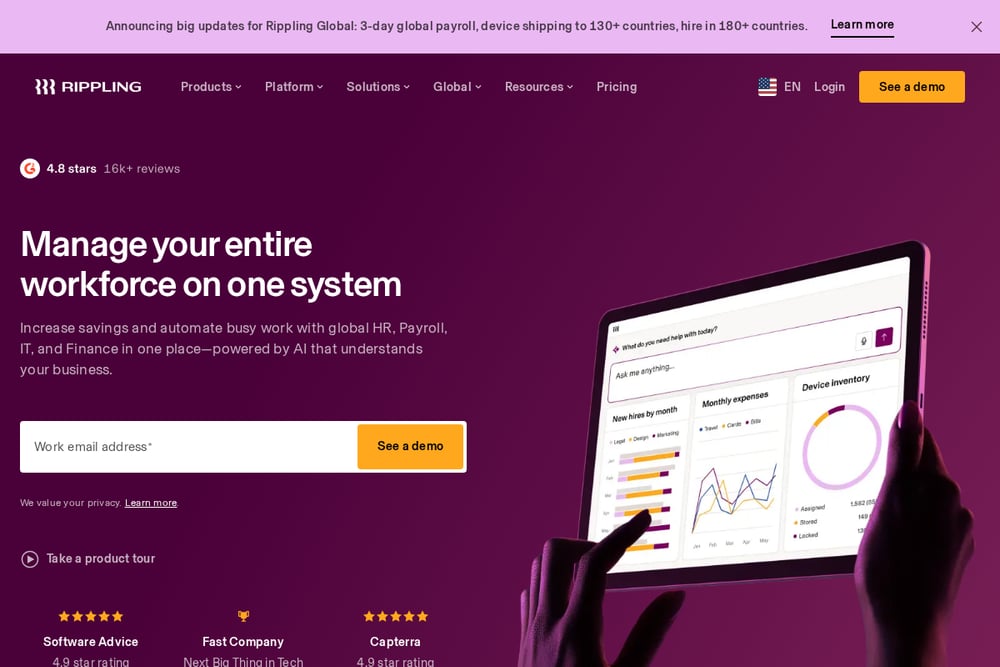 A screenshot of the Rippling website.
Rippling combines HR, IT, and finance on one platform, with payroll and device management built in. It emphasizes automation and AI to handle tasks like onboarding and employee changes. The system is designed to share data across apps, which can reduce duplicate work. It may suit small businesses that want to manage people and IT together as they grow.
#3 HiBob
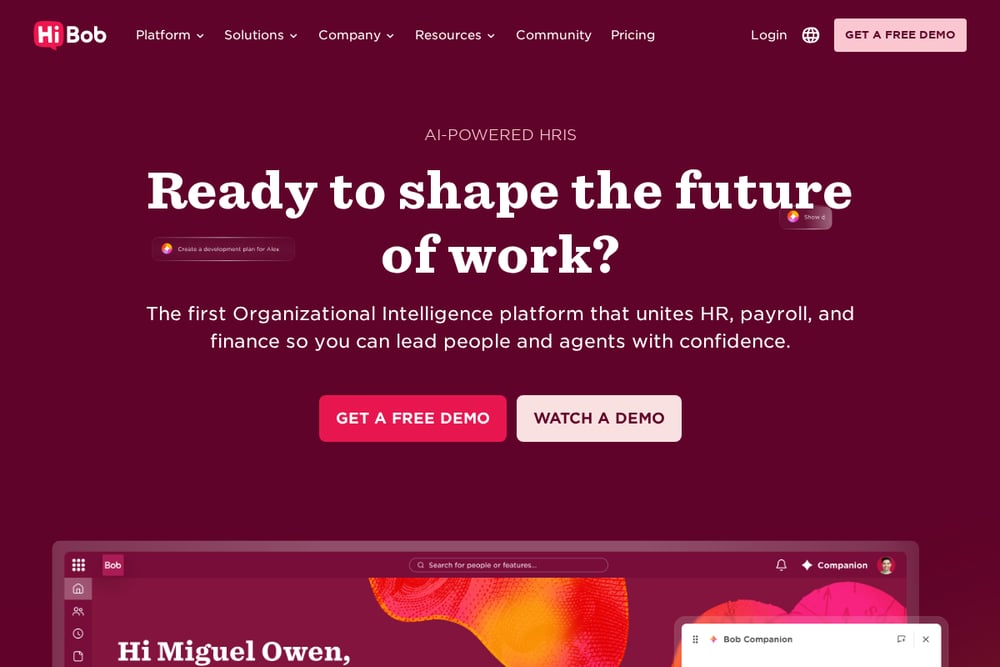 A screenshot of the HiBob website.
HiBob offers an HR platform called Bob that covers core HR, payroll, and people analytics. It includes tools for hiring, performance reviews, and compensation planning. The company positions Bob as an Organizational Intelligence platform that unites HR, payroll, and finance. It suits small and mid-sized businesses that want a modern, data-driven HR system.
#4 Factorial
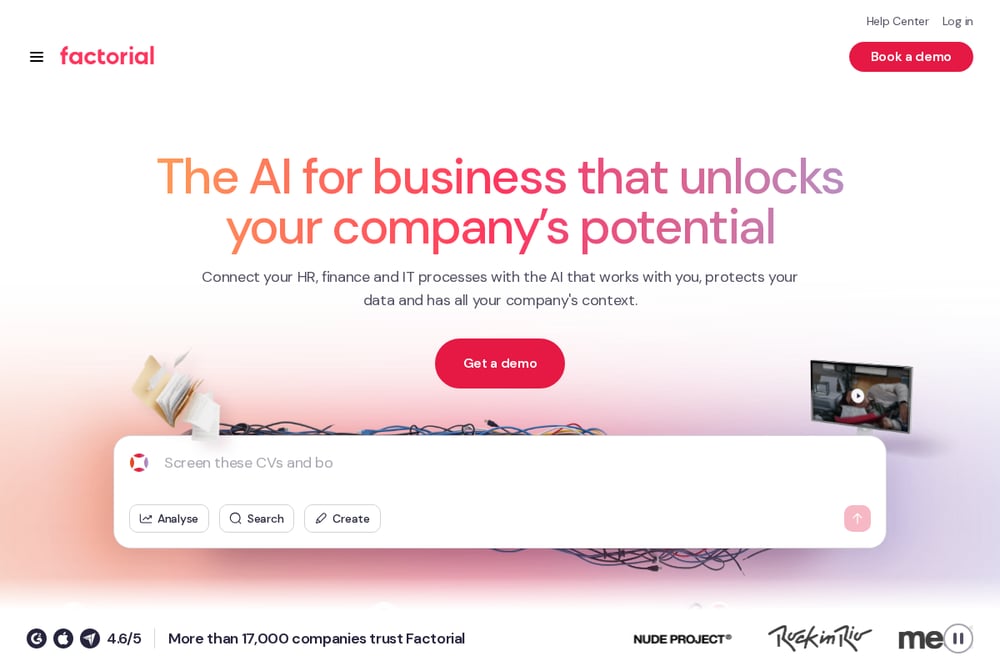 A screenshot of the Factorial website.
Factorial connects HR, finance, and IT processes with AI assistance. It covers time management, talent management, payroll, and expense management. The platform aims to automate administrative tasks so teams can focus on people. It suits small businesses that want a broad suite of business tools beyond just HR.
#5 Namely
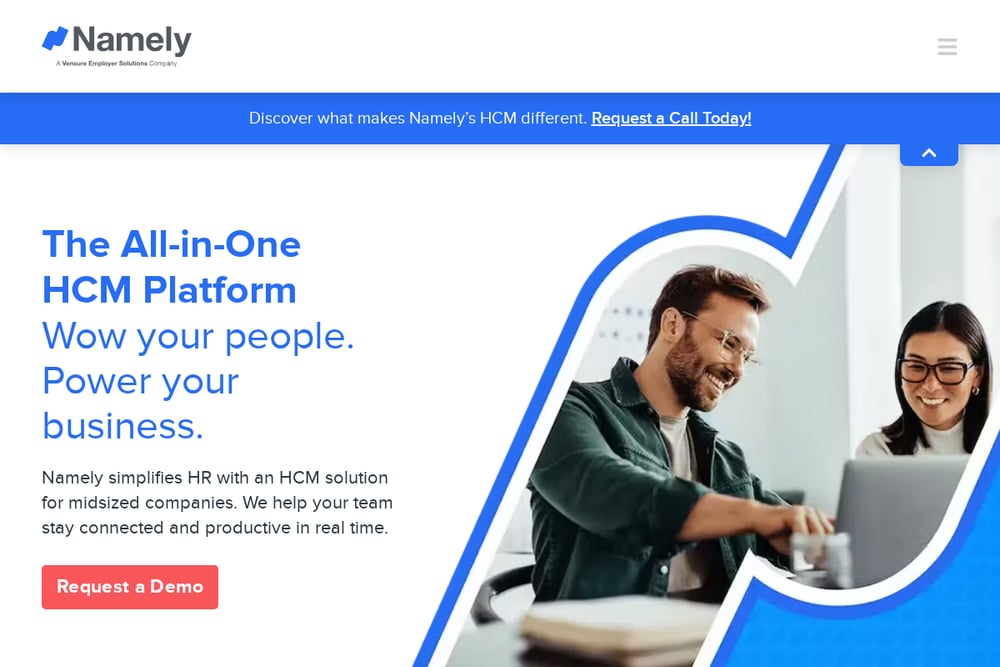 A screenshot of the Namely website.
Namely provides an all-in-one HCM platform for midsized companies, with core HR, payroll, and time tracking. It also offers managed services for HR, payroll, and benefits. Enhanced modules cover benefits administration, applicant tracking, and performance management. It suits growing small businesses that may want optional support services alongside the software.
#6 CharlieHR
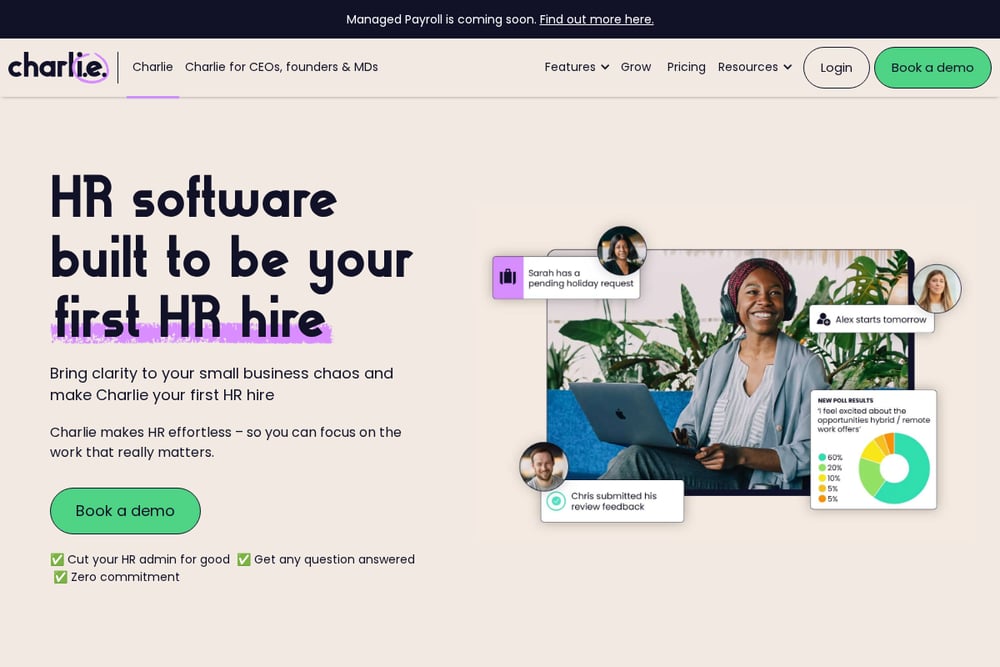 A screenshot of the CharlieHR website.
CharlieHR is HR software built for UK small businesses, designed to act as a first HR hire. It automates onboarding, time off, and document storage, and includes performance reviews and perks. The company also offers add-ons for managed payroll and HR advice. It suits UK startups and small teams that want to reduce HR admin without a dedicated HR person.
#7 Breathe
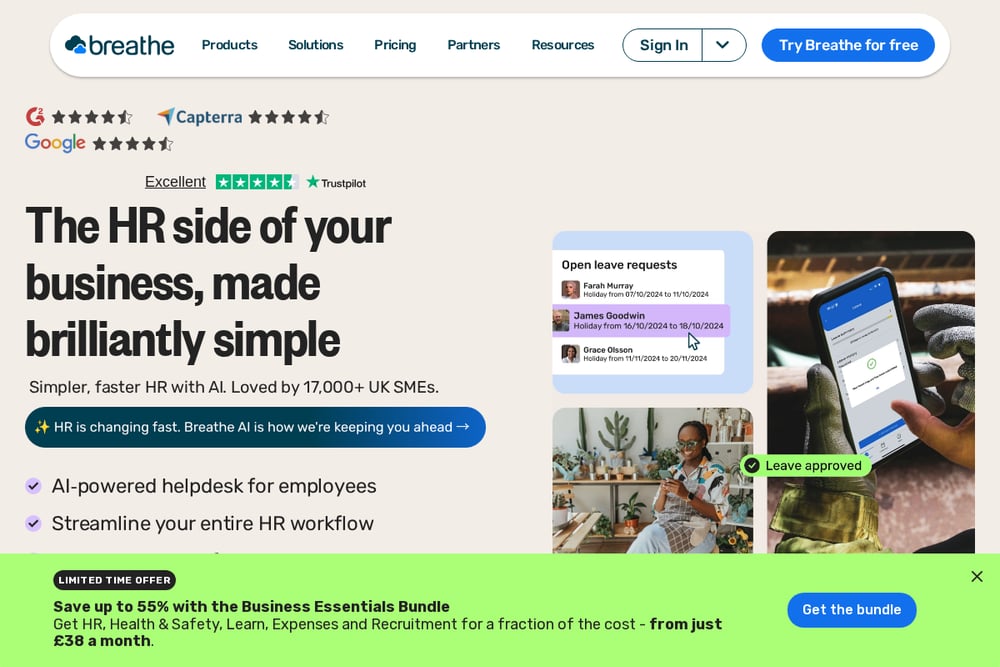 A screenshot of the Breathe website.
Breathe is an all-in-one HR platform for SMEs, with features for leave management, absence tracking, and shift scheduling. It includes an AI-powered helpdesk, e-learning, and document management. The company offers flexible, commitment-free plans and a mobile app. It suits small businesses with up to 250 people that want simple, centralized HR admin.
Which One Should You Choose?
Start by listing the HR tasks that take the most time, such as onboarding, time off, or payroll. Check which tools cover those tasks and whether they integrate with your existing systems. Consider whether you need add-ons like managed payroll or HR advice. Also think about growth: some platforms are built for very small teams, while others scale to larger headcounts. Reading the company's own feature descriptions and pricing pages will help you match the tool to your needs.
Final Thoughts
Each of these HR software options takes a different approach to helping small businesses manage people. Some focus on core HR, others combine HR with IT or finance, and some offer managed services. There is no single best choice; the right fit depends on your team size, the tasks you want to simplify, and whether you prefer a simple tool or a broader platform. Use this list as a starting point for your own research.
Know a company that belongs on this list? Email us at editorial@peekwire.com.