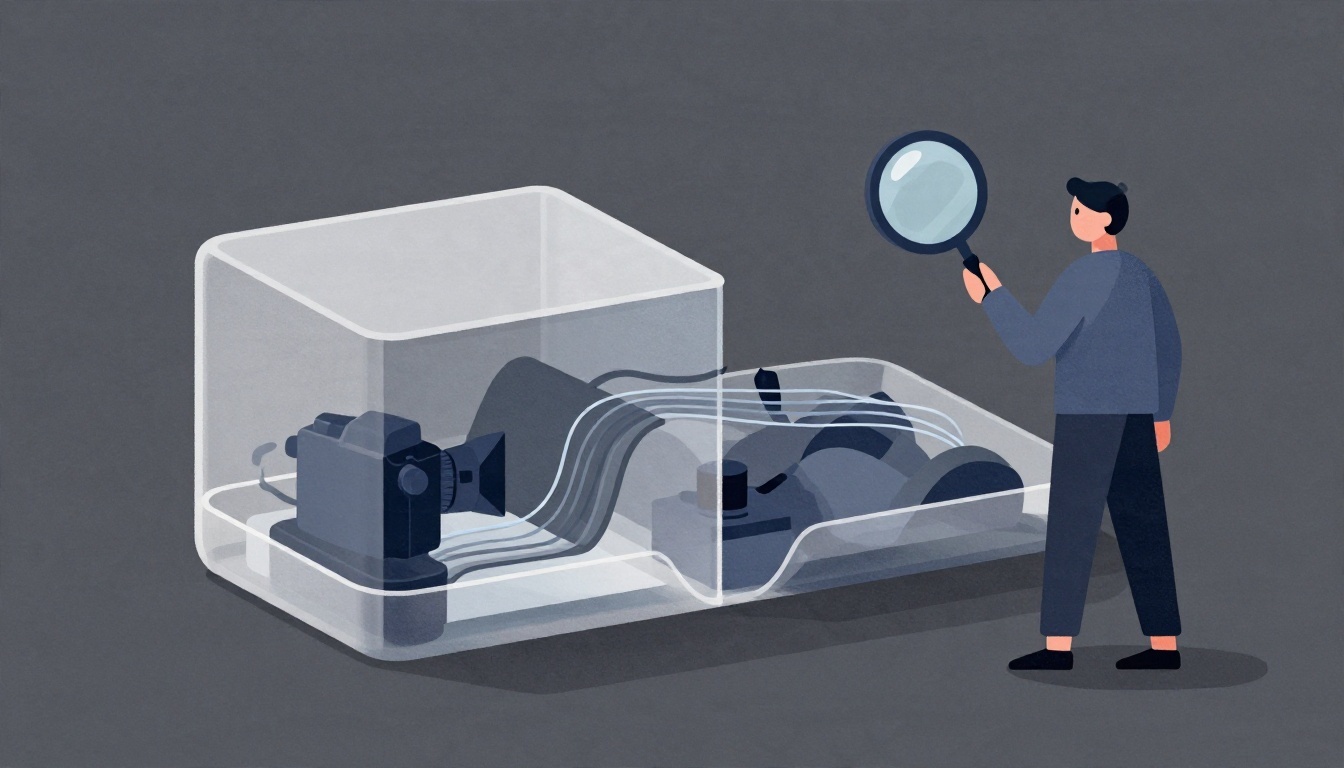
Inside the AI Demo: Cole Seifert on Accuracy, Mechanisms, and the Limits of Filmed Video
AI-generated product demos are often marketed as a faster, cheaper alternative to filmed video. But for Cole Seifert, whose work focuses on AI content that performs, the format is less about cost and more about a specific kind of visual explanation: showing how a product works from the inside. In a written interview, Seifert described a process that depends on engineering accuracy, unglamorous detail, and a clear-eyed view of what filmed video simply cannot capture.
When a product is a poor fit
Seifert's first test for any project is whether he can verify the product's internal mechanics. "When I cannot verify how the product actually works inside," he said, "my format shows the mechanism, so if the internals I am working from are not accurate, the video is fiction."
That standard recently led him to pause a client project entirely. "The cross-section I had did not match the real engineering, so we paused the video entirely until they send the updated version and its exact cross-section," he explained. "I would rather hold a project than ship a demo that shows the product working in a way it does not."
For brands considering an AI demo, the takeaway is direct: the format requires source material that reflects the real product, not an approximation. When that material is missing, the right move may be to wait rather than produce a polished but inaccurate video.
What brands get wrong before the demo can look real
Seifert said the most common misunderstanding is a focus on appearance over function. "They think the demo is about how the product looks," he said. "It is about how it works."
Brands often send polished marketing renders and lifestyle photos, but Seifert needs different inputs. "What I need is the unglamorous stuff: what moves, what heats up, where the water or air actually flows," he said. "A lot of teams have never had to explain their own mechanism that precisely, and the demo cannot look real until they do."
That gap is practical, not philosophical. A team that has never documented its product's internal behavior may need to do that work before any demo, AI or otherwise, can be credible. For readers evaluating AI product demo services, the lesson is to prepare mechanism-level detail early.
The AI-versus-filmed decision
When brands weigh an AI demo against a filmed one, Seifert said they often frame it as a budget question. "They treat it as a price decision," he said. "The real question is what the video needs to show."
His example is a sealed product in operation. "A filmed demo can never show the inside of a sealed product while it is running," he said. "If that is the shot that sells the product, it is not AI versus film, it is possible versus impossible."
Seifert also pushed back on judging the format by its weakest examples. "Brands also judge AI by the worst examples they have seen instead of by results," he said. "My channel did over 2M views in the last 30 days with this format, which is the comparison that matters."
Practical takeaways
For brands planning a product demo, Seifert's answers point to a few concrete steps. First, confirm that the internal mechanics can be verified before production begins. Second, gather the operational details, not just the marketing assets: what moves, what heats up, where flow occurs. Third, define the shot that actually sells the product before comparing formats on price. And fourth, evaluate AI demos by outcomes rather than by the worst examples circulating online.
More of Seifert's work is available at coleseifert.com. For broader context on AI video production, see Synthesia and HeyGen, both of which appear alongside Seifert in Peekwire's list of AI product demo video services.