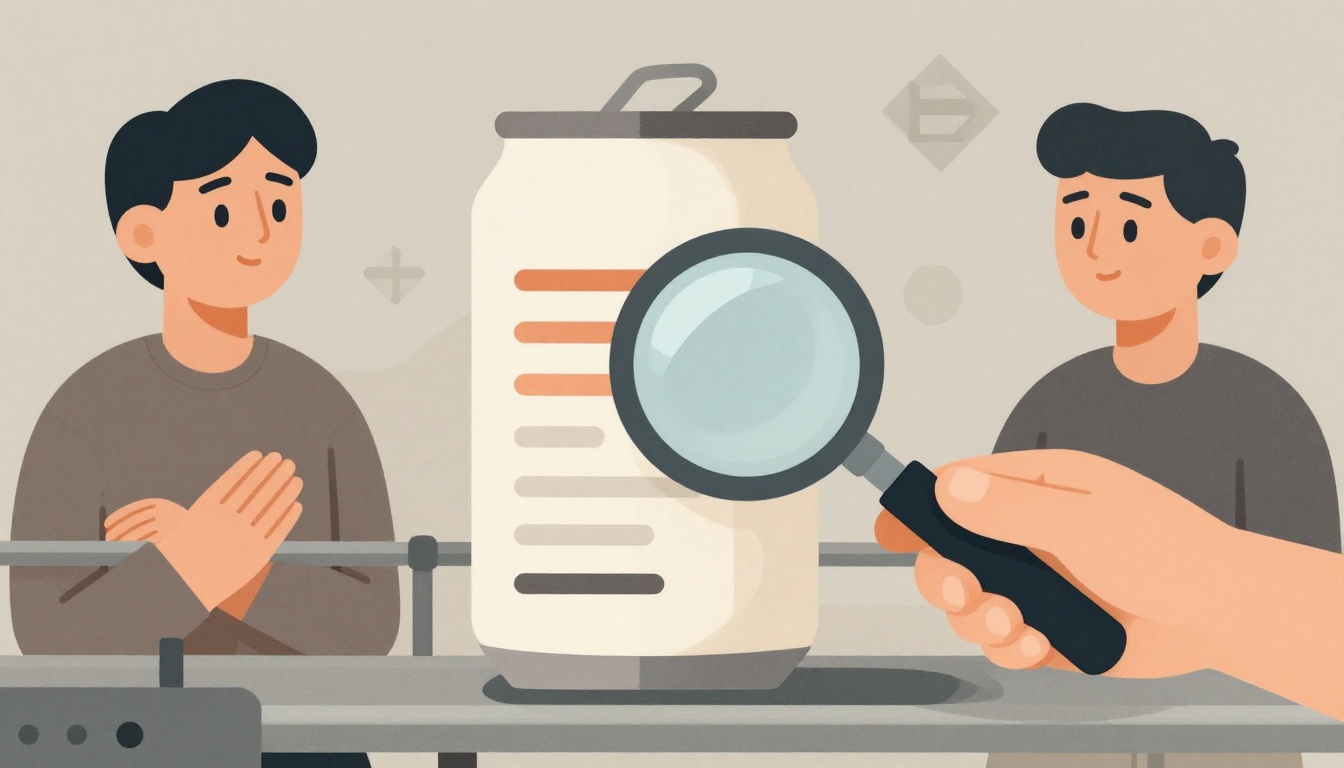
When you're launching an emerging beverage brand, the first production run feels like the finish line. In reality, it's the starting line—and how you approach it can determine whether you scale or stall. The biggest mistake most brands make? Treating the first run as a manufacturing exercise when it's really a learning exercise. Here's what that means in practice, and how to avoid the common pitfalls.
Order Less Than You Think You Need
Minimum order quantities (MOQs) are seductive. They promise a lower per-unit cost, but they also push you into 6 to 12 months of inventory before you have any velocity data. If the product needs a tweak—and it likely will—that's your entire budget sitting in a warehouse aging out. Instead, negotiate the smallest run your co-packer will allow, even if the unit cost is higher. You're paying for data, not just product.
Your Kitchen Recipe Won't Survive the Plant
A kettle-and-bottle pilot batch behaves nothing like HTST or tunnel pasteurization at 300 cans per minute. Heat load, shear, dissolved oxygen, and hold times all move flavor and color. The beverage that tasted perfect in your kitchen may come out of the plant tasting metallic or flat. Plan for a formulation adjustment after the first run—and build that into your timeline and budget.
Get Your Process Authority Letter Before You Schedule
For anything acidified or low-acid, a process authority letter is non-negotiable. It gates your FDA filing, and without it, you can't legally produce. Many brands discover this after they've booked a production slot, causing costly delays. Secure your process authority early—it's a compliance step, not a paperwork formality.
Understand the Overrun/Underrun Clause
Most co-packers deliver ±10% of your order and bill you for actuals. If you budget for exactly what you ordered, you'll be surprised when the invoice arrives. Assume you'll get 90% or 110% of your target, and plan your cash flow and inventory expectations accordingly.
Your COGS Is More Than Ingredients and Cans
Too many brands calculate cost of goods sold (COGS) as just ingredients plus packaging. But tolling fees, changeover costs, freight in and out, pallet minimums, warehousing, shrink, and QA holds typically add 20 to 40% to your true landed cost. Build a full cost model before you sign anything, or your margins will vanish.
Don't Sell Before You Have Shelf-Life Data
Retailers want a date code and a substantiated shelf life. Real-time data takes real time—you can't accelerate it. If you start selling before you have that data, you risk a recall or a failed retail audit. Start your shelf-life study as early as possible, even if it means delaying your launch.
Set Up Lot Traceability and Retention Samples
The first time you have a complaint, you need to be able to isolate to a pallet, not a run. Weak lot traceability and no retention samples are a recipe for disaster. Work with your co-packer to ensure every pallet is coded and that you retain samples from each run for your own records.
The Bottom Line
Your first production run is not about getting product to market—it's about learning how your product behaves at scale, what your true costs are, and where your process breaks. Treat it as an experiment, not a launch. That mindset will save you money, time, and a lot of headaches.
For more insights on launching and scaling an emerging beverage brand, visit Good Liquid Bev Co. And remember: The big one is treating the first run as a manufacturing exercise when it's really a learning exercise.