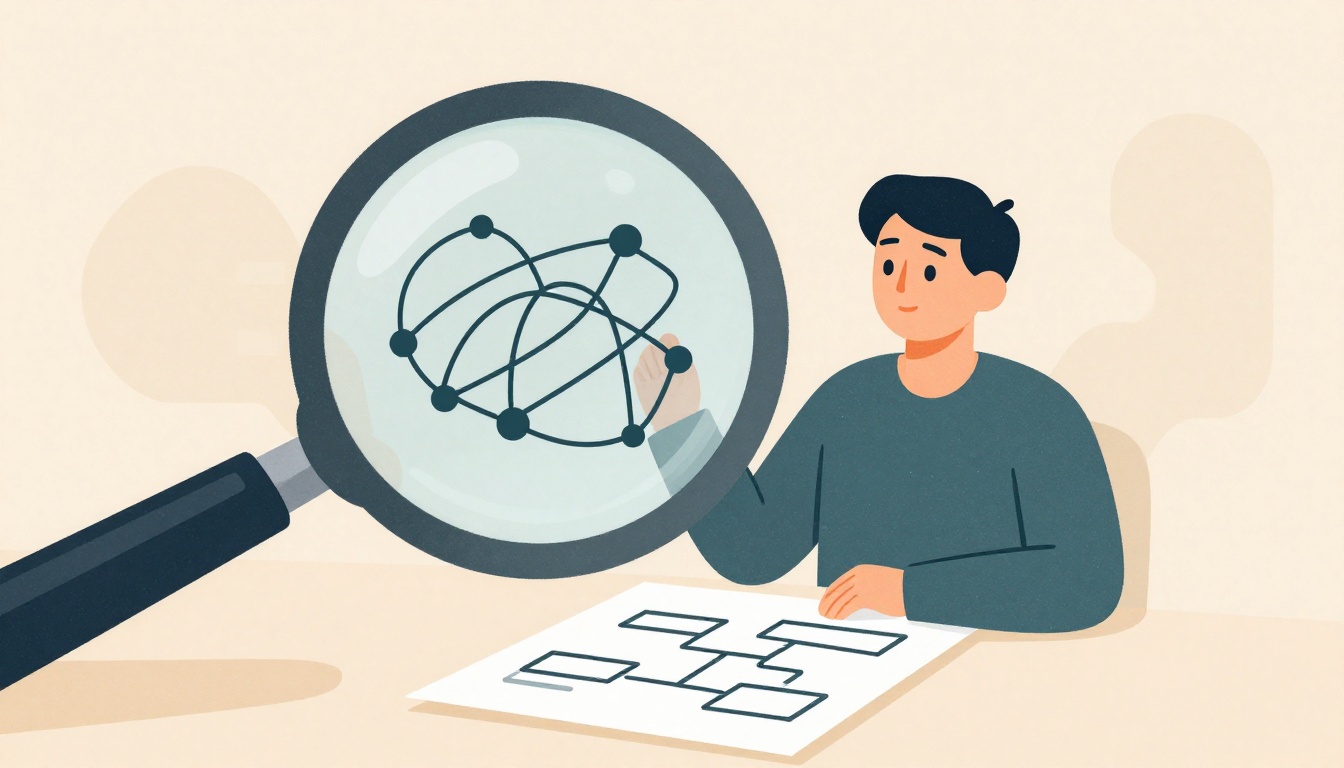
When a small business decides it's time to automate, the instinct is usually to find the most annoying task and make it disappear. That might be data entry, invoice follow-ups, or report generation. But according to Lee Pettijohn, owner of Forward Solutions, a firm that builds websites, Airtable systems, and automations for small businesses, this approach is exactly what goes wrong.
"They try to automate. That sounds like a joke, but I mean it."
The problem isn't automation itself. It's automating the wrong thing at the wrong time. Pettijohn explains that if you know exactly what needs to happen—every step, every handoff, every decision—automation isn't hard. The difficulty arises when business owners try to automate a single cog in a larger system they haven't fully mapped out.
"They automate the annoying step first, and then find out later that the annoying step was annoying for a reason: it was compensating for a broken step upstream, or it was the only thing keeping a data problem from becoming a bigger data problem."
Consider a common scenario: a business automates its lead capture form to send an email alert. But the sales team still manually copies that lead into a spreadsheet because the CRM isn't integrated. The automation didn't remove the bottleneck; it just made the bottleneck faster. Worse, if the upstream process is broken—say, leads are duplicated or missing fields—automation amplifies the mess.
Pettijohn's advice is counterintuitive but practical: don't start with the tool. Start with the process.
"Before your first automation, get honest about what your whole process actually looks like. Not what you think it looks like—what it actually looks like when you follow one job from start to finish. Then automate."
That means physically tracing a job through your business. Pick a recent order, a recent client project, or a recent support ticket. Write down every touchpoint: who touches it, what system it lives in, what decisions are made, and where the handoffs happen. You'll likely discover steps you forgot existed, workarounds that have become standard, and data that's being re-entered multiple times.
Only after you have that map should you consider automation. And even then, Pettijohn offers a simple test: "If you can't draw the process on a napkin, you're not ready to automate it."
This napkin test is more than a metaphor. It forces you to simplify. If you can't explain the process in a few boxes and arrows, you probably don't understand it well enough to automate it. And if you do automate a process you don't fully understand, you're just baking inefficiency into code.
For small businesses, the stakes are high. Unlike large enterprises with dedicated operations teams, small teams can't afford to untangle a messy automation later. A botched automation can waste weeks of time, erode customer trust, and make employees resentful of new tools.
So what does the right approach look like? Start by documenting the current state. Use a whiteboard, a piece of paper, or a simple flowchart tool. Involve the people who actually do the work—they know where the friction really is. Then look for the biggest pain point that sits at the end of a stable process. Automate that first. Once that works, move upstream.
Pettijohn's point is that automation is not a shortcut around understanding your business. It's a reward for understanding it. The businesses that succeed are the ones that slow down before they speed up.
If you're considering your first automation, resist the urge to buy a tool or hire a consultant right away. Instead, spend an afternoon tracing one job from start to finish. Draw it on a napkin. Then decide what to automate. You'll save yourself a lot of headaches—and probably a lot of money too.
For more guidance on building practical systems for your small business, visit Forward Solutions.