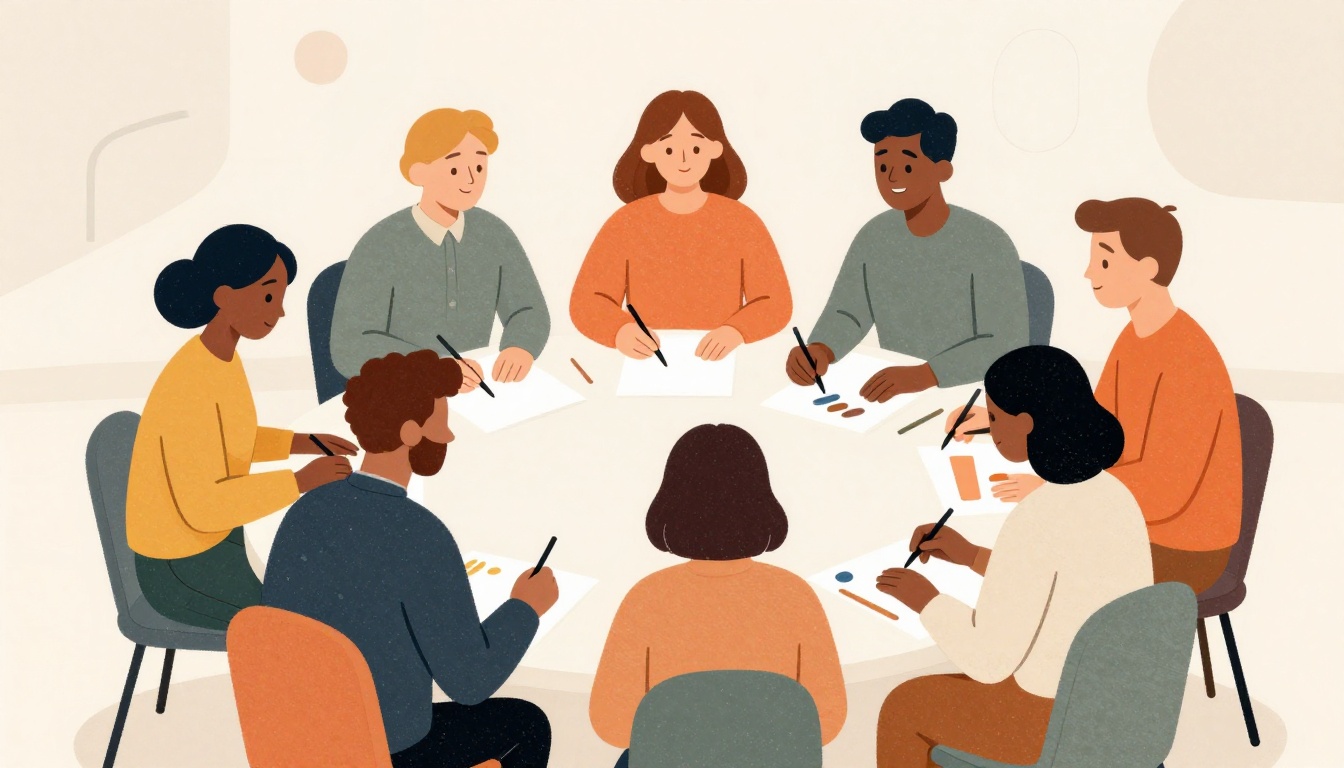
Many people hesitate to sign up for a creative workshop because they assume it’s only for those with natural talent or years of training. But according to Claudia, founder of The Studio Within, this is a common misunderstanding. In a recent interview, she explained: “People can have a misconception that they need to be a “skilled artist” or have advanced artistic abilities to benefit from a creative workshop.” In reality, the value of these sessions lies far beyond technical skill.
Creative workshops are not about producing gallery-worthy work. They are about process, not product. When you walk into a room with paper, paint, or clay, you are not being graded on your output. Instead, you are invited to slow down, notice sensations, and let your hands lead. This shift in focus—from outcome to experience—is what makes workshops accessible to anyone, regardless of background.
Claudia emphasizes that “Anyone and everyone can benefit as workshops are designed to be welcoming of all abilities.” This inclusive approach is backed by research on expressive arts therapy, which shows that creative engagement can reduce stress, improve mood, and increase self-awareness—even in people who have never picked up a brush. The act of creating activates different neural pathways than verbal thinking, allowing emotions to surface that might otherwise stay hidden.
What, then, is the real prerequisite? According to Claudia, “All you need is a willingness to participate, allowing yourself to explore, play, and engage in the creative process.” That’s it. No portfolio, no prior classes, no “good taste.” Just curiosity and a bit of courage.
This is good news for those who have felt excluded from creative spaces. Many adults carry a belief that they are “not creative” because of a childhood comment or a failed school project. But creativity is not a fixed trait—it’s a muscle that can be exercised. Workshops provide a low-stakes environment to rebuild that muscle, with guidance and structure that make it easy to start.
For example, a workshop might begin with a simple warm-up like scribbling to music or mixing colors without a goal. These activities are designed to bypass the inner critic and get you into a flow state. As you become more comfortable, you might move on to more open-ended prompts, but the emphasis remains on exploration, not execution.
This approach has profound implications for mental health. In a world that often values productivity and perfection, creative workshops offer a rare space for play. Play is not just for children—it is a fundamental human need that supports emotional regulation and problem-solving. By engaging in creative play, adults can access a sense of freedom and joy that is often lost in daily routines.
Moreover, workshops are social experiences. Sharing a creative space with others—even strangers—can foster a sense of connection and belonging. You see that everyone else is also fumbling, experimenting, and making “mistakes.” This normalizes the messiness of the creative process and reminds us that we are not alone in our uncertainties.
If you are still unsure whether a workshop is for you, consider starting with a short, low-commitment session. Many facilitators, including Claudia at The Studio Within, offer introductory sessions that are explicitly designed for beginners. Claudia partners with local spaces, such as Slate Blue Studios, to host her workshops. You can also look for workshops that focus on themes like mindfulness or self-care, which tend to emphasize process over product.
Ultimately, the only thing you need to bring is yourself. As Claudia puts it, the willingness to participate is the key. So if you have ever felt a pull toward creativity but held back because you thought you weren’t “good enough,” let this be your sign: you are exactly who these workshops are for.
In a culture that often equates creativity with professional artistry, it’s refreshing to remember that creativity is a birthright. It is a way of engaging with the world, not a skill to be mastered. Creative workshops are a doorway back to that innate capacity—and they are open to everyone.