When the Standard Playbook Doesn't Fit
Most advice about capturing a parent's life story assumes a familiar scene: an adult child sitting across from a parent, recorder running, a list of questions in hand. Grant Harris, founder of Legacy Loop, says that picture breaks down more often than people expect.
He points to four situations where the usual approach simply doesn't work. First, "Parents who aren't talkers or feel put on the spot can freeze up when handed a list of questions or a recorder." Second, geography: "For families spread across the country, sitting down together with a recorder isn't realistic, yet standard advice assumes everyone is in the same room." Third, technology: "Parents who are uncomfortable with technology may disengage as soon as an app or device is mentioned." And fourth, timing: "For families facing a parent's declining health, planning a big, formal recording session doesn't work when time is limited."
Each of these cases shares a common thread. The obstacle isn't a shortage of questions. It's the format itself.
What Search Results Leave Out
Harris says the gap between what families need and what they find online comes down to a few recurring omissions.
The first is comfort. "The challenge isn't finding questions; it's helping the person talk comfortably over time," he says. "Most advice simply provides a list of questions and stops there." A list is a starting point, not a method.
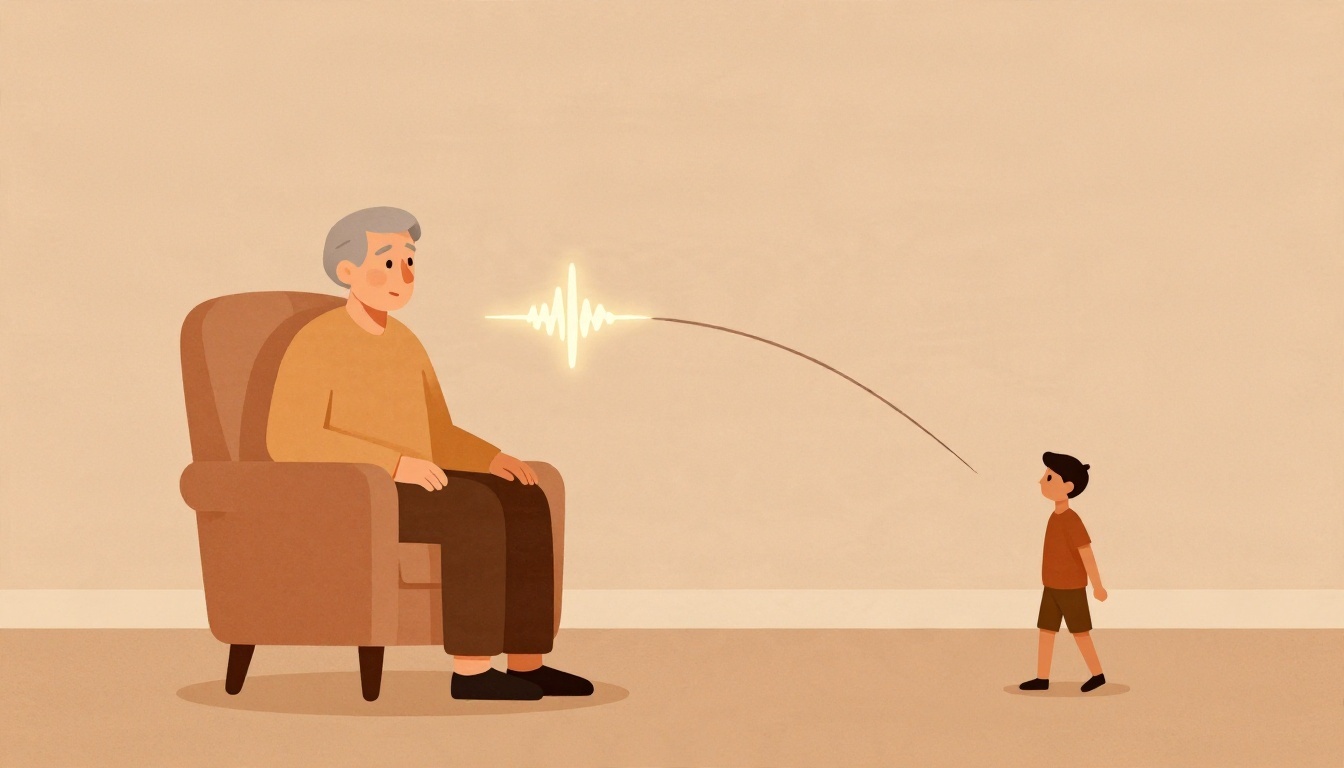
The second is audio. "People want the person's voice, not just their written words," Harris notes. "Online advice often focuses on written stories, missing the fact that a parent's voice is what families miss most." That distinction matters for anyone weighing a written keepsake against a recorded one, and it's worth reading up on why voice recordings carry emotional weight that transcripts can't replicate.
The third is framing. "Families often view this as a heavy, formal project and put it off," he says. "It is far more effective to frame it as answering one small question at a time."
The fourth is who the advice is actually for. "Advice is usually tailored to the organized adult child, ignoring whether the parent will actually find the process manageable." That's a quiet but significant blind spot: the person doing the recording isn't the person who has to participate.
The Missteps Families Make
Asked what families decide too quickly or in the wrong order, Harris lists four patterns.
- Waiting for the perfect moment. "Waiting for a holiday, visit, or free weekend often means it never happens."
- Attempting marathon sessions. "Trying to capture everything at once is exhausting and rarely repeated. A gradual approach works much better."
- Overlooking voice recording. "Focusing solely on writing stories down means losing the unique sound of the person's voice."
- Prioritizing tech over connection. "Families often focus on the tool or format first, when the priority should simply be encouraging regular, low-pressure conversations."
Read together, these missteps point in one direction: sequence. Families tend to pick a tool, block out a session, and hope the conversation follows. Harris's account suggests the reverse works better — start with small, recurring conversations, then decide what to do with them.
A Different Starting Point
For anyone beginning this process, the practical takeaways are modest but specific. Don't wait for a family gathering. Don't plan a single long session. Don't assume the parent will be comfortable with an app. And don't treat the written word as the default output when the voice is what's actually at stake.
Harris's framing also suggests a useful test before committing to any approach: ask whether the parent will find it manageable, not just whether the adult child finds it organized. If the answer is no, the format is the problem — not the parent.
For families navigating distance, health timelines, or a parent who simply doesn't like being interviewed, that reframing may be the most useful thing to carry into the first conversation. Legacy Loop's approach, as Harris describes it, centers on comfort and consistency rather than a single formal recording event.
Those interested in the service can find more at getlegacyloop.com.