When should a child start composing music? For many parents and teachers, the answer feels obvious: after they’ve learned to play an instrument, read notation, and understand basic theory. But according to Gradus, a homeschool music composition curriculum, this assumption gets things exactly backwards.
The first mistake is thinking that there is a time when kids are not ready to start composing. This belief is so widespread that it shapes most music education. Students spend years drilling scales, exercises, and repertoire before they are ever invited to write their own notes. The logic seems sound: you can’t write a sentence before you know the alphabet. But music isn’t a language in that rigid sense. Children make up songs before they can speak clearly. They hum, bang, and improvise without any instruction. The urge to create is already there.
Gradus points out that the academic and performance based pedagogies we have developed are so far from how the great composers themselves were taught. Mozart, Beethoven, and countless others learned by copying, improvising, and experimenting under mentors who treated composition as a core activity, not a reward for years of technical work. Modern pedagogy, with its focus on exams and recitals, has drifted far from that model. It treats creativity as a luxury that must be earned, not a natural mode of learning.
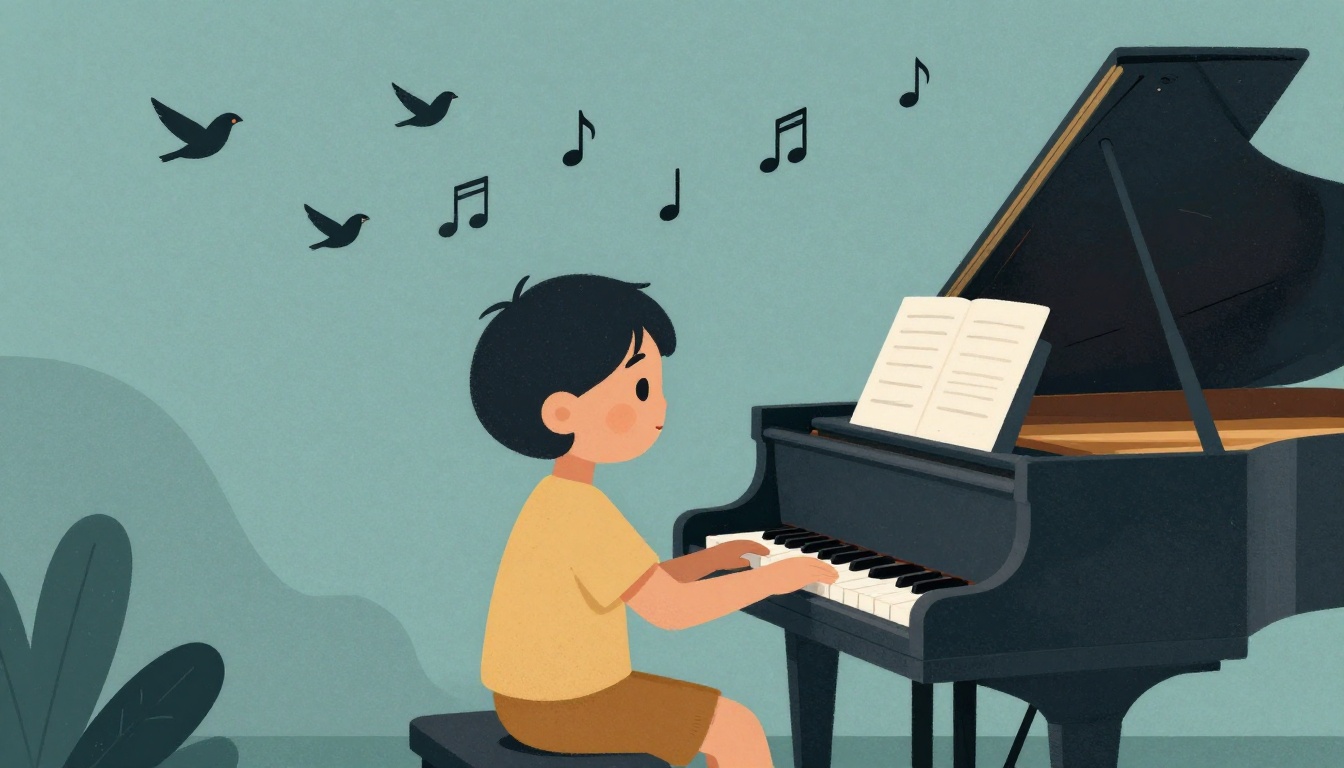
To create and explore is natural for a child. Anyone who has watched a toddler bang on a piano or invent a rhythm on a pot knows this. Yet we quickly train that instinct out of them. We tell them to sit still, play the right notes, and wait until they are “ready” to make their own music. The result is that many children lose interest entirely. They see music as a set of chores, not a means of expression.
We think they need to gain a high level of proficiency before they should be allowed to be creative. This is the core misconception. Proficiency and creativity are not sequential; they are intertwined. When a child composes, they have a reason to learn. They want to write down the melody in their head, so they learn notation. They want a chord to sound a certain way, so they learn harmony. They want their piece to be faster, so they practice. The motivation comes from the creative goal, not from abstract exercises.
Not only does that stunt their creative growth, it also makes learning an instrument and theory much more difficult, because it is disembodied from what motivates them in the first place. This is a crucial insight. When theory is taught as a set of rules with no connection to the child’s own musical ideas, it feels arbitrary and boring. But when a child is composing, theory becomes a toolbox. They ask, “How do I make this sound sad?” or “What notes go with this?” and suddenly the answers matter. The same is true for instrument practice. A child who wants to play their own piece will happily repeat a passage until it sounds right. The practice is no longer a chore; it is a means to an end they care about.
Kids don't want to practice, they want to create and they will practice - if it serves a purpose they can understand. This is the heart of the matter. Children are not lazy or undisciplined. They are simply unmotivated by tasks that seem pointless. When practice is tied to a creative project, they become self-directed. They practice because they want to hear their idea come to life, not because a teacher told them to.
So what does this mean for parents and educators? It means we should flip the sequence. Let children compose from day one, even if their pieces are simple or unconventional. Let them use their voices, their instruments, or even a digital tool. The goal is not to produce a polished work but to keep the creative spark alive. As they compose, they will naturally encounter the need for theory and technique. That is the moment to teach it, and they will absorb it far more readily.
Gradus offers a structured approach to this, designed for homeschoolers who want to make composition a central part of music education. Their curriculum guides children through the process of creating original music, building skills along the way. It’s a model that respects the child’s natural creativity while still providing the scaffolding needed to grow. For more information, visit Gradus Music.
If you’re a parent or teacher, consider this: the next time a child bangs on a piano, don’t correct them. Ask them what they’re playing. Encourage them to make up a song. You might be surprised at how ready they are. The only thing standing between a child and composition is our belief that they aren’t ready. And that belief is the one thing we can change today.