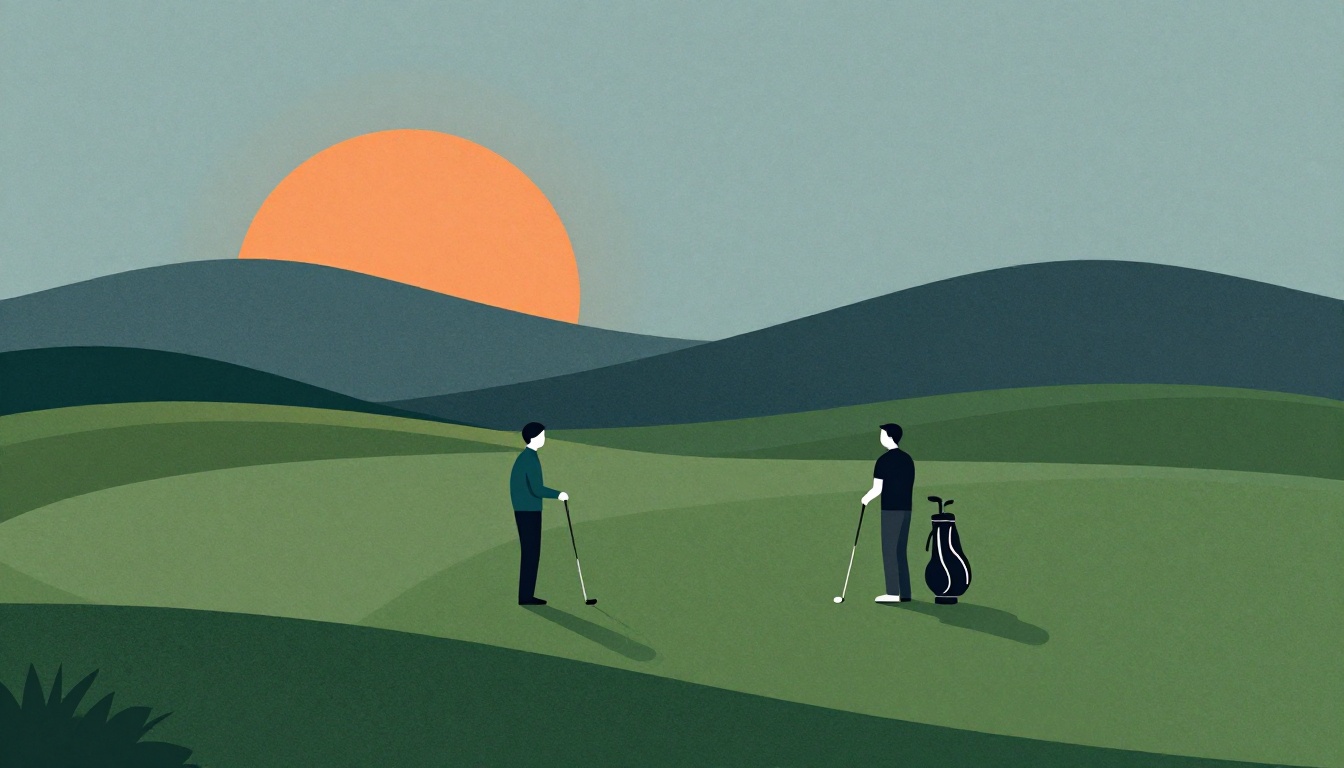
For independent financial advisors, networking often feels like a numbers game: collect as many business cards as possible, follow up once, and hope something sticks. But according to Mark "MJ" Josefczyk, the founder of Golf Outing Guy, this approach misses the entire point. His RIA golf outings reveal a different truth about peer relationships: they are built on repeated, unhurried time together, not transactional exchanges.
Most independent advisors get networking wrong because they treat it as a one-off event. They show up, shake hands, and move on. But as Josefczyk observes, the advisors who thrive are the ones who understand that trust compounds. He notes, "They keep coming back yr after yr & several tell me how much they enjoy the 8 hr event & cant wait til the next one." That eight-hour window—not a thirty-minute coffee chat—is where real connection happens.
The golf outing format is uniquely suited to this. A round of golf forces you to slow down. You spend hours walking, talking, and sharing the occasional frustration of a missed putt. There is no PowerPoint, no elevator pitch, no clock watching. The structure of the day naturally strips away the professional armor that advisors often wear at conferences or cocktail hours. By the back nine, conversations shift from assets under management to family, hobbies, and genuine concerns.
What Josefczyk has built with Golf Outing Guy is not just a networking event; it is a recurring ritual. Advisors return year after year, not because they need more referrals, but because they have found a community. This is a critical lesson for independent advisors who are stuck in a cycle of superficial networking. The goal is not to meet more people; it is to know fewer people better.
For those looking to improve their own peer relationships, the takeaway is simple: prioritize depth over breadth. Instead of attending every industry mixer, commit to one or two events where you can spend extended, unstructured time with the same group of people. Follow up not with a generic LinkedIn request, but with a specific memory from your conversation. And most importantly, be patient. As the Golf Outing Guy model shows, the payoff comes not from the first outing, but from the fifth.
Independent advisors also often overlook the value of shared experiences outside the office. When you see a peer shank a drive into the woods or celebrate a birdie, you see their humanity. That vulnerability builds a foundation of trust that no business lunch can replicate. It is why the advisors in Josefczyk's outings keep coming back—they are not just building a network; they are building a peer group that has their back.
Of course, not every advisor has access to a private golf club or the time for an eight-hour event. But the principle applies universally: create recurring, low-pressure opportunities to connect with peers. Whether it is a monthly hiking group, a quarterly dinner club, or a professional mastermind, the key is consistency and genuine engagement. The CFP Board and other professional bodies often emphasize the importance of peer support, but the mechanics of how to build it are rarely taught.
Josefczyk's approach also highlights a subtle but crucial point: networking is not about what you can get, but what you can give. The advisors who enjoy the outing most are likely the ones who are generous with their time and advice on the course. They are not calculating who is the biggest prospect; they are simply being good company. That authenticity is what makes the difference.
In a profession that can feel isolating, especially for independents who do not have a large firm's infrastructure, these peer relationships are a lifeline. They provide sounding boards, accountability partners, and sometimes just a good laugh. The advisors who understand this are the ones who will not only survive but thrive.
So, the next time you are tempted to skip that industry event or treat a peer meeting as a chore, remember the Golf Outing Guy's lesson. The best networking is not networking at all—it is showing up, year after year, and enjoying the game. As Josefczyk's returning advisors prove, the relationships that matter are the ones that last.