When the Standard Playbook Isn't Enough
Collaborative Care (CoCM) has a well-documented structure: a registry, a care manager, measurement-based care, psychiatric review, and regular case discussion. Yet programs that follow that structure correctly still run into trouble. Carmela Zaragoza, who works on CoCM program assessments through Intuitive Knowledge Nursing Solutions, has seen this pattern repeatedly.
She said "I've seen programs follow the basic CoCM structure correctly; they have a registry, a care manager, measurement-based care, psychiatric review, and regular case discussion, but still run into trouble once the panel gets larger or more clinically complex."
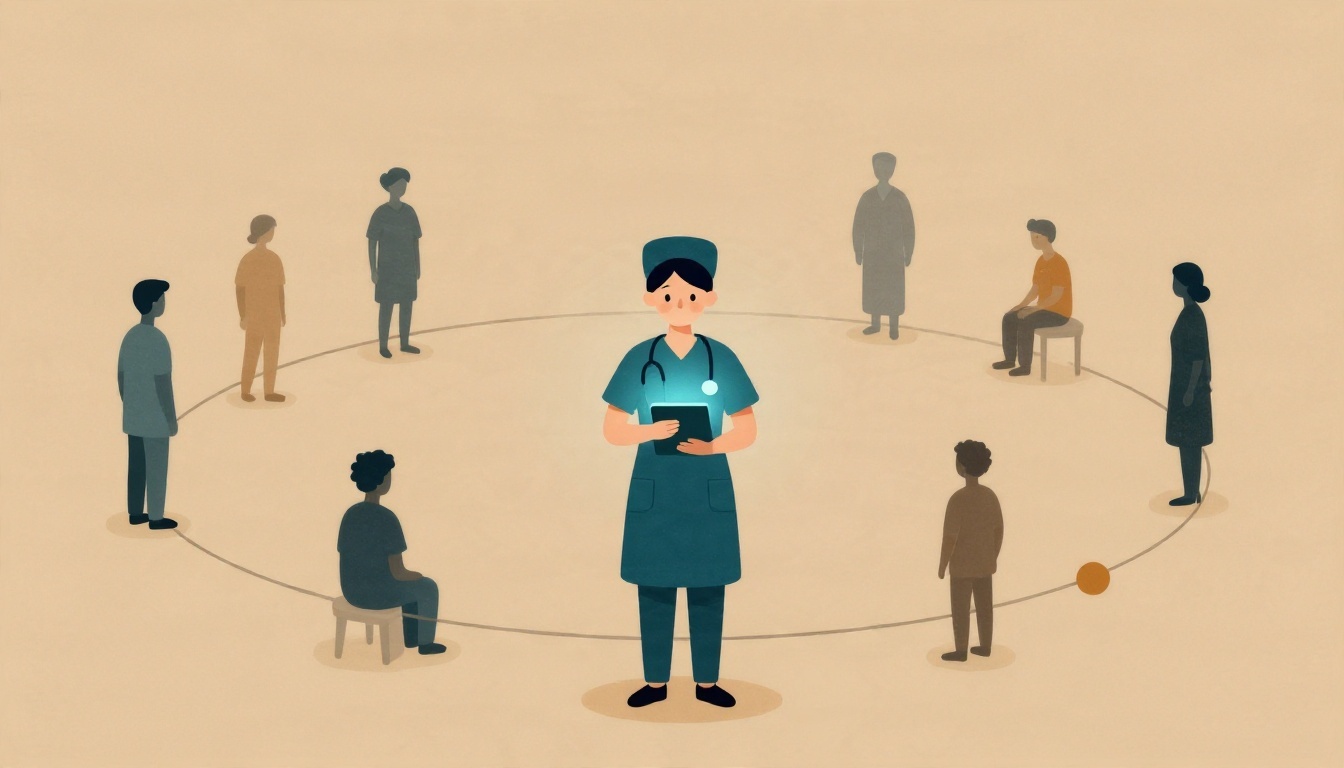
The registry itself, she notes, is rarely the problem. The difficulty lies in what surrounds it. High-acuity patients, incomplete medication lists, substance use, repeated outreach attempts, safety escalations, and coordination with outside psychiatry can turn an apparently straightforward caseload into something far heavier operationally.
As she put it, "A registry can tell you who is on the panel and what their PHQ-9 is. It does not automatically tell you how much work that patient is creating for the team."
That distinction matters for any practice trying to plan staffing around registry numbers alone. The AIMS Center provides foundational CoCM implementation guidance, but translating that framework into realistic day-to-day capacity requires looking beyond panel counts.
What Program Assessments Keep Finding
When Zaragoza conducts CoCM program assessments, the most consistent gap she encounters is capacity planning.
She said "A lot of guidance explains what roles should exist and what should happen clinically, but it says much less about how much time the work actually takes once the program is running."
The tasks that get underestimated, according to Zaragoza, include chart review, medication reconciliation, failed outreach, documentation, consultant amendments, high-acuity case review, PCP communication, resource navigation, safety planning, and transitions to higher levels of care.
She also points to the scale of need in underserved regions. "We support clinics serving communities ranging from the Appalachians to remote Utah to the Everglades, where access to specialty psychiatry can be extremely limited," she said. "In those settings, demand can grow quickly because CoCM is often filling a gap that has existed for years. That means capacity planning is not an edge case, it should be expected from the beginning."
Beyond capacity, escalation pathways are frequently left too vague. Teams often know they should escalate a patient, but have not clearly defined who owns the next action, when CoCM is no longer the appropriate level of care, or how the handoff should occur. The Substance Abuse and Mental Health Services Administration offers broader context on integrated care models, but the operational specifics of escalation ownership often need to be built locally.
The Decisions Made Too Quickly
Asked what practices tend to decide prematurely when setting up Collaborative Care, Zaragoza pointed to staffing and capacity.
She said "Practices will decide how many patients a care manager or psychiatric consultant should cover before looking closely at the actual population, referral patterns, acuity, existing workflows, and how much coordination their patients require."
That becomes especially consequential in underserved areas. "If a clinic is one of the few accessible behavioral-health touchpoints in a region, demand may scale much faster than expected," she said. "In my experience, that is not a sign the program is failing; it is often evidence that the need was much larger than anyone initially realized."
Her recommended approach is to understand the workflow first: who is doing the outreach, who reconciles medications, who follows up on escalations, who communicates with outside psychiatry, how frequently the registry is reviewed, and what happens when a patient needs more than CoCM can provide.
Once those pieces are clear, she said, staffing and caseload expectations become much more realistic.
Practical Takeaways
For practices building or reassessing a CoCM program, several themes emerge from Zaragoza's assessment work:
- Registry numbers are not workload numbers. A panel count and PHQ-9 scores do not capture the operational weight of high-acuity patients, failed outreach, or coordination demands.
- Budget time for the invisible tasks. Medication reconciliation, documentation, consultant amendments, safety planning, and PCP communication are recurring time costs that are easy to overlook during planning.
- Define escalation ownership explicitly. Knowing that a patient should be escalated is not the same as knowing who acts next, when CoCM stops being the right level of care, and how the handoff happens.
- Map the workflow before setting caseload targets. Understanding who does what, how often the registry is reviewed, and what happens when a patient needs more than CoCM can provide should come before staffing ratios are fixed.
- Expect demand to grow in underserved areas. When a clinic is one of few behavioral-health access points in a region, rapid growth may reflect unmet need rather than program failure.
Zaragoza's broader view is that CoCM remains underutilized, not only in community mental health but as a tool for improving equitable access to mental health care more broadly. For practices already running the model, her assessment work suggests the difference between a program that holds up and one that strains under its own caseload often comes down to whether capacity and workflow were examined honestly from the start.