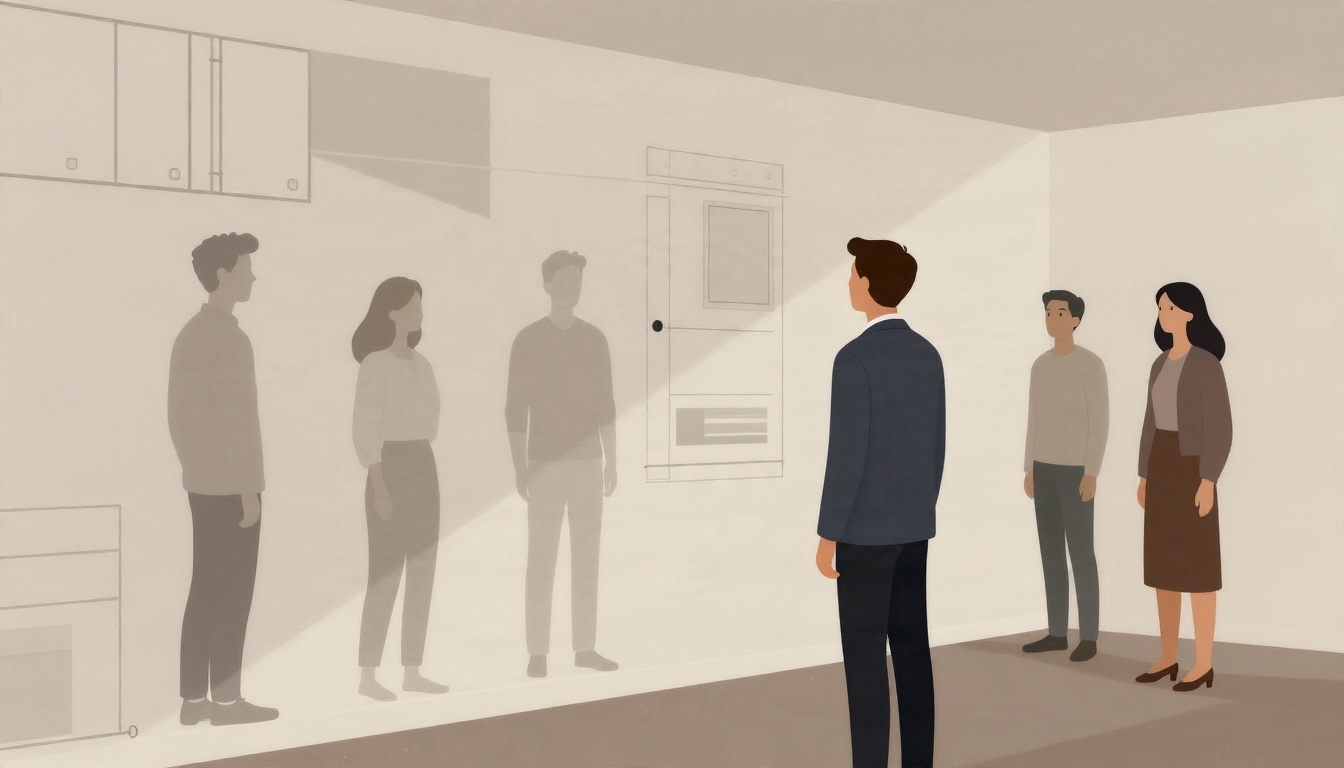
The Cost of Designing Around Decisions Already Paid For
When a client arrives after being told they do not need an architect, the project is often already in motion. Mobarak Elkerdasy, founder of TASHAKKUL Architecture + Design, has seen this pattern repeatedly in architectural design, site supervision, and interior fit-outs, particularly in Kuwait.
By the time he is called in, "partitions may already be built, electrical points installed, ceiling levels established and materials ordered." What looks like a minor change—repositioning a wardrobe, for example—can ripple through electrical outlets, lighting, circulation, and the dimensions of surrounding furniture. "What initially appears to be a small adjustment can become a coordination problem involving several different trades," he says.
The frustration is that many of these issues could have been resolved through a conversation and a drawing before construction began. Once on site, "you're no longer designing with complete freedom. You're designing around decisions that someone has already paid for."
What the Usual Advice Leaves Out
In first conversations, Elkerdasy finds that budget and the gap between what clients ask for and what they actually need are rarely addressed by standard advice about hiring an architect.
A client might show a photograph of an interior they love, but "that photograph doesn't tell us how it was built, what materials were used, how much maintenance it requires or whether it can realistically be achieved within their budget." Sometimes clients arrive with a solution already in mind when the underlying problem could be solved differently and more affordably.
Working with technical drawings, material quantities, and construction pricing has taught him to connect design decisions with their financial and practical consequences. "I believe part of an architect's responsibility is to challenge the client's ideas when necessary, not simply agree with them," he says. "Sometimes the right decision is to simplify a design, change a material or spend less money in one area so that another area can work better."
His summary is direct: "Good architecture isn't always about adding something. Sometimes it's about knowing what to leave out."
The Timing Mistake
Many people wait until they know exactly what they want before approaching an architect. Elkerdasy thinks that is often the wrong way around. "Understanding what you want, what you actually need and what you can afford is part of the architectural process," he says.
Ideally, that conversation should happen before committing to a layout, signing a construction contract, or purchasing significant quantities of materials. For some projects, it can even start before buying a property. Early involvement also gives clients a chance to evaluate different options and understand the implications of a contractor's recommendations before committing money.
That does not necessarily mean commissioning a complete architectural design from day one. "An initial consultation can be enough to identify constraints, avoid unrealistic expectations and establish a clearer direction," he notes.
His closing line captures the practical stakes: "A drawing is relatively inexpensive to change. A finished wall isn't."
Practical Takeaways
- Bring an architect in before finalizing layouts, signing construction contracts, or ordering materials.
- Expect the first conversation to cover budget and needs, not just inspiration images.
- Ask whether a proposed solution addresses the underlying problem or simply matches a photograph.
- Consider a limited initial consultation rather than a full commission to identify constraints early.
- Remember that changes on paper cost far less than changes on site.
For more on the studio's work, visit TASHAKKUL. For general guidance on hiring an architect, see the American Institute of Architects and Royal Institute of British Architects.
About the Contributor
Mobarak Elkerdasy is an architectural engineer and the founder of TASHAKKUL Architecture + Design, an international studio with projects across Finland, Kuwait, and Egypt. A LEED AP BD+C, he works across architectural design, site supervision, and interior fit-outs, and writes from direct experience of how design decisions play out on site.