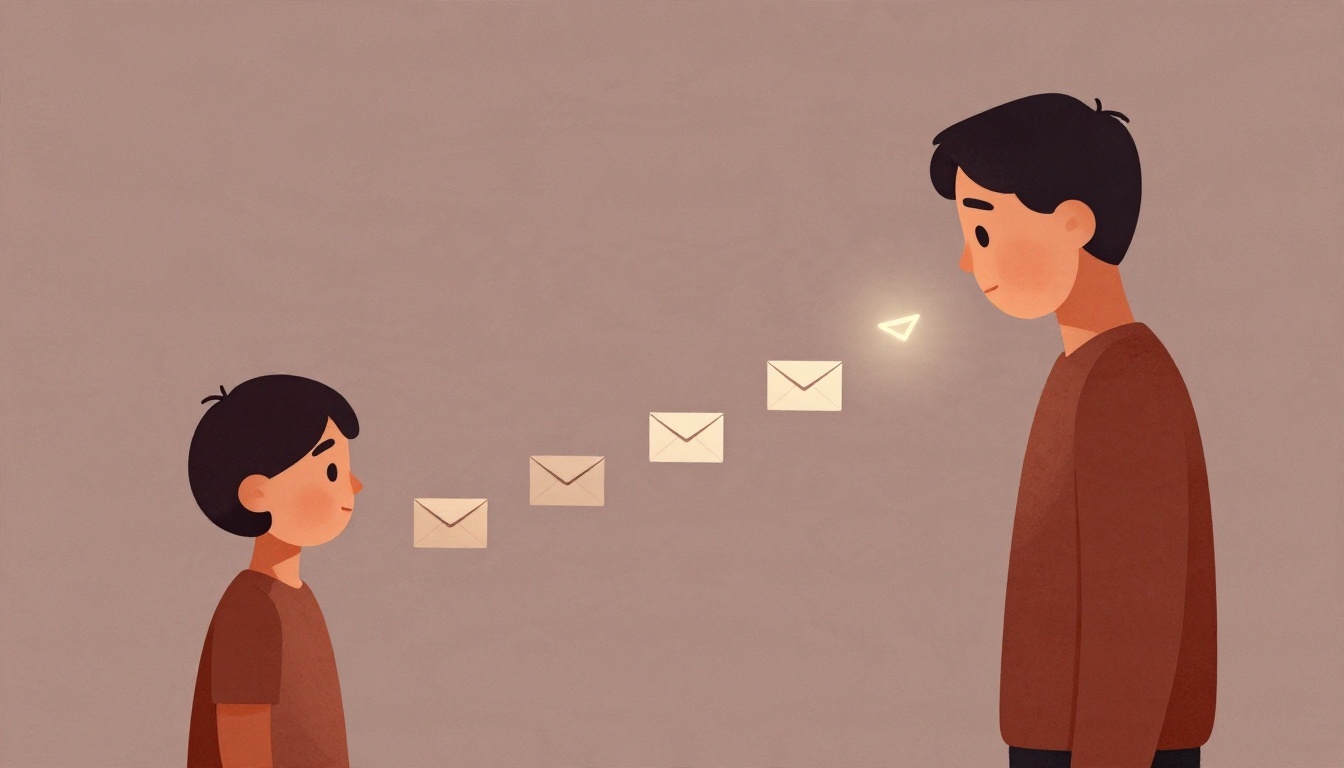
A Different Approach to Open-When Letters
Open-when letters have a familiar shape: a box of envelopes, each labeled for a moment, handed to a child on move-in day. Matthew Wolf, who built Whenvelope, says that shape has a practical flaw. He is candid about the limits of his vantage point. "We don't read the letters people write. They're between the parents and their child, and nothing inside an envelope shows up in our own tools. We also only launched this fall. So I can't speak to patterns in other families' letters, but I can tell you what we learned building Whenvelope and writing its 48 starter letters for college."
That distinction matters. The interview below is about design decisions and the reasoning behind them, not about observed behavior across other families.
The Box That Gets Opened Too Fast
Asked which open-when box stuck with him as a case where the usual advice did not fit, Wolf pointed to the delivery model itself. "The usual advice is a box of letters handed over on move-in day. Kids open half of them the first week. So in Whenvelope, letters open one at a time on a timer the parents can set, or on a set day, like our December countdown with one letter for each day until Christmas. That guarantees the letters are spaced out and not opened all at once."
The takeaway for anyone assembling a physical or digital box: spacing is a design choice, not an afterthought. A letter meant for a hard week loses its purpose if it is read in the first three days. Timed release, whether through a service or a simple schedule agreed with the recipient, preserves the moment each letter was written for. For context on how timed digital delivery works more broadly, see this overview of scheduled messaging.
What the Guides Leave Out
Wolf was asked what comes up repeatedly in open-when letters that online guides omit. He framed his answer around what Whenvelope itself provides. "Most guides give you the label, like 'open when you're homesick,' and stop there. The hard part is the first line inside the envelope, so every idea we offer comes with a starter letter you rewrite in your own words. Guides also lean on the sad moments. The everyday, funny ones, like 'open when you've had cereal for dinner three nights in a row,' matter just as much. A box of only hard moments is heavy to carry."
Two practical points emerge. First, the label is the easy part; the opening sentence is where writers stall, which is why starter text that gets rewritten in the parent's own voice lowers the barrier. Second, tone balance matters. A collection built entirely around homesickness and heartbreak can feel like a weight rather than a support. Light, specific, everyday prompts give the recipient permission to laugh. Resources on letter writing as a practice note that specificity and voice are what make correspondence feel personal rather than generic.
What Parents Decide Too Quickly
On the question of what parents rush when putting together a box for a child leaving home, Wolf listed three habits. "In my view: they pick the list of occasions fast and spend all their energy on the sad ones. They write everything in one sitting. And they make it one-way. We built it so the kid can send a video back and share their joy (or melancholy) with their parents."
Each point suggests a correction. Choosing occasions quickly can leave gaps for the ordinary moments that make up most of a first year away. Writing everything in one sitting tends to flatten the voice and exhaust the writer; spreading it out over weeks produces letters that sound like different days. And a one-way box closes the loop at delivery. Building in a reply, whether a video, a note, or a call prompted by the letter, turns the gift into a conversation. Guidance on transitioning to college life often stresses ongoing connection with family as a stabilizing factor, which aligns with the two-way design Wolf describes.
Practical Takeaways
For anyone building an open-when box, the interview points to a short checklist:
- Space the delivery. Use a timer or set dates so letters arrive when they are needed, not all at once.
- Write the first line first. A starter sentence, rewritten in your own words, gets past the blank page.
- Balance heavy and light. Include funny, everyday prompts alongside the harder ones.
- Don't write it all in one night. Spread the writing so each letter carries its own moment.
- Leave room for a reply. A box that invites something back stays alive longer than one that only gives.
Wolf's answers stay close to what Whenvelope built and why. The broader lesson is that the format of an open-when letter, when it opens and whether it can be answered, shapes how it lands as much as the words inside.