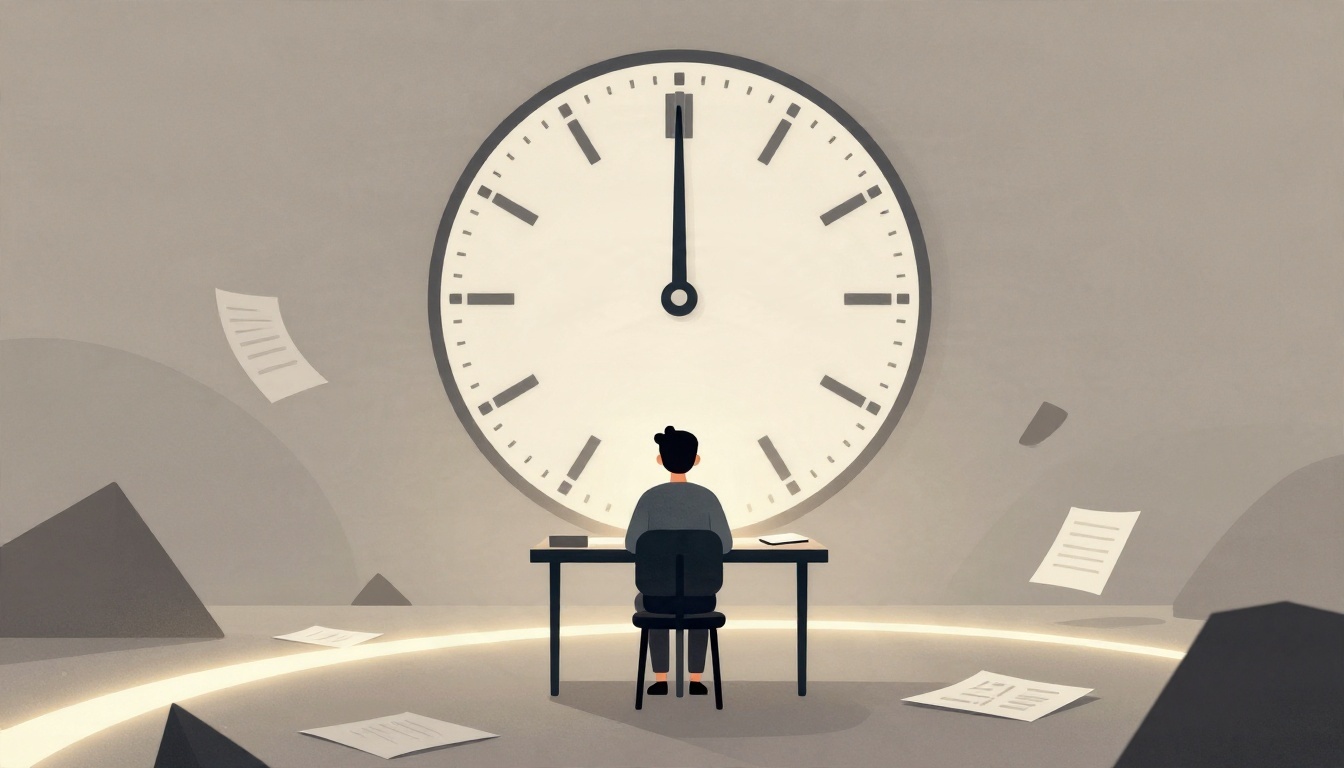
When the Clock Becomes the Test
Most advice for timed aptitude tests assumes the problem is knowledge. Learn more formulas, drill more questions, repeat until the score climbs. But for some test-takers, the score stays flat no matter how much material they cover—and the reason has less to do with what they know than with what happens when the timer starts.
Andrzej, who built TimedTestPrep, a service offering timed Wonderlic-style and CCAT-style practice tests, has a direct perspective on this. His own experience with timed exams shaped the tool he created, and in a short interview he described a gap between the standard study advice and the actual experience of sitting under a clock.
The Problem Isn't Always the Questions
Asked what is usually going on when scores keep coming out short on time—something the usual online advice does not cover—Andrzej pointed to the mental side of the test rather than the content side.
"In my case it was not about knowledge. I took different tests and exams where I was well prepared, and I still failed because the stress and the time pressure got to me. The advice I found online was mostly about learning more and doing more practice questions. It did not say much about what happens in your head when you look at the clock and feel you are behind. For me that was the main problem, not the questions themselves."
That distinction matters. A test-taker who has mastered the material but freezes under time pressure is not facing a study problem. They are facing a pacing and stress-management problem, and the two require different responses. General resources on test anxiety and cognitive load describe how pressure can interfere with performance even when the underlying skill is present.
The First Decision People Make Too Quickly
When people first sit down with a timer, Andrzej said, the easy conclusion is that they need to study more—because the final score is the only thing they look at.
"The score does not show you where the time went or when the stress started. Now I would first do a full test with the real time limit, and only after that decide what to fix."
That is a practical takeaway for anyone preparing for a timed test: treat the first full timed run as a diagnostic, not a verdict. A score tells you how many questions you answered correctly. It does not tell you which section consumed your minutes, where you slowed down, or at what point the clock started to feel like a threat. Those details are what a study plan should be built on.
The Moment the Usual Advice Didn't Fit
Asked which moment in his work with timed practice stood out as one where the usual advice did not fit, Andrzej was candid: the person in front of him was himself.
"I don't coach anyone, so honestly the person was me. I was prepared for my tests and I still failed, because the stress and the clock got to me. The usual advice to study more did not help, because the problem was not what I knew. I wanted to practice in conditions closer to the real test and see afterwards where I lost time. That is why I built TimedTestPrep."
That origin story explains the design logic behind the service: practice under realistic time limits, then review where the minutes actually went. It is a different loop from the standard "more questions, more hours" approach. Instead of adding volume, it adds feedback about pacing.
What Readers Can Take Away
For anyone preparing for a timed aptitude test, the interview suggests a few concrete steps:
- Run a full timed test before changing your study plan. Use the real time limit, and treat the result as data rather than a judgment.
- Separate knowledge gaps from pacing gaps. If you know the material but run out of time, more studying may not address the actual bottleneck.
- Watch for stress signals, not just wrong answers. Notice when the clock starts to affect your decisions, and practice under conditions that resemble the real test.
- Review where the time went. A score alone will not show you which questions or sections consumed your minutes.
Andrzej's account is a reminder that timed tests measure more than content knowledge. They also measure how a person operates under constraint—and that is a skill that can be practiced, provided the practice is designed to surface it. Services like 12minprep and JobTestPrep also offer timed practice, and the broader category is growing as employers continue to use timed aptitude screens.
For test-takers who have studied diligently and still come up short, the interview offers a useful reframe: the problem may not be what you know, but how you spend the minutes you have.