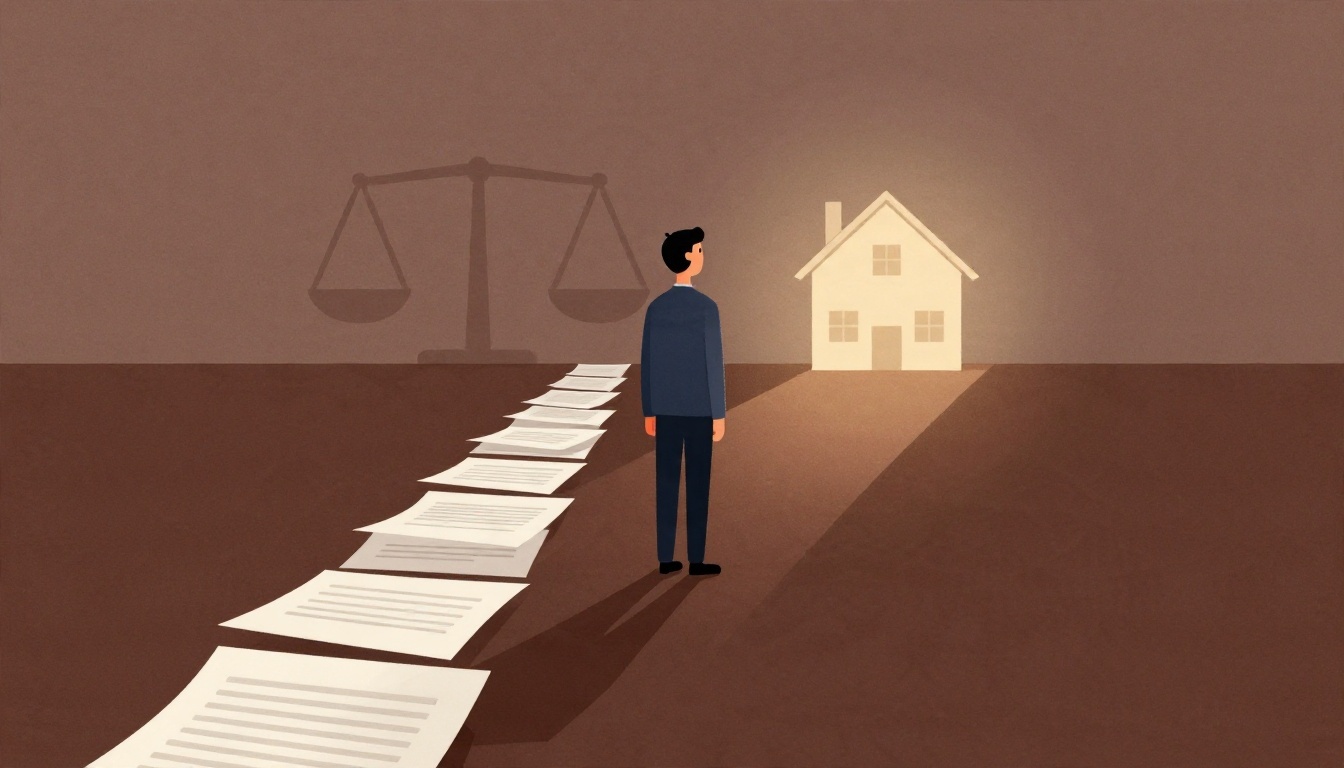
When the Tax Return Rule Breaks Down
For many rental borrowers, the standard advice to bring two years of tax returns stops working once they move from owning a single rental on the side to operating like a real investor or business owner. Mitchell Dunn of Oak & Iron Lending, LLC. sees this pattern weekly with self-employed borrowers and scaling landlords who use legitimate tax strategies—cost segregation, bonus depreciation, and business write-offs—to lower taxable income.
"On paper, their tax returns make them look like they barely make any money, even when their bank accounts are healthy and their rentals are cash-flowing," Dunn said.
Rather than penalizing borrowers for smart tax planning, Oak & Iron Lending, LLC. sets the tax returns aside and evaluates whether the property can pay for itself using a DSCR loan. The process takes the property's gross monthly rent—from a signed lease or an appraiser's market rent schedule—and compares it directly against the monthly mortgage payment, taxes, insurance, and HOA dues. As Dunn explained, "As long as the rent covers the payment and the borrower has solid credit and cash reserves, we can get the deal done without looking at personal income."
This approach aligns with how DSCR loans are generally structured: repayment ability is tied to the property's income rather than the borrower's personal income.
What DSCR Marketing Leaves Out
Much of what is written about DSCR loans online makes them sound like easy, no-hassle money, but Dunn pointed to several real-world details that make or break files in underwriting.
First, even though personal income is not verified, lenders still scrutinize cash reserves. Underwriters typically want to see three to six months of mortgage payments sitting in a liquid account after closing, and they want that money seasoned in the account rather than moved around at the last minute.
Second, borrowers often miss the jump that happens when a property goes from four units to five. Once a property hits five apartments, residential DSCR rules disappear and the loan enters small commercial territory, which usually brings stricter entity rules, full commercial appraisals, and experience requirements. Investors can learn more about commercial real estate loan requirements through general resources.
Third, rising property insurance costs are quietly hurting deals. "A rental that easily passed the cash-flow test two years ago might fall short today just because the insurance quote doubled, which forces the borrower to bring a larger down payment to the table," Dunn said.
Early Mistakes Borrowers Make
The biggest mistake Dunn sees is treating a DSCR loan like a standard home loan, especially regarding title, cash needs, and how long the borrower plans to keep the loan.
A common misstep is putting a property under contract in a personal name and then asking to close in an LLC three days before closing—or setting up a brand-new LLC without an operating agreement and EIN ready. That slows everything down.
Borrowers also tend to underestimate the cash required. "No tax returns does not mean low down payment," Dunn said. Most good DSCR programs require 20% to 25% down plus closing costs and reserves, and borrowers generally cannot rely on gift funds or unseasoned cash—though Dunn noted that Oak & Iron Lending, LLC. has some programs that allow for no seasoning on cash deposits.
Finally, borrowers often focus only on getting the lowest interest rate without checking the prepayment penalty. "I see people lock themselves into a rigid five-year prepayment penalty to save a fraction of a percent on the rate, even though their actual plan is to renovate the property and refinance out of it in eighteen months," Dunn said.
Practical Takeaways
For investors financing rental properties without tax returns, Dunn's observations suggest several steps: prepare entity documents and EINs before going under contract, plan for 20% to 25% down plus closing costs and seasoned reserves, check how a property's unit count affects loan classification, account for current insurance quotes in the cash-flow test, and weigh prepayment penalties against the actual hold period. More information about Oak & Iron Lending, LLC. is available at oakandironlending.com.
Borrowers can also review general guidance on cash reserves and prepayment penalties from neutral consumer finance resources.