When the Standard Playbook Doesn't Fit
Most guidance on writing a research proposal follows the same arc: start broad, read widely, then narrow toward a gap in the literature. That sequence assumes time. When time is the one thing a student doesn't have, the sequence has to be rebuilt.
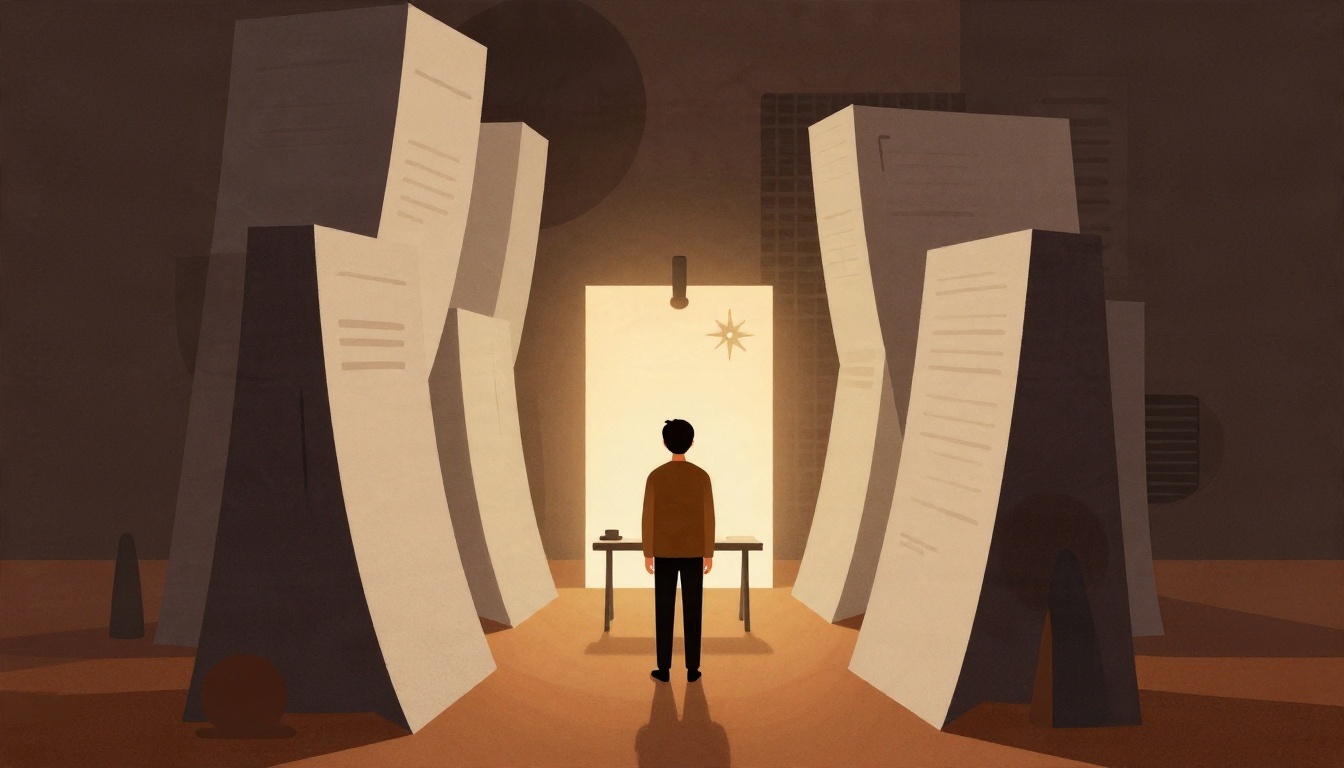
Bangi Joseph, of the research consultancy Expert Research Ready Services, described a case where the conventional approach would have consumed the entire window available. The student was working toward a master's degree, had been given three weeks by her supervisor, and was writing on a topic she had been handed rather than chosen.
"Reading widely would have eaten the whole three weeks," Joseph said.
The alternative was to invert the process. Joseph's team wrote the objectives first — "rough and ugly" — and then asked what minimum body of literature was needed to defend each one. The student read only for those objectives. The first draft was thin in places, but it existed by the end of week one, giving the supervisor something concrete to respond to. Most of the later reading happened with the supervisor's comments already in hand, which Joseph describes as faster and more focused than reading without direction.
The takeaway for students under deadline pressure is that objectives can function as a filter for reading, not just a product of it. For background on how proposals are typically structured, see this overview of research proposal components.
What the Guides Leave Out
Joseph argues that online proposal guides tend to assume a student with unrestricted access — free to sample anyone, go anywhere, and pay for whatever the study requires. The first conversation with a student usually surfaces a different set of constraints.
"In the first conversation, the real questions come out sideways: can I get a letter to enter that hospital, will the data collectors need paying, does my employer know I'm doing this," she said. "A design that looks good on paper can fall apart on the second of those."
Budget and institutional access are practical gates that determine whether a design is feasible at all. Joseph's point is that these belong in the design conversation from the start, not after the methodology chapter is drafted. Resources on planning research budgets and research ethics and access approvals can help students map constraints early.
The second omission is the supervisor. Students often don't state it directly, but they are writing for one specific person with specific habits, while the guides address a generic reader. Joseph said she always asks what the supervisor has said so far, "even if it was only a passing remark." In her view, that single question reveals more about what a proposal needs than any template.
The Two Decisions Students Make Too Fast
When a student is stuck, the instinct is often to blame the topic. Joseph is skeptical of that diagnosis.
"A student stuck in chapter one will often say they want to change the whole topic, when what's wrong is one thing: the objectives don't match the questions, or the sample size can't be justified, or the problem statement never says why anyone should care," she said. "Changing a topic feels like progress, but it resets the clock and the same stuck point usually turns up again in the new topic."
The practical implication is diagnostic: locate the specific mismatch before discarding months of groundwork. Guidance on aligning research questions with objectives can help students check that alignment directly.
The second premature decision concerns methodology. Joseph said students sometimes conclude the methodology must be mixed methods because it sounds more serious. "It doubles the work and the student often lacks the time to do either half well," she said. Her approach is to ask what the question actually requires — and in most cases, she said, one method answers it.
What This Means in Practice
Across all three answers, a consistent principle emerges: match the proposal to the actual conditions — the deadline, the budget, the access, the supervisor — rather than to an idealized version of the research process. Objectives written early can discipline the reading. Constraints surfaced early can prevent a design from collapsing later. And a stuck proposal is more often a misalignment to be diagnosed than a topic to be abandoned.
For students weighing whether to restructure or restart, Joseph's account suggests the cheaper move is usually to find the one broken element and fix it.