
Tired of opening a budgeting app every time you buy a coffee? These five tools let you track your money right inside your chat apps.
The Rise of Chat-Based Finance
In 2026, personal finance is moving into your messaging apps. Instead of forcing you into a separate dashboard, these tools let you send a text or voice note to log expenses. The appeal is simple: you already spend hours in WhatsApp or Telegram, so why not manage money there? This category is growing fast, with AI doing the heavy lifting of categorizing and analyzing your spending. For anyone who finds traditional apps tedious, chat-based trackers offer a low-friction alternative. The result is a more natural, conversational way to stay on top of your finances.
How We Evaluated These Tools
We looked at each service based on its core functionality, ease of use, and how well it fits into your existing chat habits. We considered the range of features, from simple logging to advanced insights, and how clearly each tool communicates its value. We also weighed the importance of privacy and data security, since you're sharing financial details. Finally, we assessed the overall user experience, from the initial setup to the daily interaction. Each tool has its own strengths, and we've highlighted what stood out for each one.
Here's a quick look at the five tools we're covering, from the most feature-rich to the simplest.
| Provider | Best For |
|---|---|
| AI Money | Best for a polished, ready-to-use experience with a free tier. |
| Dinvox | Best for voice-first tracking and a simple chat-based workflow. |
| POQT | Best for users who want AI-driven insights and a financial health score. |
| CashKaka | Best for a simple, no-frills tracker that also encourages savings. |
| Superchat | Best for those who want a multi-purpose assistant beyond just expense tracking. |
The Detailed Breakdown
#1 AI Money
 A screenshot of the AI Money website.
AI Money is a polished WhatsApp expense tracker that lets you log expenses by sending a message, a voice note, or even a photo of a receipt. It offers a free plan with 2 entries per day, which is great for testing the waters, and has a high rating from users. The app is available on both iOS and Android, making it accessible to most smartphone users. It focuses on removing friction, so you can log a $4 coffee in seconds without opening a separate app. If you want a reliable, user-friendly option that's ready to go, this is a strong choice. Source: AI Money blog
#2 Dinvox
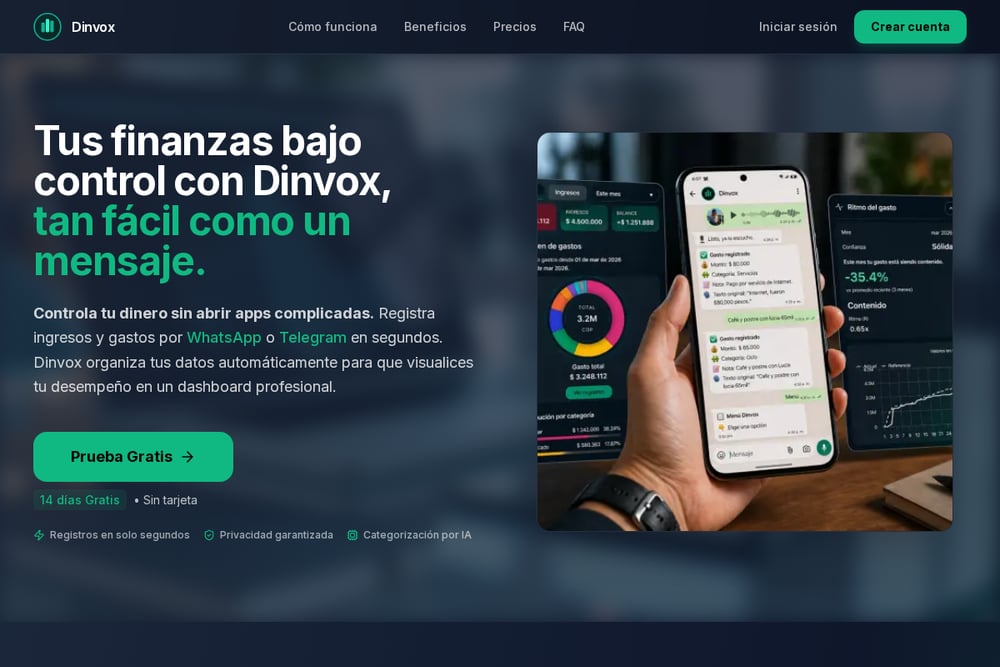 A screenshot of the Dinvox website.
Dinvox is a voice-activated personal finance assistant that works through WhatsApp and Telegram, letting you record income and expenses by simply sending a message or audio note. It automatically categorizes your transactions using AI, so you don't have to manually sort anything. The dashboard provides a clear visual overview of your spending, with summaries, charts, and performance signals. It's designed to make money tracking feel as easy as chatting with a friend, which is perfect for people who find traditional apps overwhelming. Dinvox also emphasizes privacy, ensuring your financial data is kept secure. If you prefer speaking over typing, this tool is particularly appealing. Source: Dinvox website
#3 POQT
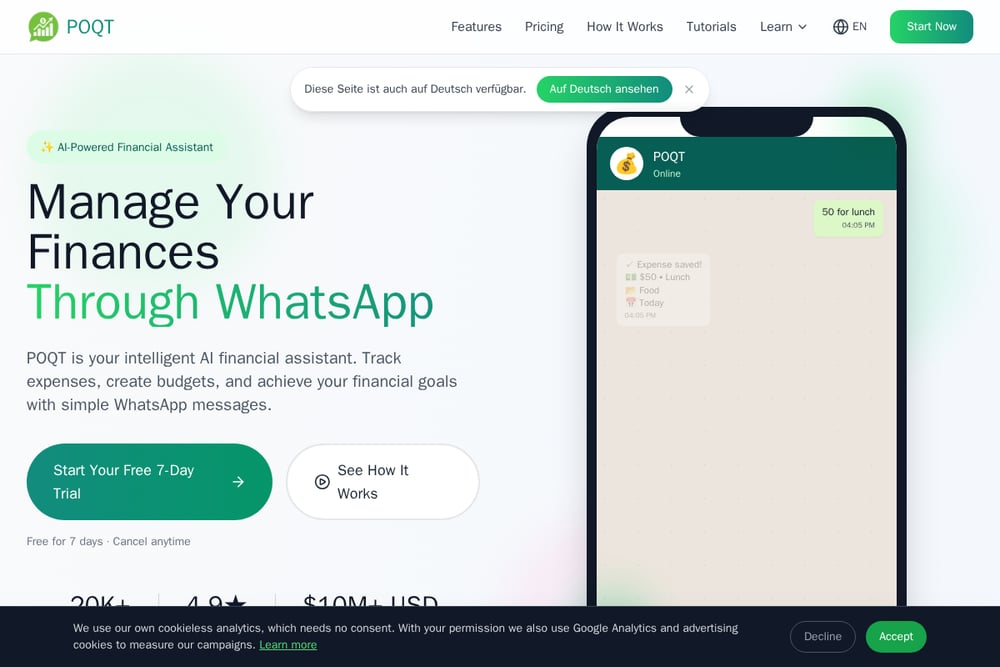 A screenshot of the POQT website.
POQT is an AI-powered WhatsApp expense tracker that goes beyond simple logging, offering features like a financial health score and natural language queries. You can ask questions like 'How much have I spent this week?' and get instant answers, making it feel like a personal finance assistant. It supports multiple input methods, including text, voice notes, and even photos of receipts. POQT also provides detailed insights into your spending patterns, helping you understand your habits better. The setup is straightforward: you add the bot to your contacts and start messaging. For those who want deeper analytics without leaving their chat app, POQT is a solid option. Source: POQT blog
#4 CashKaka
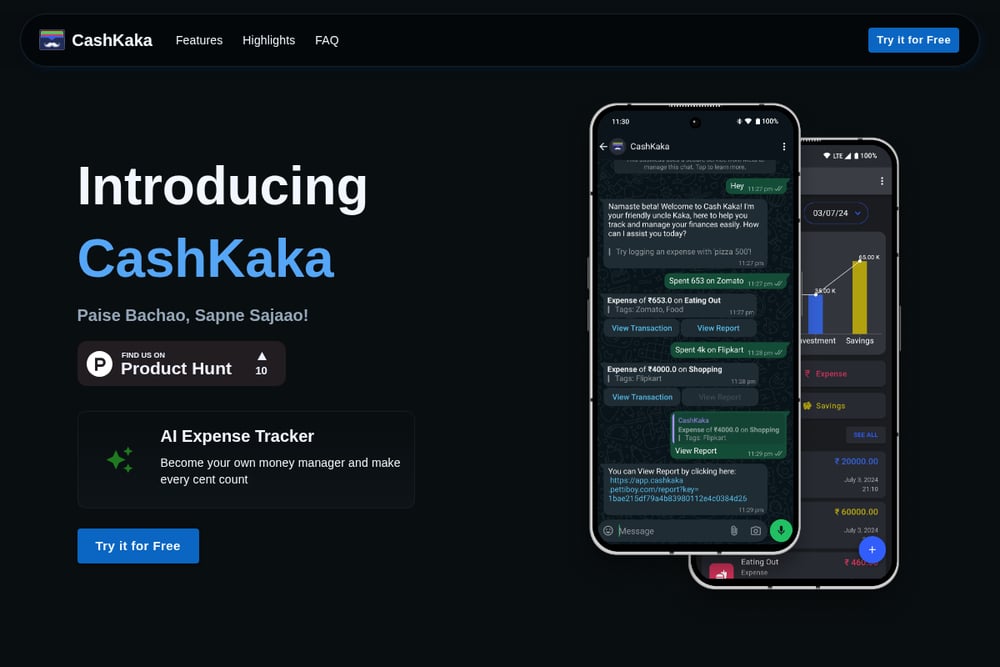 A screenshot of the CashKaka website.
CashKaka is an AI expense tracker that operates entirely within WhatsApp, making it accessible even for non-tech-savvy users. It focuses on simplicity, allowing you to log expenses by sending a message, and it automatically categorizes them. Beyond tracking, CashKaka also helps with savings and investments, offering personalized reports to help you make smarter financial decisions. The service is designed to be seamless, with no learning curve, so you can start using it right away. It's particularly popular in markets where WhatsApp is the primary communication tool. If you want a straightforward, no-frills tracker that also nudges you toward saving, this could be the one. Source: CashKaka website
#5 Superchat
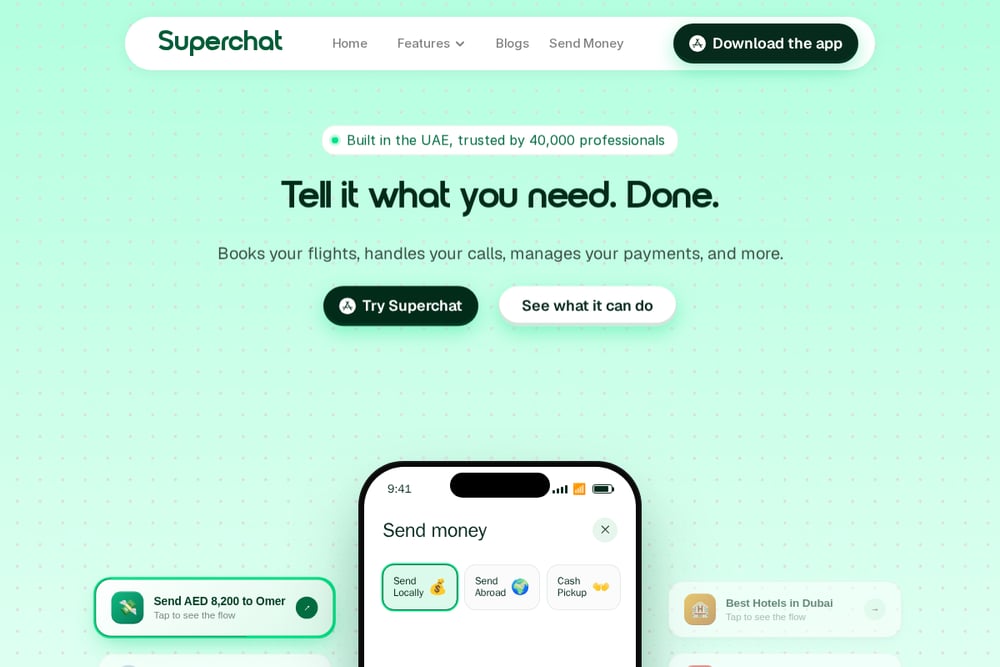 A screenshot of the Superchat website.
Superchat is a broader AI assistant that includes expense management as one of its many features, alongside flight booking, hotel reservations, and product search. It aims to be your all-in-one personal assistant, handling everything from tracking spending to planning trips. The expense tracking feature lets you log transactions through chat, and it also offers cost comparison and savings tips. Superchat is ideal for users who want a single tool for multiple daily tasks, not just finance. However, its focus is wider, so it may not have the same depth in expense tracking as dedicated tools. If you're looking for a multi-purpose assistant, Superchat is worth considering. Source: Superchat blog
How to Choose the Right WhatsApp Expense Tracker
Start by thinking about how you naturally communicate. If you prefer voice notes, look for a tool like Dinvox that emphasizes audio input. If you want deep analytics and a financial health score, POQT might be more your style. Consider whether you need a free plan to test the waters, as AI Money offers one. Also, think about whether you want a dedicated finance tool or a multi-purpose assistant like Superchat. Finally, check if the service supports both WhatsApp and Telegram, depending on which you use most. The right choice is the one that fits seamlessly into your daily routine.
Automating Your Money Tracking
The beauty of these tools is that they automate the boring parts of budgeting. You send a message like 'lunch 12' or a voice note saying 'spent 20 on groceries,' and the AI does the rest. It categorizes the expense, updates your totals, and even provides insights on your spending patterns. Over time, you can ask questions like 'How much did I spend on dining this month?' and get instant answers. This automation removes the need for manual data entry, making it more likely you'll stick with tracking. The result is a clearer picture of your finances without the effort.
The Bottom Line
Chat-based expense trackers are changing the way we manage money, making it as easy as sending a text. Whether you choose Dinvox for its voice-first approach, AI Money for its polish, or any of the others, the key is to pick one that fits your habits. The best tool is the one you'll actually use, and with these options, you can find one that feels natural. Start with a free trial or a free plan to see which one clicks. Your future self will thank you for taking control of your finances.