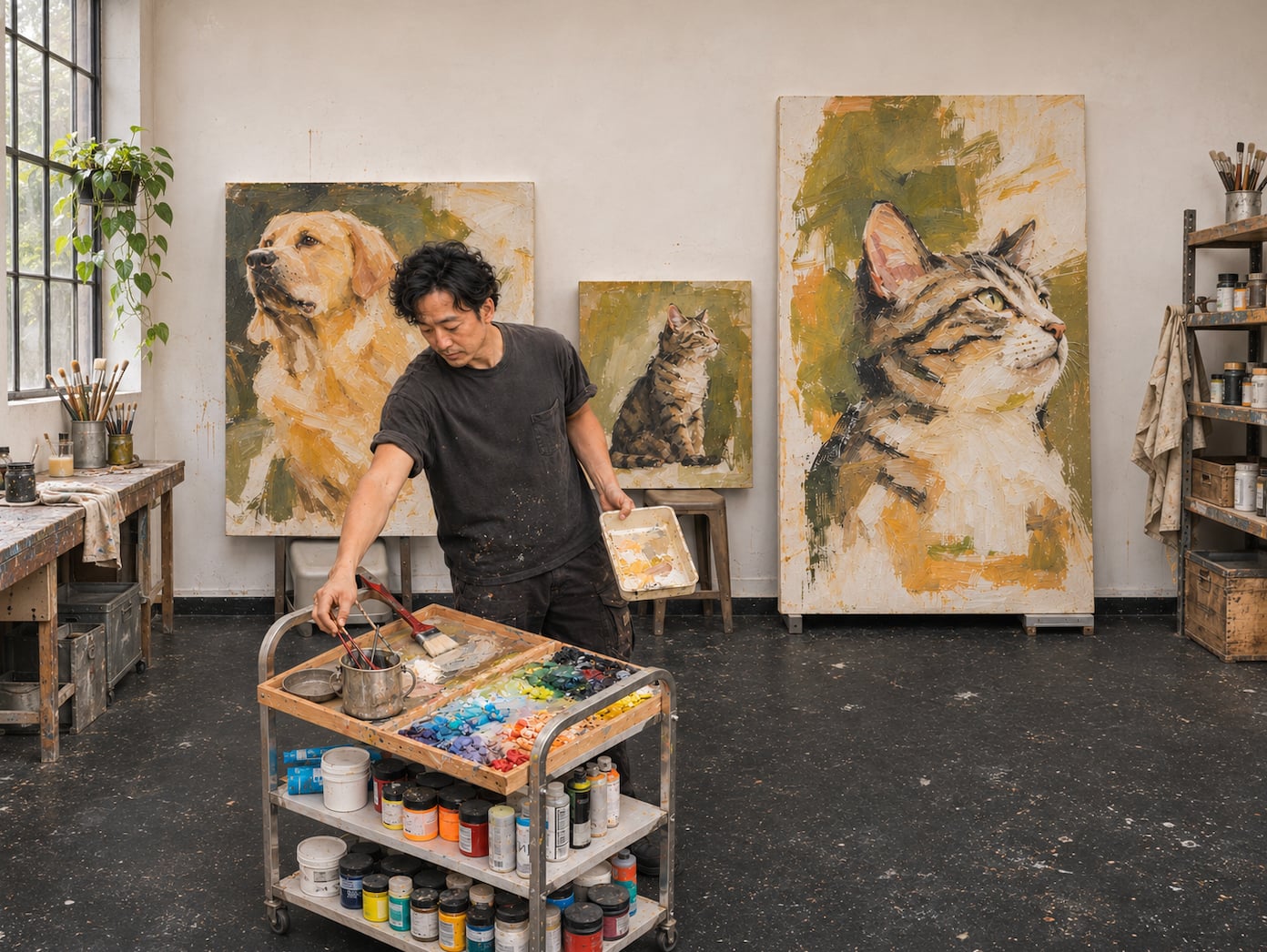
What to Do When Your Pet Photos Aren't Perfect

Ordering a custom pet portrait often starts with a folder of imperfect photos: old phone shots, dim lighting, or images of a pet that has since passed. Julian Lin, co-founding artisan at Pawtrielle, a service offering custom pet portraits and hand-painted oil paintings, shared his approach to working with whatever photos clients have.
Working with the photos people already have
Lin said "We often work with the photos people already have, and those aren't always technically perfect. Especially when a pet has passed away, asking for a better photo may simply not be possible. I never want someone to feel that a blurry photograph makes their memories less worth preserving."
Instead of requesting a single perfect image, Lin asks for a small set. "What helps is seeing a few images together. One might show the eyes clearly, another the coat markings, and another that familiar expression. We'd also ask which photograph feels most like their pet, and what details they especially want us to capture. A technically clearer image isn't always the one they have the strongest connection to."
He also emphasized transparency: "The important thing is being honest about what we can see and what remains uncertain, rather than quietly guessing at a detail that matters to someone."
The details that make a portrait feel personal
Many guides to custom pet portraits focus on style and price, but Lin pointed to a different distinction. "The difference between a portrait that looks like the right breed and one that feels like your particular pet. People recognise tiny things: the way one ear sits, an uneven patch of fur, a slightly crooked smile. Those details can matter much more than a perfectly polished finish."
There is also an emotional layer to selecting a reference photo. "For someone who has lost a pet, their clearest recent photographs might be from a time when the pet was unwell. They may want to remember an earlier, healthier version of them. It helps to give people room to explain that, rather than expecting a single uploaded image to tell the whole story."
What to check before you order
According to Lin, people often rush the style choice before evaluating their photos. "People often choose the style and place the order before really checking the reference photograph. I'd reverse that: first decide which expression, pose, and stage of your pet's life you want to remember. Then ask whether the photographs you have can support that."
He recommends asking specific questions of any artist. "Before ordering, I'd also check how the artist handles unclear details, whether you'll see a proof, and what changes are included. Those things become especially important when the reference isn't straightforward."
Finally, Lin suggests studying the artist's existing work for signs of individuality. "And look closely at the artist's examples. Do the pets have their own distinct expressions and markings? You want to feel confident that the details that make your pet recognisable will carry through into the finished portrait."
For anyone navigating a portrait with less-than-ideal photos, Lin's advice is to slow down, gather several images, and have an honest conversation about what can be captured. As he put it, the goal is to preserve a memory, not to meet a technical standard.