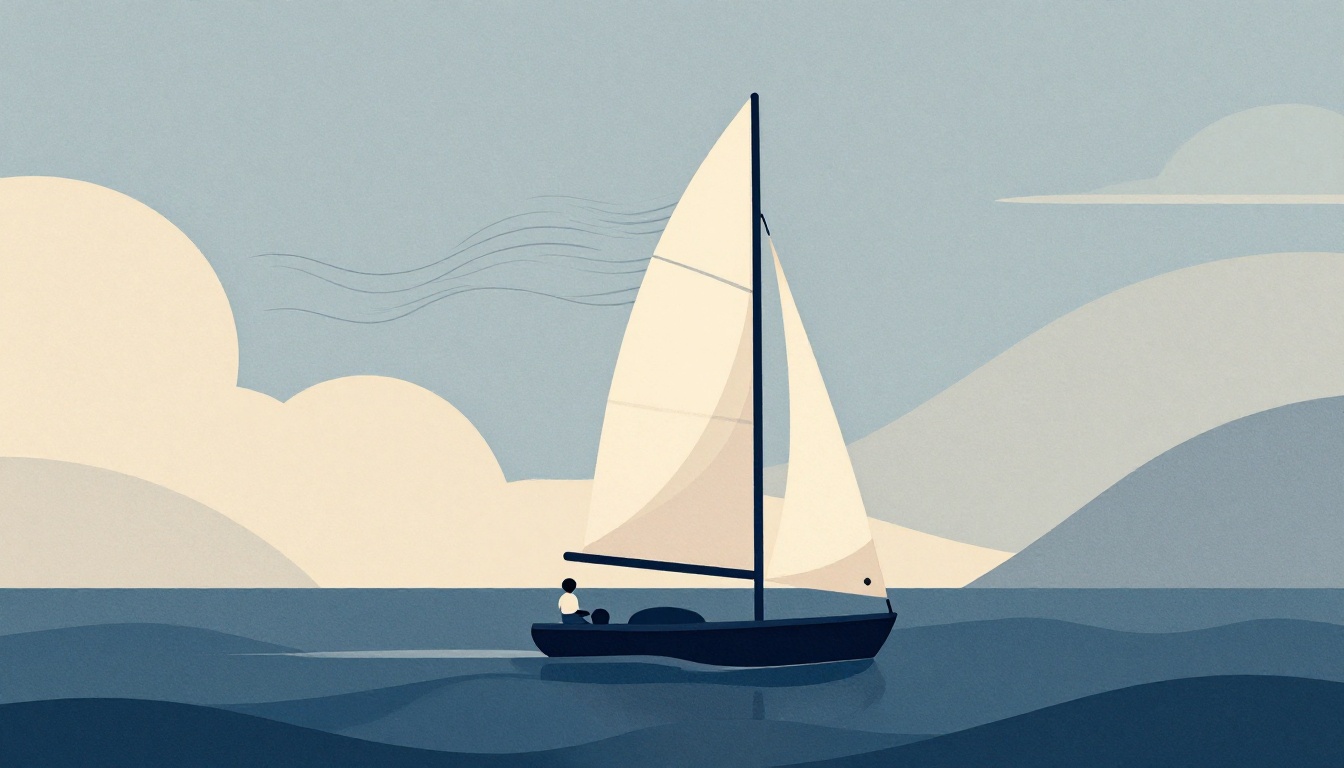
When most people imagine learning to sail, they picture hoisting a sail, grabbing a tiller, and letting the wind do the rest. But according to the instructors at Go With The Flo Adventures, a sailing school on the Outer Banks of North Carolina, that mental picture skips the most important part. The real challenge—and the real joy—lies in understanding the invisible forces at play.
“When it comes to sailing, and water (lakes, rivers, oceans), and wind, a lot of people underestimate the effects of Mother Nature.”
That single misconception—treating wind and water as passive elements rather than active partners—is what separates those who struggle from those who thrive. Sailing is not about brute strength or memorizing maneuvers. It’s about reading the environment and responding to it with intention.
The Physics Behind the Fun
At its core, sailing is applied physics. The same principles that keep airplanes aloft—lift and airfoils—are what move a boat across the water. A sail is essentially a vertical wing. When wind flows over its curved surface, it creates a pressure difference that pulls the boat forward. This is why sailors can travel in almost any direction, even into the wind, by tacking back and forth at an angle.
“Sailing involves a basic understanding of the physics of lift and airfoils, the same principals that allow airplanes to fly.”
You don’t need an engineering degree to sail, but grasping this basic concept changes everything. Instead of fighting the wind, you learn to work with it. Instead of fearing waves, you learn to use them. This knowledge transforms sailing from a guessing game into a skill you can apply anywhere—from a quiet lake to the open ocean.
The Symbiotic Relationship
Once you understand the forces, sailing becomes a conversation. The wind tells you where it wants to go; the water tells you how it feels; your boat responds. The sailor’s job is to listen and adjust.
“This symbiotic relationship allows sailors to sail just about anywhere, whether it's a leisurely day sail to no place in particular or racing against other boats around a race course.”
That’s the part most people miss: sailing isn’t just a destination activity. It’s a way of moving through the world. Whether you’re drifting on a calm afternoon or competing in a regatta, the same principles apply. The more you understand the relationship between wind, water, and hull, the more options you have.
Why the Outer Banks Is a Great Place to Learn
The Outer Banks offers a unique classroom. With the Atlantic on one side and the sounds of the Outer Banks on the other, sailors encounter a variety of conditions—shallow waters, shifting winds, and open stretches that demand respect. The area is home to seven sounds, with Pamlico, Roanoke, Currituck, and Albemarle the ones that most frequently see sailboats. Learning here means you’re not just practicing in a protected marina; you’re building real-world instincts.
At Go With The Flo Adventures, ASA-certified instruction focuses on these fundamentals. Students learn to read weather patterns, adjust sail trim, and make decisions based on what the environment is telling them. It’s not about memorizing a checklist—it’s about developing a feel for the boat and the elements.
The Takeaway
If you’re thinking about learning to sail, the best thing you can do is shift your mindset. Don’t expect to control the wind or the water. Instead, expect to understand them. The more you respect the power of nature, the more capable you become.
As the instructors at Go With The Flo Adventures put it, sailing is a partnership. Once you embrace that, the possibilities are endless—whether you dream of a quiet sunset sail or a competitive race around the buoys.
For more on how to start your own sailing journey, check out Go With The Flo Adventures and their ASA certification courses on the Outer Banks.