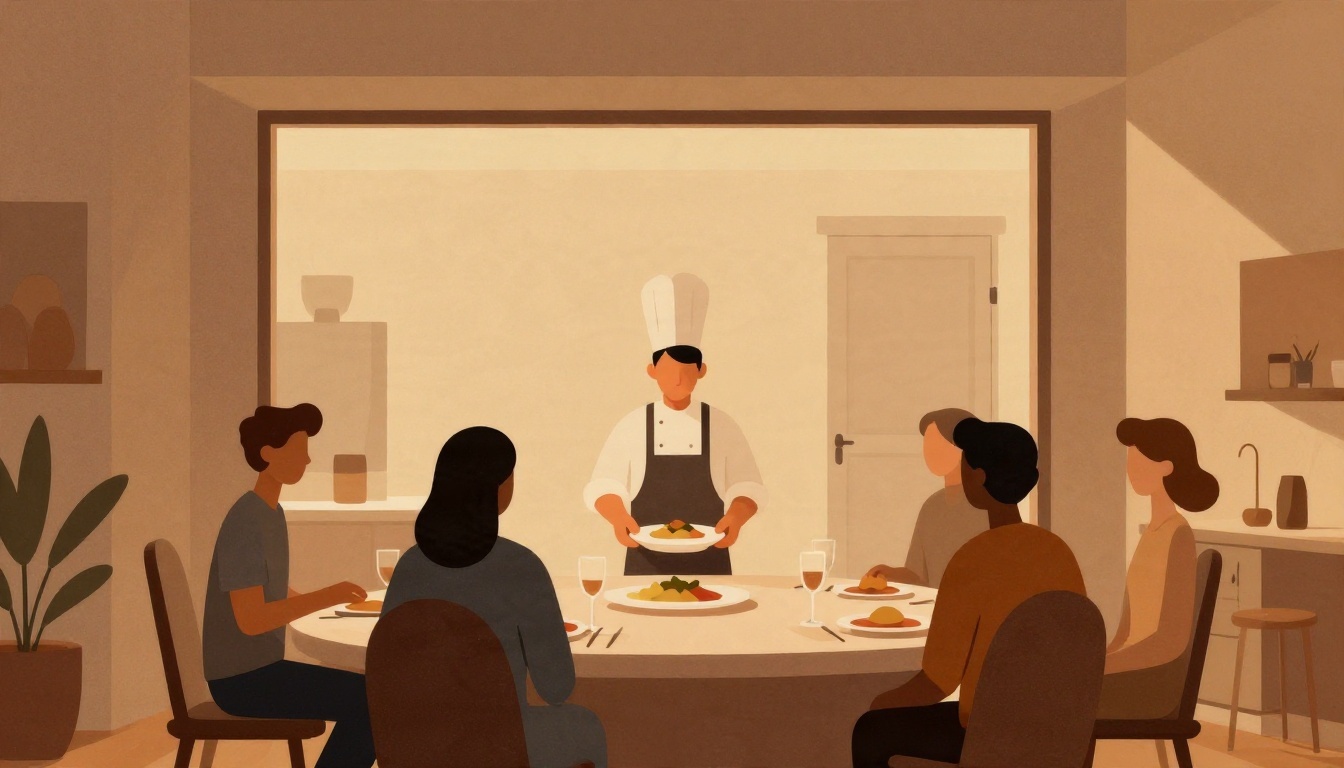
From Restaurant Table to Dining Room Table
For a milestone dinner, the choice between a restaurant and a private chef often starts as a budget question. According to Food, Fire + Knives, a provider operating in more than 475 cities nationwide, the answer usually becomes clearer once hosts see the numbers side by side.
"When comparing prices, our hosts quickly realize the costs are comparable to a restaurant and more importantly predictable," the provider said. "When booking with us, we have no hidden fees and you're able to see the cost up front."
That predictability shifts the conversation. Instead of comparing a menu price against an all-in evening, hosts can weigh what the format itself offers.
Comfort, Convenience, and a Chef Who Talks Back
Once price is settled, the deciding factors tend to be experiential rather than financial.
"The deciding factor comes to down to comfort and convenience," the provider said. "The restaurant experience in the comfort of their own home with the convenience of not having to entertain or work. This means spending more time with guests and not stressing over the event."
There is also the entertainment value of having the kitchen at the center of the evening. As the provider put it, "Any chef driven restaurant is exciting, but they keep the chef tucked away in the kitchen. Our customers love to interact with our chefs and talk about food, cooking tips, restaurants etc."
For hosts weighing a private chef against a restaurant reservation, that access to the person cooking is part of what they are paying for.
What Review Pages Leave Out
Hosts researching a chef in their city often rely on review pages, but the provider argues those pages rarely capture the full picture. To address that, the company built a companion site alongside its main site, foodfireknives.com, where reviews can be searched by city, chef, event type, and rating in one place.
"Because reviews are often times the most important factor when deciding on a chef, we created this database to easily search by city, chef, event types and ratings, all in one place," the provider said. "This site is often visited after our main site at foodfireknives.com."
What the first conversations actually center on is more practical: "Generally our first conversations with customers are availability and pricing or more commonly, customized menus to perfectly fit an occasion."
That gap matters for hosts who arrive with a shortlist of names but no sense of what the booking conversation will involve. Review pages help narrow the field; they do not replace the questions a host needs to ask about dates, budget, and menu fit.
The One Thing Not to Decide Too Quickly
The provider's advice for first-time bookers is counterintuitive: do not rush the menu.
"If we could stop a host from deciding one thing as a first timer, it would surprisingly be to not choose their specific menu when booking," the provider said. "Considering most customers tend to book 1-2 months before the event, a lot of things can happen in between. Customers are notified of certain allergies or dietary restrictions, likes and dislikes, etc."
The platform offers a "Choose Menu Later" option for events more than seven days away, which leaves room to discuss options with the chef, take recommendations, or tailor the menu closer to the date.
"We do recommend booking the chef you like as soon as possible to lock them in for that date and time," the provider said. "But choosing a menu can come further down the line."
Practical Takeaways for Hosts
- Compare all-in costs, not menu prices. Predictable, upfront pricing is the fair basis for comparing a private chef with a restaurant evening.
- Weigh the format, not just the food. Time with guests, no hosting labor, and direct conversation with the chef are part of the value.
- Use reviews to shortlist, then ask questions. Availability, pricing, and menu customization are the topics that dominate early conversations.
- Book the chef early; decide the menu later. Locking in a date protects the booking, while a later menu decision leaves room for dietary needs and preferences that surface in the weeks before the event.
For hosts planning a milestone dinner, the through-line is preparation without haste: secure the chef, keep the menu flexible, and treat the review search as a starting point rather than the final word.