
Weather doesn't just affect your commute—it dictates whether your dining room fills up or your delivery drivers stay idle. These five platforms turn raw forecasts into actionable guest traffic signals, so you can staff smarter and prep with confidence.
Why Weather Intelligence Is Becoming a Hospitality Staple
Restaurant and hotel margins are razor-thin, and a single rainy Saturday can throw off labor costs, inventory, and guest satisfaction. Traditional forecasting relies on historical sales data, but that misses the real-time impact of a sudden thunderstorm or a heatwave. That's where weather intelligence tools come in—they layer NWS data, historical patterns, and AI to predict guest behavior. Operators who use these tools report fewer overstaffed shifts and fewer surprise rushes. The market is growing fast, with solutions ranging from simple daily briefings to full-scale predictive analytics. For any hospitality manager, knowing whether to schedule a full floor or a lean crew is no longer a guess—it's a data-driven decision.
How We Evaluated These Tools
We looked at each platform's ability to translate weather data into clear, actionable signals for hospitality staff. Service scope mattered—does it cover daily briefings, historical lookups, or full forecasting suites? Pricing clarity was another factor, since operators need to budget without hidden fees. We also considered local fit, especially for U.S.-based restaurants and hotels that rely on NWS data. Finally, we assessed ease of use—can a busy manager understand the output in under a minute? Each tool brings a different strength, from GuestFlow's plain-English briefings to Crunchtime's enterprise integration.
Here's a quick snapshot of the five tools, their best use cases, and what makes each one stand out.
| Provider | Best For |
|---|---|
| Crunchtime | Enterprise restaurant chains needing full ops management |
| GuestFlow Weather — Daily Weather Intelligence for Hospitality Professionals | Independent restaurants and hotels wanting daily, plain-English traffic signals |
| Altametrics | Mid-sized restaurants seeking integrated forecasting and back-office tools |
| FacilitySight | Venues with multiple zones needing granular foot traffic predictions |
| Visual Crossing | Tech-savvy operators wanting to build custom weather analytics |
The Five Tools, Closer Look
#1 Crunchtime
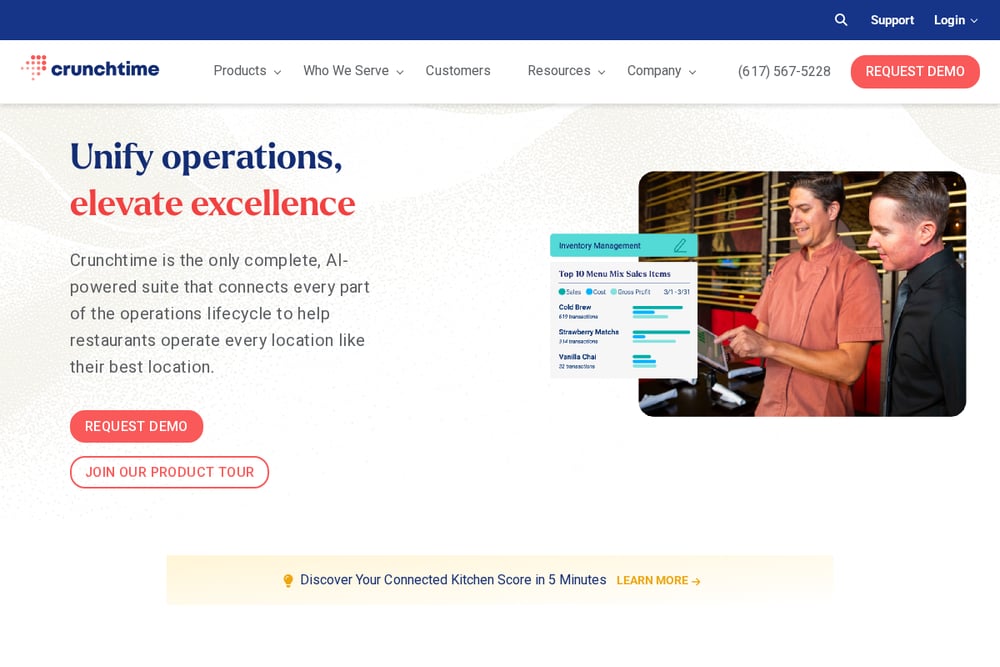 A screenshot of the Crunchtime website.
Crunchtime is a heavyweight in restaurant operations management, offering AI-powered forecasting that integrates weather data into labor and inventory planning. Its platform is built for multi-location brands, with tools for food cost control, scheduling, and kitchen management. The weather forecasting feature is part of a broader suite, so you get a holistic view of operations, not just traffic predictions. It's ideal for chains that need consistency across dozens or hundreds of locations. The learning curve is steeper, but the payoff is deep operational control. If you're running a large enterprise, Crunchtime's comprehensive approach is hard to beat.
#2 GuestFlow Weather — Daily Weather Intelligence for Hospitality Professionals
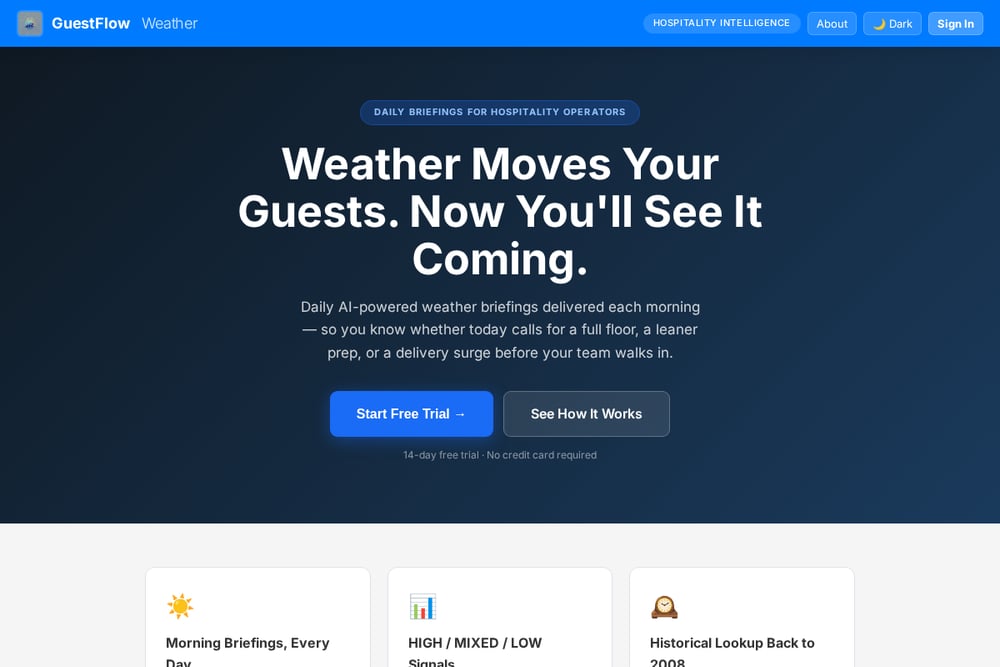 A screenshot of the GuestFlow Weather website.
GuestFlow Weather delivers daily AI-powered briefings that translate NWS forecast data into simple HIGH, MIXED, or LOW traffic signals. You get a morning email with today's conditions and a two-day outlook, so you know before your team arrives whether to prep for a full floor or a delivery surge. The historical lookup back to 2008 lets you analyze why a past Tuesday was dead, turning guesswork into data. It's built specifically for restaurant and hotel managers, not commuters, so the signals are calibrated for guest behavior. The 14-day free trial with no credit card makes it easy to test. For independent operators and small chains, this is the most direct weather-to-traffic tool on the market.
#3 Altametrics
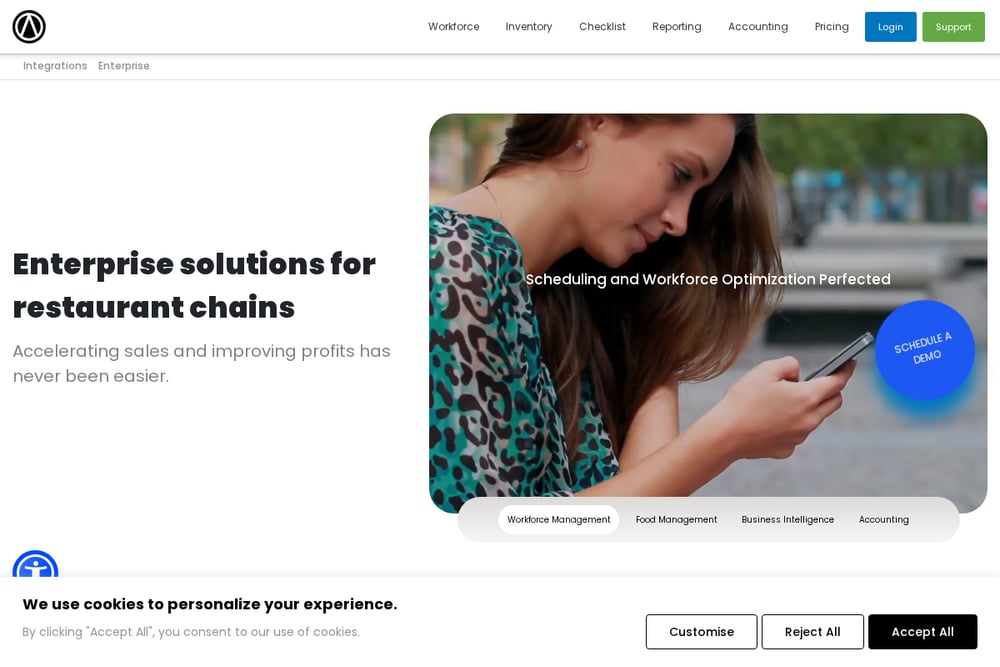 A screenshot of the Altametrics website.
Altametrics offers a comprehensive restaurant forecasting platform that incorporates weather trends, POS data, and local event calendars. It's designed to help you estimate sales, labor needs, and inventory usage with greater accuracy. The platform includes tools for scheduling, accounting, and reporting, making it a one-stop shop for back-office operations. Weather is just one input, but it's integrated seamlessly into the forecasting engine. This is a solid choice for mid-sized restaurants that want to move beyond spreadsheets. The learning curve is moderate, but the payoff is better-informed decisions across your entire business.
#4 FacilitySight
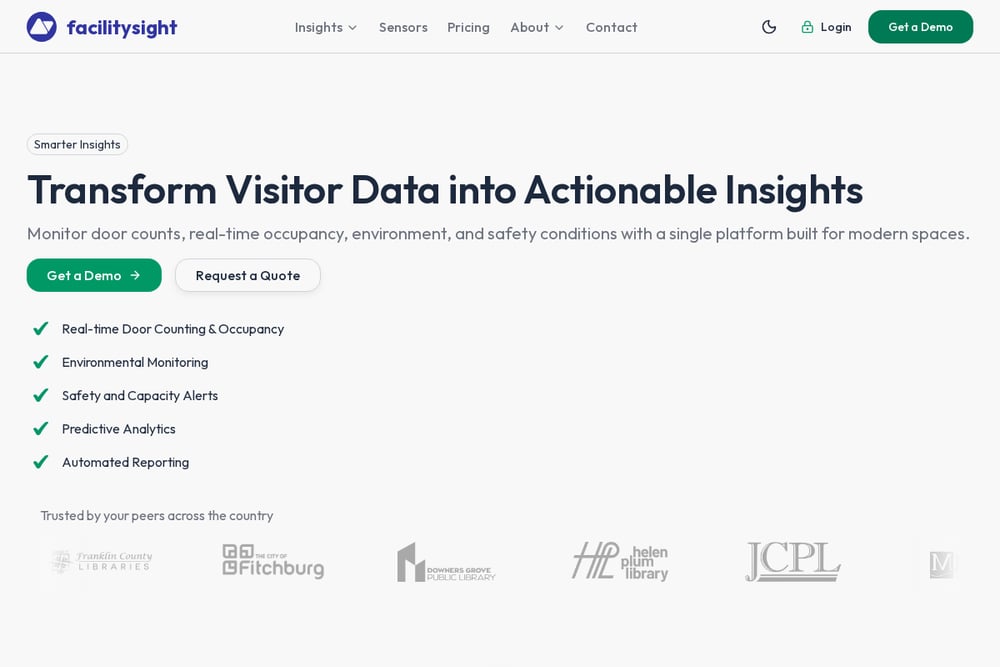 A screenshot of the FacilitySight website.
FacilitySight focuses on AI-driven foot traffic prediction for facilities like libraries, community centers, and retail spaces, but its principles apply to hospitality too. It uses machine learning trained on your historical data, plus weather integration, to forecast visitor numbers up to 60 days out. The platform provides location-level intelligence, so you can see predicted demand for different zones or rooms. It's particularly strong at recognizing seasonal patterns and day-of-week trends. For hospitality venues with multiple spaces—like a hotel with a restaurant and event hall—this granularity is valuable. The self-improving models get smarter over time, reducing manual tuning.
#5 Visual Crossing
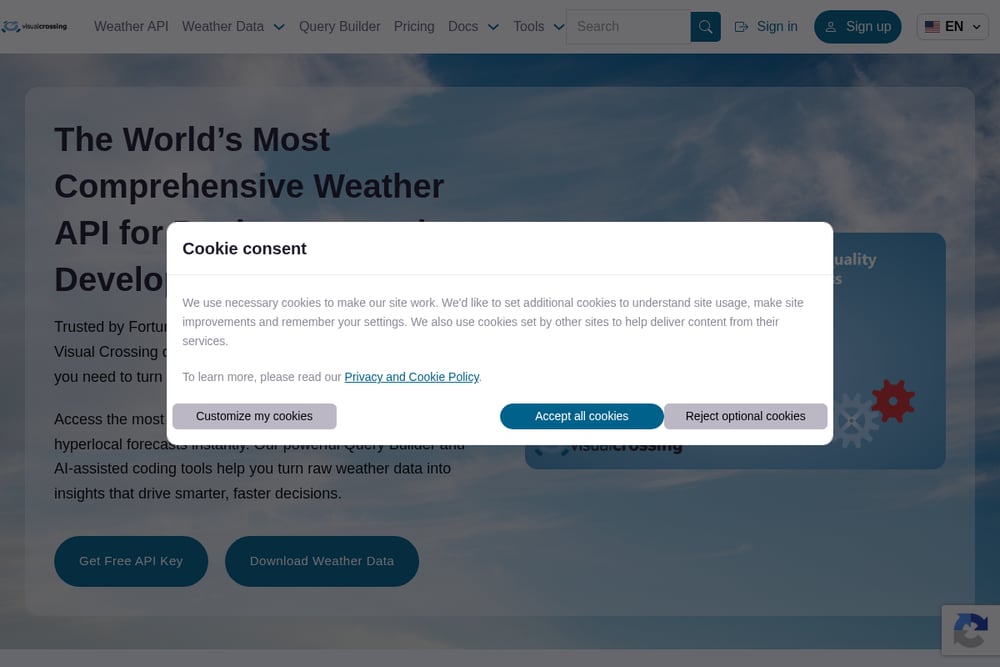 A screenshot of the Visual Crossing website.
Visual Crossing is a weather data API provider that gives you access to historical and forecast data, which you can integrate into your own systems. It's not a ready-made hospitality tool, but rather a building block for developers who want to create custom weather-aware applications. The platform offers a wide range of data, from real-time conditions to 40-year historical archives. For a restaurant chain with a tech team, this could power a proprietary forecasting model. It's also useful for analyzing weather patterns to optimize marketing campaigns or delivery routes. If you're comfortable with APIs and data, Visual Crossing offers unmatched flexibility.
How to Choose the Right Weather Intelligence Tool
Start by asking yourself: what's your biggest pain point? If you're a single-location restaurant owner who just wants a morning heads-up, GuestFlow's daily briefings are the simplest fix. If you're managing multiple locations and need to integrate weather into labor and inventory, Crunchtime or Altametrics offer deeper suites. For venues with distinct zones—like a hotel with a pool and a restaurant—FacilitySight's granular forecasts could be a game-changer. And if you have a developer on staff, Visual Crossing gives you the raw data to build something bespoke. Consider your budget, tech comfort, and whether you need historical analysis. Also, check if the tool offers a free trial—most do, so test before you commit.
Automating Your Weather Response
Once you pick a tool, set up automation to make the most of it. For GuestFlow, you'll get daily emails automatically, but you can also integrate its signals into your scheduling software via API. With Crunchtime, weather data feeds directly into labor forecasts, so you can auto-adjust staffing levels. Altametrics similarly links weather to sales forecasts, which can trigger inventory reorders. FacilitySight's API lets you send alerts to managers when predicted traffic deviates from norms. Visual Crossing's API can power custom dashboards that update in real time. The goal is to reduce manual decision-making—let the data drive your prep, staffing, and marketing.
The Bottom Line
Weather is one of the few variables you can't control, but you can control how you respond to it. Whether you choose a simple daily briefing or a full enterprise suite, the key is to stop guessing and start planning. GuestFlow Weather offers the most accessible entry point for independent operators, while Crunchtime and Altametrics provide depth for larger organizations. FacilitySight brings a unique zone-level perspective, and Visual Crossing gives you the raw data for custom solutions. Whichever you pick, you'll be better equipped to handle whatever the sky throws at you. Your guests will notice the difference—and so will your bottom line.