
Voice AI is no longer a futuristic concept—it's a practical tool that can answer your calls, book appointments, and even close sales while you sleep. Here are five platforms that are reshaping customer conversations in 2026.
The Voice AI Landscape in 2026
The voice AI industry has exploded over the past few years, moving from simple IVR systems to sophisticated agents that can handle nuanced conversations in over 100 languages. Businesses across healthcare, finance, real estate, and e-commerce are adopting these tools to cut costs, reduce response times, and improve customer satisfaction. The market is crowded, but the leaders are those that combine reliability, ease of deployment, and deep integrations. As you evaluate options, you'll find that each platform has its own strengths—some focus on enterprise security, others on developer flexibility, and some on out-of-the-box templates. The key is to match the platform's capabilities to your specific operational needs.
How We Evaluated These Platforms
We looked at each platform through the lens of a business owner or operations leader. Key factors included the breadth of features (like inbound/outbound calling, real-time assistance, and analytics), ease of deployment (from no-code to API-first), and the clarity of their value proposition. We also considered how well each platform integrates with existing tools like CRMs and calendars, and how they handle compliance and security—critical for regulated industries. Finally, we weighed the overall user experience, from the initial demo to the daily management of AI agents.
Here's a quick snapshot of the five platforms we're diving into, so you can see at a glance what each one brings to the table.
| Provider | Best For |
|---|---|
| Vapi | Developers and enterprises needing full customization |
| Voice AI Platform for Customer Operations | ConversAI Labs | Balanced automation and real-time agent support |
| Synthflow | Enterprises needing a proven, high-uptime platform |
| Bland | Regulated industries needing high security and compliance |
| Autocalls | SMBs wanting a no-code, all-in-one solution |
The Deep Dive: Your 2026 Voice AI Shortlist
#1 Vapi
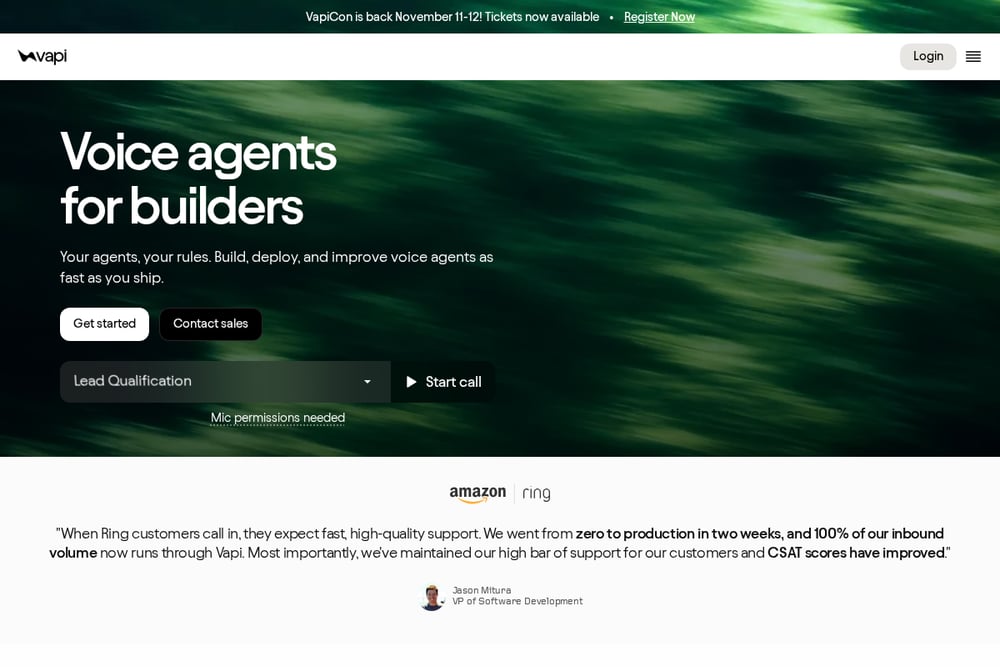 A screenshot of the Vapi website.
Vapi is a developer-first voice AI platform that gives you total control over building and deploying voice agents. It's designed for teams that want to customize every aspect of the conversation flow, from the voice and tone to the underlying logic. With sub-500ms latency and the ability to scale to millions of calls, it's built for high-volume operations. Vapi also offers enterprise-grade features like SSO, RBAC, and SOC 2, HIPAA, and PCI compliance, making it a solid choice for larger organizations. If you have engineering resources and want to build a truly bespoke voice experience, Vapi is your playground.
#2 Voice AI Platform for Customer Operations | ConversAI Labs
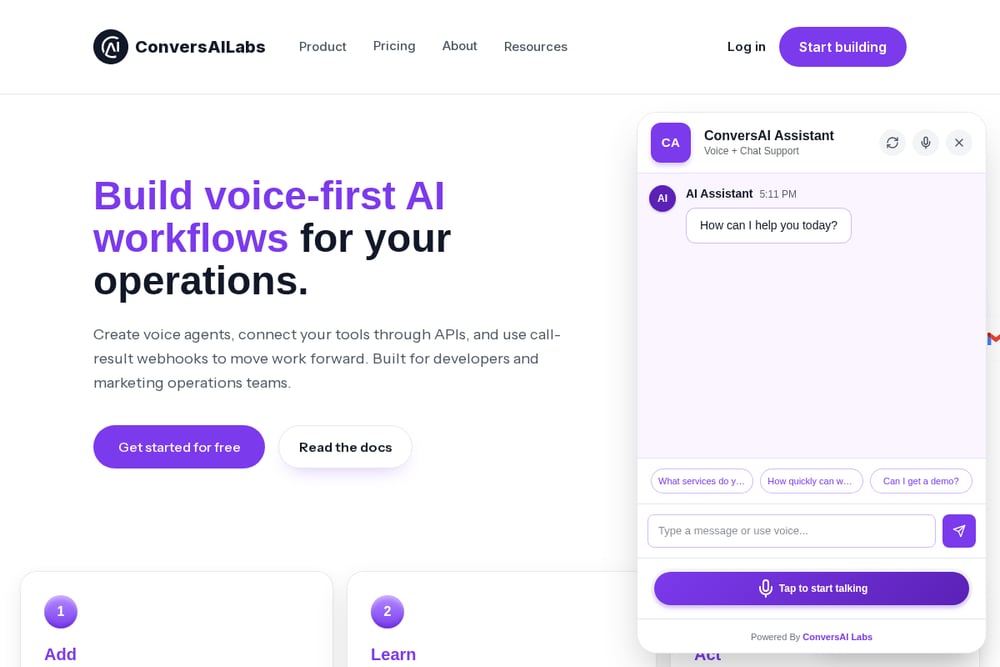 A screenshot of the ConversAI Labs website.
ConversAI Labs is a comprehensive voice AI platform that automates customer calls, provides real-time agent assistance, and delivers conversation analytics. It's designed for businesses that want to increase revenue and reduce costs without sacrificing customer experience. The platform offers pre-built agent templates for sales, support, and collections, so you can launch in minutes, not weeks. It also integrates seamlessly with your existing CRM and calendar, and supports human-like conversations in over 100 languages with real-time handoff to live agents. For a balanced solution that covers the full spectrum of customer operations, ConversAI Labs is a strong contender.
#3 Synthflow
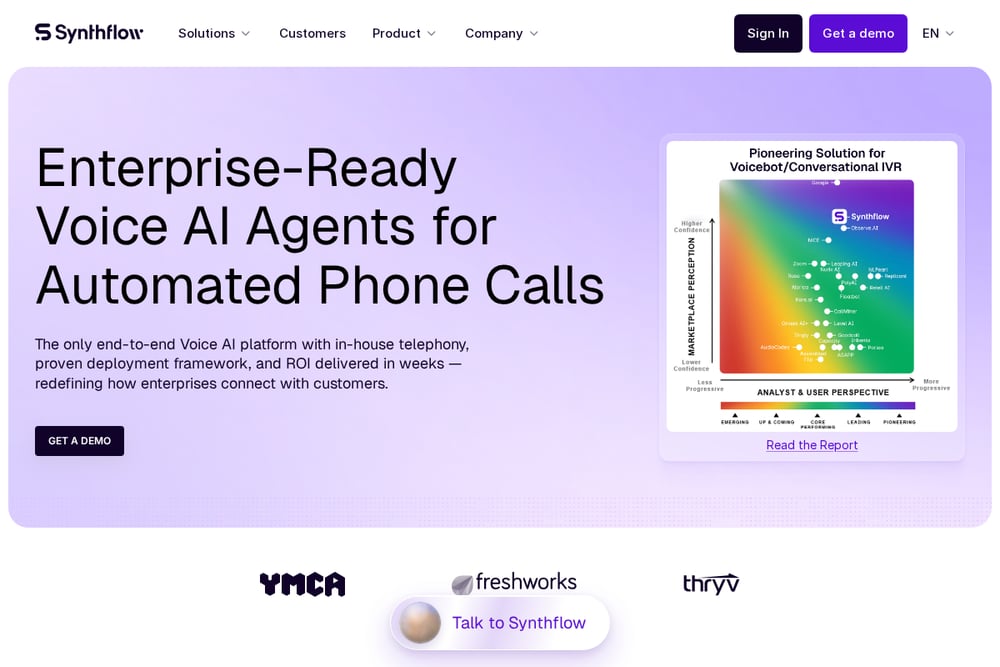 A screenshot of the Synthflow website.
Synthflow is an enterprise-ready voice AI platform that emphasizes reliability and a proven deployment framework. It boasts over 65 million customer calls handled and a 99.99% uptime, making it a dependable choice for high-volume phone operations. The platform's BELL framework guides you through building, evaluating, launching, and learning from your AI agents, reducing deployment risks. Synthflow also offers a visual flow designer and a test center, so you can perfect your agents before they go live. If you're looking for a platform that's built for scale and backed by real-world performance, Synthflow is worth a close look.
#4 Bland
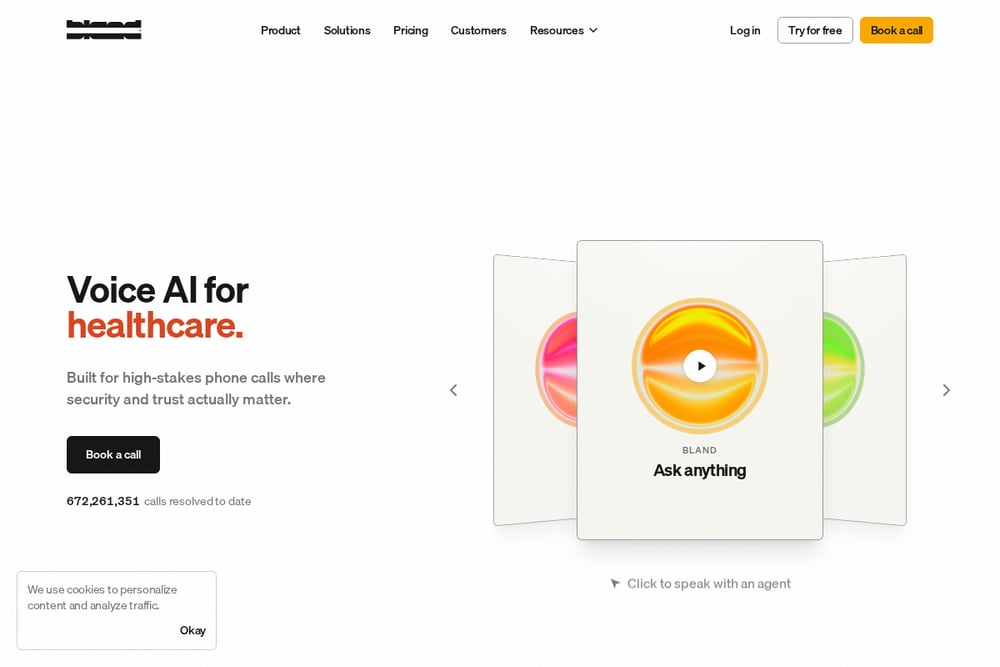 A screenshot of the Bland website.
Bland is an enterprise voice AI platform that focuses on regulated industries like healthcare, insurance, and financial services. It runs entirely on your own infrastructure, ensuring maximum security and data privacy. Bland's agents are custom-made for phone calls, and you can build them using natural language prompts—no coding required. The platform also offers omnichannel support, so you can deploy the same agent across voice, SMS, iMessage, and web chat with unified memory. For businesses that prioritize security and compliance, Bland is a compelling option.
#5 Autocalls
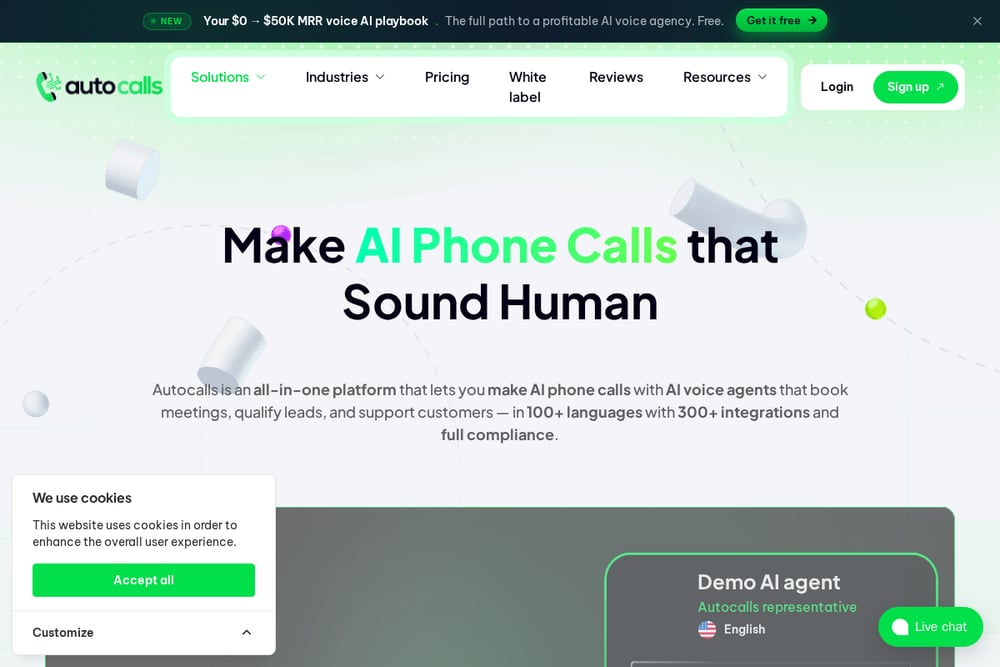 A screenshot of the Autocalls website.
Autocalls is a versatile voice AI platform that covers everything from AI receptionists to outbound cold calling and call center automation. It's designed for businesses that want to automate both inbound and outbound calls, with features like AI appointment booking and WhatsApp chatbots. The platform offers a no-code builder, so you can create agents without any programming skills. With over 300 integrations and support for 100+ languages, it's a flexible option for a wide range of industries. If you're looking for an all-in-one solution that's easy to set up, Autocalls is a practical choice.
How to Choose the Right Voice AI Platform
Start by defining your primary use case—are you looking to automate inbound calls, make outbound sales calls, or support your live agents? Next, consider your technical resources: if you have a dev team, platforms like Vapi offer maximum flexibility, while no-code options like Autocalls are quicker to deploy. Think about the industries you serve and the compliance requirements you must meet—Bland and Vapi are strong on security, while ConversAI Labs and Synthflow offer balanced features. Finally, evaluate the total cost of ownership, including per-minute pricing and setup fees, and take advantage of free demos to test the voice quality and user experience.
Automating Your Customer Operations with Voice AI
Once you've chosen a platform, the typical workflow starts with selecting a pre-built template or building a custom agent from scratch. You'll define the conversation flow, set up integrations with your CRM and calendar, and configure handoff rules to live agents when needed. After testing your agent in a sandbox environment, you can deploy it to handle real calls, monitoring performance through analytics dashboards. Over time, you can refine the agent based on conversation insights, improving response accuracy and customer satisfaction. The goal is to automate routine calls, free up your team for complex issues, and ensure you never miss a lead.
The Bottom Line on Voice AI Platforms
Voice AI is no longer a nice-to-have—it's becoming a necessity for businesses that want to stay competitive. Whether you're a small business looking for a simple AI receptionist or an enterprise needing a secure, scalable solution, there's a platform on this list for you. The key is to match the platform's strengths to your specific needs, and to take advantage of free trials and demos to see which one feels right. As the technology continues to evolve, the businesses that adopt it early will be the ones that lead their industries.