
Looking for a place to stash your stuff without the guesswork? These five platforms are redefining peer-to-peer storage with a focus on trust, verification, and neighborly convenience.
The Rise of Verified Peer-to-Peer Storage
The self-storage industry is undergoing a quiet revolution. Traditional facilities are giving way to peer-to-peer marketplaces that connect people with extra space—garages, basements, driveways—to those in need of storage. The appeal is clear: lower costs, closer locations, and flexible terms. But with this convenience comes a critical challenge: trust. How do you know the host actually owns the space? How does the host know the renter isn't a risk? The answer is verification, and a new wave of platforms is making it the cornerstone of their business. From deed checks to ID verification, these marketplaces are building a foundation of security that traditional storage often lacks.
How We Evaluated These Platforms
To bring you this list, we looked at each platform's approach to verification, the scope of its services, pricing transparency, and how well it fits the local community. We considered whether the platform offers a clear path for both hosts and renters, and whether it prioritizes human oversight or relies solely on automated processes. Each platform brings something unique to the table, and we've highlighted what stood out for each.
Here's a quick snapshot of the five platforms we're featuring, from the most established to the newest player on the block.
| Provider | Best For |
|---|---|
| Neighbor | Widest selection of spaces and established trust |
| Stashhood — Verified space. Real neighbors. | Maximum security and peace of mind in Naperville |
| PeerStorage | Educational resources and budget-friendly options |
| Roost.com | Urban dwellers seeking convenient, local storage |
| Stashbee | Flexible options and a global community |
The Five Platforms, Closer Look
#1 Neighbor
Neighbor is the largest peer-to-peer storage marketplace in the US, connecting renters with hosts who have spare space in their homes, garages, and driveways. It's known for its extensive network and user-friendly platform, making it a go-to for many. Neighbor emphasizes affordability, often undercutting traditional storage prices by 30-50%. The platform has a strong presence across the country, including in the Chicago area, which makes it a relevant option for Naperville residents. While it doesn't have the same level of verification as Stashhood, its scale and track record are hard to ignore. You can find a space quickly, but you'll want to check the host's reviews and ratings.
#2 Stashhood — Verified space. Real neighbors.
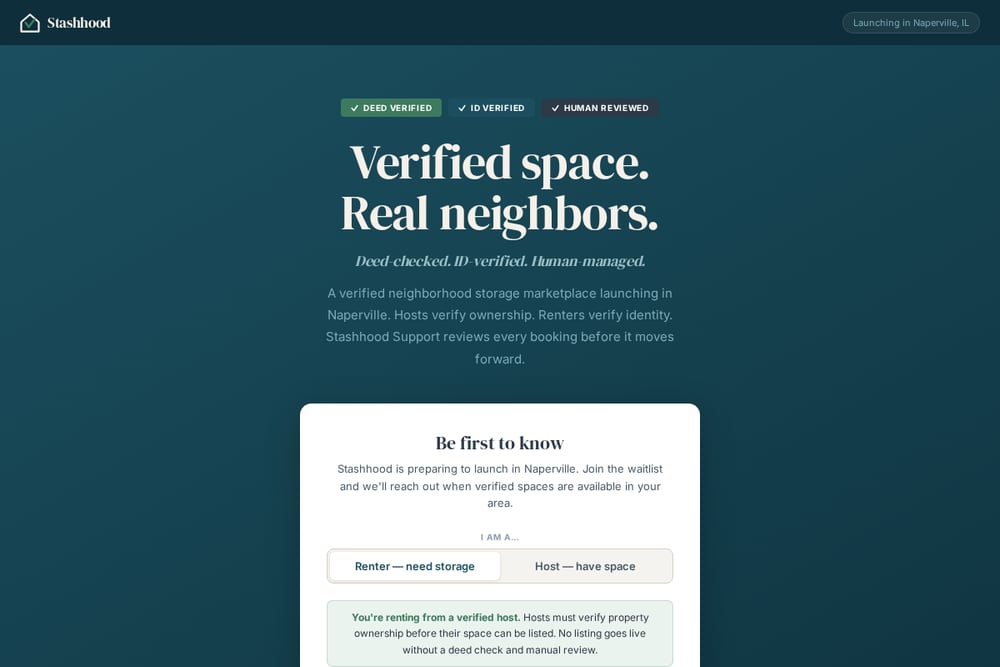 A screenshot of the Stashhood website.
Stashhood is a new, hyper-local storage marketplace launching in Naperville, IL, with a laser focus on verification. Unlike other platforms, Stashhood requires hosts to prove property ownership through deed checks and tax bills, cross-referenced with county records. Renters must submit a government ID and a liveness selfie before they can even message a host. Every booking is reviewed by a real person at Stashhood Support, adding a layer of human oversight that's rare in this space. This platform is built for trust, not just convenience, and it's ideal for those who want absolute certainty about who they're dealing with. If you're in Naperville and value security above all, Stashhood is worth joining the waitlist for.
#3 PeerStorage
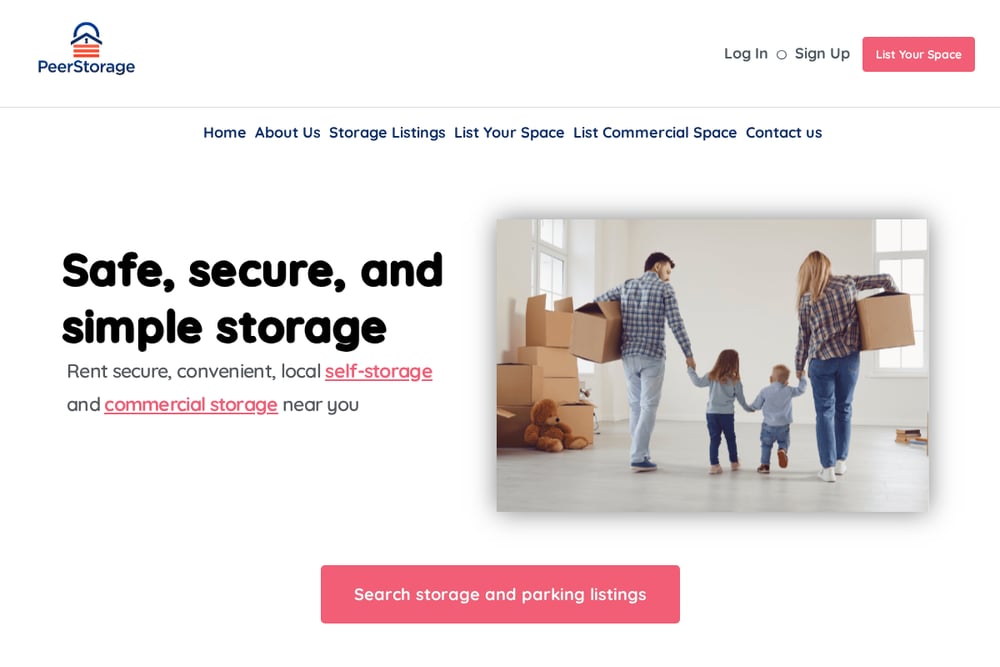 A screenshot of the PeerStorage website.
PeerStorage is a platform that offers a comprehensive guide to peer-to-peer storage, and it also operates as a marketplace. It's a great resource for understanding the differences between self-storage and peer-to-peer options, with detailed comparisons on cost, security, and accessibility. The platform itself connects renters with hosts, focusing on affordability and flexibility. PeerStorage's blog is a goldmine of information, helping you make an informed decision. While it may not have the same verification rigor as Stashhood, it's a solid choice for budget-conscious renters who want to learn as they go.
#4 Roost.com
 A screenshot of the Roost.com website.
Roost.com is a peer-to-peer self-storage marketplace that launched in San Francisco, bringing a fresh approach to urban storage. It focuses on connecting people with unused space in their homes and businesses, catering to the unique needs of city dwellers. Roost emphasizes convenience and accessibility, with a user-friendly interface that makes listing and booking straightforward. While it's still growing, its early presence in a major market signals potential. For those in urban areas, Roost offers a viable alternative to traditional storage facilities.
#5 Stashbee
 A screenshot of the Stashbee website.
Stashbee is a peer-to-peer storage marketplace that originated in the UK and has expanded its reach. It connects people with spare space in homes, garages, and even commercial properties. Stashbee is known for its flexible booking options and a wide range of spaces, from small lockers to large parking spots. The platform has a strong focus on community, encouraging hosts and renters to interact directly. While its verification process may not be as stringent as Stashhood's, it offers a reliable and user-friendly experience. If you're looking for a global perspective on peer-to-peer storage, Stashbee is a name to know.
How to Choose the Right Storage Marketplace
When picking a storage marketplace, start by considering your priorities. If security is your top concern, look for platforms that offer robust verification, like Stashhood's deed checks and ID requirements. If you're on a tight budget, you might prioritize platforms with lower prices, even if they have less rigorous vetting. Think about location—do you want a space close to home, or are you willing to travel for a better deal? Also, consider the level of human support you expect. Some platforms rely on automated systems, while others, like Stashhood, promise a real person to help with any issues. Finally, read the fine print on contracts and access hours to ensure the platform fits your lifestyle.
Automating Trust: The Verification Workflow
The key to a successful peer-to-peer storage platform is automating the trust-building process. Stashhood's workflow is a prime example: hosts submit ownership documents, which are cross-referenced with county records automatically. Renters go through a government ID and liveness check, ensuring they are who they claim to be. Once both sides are verified, the platform's support team manually reviews each booking before it's confirmed. This hybrid approach—automated checks plus human oversight—creates a safety net that pure automation can't match. It's a model that could set the standard for the industry.
The Future of Storage Is Verified
The peer-to-peer storage market is evolving, and verification is becoming the new currency of trust. While established players like Neighbor offer scale, newcomers like Stashhood are raising the bar with rigorous checks and human review. For you, the renter or host, this means more options and greater peace of mind. As these platforms grow, expect to see more emphasis on security and community. Whether you choose a global giant or a local startup, the key is to find a platform that aligns with your needs and values. The future of storage is not just about space—it's about trust.