Product teams need research that keeps up with the pace of decisions. This list covers tools that help teams recruit participants, run studies, and turn findings into evidence. Each entry describes what the tool does and who it suits, without ranking them as better or worse.
How This List Was Chosen
We selected tools that appear in the provided source pages and offer features relevant to product teams, such as participant recruitment, usability testing, and analysis. The list is not a quality ranking; it simply presents five options to consider.
| Provider | Best For |
|---|---|
| Maze | Product teams seeking an all-in-one research platform with AI assistance |
| UserTesting | Product teams needing fast feedback from a large participant network |
| Lyssna | Product teams wanting a multi-method research platform with recruitment |
| Useberry | Product teams seeking a straightforward platform for usability testing |
| Lookback | Product teams focused on in-depth qualitative research at scale |
5 User Research Tools for Product Teams
#1 Maze
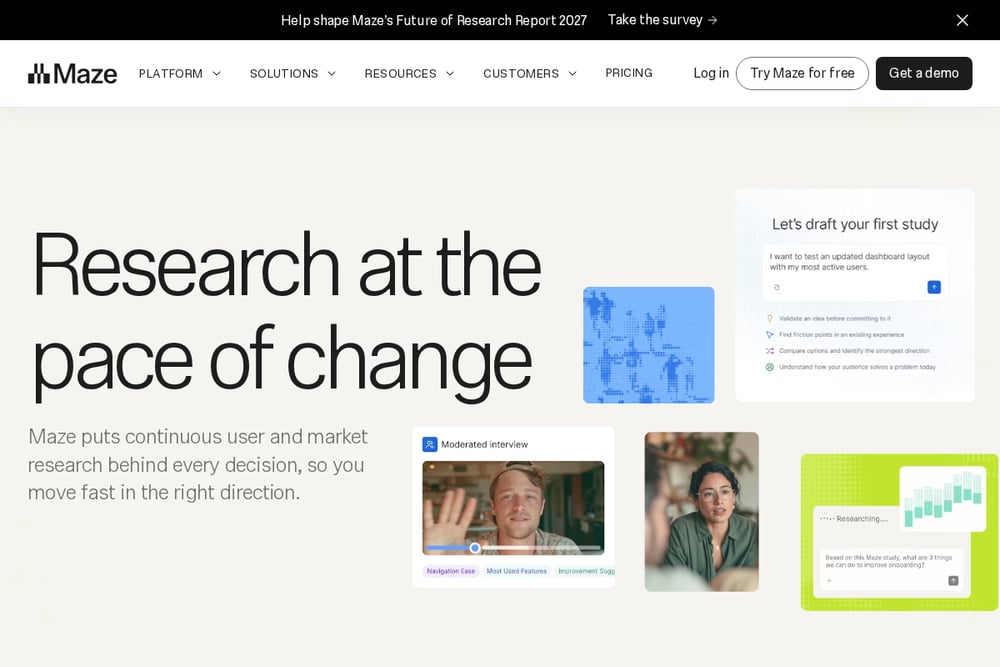 A screenshot of the Maze website.
Maze is a research platform that connects recruitment, testing, and analysis in one place. It supports qualitative and quantitative methods, including prototype testing, surveys, and moderated interviews. The platform includes an AI moderator and AI study builder to assist with research tasks. Maze also offers a panel of participants and tools for automated reporting. It suits product teams that want to run continuous research and bring evidence into their decision-making.
#2 UserTesting
 A screenshot of the UserTesting website.
UserTesting is a platform for getting fast feedback on apps, experiences, and content. It offers a network of authenticated participants and tools for AI-powered analysis. The platform connects human insight to workflows where teams build and decide. UserTesting provides services such as consulting and audience services. It suits product teams that need quick feedback from real users to inform design and product decisions.
#3 Lyssna
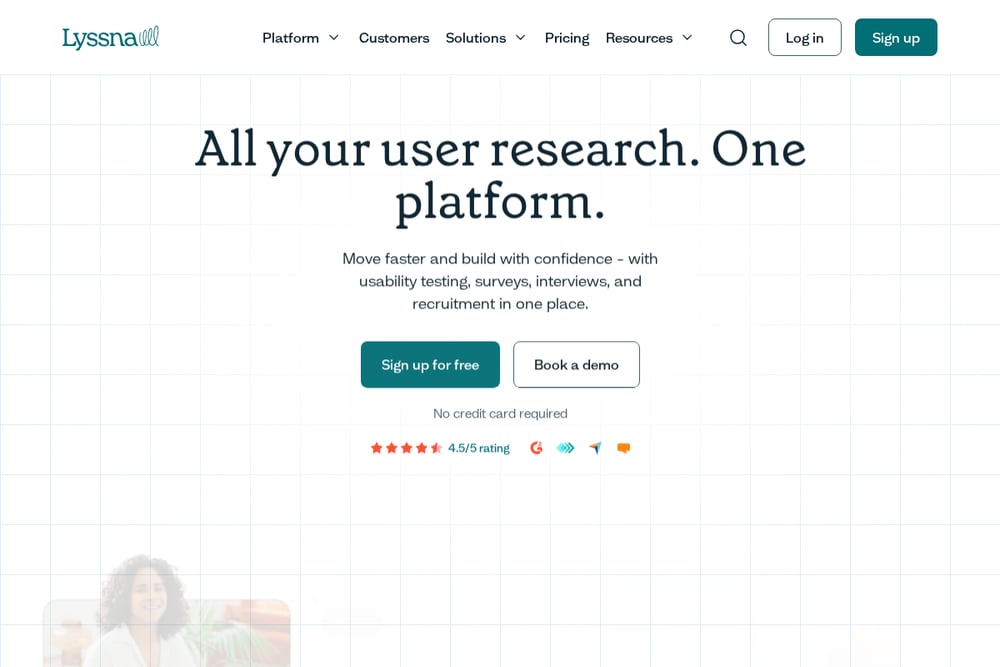 A screenshot of the Lyssna website.
Lyssna is a user research platform that combines usability testing, surveys, interviews, and recruitment. It offers a range of research methods, including card sorting, first click testing, and five second testing. The platform provides access to a panel of verified participants and tools for analysis. Lyssna aims to help teams move faster and build with confidence. It suits product teams looking for a versatile platform to validate decisions.
#4 Useberry
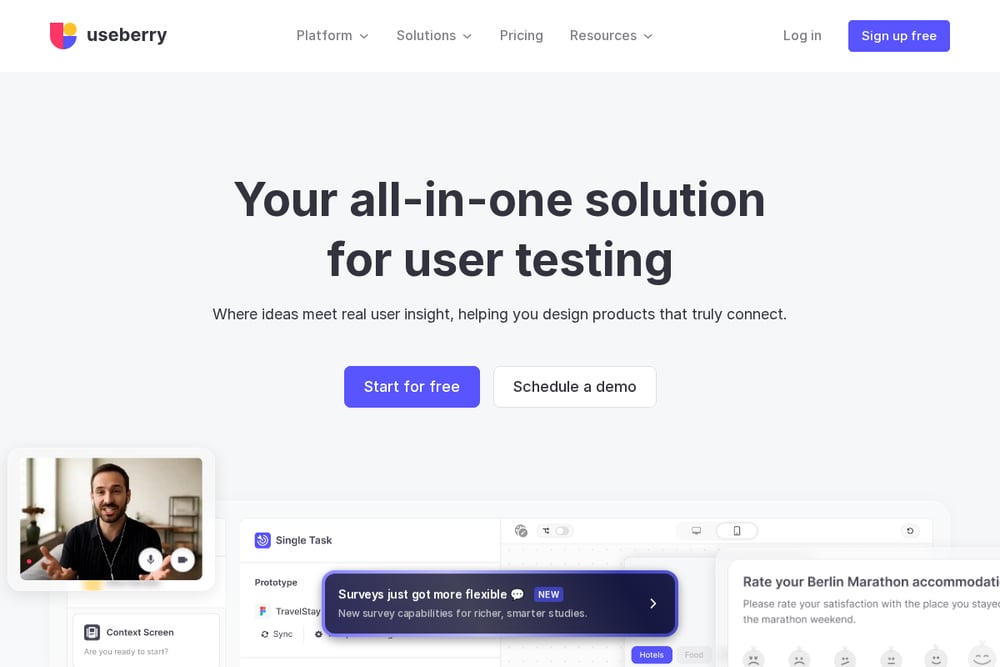 A screenshot of the Useberry website.
Useberry is an all-in-one user testing platform that helps teams see how users think, click, and feel. It offers research methods such as card sorting, tree testing, first click, and five second tests. The platform includes moderated research with live user interviews and participant recruitment from a global pool. Useberry provides analysis tools like recordings, highlights, and tags. It suits product teams that want a simple, powerful platform for UX research.
#5 Lookback
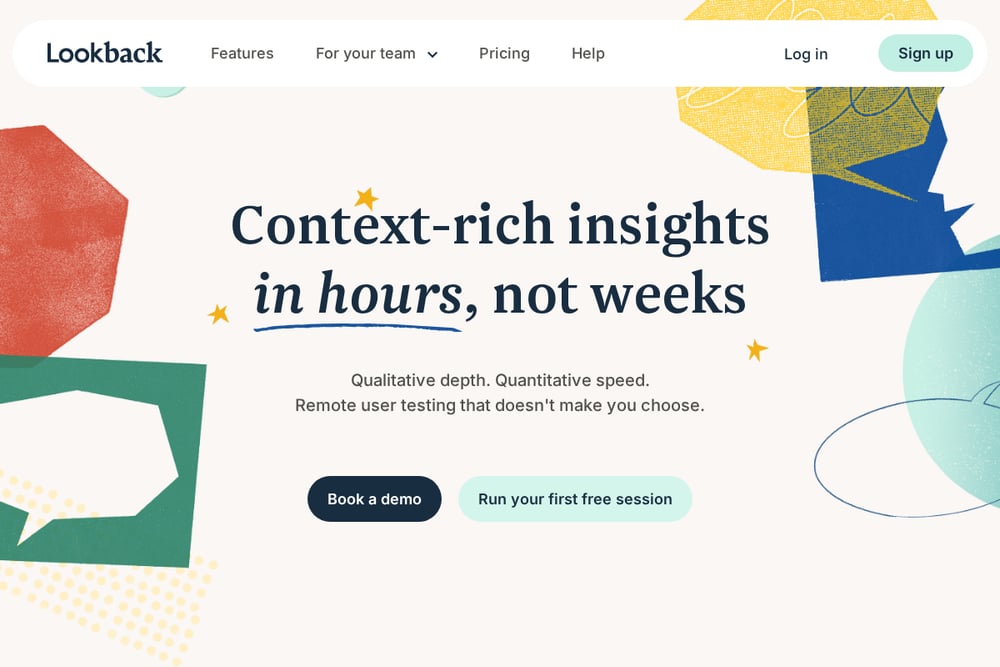 A screenshot of the Lookback website.
Lookback is a remote user testing platform that combines qualitative depth with quantitative speed. It supports moderated and unmoderated research, with AI features like suggested findings and smart headlines. The platform includes a Discover tool and MCP integration for analysis. Lookback emphasizes privacy-first design and compliance. It suits product teams that need rich insights from user sessions and want to scale research.
Which One Should You Choose?
Consider your team's primary research needs: if you need an all-in-one platform with AI assistance, Maze or Lyssna may fit. For fast feedback from a large network, UserTesting is an option. Useberry offers a simple platform for usability testing, while Lookback focuses on qualitative depth. Evaluate based on the methods you use most and the level of recruitment support you require.
Final Thoughts
These five tools each bring different strengths to product teams. The right choice depends on your research goals, team size, and workflow. None is universally best; instead, match the tool to your specific needs and context.
Know a company that belongs on this list? Email us at editorial@peekwire.com.