
Running a dispatch operation shouldn't feel like juggling five different tools. These five platforms each take a different swing at solving that problem—here's how they stack up.
The Dispatch Software Landscape in 2026
Trucking dispatch has moved far beyond whiteboards and phone calls. Modern platforms promise to automate load tracking, document handling, invoicing, and driver communication—all in one place. But the reality is that most carriers still stitch together multiple tools, leading to lost paperwork, delayed invoices, and frustrated brokers. The platforms below each tackle this chaos from a different angle, whether through AI-powered parsing, deep ELD integration, or a focus on simplicity. As you evaluate them, think about your own workflow: where do you lose the most time? That's the problem your next software should solve.
How We Evaluated These Platforms
We looked at each platform through the lens of a small to mid-sized trucking operation. Key factors included the breadth of dispatch features, ease of adoption for dispatchers and drivers, and how well each handles document flow and invoicing. We also considered pricing transparency and the strength of integrations with tools like ELDs and accounting software. Finally, we weighed the practical, day-to-day experience—because software that's too complex or too limited won't get used. Here's what stood out for each contender.
Here's a quick snapshot of the five platforms, ranked by our overall assessment for dispatch-focused teams.
| Provider | Best For |
|---|---|
| Truckbase | Carriers wanting a simple, fast-to-adopt dispatch TMS |
| Dispatch Comms | Dispatch Management Software for Trucking Teams | Dispatch teams that want to eliminate paperwork and manual data entry |
| Alvys | Growing logistics companies needing a full TMS with AI and integrations |
| Trucking Hub | Fleets that want an all-in-one platform with compliance and custom options |
| TruckX | Fleets that prioritize safety and telematics alongside dispatch |
The Five Platforms, Closer Look
#1 Truckbase
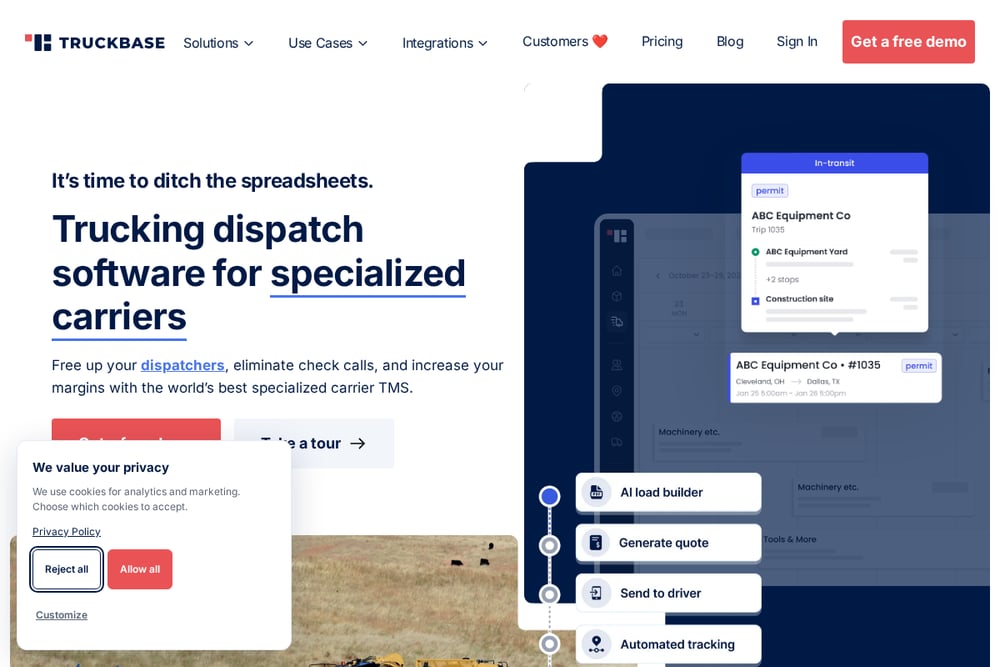 A screenshot of the Truckbase website.
Truckbase is built around the idea that dispatch software should be simple enough for any dispatcher to learn in 30 minutes. It offers zero data entry by pulling load details directly from brokers, plus real-time truck tracking and instant invoicing. The platform integrates with over 30 ELDs and syncs with QuickBooks, which eliminates double entry. Its customer portal and driver settlement tools are particularly strong for improving communication and trust. If you want a tool that your team will actually adopt without a steep learning curve, Truckbase is a solid bet. It's a great fit for long-haul, regional, and cross-border carriers that value efficiency.
#2 Dispatch Comms | Dispatch Management Software for Trucking Teams
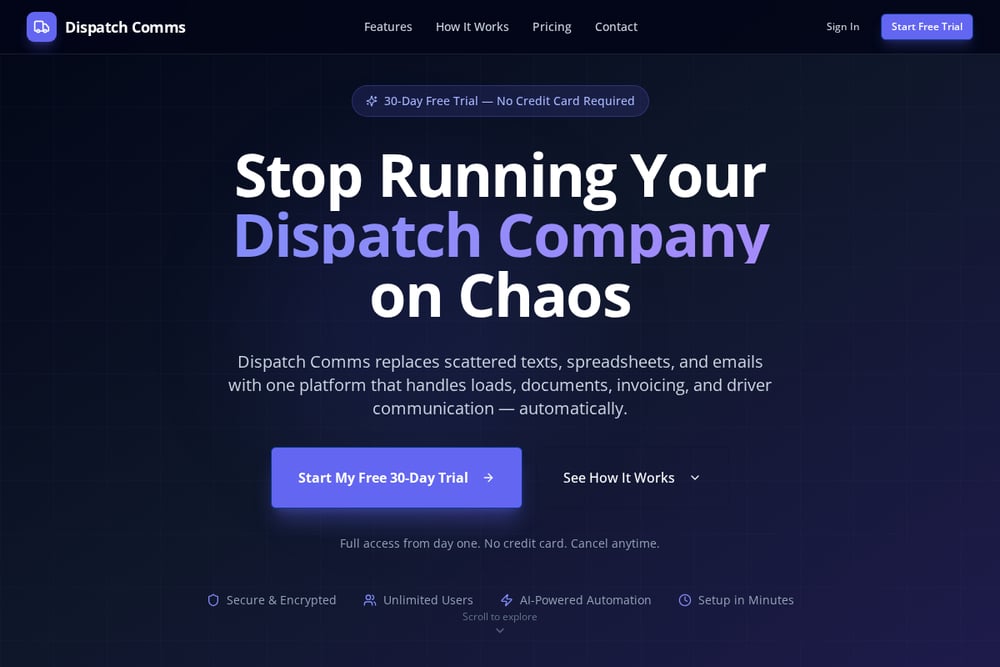 A screenshot of the Dispatch Comms website.
Dispatch Comms focuses on automating the paperwork-heavy side of dispatch, which is a huge pain point for many teams. Its AI reads rate confirmations and auto-fills load details, and drivers can scan multi-page BOLs directly from their phone browser—no app install needed. The platform automatically sends status updates to dispatchers, MC owners, and brokers, cutting down on check calls. It also generates PDF invoices and tracks driver expenses, which speeds up billing. For teams that are drowning in documents and manual data entry, this is a targeted solution. It's a strong choice for dispatch operations that want to reduce administrative hours without switching to a full TMS.
#3 Alvys
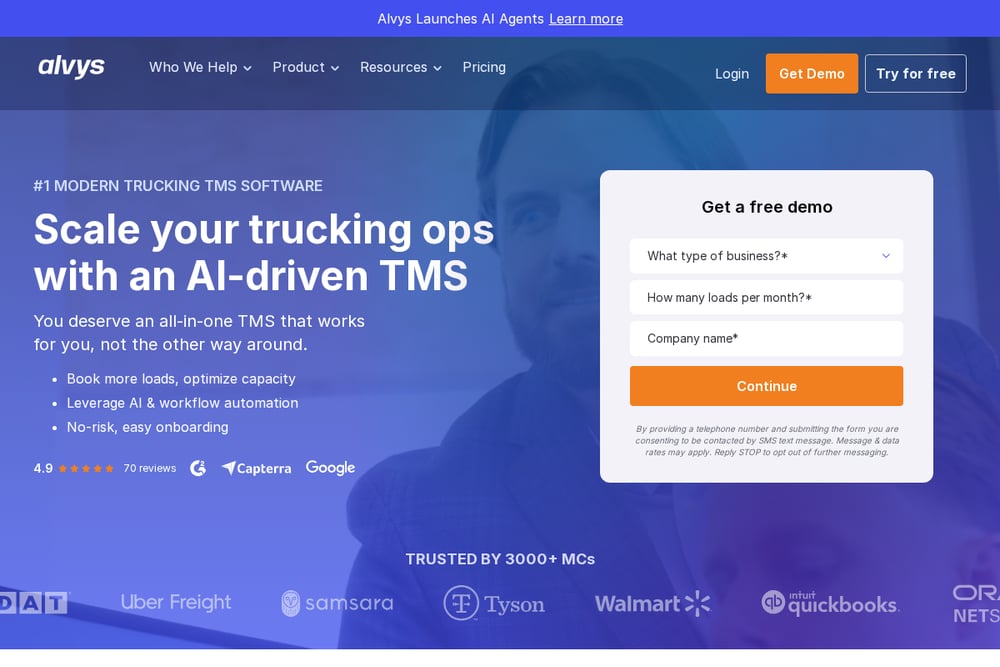 A screenshot of the Alvys website.
Alvys positions itself as an all-in-one operating system for logistics, covering dispatching, driver apps, compliance, accounting, and reporting. It offers native EDI and over 120 integrations, which is impressive for connecting with brokers and other systems. The platform includes AI agents that help with tasks like document scanning and load booking, making it a forward-looking choice. Alvys is designed for carriers, brokers, and hybrid operations, so it's more complex than some competitors. If you need a comprehensive TMS that can scale with your business, Alvys is worth a serious look. Its pricing is transparent, with no long-term contracts and unlimited users.
#4 Trucking Hub
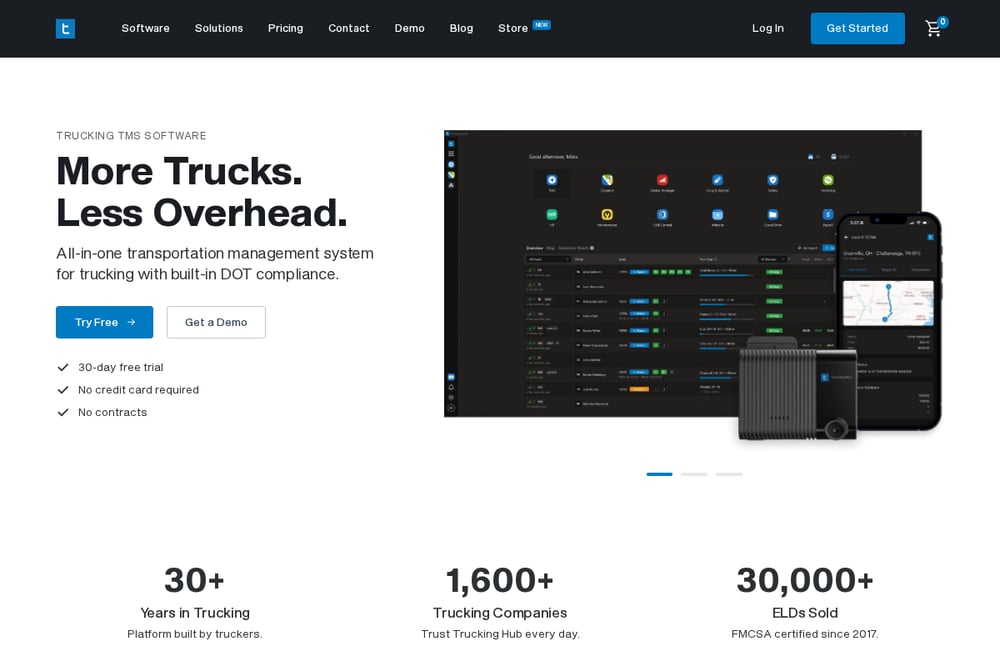 A screenshot of the Trucking Hub website.
Trucking Hub is a modular platform that covers dispatch, compliance, ELD, IFTA, payroll, and even custom software development. It's more of a suite of tools than a single dispatch app, which gives you flexibility to pick what you need. The dispatch module includes planning, tracking, and routing with PC*MILER, plus a mobile app for drivers to collect proof of delivery. It also offers white-labeling and custom development, which is rare among competitors. However, the breadth of features might be overwhelming if you're just looking for a simple dispatch solution. It's best for fleets that want to consolidate multiple operational areas into one ecosystem.
#5 TruckX
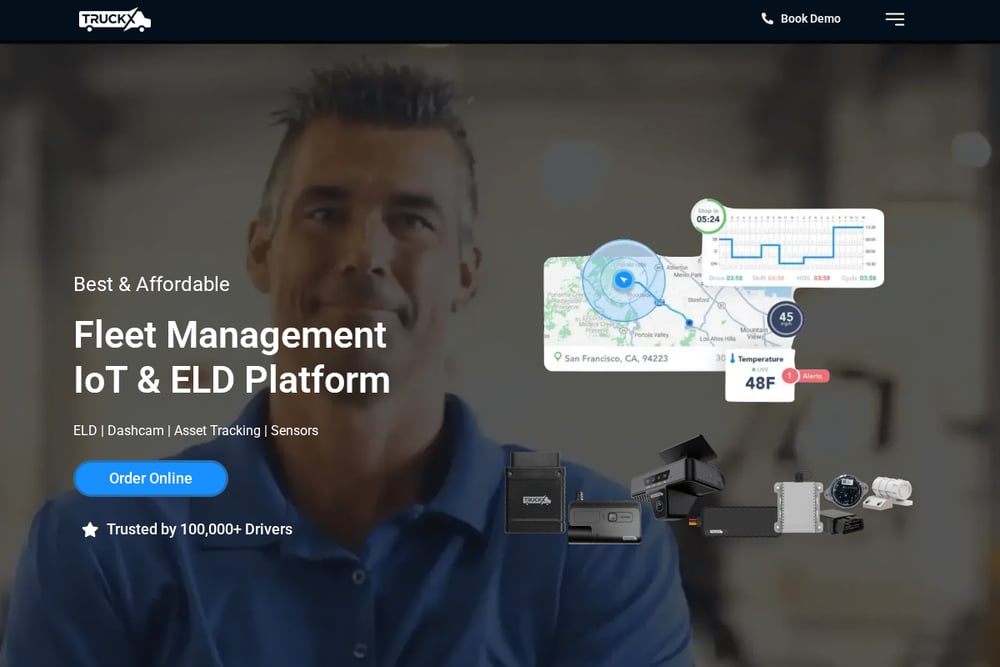 A screenshot of the TruckX website.
TruckX is a hardware and software combo that focuses on fleet tracking, ELD compliance, and driver safety. Its dispatch software integrates with GPS and telematics to help you optimize routes and monitor driver behavior in real time. The platform is particularly strong for safety-conscious fleets, with AI dashcams and HOS compliance built in. However, its dispatch features are less comprehensive than dedicated TMS platforms, and it may require purchasing hardware. If you're already using TruckX for ELD and asset tracking, adding their dispatch module could be a natural fit. But for pure dispatch management, you might find it lacking in document and invoicing tools.
How to Choose the Right Dispatch Platform
Start by mapping your current workflow and identifying the biggest bottlenecks. If paperwork and data entry are eating your hours, a tool like Dispatch Comms that automates document parsing and invoicing could be a game-changer. If you need a full TMS with accounting and compliance, Alvys or Trucking Hub might be more appropriate. Consider your team's technical comfort—Truckbase is famously easy to adopt, while Alvys has a steeper learning curve. Also, think about integrations: do you need ELD data, QuickBooks sync, or EDI? Finally, check pricing models and whether they scale with your fleet size. The right choice is the one that fits your operation's size, complexity, and pain points.
Automation Workflows to Look For
The best dispatch platforms automate the repetitive tasks that slow you down. Look for features like automatic status notifications to brokers and dispatchers when drivers update loads. AI-powered parsing of rate confirmations and receipts can save hours of manual entry. In-browser document scanners let drivers upload multi-page BOLs without installing apps. Automated invoice generation from load data and mileage calculations reduces billing errors. And backhaul alerts can help you find return loads. These workflows turn dispatch from a reactive, admin-heavy job into a streamlined operation.
The Bottom Line
No single platform is perfect for every trucking team, but each of these five brings something valuable to the table. Truckbase wins on simplicity and adoption, while Dispatch Comms excels at automating paperwork. Alvys offers a comprehensive, AI-driven TMS for scaling operations, and Trucking Hub provides a modular suite for fleets with diverse needs. TruckX is a solid choice if you're already invested in their hardware and want to add dispatch. Evaluate your own pain points, test a few demos, and choose the one that feels like it was built for your workflow. The right software can save you hours every week and keep your brokers happy—so it's worth the time to get it right.