
If you're a healthcare professional looking to deepen your understanding of trauma-informed care, you know the stakes are high. Your patients rely on you to navigate complex emotional and physiological landscapes, and the right training can make all the difference.
Why Trauma-Informed Care Training Matters More Than Ever
Trauma is nearly universal, with studies showing around 70 percent of people experience at least one traumatic event in their lifetime. Yet, many clinicians feel underprepared to address it in practice. The demand for specialized training has exploded, pushing organizations to offer everything from quick certifications to deep academic dives. The best programs don't just teach theory; they give you practical tools to apply in high-stakes environments, all while protecting your own well-being.
How I Ranked These Programs
I evaluated each program based on three core criteria: clinical relevance (does it translate to real patient care?), depth of content (is it evidence-based and comprehensive?), and flexibility (can you fit it into a busy schedule?). I also considered cost and the credibility of the issuing institution. The goal was to find programs that respect your time and your patients' trust.
Here's a quick look at how the five programs stack up against each other.
| Provider | Best For |
|---|---|
| Harvard Medical School | Clinicians seeking a prestigious, intensive one-day update |
| Evergreen Certifications | Professionals wanting a specialized, role-specific trauma certification |
| AIHCP | Healthcare workers needing a flexible, self-paced certification |
| Home - Jen J Snyder | Clinicians wanting a deep dive into nervous system science and ethics |
| UMass Chan Medical School | Professionals seeking training from a leading academic medical center |
The Full Breakdown: 5 Trauma-Informed Care Training Programs
#1 Harvard Medical School
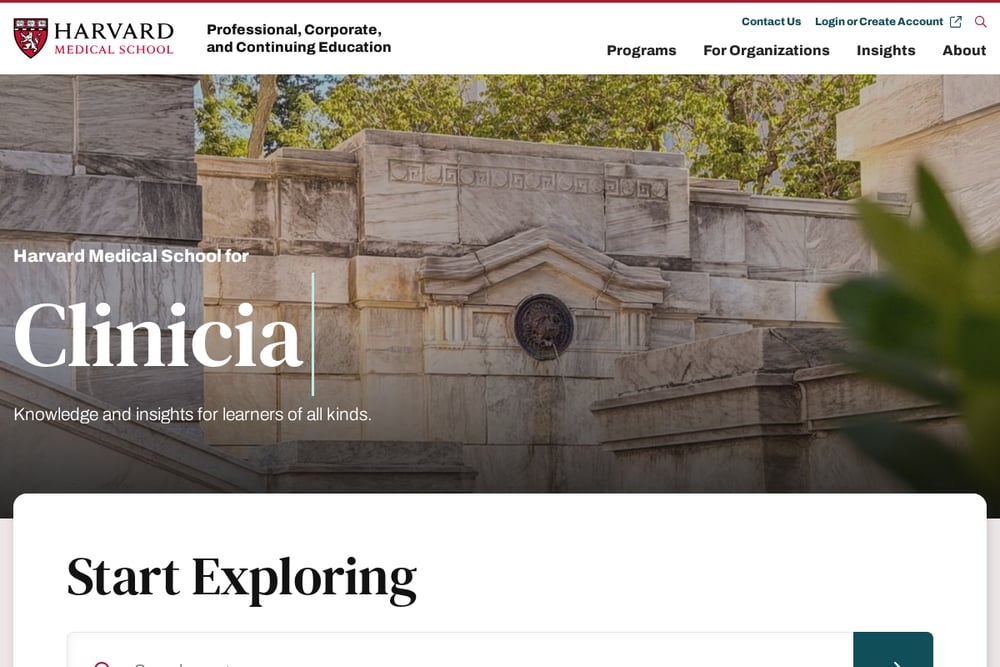 A screenshot of the Harvard Medical School website.
Harvard Medical School offers a live online course titled 'Trauma Informed Care (TIC): Optimizing the Role of TIC in Mainstream Clinical Practice.' This one-day program brings together a multidisciplinary group of experts to equip you with culturally grounded strategies and practical tools. You'll explore emerging adjunctive interventions while also focusing on clinician well-being, which is a critical but often overlooked component. The course costs $375 and earns you up to 8.00 AMA PRA Category 1 Credits. It's a concentrated, high-level experience that leverages Harvard's academic prestige.
#2 Evergreen Certifications
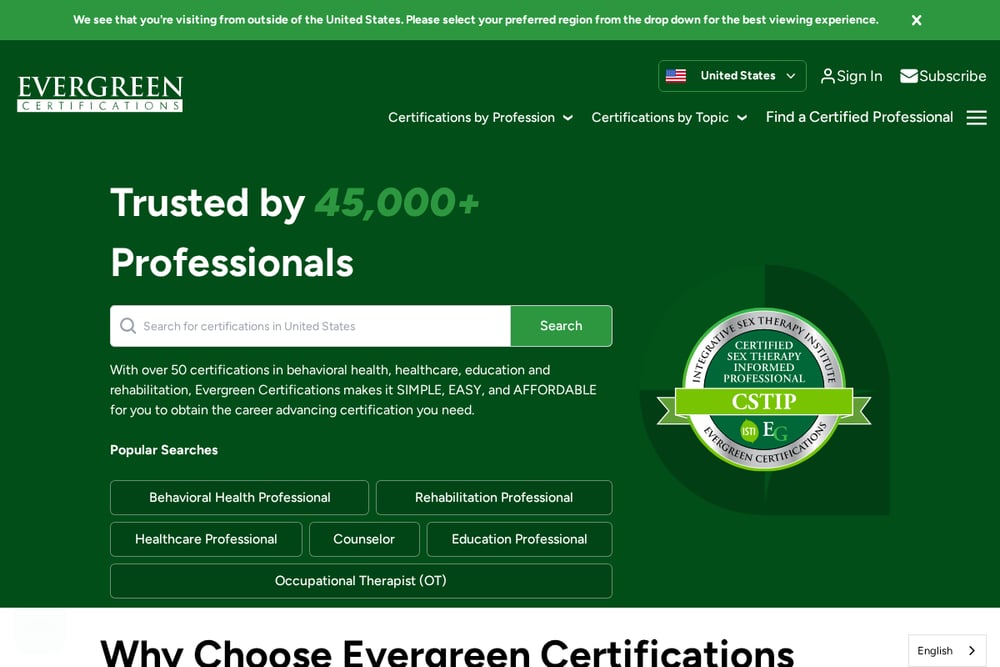 A screenshot of the Evergreen Certifications website.
Evergreen Certifications provides a Certified Trauma Professional (CTP) credential that is widely recognized across behavioral health and healthcare fields. Their program covers a broad spectrum, including clinical trauma, complex trauma, child and adolescent trauma, and even compassion fatigue. You can choose a track tailored to your role, whether you're a licensed clinician, a graduate student, or a healthcare professional. The certification is designed to be practical and immediately applicable, with a focus on real-world scenarios. It's a solid choice if you want a specialized credential that signals expertise to employers.
#3 AIHCP
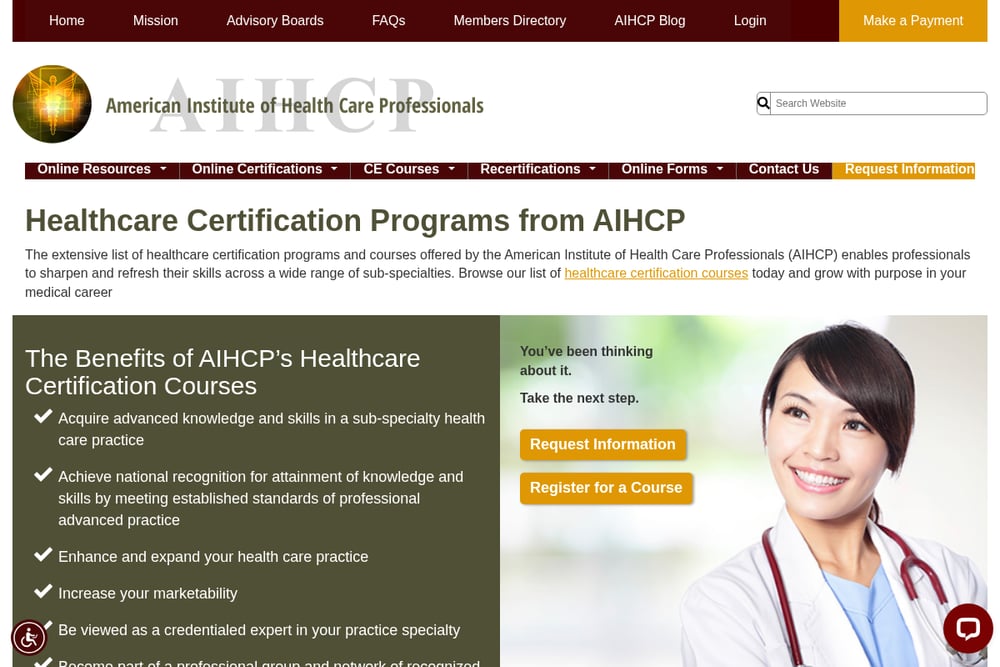 A screenshot of the AIHCP website.
The American Institute of Health Care Professionals (AIHCP) offers a Trauma-Informed Care Certification that provides the necessary skills and knowledge to effectively aid patients experiencing various forms of trauma. The program is self-paced and includes course requirements, renewal options, and testimonials from past participants. AIHCP also provides a range of continuing education courses and recertification options, making it a flexible choice for busy professionals. It's a straightforward, accessible certification that doesn't require a huge time commitment.
#4 Home - Jen J Snyder
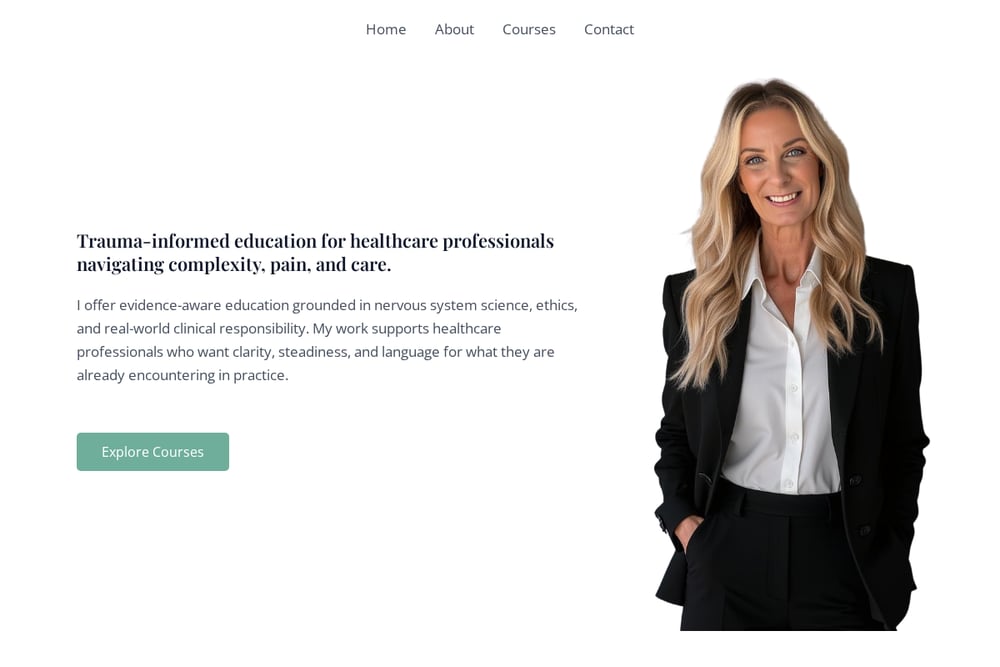 A screenshot of the Home - Jen J Snyder website.
Jen J Snyder provides trauma-informed educational courses specifically designed for healthcare professionals, with a sharp focus on nervous system science, ethics, and real-world clinical responsibility. The courses are self-paced and evidence-aware, meaning you can learn at your own rhythm while staying grounded in current research. This program stands out for its emphasis on the nervous system's role in trauma, which is essential for understanding patient responses. It's a great fit if you want to move beyond surface-level concepts and dive into the biological underpinnings of trauma care.
#5 UMass Chan Medical School
UMass Chan Medical School offers trauma-informed care trainings through its Center for Treatment of Traumatic Stress (CTTC), specifically designed for healthcare professionals. The program focuses on practical applications within clinical settings, drawing on the center's extensive research and clinical experience. While the specific course details were not fully accessible, UMass Chan is a respected institution with a strong track record in trauma research. This option is best for those who want training rooted in academic medical expertise.
How to Pick the Right Trauma-Informed Care Training for You
Start by asking yourself what you need most. Are you looking for a quick, prestigious credential to boost your resume? Harvard's one-day course might be your best bet. Do you want a deep, science-focused understanding of the nervous system? Jen J Snyder's program is tailored for that. Consider your schedule: self-paced options like AIHCP and Jen J Snyder offer flexibility, while live courses like Harvard's require a set time commitment. Also, think about your specialty—Evergreen Certifications lets you choose a track specific to your role. Finally, check if the program offers CE credits you need for licensure.
Streamline Your Learning with a Simple Workflow
Once you choose a program, set up a dedicated study schedule. Block out 30 minutes each day or a few hours each week, and stick to it. Use a note-taking app like Notion or Evernote to capture key concepts and how they apply to your patients. After completing the course, create a cheat sheet of your top three takeaways and share it with your team. This turns your learning into a practical tool that improves care across your practice.
Your Next Step in Trauma-Informed Care
No matter which program you choose, the most important thing is to start. Trauma-informed care isn't just a certification; it's a mindset that transforms how you interact with every patient. Each of these five programs offers a unique path to that transformation, whether through academic rigor, specialized focus, or flexible learning. Pick the one that aligns with your goals, and commit to deepening your practice. Your patients will feel the difference.