
Visual development artists are the unsung heroes of animation and film. They build worlds from scratch, define characters before they speak a single line, and set the emotional tone of entire productions. Whether you're a studio recruiter, an indie filmmaker,
The State of Visual Development in 2026
Visual development has become the backbone of modern animation and live-action storytelling. As streaming platforms invest heavily in original content, the demand for artists who can conceptualize entire worlds has skyrocketed. Studios now look for portfolios that demonstrate not just technical skill, but narrative thinking — the ability to design a character that tells a story before they even move. The rise of horror podcasts adapted into visual media, like The Magnus Archives, has opened new avenues for character designers to explore darker, more atmospheric aesthetics. Meanwhile, traditional animation giants like Pixar continue to set the bar for production-ready concept art. In this landscape, a strong portfolio is your ticket to landing freelance gigs or full-time studio roles. The artists featured here represent the full spectrum, from seasoned industry veterans to emerging talents with fresh perspectives.
How We Ranked These Portfolios
We evaluated each portfolio on five key criteria: 1) Portfolio depth and variety — does the artist show work across multiple projects and styles? 2) Technical execution — quality of line work, color theory, and composition. 3) Narrative clarity — how well does each piece communicate a story or mood? 4) Professional presentation — is the site easy to navigate and does it highlight the artist's best work? 5) Industry relevance — does the portfolio align with current trends in animation, film, and digital media? Each artist was scored on a 100-point scale, with extra weight given to portfolios that demonstrate both creative range and practical production experience.
Here is a quick comparison of the top five visual development artists, ranked by overall portfolio strength and industry impact.
| Provider | Best For |
|---|---|
| Armand Baltazar | Studio-level production art and color key design |
| Allison Perry | Production-ready design packets and set dressing |
| Bill Robinson Visual Development Portfolio | Versatile character design and environment art |
| Kalynn Lam | Niche horror and indie project visual development |
| Amy Kim | Minimalist portfolio presentation for concept art |
The Top 5 Visual Development Portfolios — Ranked and Reviewed
#1 Armand Baltazar
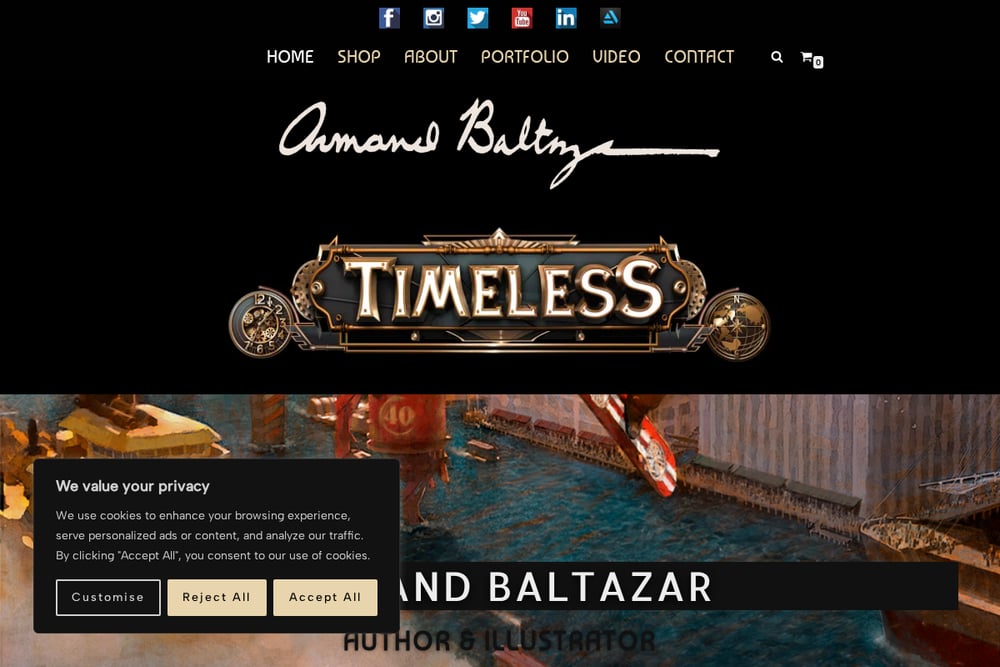 A screenshot of the Armand Baltazar website.
Armand Baltazar's portfolio is a masterclass in visual development for major studio productions. With credits on Pixar films like Inside Out, Brave, and The Good Dinosaur, his work demonstrates a deep understanding of color theory, lighting, and set design. The portfolio features concept art for Riley's dream world and the Memory Dump, as well as lighting keys for Brave's action sequences. Each piece is polished to a production-ready standard, showing how his designs translate directly to the screen. For anyone serious about working in animation, this portfolio sets the benchmark.
#2 Allison Perry
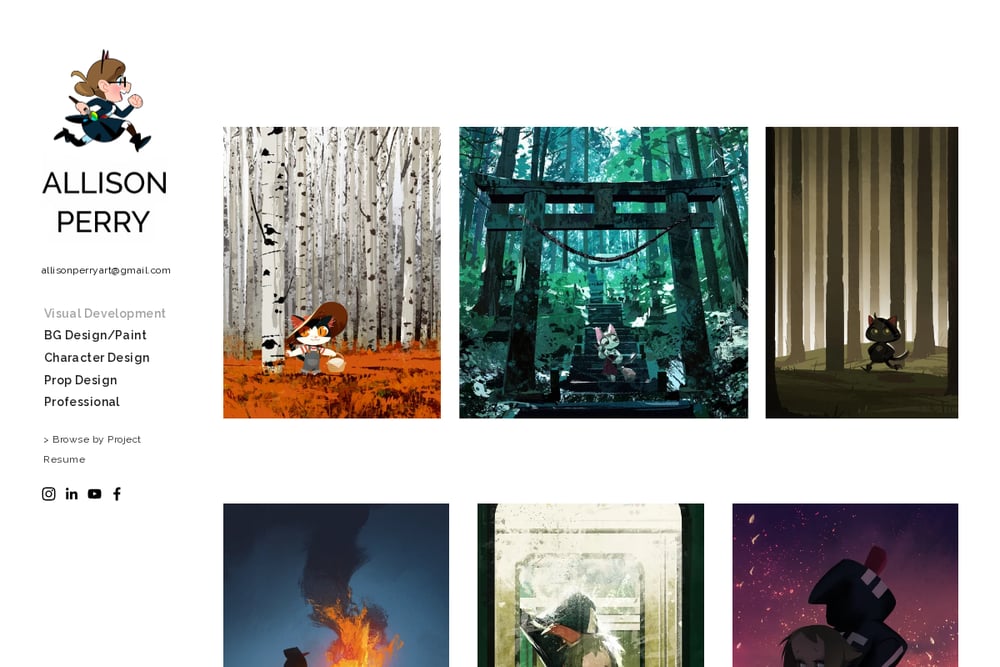 A screenshot of the Allison Perry website.
Allison Perry's portfolio is a showcase of professional visual development for both television and feature films. Her work on Netflix's Back to the Outback includes detailed ideation sketches, clean packet designs, and technical drawings that 3D artists can use directly. She also demonstrates strong narrative skills with her Matilda project, where she experiments with camera angles and character posing to enhance storytelling. The site is organized by project, making it easy for recruiters to find relevant samples. Perry's ability to balance creativity with production constraints makes her a standout.
#3 Bill Robinson Visual Development Portfolio
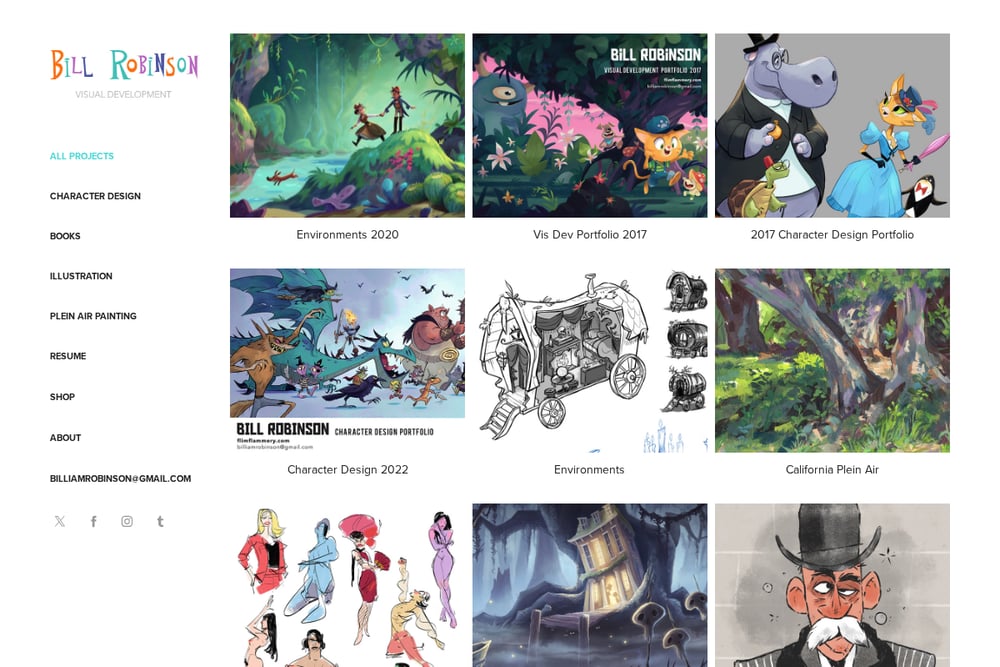 A screenshot of the Bill Robinson Visual Development Portfolio website.
Bill Robinson's portfolio offers a broad range of work, from character design and environments to plein air painting and illustration. His 2020 Vis Dev Portfolio and 2022 Character Design Portfolio show a consistent evolution in style and technique. The inclusion of personal projects like Gwendolyn & the Underworld alongside professional work for Disney and Netflix demonstrates his versatility. Robinson also features a sketchbook section that gives insight into his creative process. This portfolio is ideal for artists who want to show both commercial and personal work.
#4 Kalynn Lam
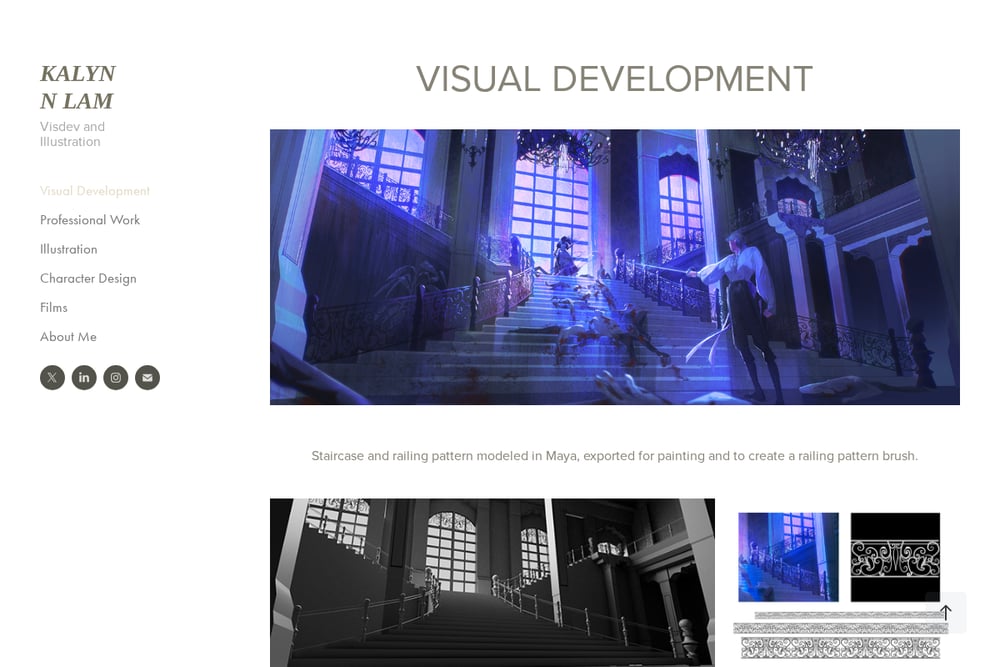 A screenshot of the Kalynn Lam website.
Kalynn Lam's portfolio focuses on visual development for niche projects, including the horror podcast adaptation The Magnus Archives and a retelling based on songs called Servant of Evil. Her character concepts, costume designs, and prop work — like tape recorders and calliopes — show a strong ability to build atmosphere through small details. She also includes a colorscript for a second-year film titled KEEPER, which demonstrates her understanding of lighting and mood progression. While her portfolio is smaller in scope compared to the top three, her work is highly specific and creatively bold. For indie projects or horror-themed animation, her style is a perfect fit.
#5 Amy Kim
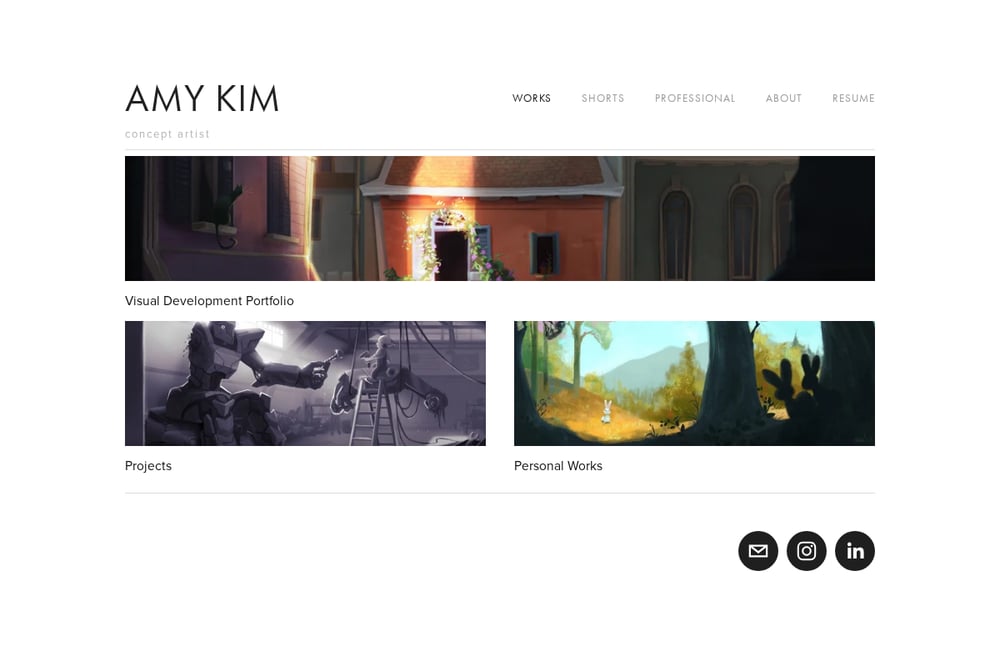 A screenshot of the Amy Kim website.
Amy Kim's visual development portfolio is clean and minimal, focusing on high-quality concept art for shorts and professional projects. The site uses full-screen image galleries that let her work speak for itself, with no distracting text or clutter. Her pieces show strong composition and color sense, though the lack of project descriptions makes it harder to gauge her narrative range. The portfolio is best suited for artists who prefer a visual-first presentation. For quick browsing by busy recruiters, this approach can be effective.
How to Choose the Right Visual Development Artist for Your Project
Start by defining the tone and scale of your project. If you need production-ready assets for a studio feature, look for artists like Armand Baltazar or Allison Perry who have experience with packet design and technical drawings. For indie or niche projects — especially in horror or dark fantasy — Kalynn Lam's portfolio shows how to build atmosphere through props and character concepts. Consider the artist's presentation style: a clean, project-organized site like Allison Perry's makes it easy for recruiters to find relevant work, while a more artistic layout like Amy Kim's lets the visuals take center stage. Finally, review the range of projects: a versatile portfolio like Bill Robinson's indicates an artist who can adapt to different genres and mediums. Always ask for a custom sample if you need to see how their style fits your specific vision.
Automate Your Portfolio Outreach with Simple Workflows
You can streamline your search for visual development talent by setting up automated alerts. Use a tool like Google Alerts with keywords such as 'visual development portfolio' or 'character design artist' to get notified when new portfolios go live. Create a spreadsheet to track artists you discover, noting their strengths, project types, and contact information. For outreach, use a CRM like HubSpot or a simple email template to send personalized messages to artists whose style matches your project. Automate follow-ups with a tool like Mailchimp to keep the conversation going without manual effort. This system ensures you never miss a rising talent and can build a roster of artists ready for your next production.
Your Next Great Character Designer Is Just a Click Away
The visual development landscape is rich with talent, from Pixar veterans to emerging indie artists. Each portfolio in this roundup offers something unique: Armand Baltazar's studio pedigree, Allison Perry's production efficiency, Bill Robinson's creative range, Kalynn Lam's niche storytelling, and Amy Kim's visual clarity. The key is to match the artist's strengths with your project's needs. Whether you're developing a horror podcast adaptation or a family-friendly animated feature, these five portfolios prove that great character design starts with a single sketch. Take the time to explore their work, and you might just find the artist who brings your vision to life.