
Space is no longer just for astronauts and engineers. As humanity prepares for permanent settlements on the Moon and Mars, a new breed of designer is stepping up: the space architect. These studios blend engineering rigor with human-centered design to
The New Frontier of Design
Space architecture is no longer a speculative discipline. With NASA's Artemis program, commercial space stations like Starlab, and ambitious Mars settlement plans, the demand for specialized habitat design has exploded. These firms must balance extreme environmental constraints — radiation, vacuum, temperature swings — with human psychological and physiological needs. The best studios combine aerospace engineering, industrial design, and behavioral science to create environments where crews can perform and live for years at a time. As the industry matures, the line between space architecture and terrestrial architecture is blurring, with innovations in 3D printing and generative design flowing both ways.
How We Ranked the Top Studios
We evaluated each firm based on four criteria: proven track record (flight heritage or NASA collaboration), breadth of services (from concept to hardware), innovation in human-centered design, and community or research impact. Firms with orbital hardware or direct agency partnerships scored higher, but we also valued those pushing the field forward through research and open knowledge sharing.
Here is a quick comparison of the five space architecture studios shaping the future of off-world living.
| Provider | Best For |
|---|---|
| SAGA Space Architects | End-to-end space habitat design with proven orbital hardware |
| SEArch+ (Space Exploration Architecture) | NASA-collaborated lunar and Mars habitat concepts |
| Aurelia Institute | Research-backed feasibility analysis of habitat concepts |
| Frontier Space Architecture | Integrated settlement frameworks and mission architecture |
| SpaceArchitect.org | Community networking and open-access research archive |
Deep Dive: The Top 5 Space Architecture Studios
#1 SAGA Space Architects
SAGA Space Architects is a Copenhagen and Hanoi-based studio that operates at the intersection of space architecture and terrestrial innovation. They are vertically integrated across architecture, engineering, design, and software development, giving them a rare end-to-end capability. Their Circadian Light system has been operating aboard the International Space Station since 2023, surpassing 1,000 days in orbit. They also built and tested the LUNARK Moon Habitat during a 100-day Arctic expedition and designed FLEXHab, the astronaut training habitat at ESA's European Astronaut Centre. Currently, they are working on habitat design for Starlab's commercial space station. On Earth, they apply the same generative design and 3D-printing techniques to projects like Skovsporet, Europe's largest 3D-printed housing development.
#2 SEArch+ (Space Exploration Architecture)
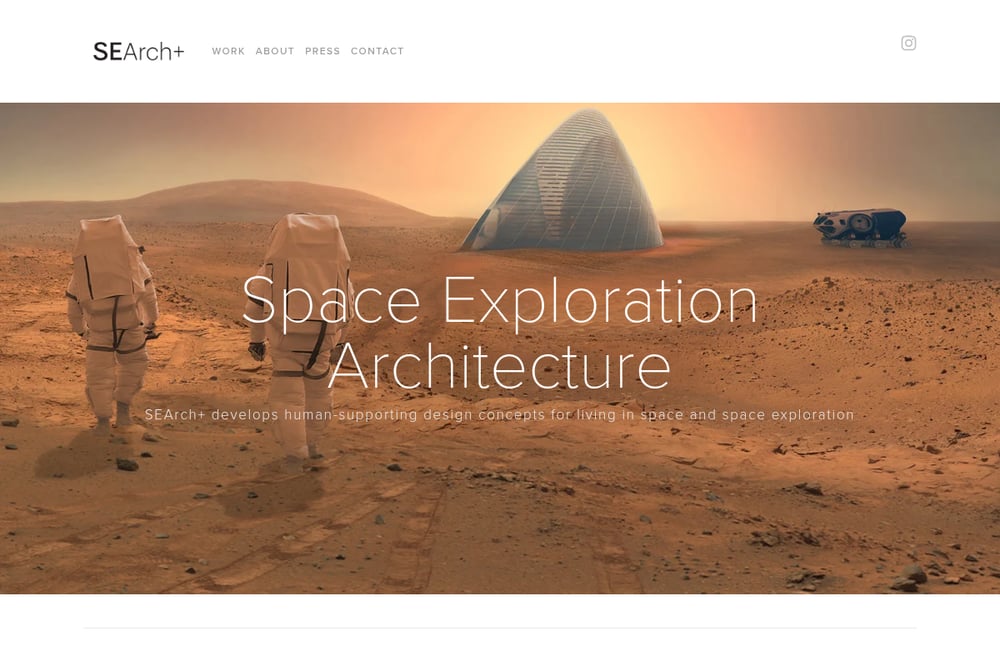 A screenshot of the SEArch+ website.
SEArch+ has a decade-long association with NASA's Johnson Space Center Human Habitability Division and Langley Research Center. Their mission is to produce innovative 'human-centered' designs that enable people to thrive in space. Notable projects include the Lunar Lantern concept for mankind's first extended Moon mission, a Lunar Landing Pad design for 3D-printed lunar settlement infrastructure, and the Mars X-House, which won top prizes in NASA's 3D-Printed Habitat Competition. They also developed the Mars Ice Home concept in collaboration with NASA. Their work consistently pushes the boundaries of what's possible with in-situ resource utilization and additive construction.
#3 Aurelia Institute
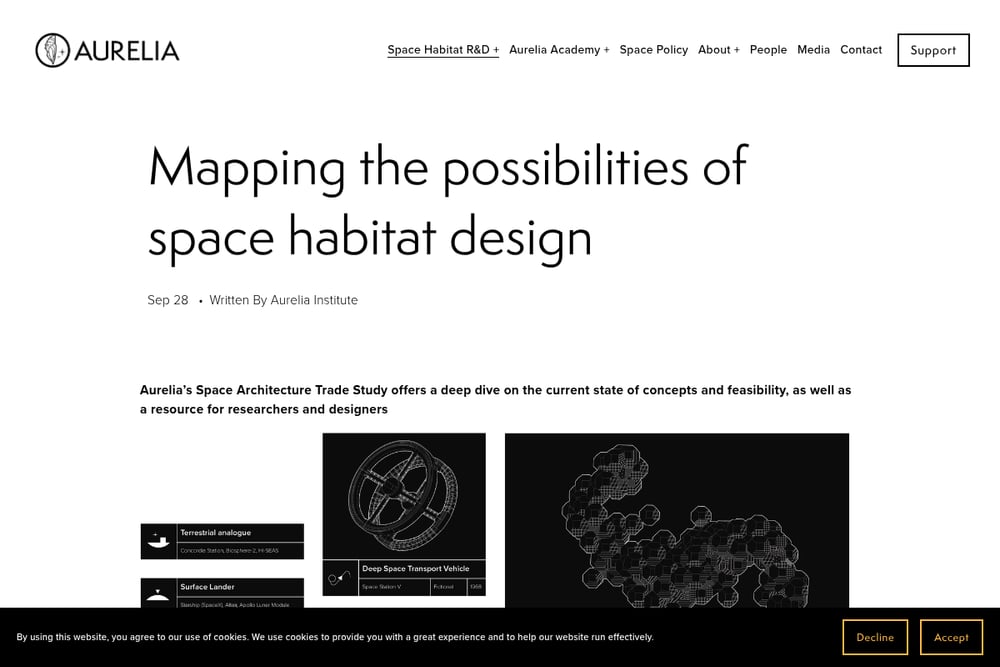 A screenshot of the Aurelia Institute website.
Aurelia Institute is a research-driven organization that recently completed the first phase of its Space Architecture Trade Study, a deep-dive review of habitat papers, concepts, and designs. Led by Dr. Annika Rollock and Dr. Danielle DeLatte, the study assesses past and current space station designs while evaluating the feasibility of future concepts. The institute aims to understand what designs have succeeded, why, and which unbuilt concepts are worth pursuing. This makes Aurelia a critical resource for anyone looking to benchmark ideas or validate design directions before committing to development.
#4 Frontier Space Architecture
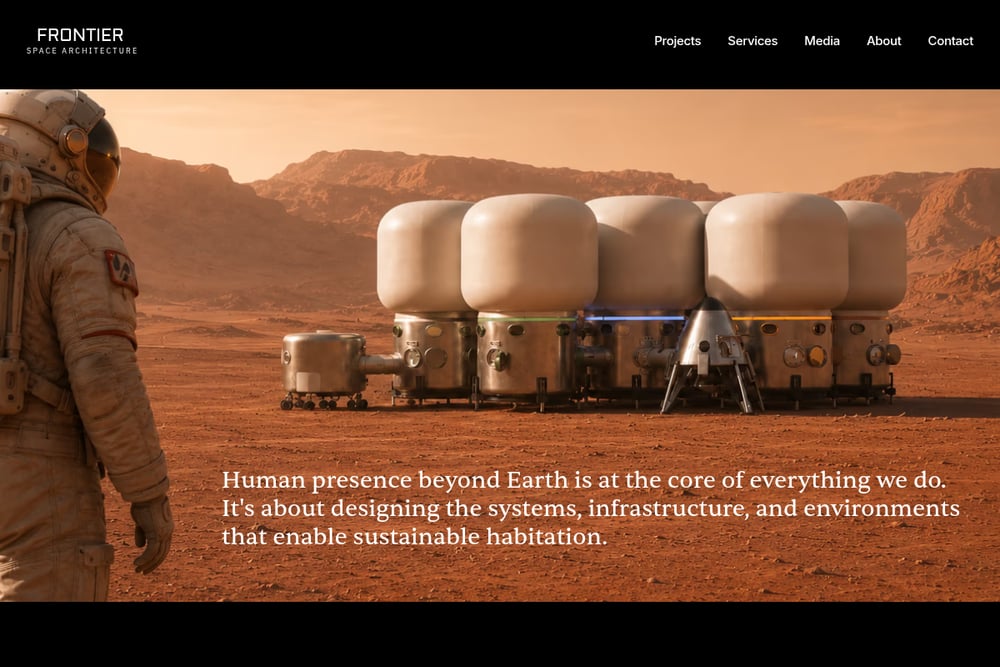 A screenshot of the Frontier Space Architecture website.
Frontier Space Architecture is a research-led studio that designs human-centered systems, habitats, and infrastructure for Earth orbit, lunar, and Mars missions. They focus on the question of not just how humans reach other worlds, but how they remain there. Their work spans mission architecture, infrastructure planning, and long-term settlement development, integrating transportation, habitation, resource utilization, and construction. By combining architecture, engineering, operations, and human-centered design, they create integrated concepts that transform exploration into permanence. For clients seeking a holistic approach to off-world settlement, Frontier offers a compelling blend of vision and practicality.
#5 SpaceArchitect.org
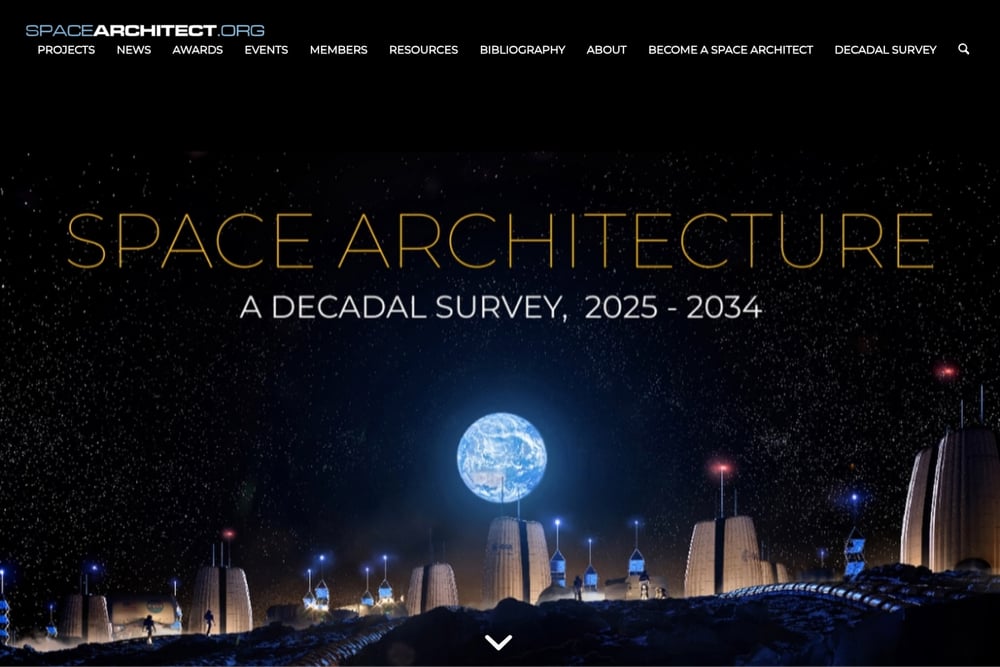 A screenshot of the SpaceArchitect.org website.
SpaceArchitect.org is not a design studio but an essential global network and resource hub for the space architecture community. It maintains an open archive of space-architecture papers and articles, offers a 'How to become a Space Architect?' FAQ, and organizes periodic symposia to connect students and professionals. The site also hosts the Space Architecture Technical Committee (SATC), a professional organization under AIAA that promotes practice standards and interdisciplinary collaboration. For anyone entering the field or seeking the latest research, this is the go-to starting point.
How to Choose the Right Space Architecture Partner
Start by defining your mission phase. If you need a proven habitat with orbital heritage, SAGA Space Architects is your best bet. For NASA-aligned lunar or Mars concepts, SEArch+ has decades of collaboration. If you're still in the research and feasibility stage, Aurelia Institute's trade study can guide your decisions. Frontier Space Architecture excels at integrated settlement frameworks that go beyond a single habitat. And if you're building a team or need the latest research, SpaceArchitect.org is an indispensable resource. Always ask for references, test data, and a clear philosophy on human factors.
Automating the Design Workflow
Top studios like SAGA and SEArch+ use generative design and topology optimization to rapidly iterate habitat layouts. Tools like Autodesk's generative design software allow them to input constraints — mass, radiation shielding, crew size — and output dozens of optimized floor plans. This automation reduces design cycles from months to weeks. Frontier Space Architecture integrates mission architecture software to simulate logistics and resource flows, ensuring that habitat designs are grounded in operational reality. For your own projects, consider adopting parametric modeling early to test multiple configurations before committing to a single concept.
The Future Is Being Designed Now
The five studios profiled here represent the vanguard of a new profession. From SAGA's orbital circadian lighting to Frontier's settlement frameworks, each brings a unique piece of the puzzle. As humanity moves toward permanent presence beyond Earth, the work of these architects will determine not just where we live, but how well. Whether you're planning a lunar base, a Mars colony, or a commercial station, partnering with the right space architecture studio is the first step toward making that future a reality.