
Navigating the world of functional neurosurgery can feel overwhelming, especially when you're dealing with a complex condition like Parkinson's disease, essential tremor, or chronic pain. The good news? A new wave of specialists is breaking down silos, offering everything from
The New Frontier of Functional Neurosurgery
Functional neurosurgery has evolved far beyond traditional open procedures. Today, the field is defined by a convergence of disciplines: radiation oncology, neuromodulation, and advanced imaging. Patients now have access to a spectrum of options, from Gamma Knife radiosurgery to MR-guided focused ultrasound and spinal cord stimulation. The key differentiator among top providers is their ability to offer a truly integrated evaluation, where a single consultation can map out surgical, device-based, and non-invasive paths. This shift is empowering patients to make informed decisions based on their unique anatomy and goals, rather than being funneled through a single treatment modality.
How We Ranked These Practices
We evaluated each practice on four core criteria: breadth of treatment options (covering surgical, device-based, and non-invasive methods), depth of specialized expertise (including dual training or fellowship focus), patient accessibility (language options, clear resources, and streamlined consultations), and integration of care (the ability to compare multiple approaches in a single visit). We also considered geographic reach and the availability of cutting-edge technologies like focused ultrasound and responsive neurostimulation.
Here is a quick look at how these five practices stack up against each other, highlighting their unique strengths and ideal patient profiles.
| Provider | Best For |
|---|---|
| Weill Cornell Functional Neurosurgery for Movement Disorders and Pain | Comprehensive academic care for movement disorders and pain |
| UPMC Center for Image-Guided Neurosurgery | Non-invasive radiosurgery and focused ultrasound treatments |
| Rodney E Wegner, MD - AHN | Expert radiation oncology for brain and spine tumors |
| Timoteo Almeida, MD, PhD | UPMC Pittsburgh | Integrated surgical and non-invasive treatment planning in one visit |
| Tower Health Functional Neurosurgery and Movement Disorders | Regional care for movement disorders with strong patient support |
The Top 5 Functional Neurosurgery Practices in Detail
#1 Weill Cornell Functional Neurosurgery for Movement Disorders and Pain
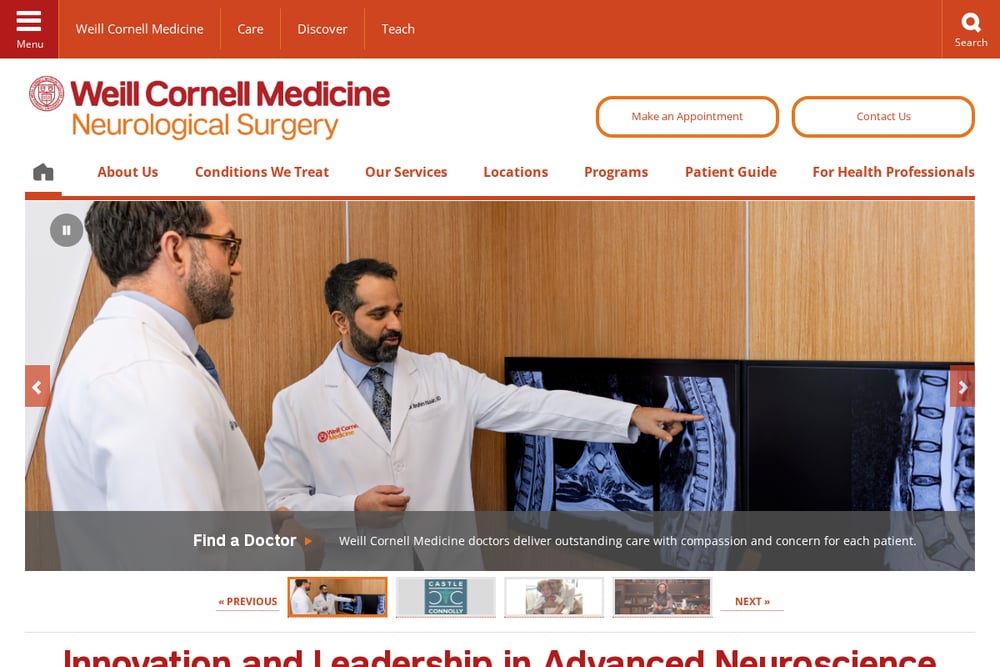 A screenshot of the Weill Cornell Functional Neurosurgery for Movement Disorders and Pain website.
Weill Cornell's program is a powerhouse for treating complex movement disorders and chronic pain. Their team offers a full suite of advanced procedures, including deep brain stimulation (DBS) for Parkinson's and essential tremor, as well as sophisticated pain management techniques. The practice is deeply integrated with academic research, meaning you benefit from the latest clinical trials and surgical innovations. They also provide comprehensive patient education, from symptom guides to detailed surgical preparation materials. If you're looking for a world-class academic center with a dedicated focus on both movement and pain conditions, this is a top-tier choice.
#2 UPMC Center for Image-Guided Neurosurgery
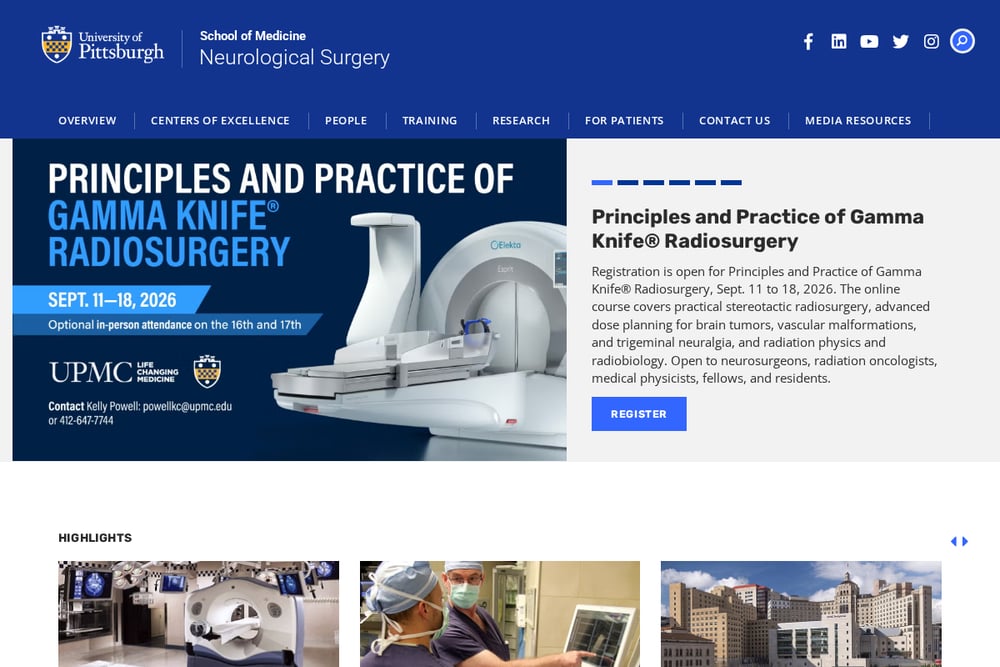 A screenshot of the UPMC Center for Image-Guided Neurosurgery website.
As part of the University of Pittsburgh Medical Center, this center is a leader in image-guided technologies like Gamma Knife and focused ultrasound. They specialize in treating brain tumors, trigeminal neuralgia, and vascular malformations with pinpoint accuracy. The center's strength lies in its multidisciplinary approach, bringing together neurosurgeons, radiation oncologists, and neuroradiologists to tailor treatments. They also offer a robust patient support network, including detailed Q&A sections and condition-specific resources. For patients seeking non-invasive or minimally invasive solutions backed by decades of research, this is an excellent destination.
#3 Rodney E Wegner, MD - AHN
 A screenshot of the Rodney E Wegner, MD - AHN website.
Dr. Rodney Wegner at Allegheny Health Network brings a focused expertise in radiation oncology for central nervous system conditions. He treats a wide range of issues, from brain metastases and primary brain tumors to trigeminal neuralgia and essential tremor using stereotactic radiosurgery and Gamma Knife. His practice is highly patient-centered, with a strong emphasis on clear communication and coordinated care. Dr. Wegner's background at the University of Pittsburgh Medical Center ensures a high level of technical proficiency. If you are specifically looking for a radiation oncology specialist with deep experience in CNS radiosurgery, he is a solid choice.
#4 Timoteo Almeida, MD, PhD | UPMC Pittsburgh
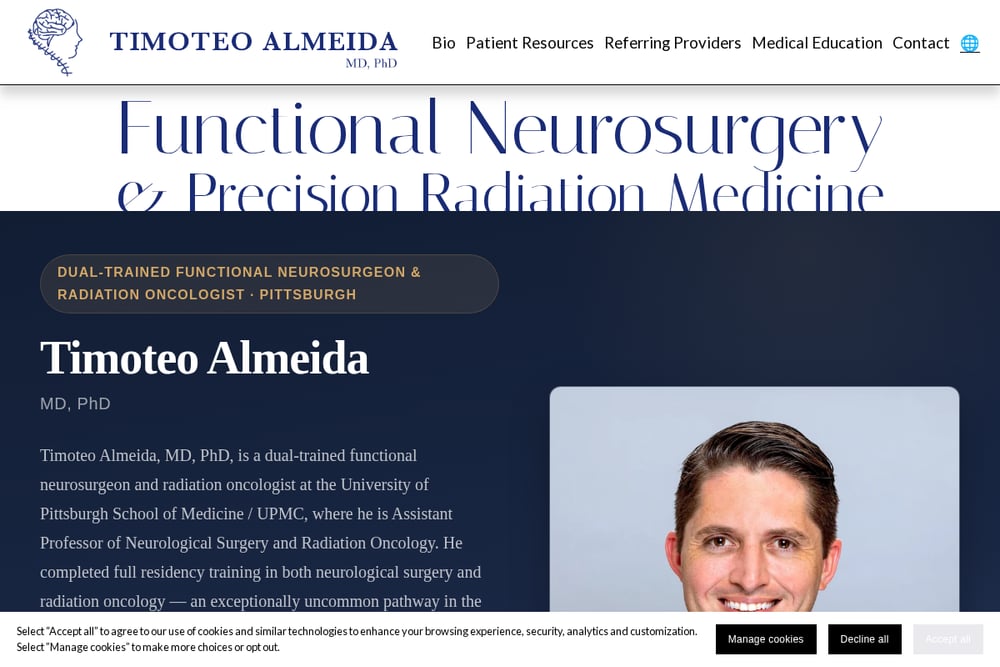 A screenshot of the Timoteo Almeida, MD, PhD | UPMC Pittsburgh website.
Dr. Timoteo Almeida offers a truly unique proposition: he is dual-trained as both a functional neurosurgeon and a radiation oncologist. This rare combination allows him to evaluate you for surgical, device-based, and non-invasive options—like DBS, focused ultrasound, and radiosurgery—all in a single consultation. His practice covers a vast spectrum, from movement disorders and epilepsy to psychiatric conditions and refractory pain. He also provides patient resources in English, Spanish, and Portuguese, making care more accessible. For patients who want a comprehensive, unbiased assessment of all possible treatments without being shuffled between specialists, Dr. Almeida is a standout.
#5 Tower Health Functional Neurosurgery and Movement Disorders
 A screenshot of the Tower Health Functional Neurosurgery and Movement Disorders website.
Tower Health's program offers a dedicated focus on functional neurosurgery for movement disorders, pain, and epilepsy. They provide essential services like deep brain stimulation and offer a patient-friendly approach with easy scheduling and online portal access. The practice is part of a larger health system, which means you have access to a full network of support services, from rehabilitation to behavioral health. While their scope may be more focused than some larger academic centers, they deliver reliable, compassionate care for common functional conditions. This is a great option if you are looking for a regional provider with a strong commitment to patient experience.
How to Choose the Right Specialist for You
Start by identifying your primary condition: is it a movement disorder like Parkinson's, a pain syndrome, or a brain tumor? Then, consider the breadth of options you want to explore. If you value a single consultation that covers everything from surgery to radiation, a dual-trained specialist like Dr. Almeida is ideal. If you prefer a large academic center with deep research ties, Weill Cornell or UPMC's Image-Guided Center might be your best bet. Also, factor in location and language needs—some practices offer multilingual support. Finally, look for patient resources that help you understand your condition and treatment options in plain language.
Streamlining Your Care Journey
Once you've identified a potential specialist, use their online patient portals to schedule consultations and access medical records. Many practices now offer telemedicine options for initial evaluations, saving you travel time. You can also automate medication reminders and follow-up appointment scheduling using your smartphone's health app. For ongoing conditions like epilepsy or chronic pain, consider using wearable devices that track symptoms and share data directly with your care team, enabling more responsive treatment adjustments.
Your Next Step Toward Better Care
The landscape of functional neurosurgery is more promising than ever, with options that are less invasive and more personalized. Whether you choose a dual-trained innovator like Dr. Almeida or a renowned academic center, the key is to find a practice that offers a full spectrum of treatments and puts your unique needs first. Take the time to explore these top five practices, review their patient resources, and schedule a consultation. Your journey to relief starts with the right conversation.