
Preparing for Hajj or Umrah is a deeply spiritual journey, but the logistics and rituals can be overwhelming for first-time pilgrims. Virtual reality (VR) training simulators are changing that, offering immersive, step-by-step guidance from the comfort of your home. Whether
The Rise of VR Pilgrimage Training
The Hajj and Umrah training industry is undergoing a digital transformation, with virtual reality emerging as a powerful tool to prepare pilgrims for the physical and spiritual demands of the journey. Traditional methods like books and lectures are being supplemented by immersive simulations that let you practice rituals in realistic 3D environments. This shift is driven by the need to reduce anxiety, improve accessibility for those who cannot afford travel, and educate a global audience. Academic institutions, startups, and creative studios are all entering the space, each bringing unique strengths from research-backed curricula to cutting-edge game development. As VR hardware becomes more affordable, these simulators are poised to become standard resources for mosques, travel agencies, and individual pilgrims worldwide.
How We Ranked the Top VR Pilgrimage Simulators
We evaluated each platform based on five key criteria: accuracy of religious rituals and site representations, interactivity and ease of use, scalability for group training, language and accessibility features, and the credibility of the development team. Academic backing and government partnerships were weighted heavily, as they ensure the content aligns with Islamic guidelines. We also considered the range of features, from self-guided tours to step-by-step curricula, and the availability of custom solutions for institutions. Finally, we looked at real-world adoption, such as pilot programs and user testimonials, to gauge effectiveness.
Here is a quick comparison of the top five VR pilgrimage simulators to help you find the best fit for your needs.
| Provider | Best For |
|---|---|
| Pilgrim VR | Academic and institutional training programs |
| Labbaik VR | Large-scale pilgrim training programs |
| Pilgrim VR - CICW Learn | Individual learners and curious non-Muslims |
| VSUALIZER CREW — Immersive Animation, Games & VR Experiences | Custom, boutique VR training solutions |
| Siraj Studios | Custom VR development partnerships |
Detailed Reviews of the Top 5 VR Pilgrimage Simulators
#1 Pilgrim VR
 A screenshot of the Pilgrim VR website.
Pilgrim VR, developed by Shenandoah University Professor Mohammad Obeid with a grant from the Center for Islam in the Contemporary World, is a research-backed VR training platform for both Hajj and Umrah. It offers an authentic simulation of sacred sites like the Haram, Safa, and Marwa, allowing you to explore freely or follow a structured step-by-step curriculum. The platform is designed for classrooms, travel agencies, and government entities, making it a versatile educational tool. Its academic foundation ensures accuracy in religious rituals and guidelines, as noted in the project's description. The app also includes language support in English and Arabic, with more languages planned. For institutional use, Pilgrim VR provides custom training programs and direct consultation, setting it apart as a comprehensive solution.
#2 Labbaik VR
 A screenshot of the Labbaik VR website.
Labbaik VR, developed by Pakistani startup founder Muhammad Zubair Khan Qureshi, claims to be the world's first fully developed VR Hajj and Umrah simulator. Launched at the Momentum Tech Conference in 2019, this app provides realistic 3D tours of sacred sites and a library of guidance materials to orient first-time pilgrims. It also features a real-time tracking function to help groups stay connected as they move between Madinah and Makkah. The startup has partnered with Pakistan's religious affairs ministry to train 5,000 pilgrims using the simulator, demonstrating its scalability. Labbaik VR is particularly focused on accessibility, offering dongles powered with the app to private companies organizing pilgrimages. Its early mover advantage and government backing make it a strong contender for large-scale training.
#3 Pilgrim VR - CICW Learn
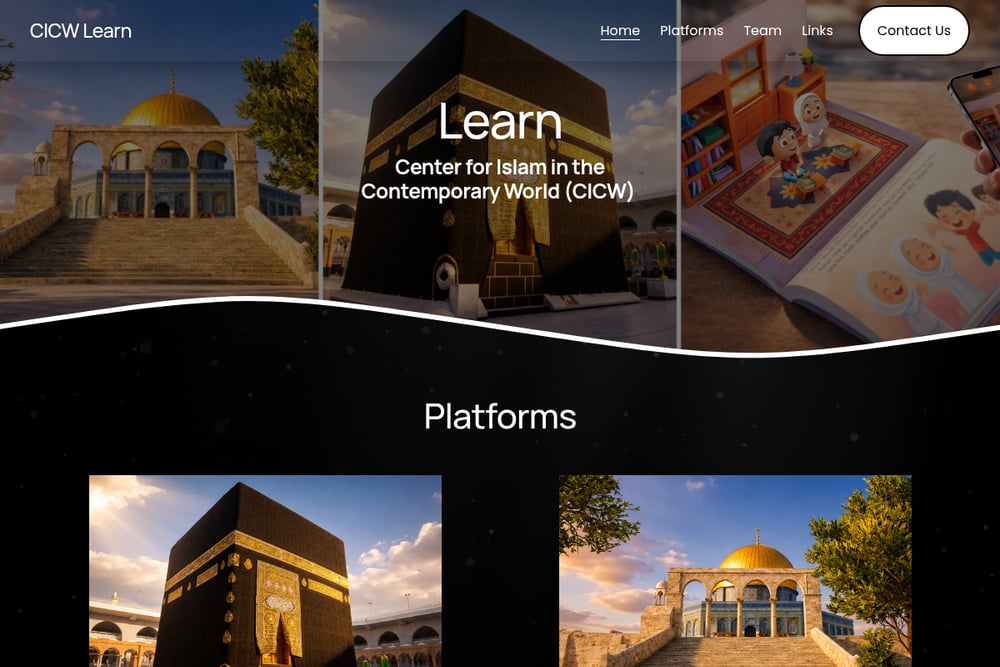 A screenshot of the Pilgrim VR - CICW Learn website.
The CICW Learn version of Pilgrim VR is a dedicated educational platform that offers tiered access to the same VR experience developed by Shenandoah University. It provides a self-guided tour of the Haram, Safa, and Marwa with info pins on key landmarks, plus a premium tier that adds Hajj locations like Mina and Arafat. The app includes an interactive training curriculum with step-by-step guidance, a multifunctional map, and stunningly realistic 3D scenes. Language support covers English and Arabic, with more languages on the way, making it accessible to a global audience. This version is ideal for individual learners and non-Muslims curious about the pilgrimage, as it offers a lite option for personal, non-commercial use. The premium and institutional tiers unlock custom training and direct consultation for organizations.
#4 VSUALIZER CREW — Immersive Animation, Games & VR Experiences
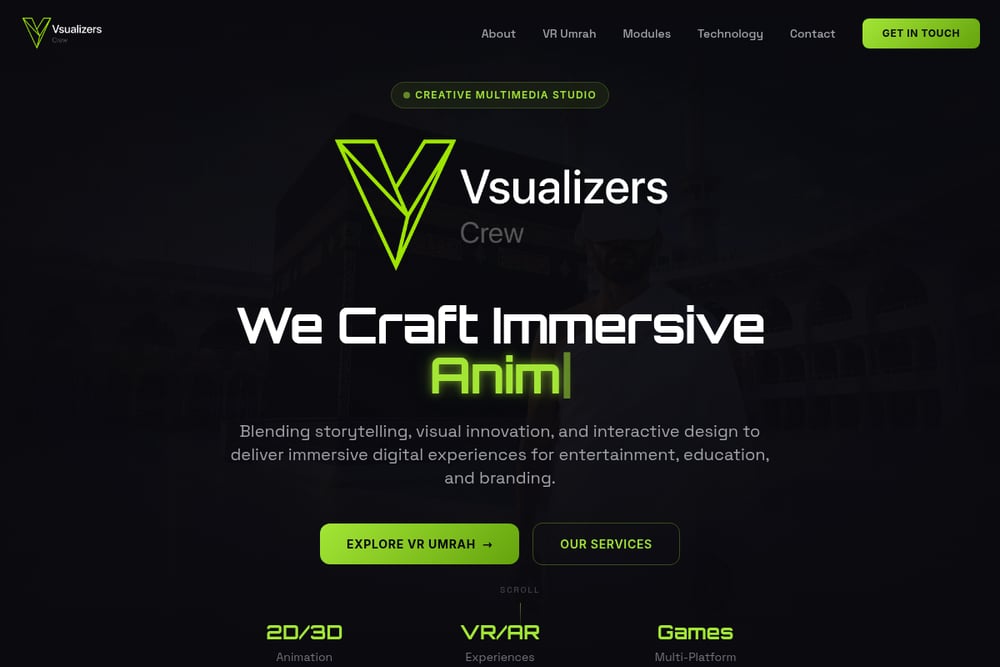 A screenshot of the VSUALIZER CREW website.
VSUALIZER CREW is a boutique creative multimedia studio based in the US that specializes in animation, game development, and VR/AR experiences. Their standout project is the VR Umrah training simulation, which they claim is the world's first virtual reality Umrah training tool. Unlike academic or government-backed competitors, VSUALIZER CREW positions itself as a service provider for diverse clients, from individuals to enterprises worldwide. Their approach blends immersive digital storytelling with technical expertise, offering a more personalized and flexible development process. While their VR Umrah simulation is pioneering, the studio's broader portfolio includes games and interactive animations, making them a versatile partner for custom projects. For pilgrims seeking a tailored, boutique experience, VSUALIZER CREW delivers a unique blend of creativity and technology.
#5 Siraj Studios
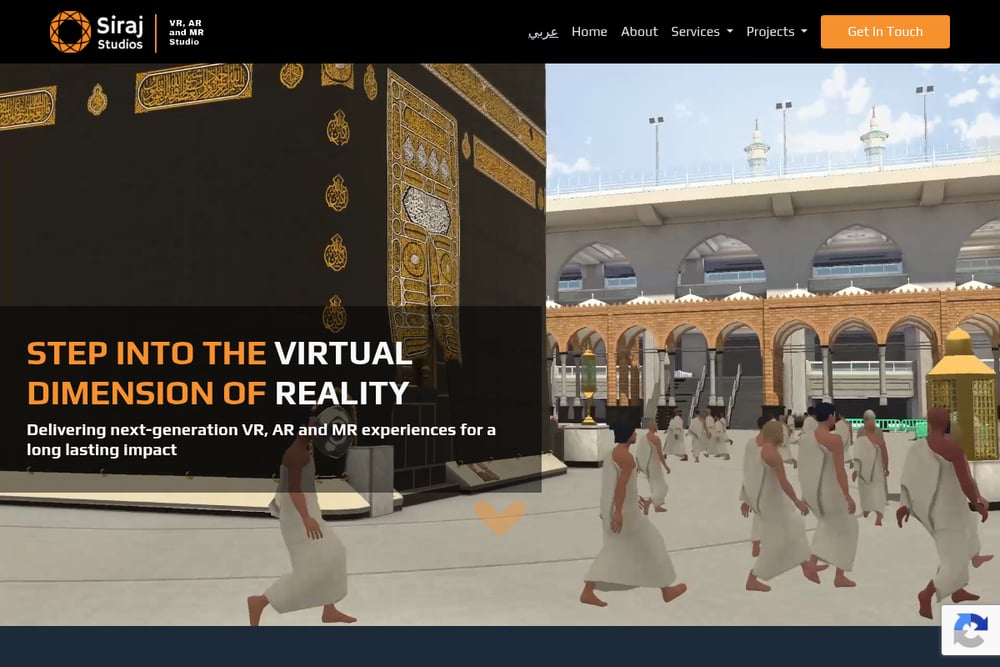 A screenshot of the Siraj Studios website.
Siraj Studios is a global partnership collaborator on the Pilgrim VR project, working with Shenandoah University and the Center for Islam in the Contemporary World to develop the VR training platform. While specific details about their standalone offerings are limited, their involvement in this academic initiative highlights their expertise in immersive media production. They likely provide technical development, 3D modeling, and software integration services for VR training tools. For organizations looking to build a custom VR pilgrimage simulator from scratch, Siraj Studios could be a valuable partner. Their role in the Pilgrim VR project suggests a focus on high-fidelity, research-driven simulations. However, as a behind-the-scenes studio, they may not offer a ready-to-use app for individual pilgrims.
How to Choose the Right VR Pilgrimage Simulator
Start by identifying your primary use case: are you an individual pilgrim, a travel agency, or an educational institution? For academic or large-scale training, platforms like Pilgrim VR or Labbaik VR offer structured curricula and government backing. If you need a custom, boutique solution, VSUALIZER CREW provides personalized development services. Consider the level of interactivity you want—some apps offer free exploration, while others guide you step by step. Language support is crucial for non-English speakers, so check for Arabic or other languages. Finally, evaluate your budget: lite versions are available for personal use, while premium tiers unlock institutional features like custom training and consultation.
Automating Pilgrim Training with VR Workflows
Integrating a VR pilgrimage simulator into your training program can be streamlined with a simple workflow. First, select a platform that offers a turnkey solution, such as Pilgrim VR's institutional tier, which includes direct consultation and customization. Next, deploy the app on VR headsets or dongles for easy distribution to pilgrims. Use the platform's real-time tracking feature to monitor group progress and ensure everyone completes the required rituals. Finally, collect feedback through built-in analytics to refine the training experience for future cohorts. This automated approach reduces the need for in-person instructors and allows you to scale training to thousands of pilgrims simultaneously.
Your Virtual Path to a Sacred Journey
Virtual reality is no longer a futuristic concept—it is a practical tool that is already transforming how pilgrims prepare for Hajj and Umrah. Whether you choose an academic powerhouse like Pilgrim VR, a startup innovator like Labbaik VR, or a boutique studio like VSUALIZER CREW, each platform offers a unique path to immersive learning. The key is to match the simulator's strengths with your specific needs, whether that is accuracy, scalability, or customization. As VR technology continues to evolve, these tools will only become more realistic and accessible, making the sacred journey less daunting and more meaningful for millions of Muslims worldwide.