
Navigating the complex world of materials science requires more than just technical skill; it demands access to a robust professional network and cutting-edge research. We have vetted the leading professional societies to help you find the right community for your
What is a Materials Science Professional Society?
Materials science professional societies serve as the backbone of the industry, bridging the gap between academic research and industrial application. These organizations provide members with essential resources, including peer-reviewed journals, technical handbooks, career development tools, and global networking opportunities. By joining a society, professionals gain access to a collective knowledge base that fosters innovation and helps navigate the rapidly evolving landscape of advanced materials.
How we vetted these providers
We evaluated these societies based on the breadth of their technical resources, the value of their networking events, the accessibility of their educational content, and the overall return on investment for individual members. Our ranking focuses on organizations that offer tangible benefits to materials scientists and engineers at various career stages.
Here is a quick look at the top professional societies for materials science professionals.
| Provider | Best For | Pricing |
|---|---|---|
| The Minerals, Metals & Materials Society (TMS) | Comprehensive industry coverage | Custom quote |
| Materials Research Society (MRS) | Cutting-edge research and interdisciplinary collaboration | Starting at $150 |
| The American Ceramic Society (ACerS) | Ceramics and glass industry specialists | Starting at $150 |
| ASM Member Benefits - ASM International | Technical reference and professional networking | Starting at $113 |
| Society of Plastics Engineers (SPE) | Plastics and polymer engineering professionals | Custom quote |
The 5 Best Materials Science Professional Societies in 2026
#1 The Minerals, Metals & Materials Society (TMS)
TMS is a premier global organization that encompasses the entire spectrum of materials science and engineering, from primary metals production to advanced research. Members benefit from a vast array of technical divisions, high-impact journals, and international conferences that facilitate deep industry connections. The society is highly regarded for its commitment to professional development and its role in setting standards for engineering education. It provides a unique platform for researchers, educators, and industry leaders to collaborate on solving complex materials challenges.
Key Membership Benefits:
- Pro: Unmatched breadth of technical divisions and global networking.
- Con: Membership benefits are heavily tied to conference participation.
- Pricing: Custom quote
#2 Materials Research Society (MRS)
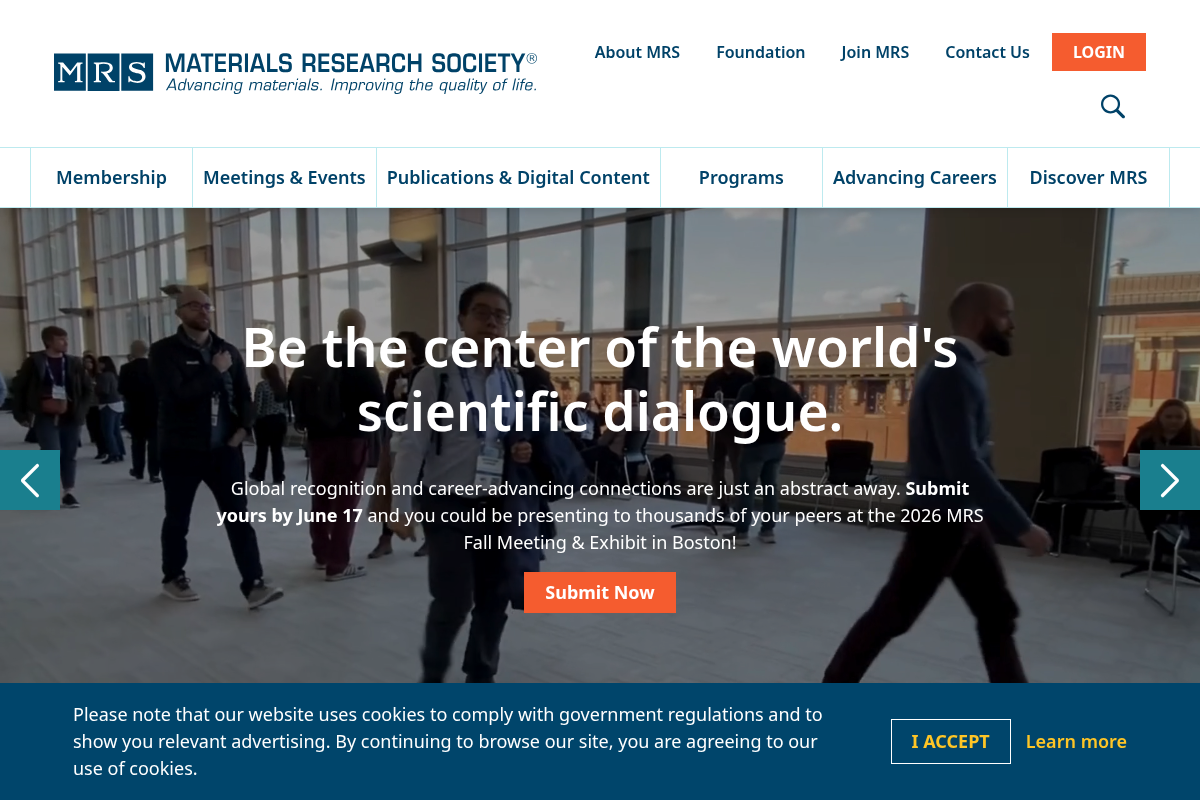 A screenshot of the MRS website.
The Materials Research Society is a leading association for materials researchers, known for its interdisciplinary approach and focus on cutting-edge scientific discovery. With members spanning over 90 countries, MRS provides an open environment for collaboration across various scientific disciplines. Their meetings are famous for featuring the latest research, often driven by member-proposed symposia. Members gain exclusive access to the Knowledge Research Hub and a community that is at the forefront of emerging technologies like AI for materials design.
Key Membership Benefits:
- Pro: Highly topical and flexible meeting content.
- Con: Stronger focus on academic research than industrial application.
- Pricing: Starting at $150
#3 The American Ceramic Society (ACerS)
ACerS is the definitive home for professionals in the ceramics and glass industry, offering specialized resources that are difficult to find elsewhere. The society provides comprehensive training, targeted networking, and exclusive access to technical content tailored to ceramic and glass materials. Their mentorship programs are particularly well-regarded, helping early-career professionals transition into the workforce. With a global community of innovators, ACerS is essential for those focused on high-temperature materials and advanced ceramics.
Key Membership Benefits:
- Pro: Exceptional mentorship and career development programs.
- Con: Niche focus may limit utility for generalist materials scientists.
- Pricing: Starting at $150
#4 ASM Member Benefits - ASM International
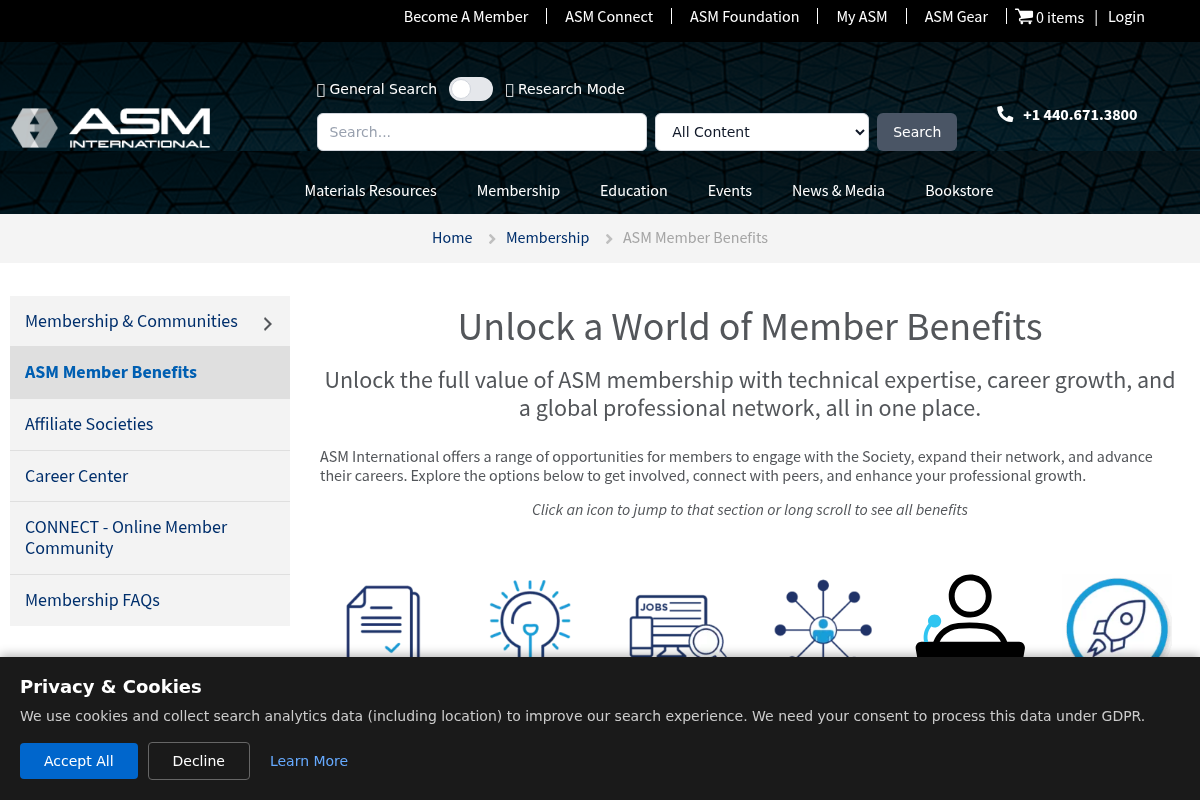 A screenshot of the ASM Member Benefits website.
ASM International is a global professional society that provides members with deep access to technical resources, including the renowned ASM Handbooks and various peer-reviewed journals. Members benefit from significant discounts on conferences, webinars, and educational programs, making it a cost-effective choice for ongoing professional development. The society’s extensive network allows professionals to connect with peers and experts across the materials science field. Whether you are a student or a seasoned engineer, ASM offers tools to help you solve materials problems and improve performance. It remains a cornerstone for those seeking authoritative data and a supportive professional community.
Key Membership Benefits:
- Pro: Unrivaled access to technical handbooks and reference materials.
- Con: Initiation fees apply to new memberships.
- Pricing: Starting at $113
#5 Society of Plastics Engineers (SPE)
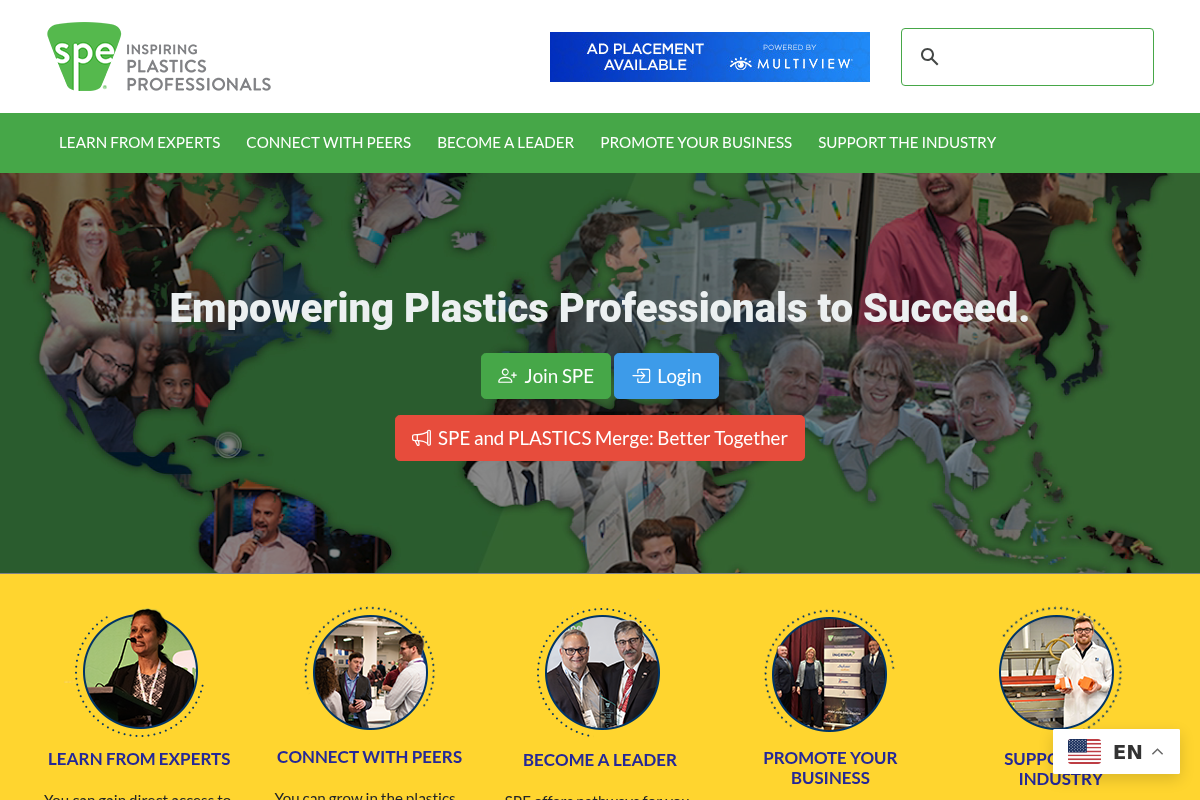 A screenshot of the Society of Plastics Engineers website.
SPE is the leading professional organization for those dedicated to the plastics and polymer industry. It provides a wealth of technical information, including journals, webinars, and the industry-standard ANTEC conference. The society is highly active in promoting education and sustainability within the plastics sector, offering members a platform to share ideas and increase their technical knowledge. With a strong focus on practical engineering solutions, SPE is an invaluable resource for professionals working in polymer processing and design.
Key Membership Benefits:
- Pro: Strong focus on practical, industry-relevant technical content.
- Con: Membership value is highly dependent on active participation in local chapters.
- Pricing: Custom quote
Selecting the right society for your career
When choosing a professional society, consider your primary technical focus and career goals. If you are in research, a society like MRS might be ideal, while those in manufacturing or specific material sectors like ceramics or plastics should look toward ACerS or SPE. Always check if your employer offers reimbursement for membership dues, as many companies view these as essential professional development investments.
Maximizing your membership value
Don't just pay your dues and forget about it. Actively participate in your society's online forums, attend at least one major conference annually, and take advantage of member-only discounts on training courses. Many societies also offer digital libraries and career centers that can save you hours of research time and help you land your next role.
The Verdict
Joining a professional society is one of the most effective ways to stay competitive in the fast-paced materials science industry. Whether you choose the broad reach of TMS or the specialized focus of ACerS or SPE, the investment in your professional network and knowledge base will pay dividends throughout your career. Evaluate your specific needs, pick the organization that aligns with your goals, and start engaging today.