
Accessibility is no longer a luxury, and 3D printing is making it more affordable than ever. Here are the top five platforms helping you create tactile, braille-ready solutions with ease.
Why 3D Printing is Changing Braille Accessibility
Traditional braille production often relies on expensive, specialized embossing hardware that is out of reach for many small businesses and individuals. 3D printing has democratized this process, allowing users to generate custom, durable, and tactile braille labels, signs, and educational tools on demand. By converting plain text into precise 3D models, these platforms bridge the gap between digital content and physical accessibility, ensuring that essential information is readable for everyone.
How We Vetted These Providers
We evaluated these platforms based on their ease of use, accessibility for non-technical users, the variety of braille objects they support, and their commitment to open-source or free-to-use models. Each entry was selected for its ability to provide high-quality, tactilely accurate files that can be printed on standard 3D printers.
A quick look at the best tools for your 3D braille projects.
| Provider | Best For | Pricing |
|---|---|---|
| Braille3D | Comprehensive accessibility | Free |
| Brailio | Professional signage | Free |
| Makers Making Change | Community-driven projects | Free |
| Accessible3D | Personalized accessibility designs | Free |
| TouchSee | Multi-language support | Free (file download) / Paid (printing) |
The 5 Best 3D-Printed Braille Platforms in 2026
#1 Braille3D
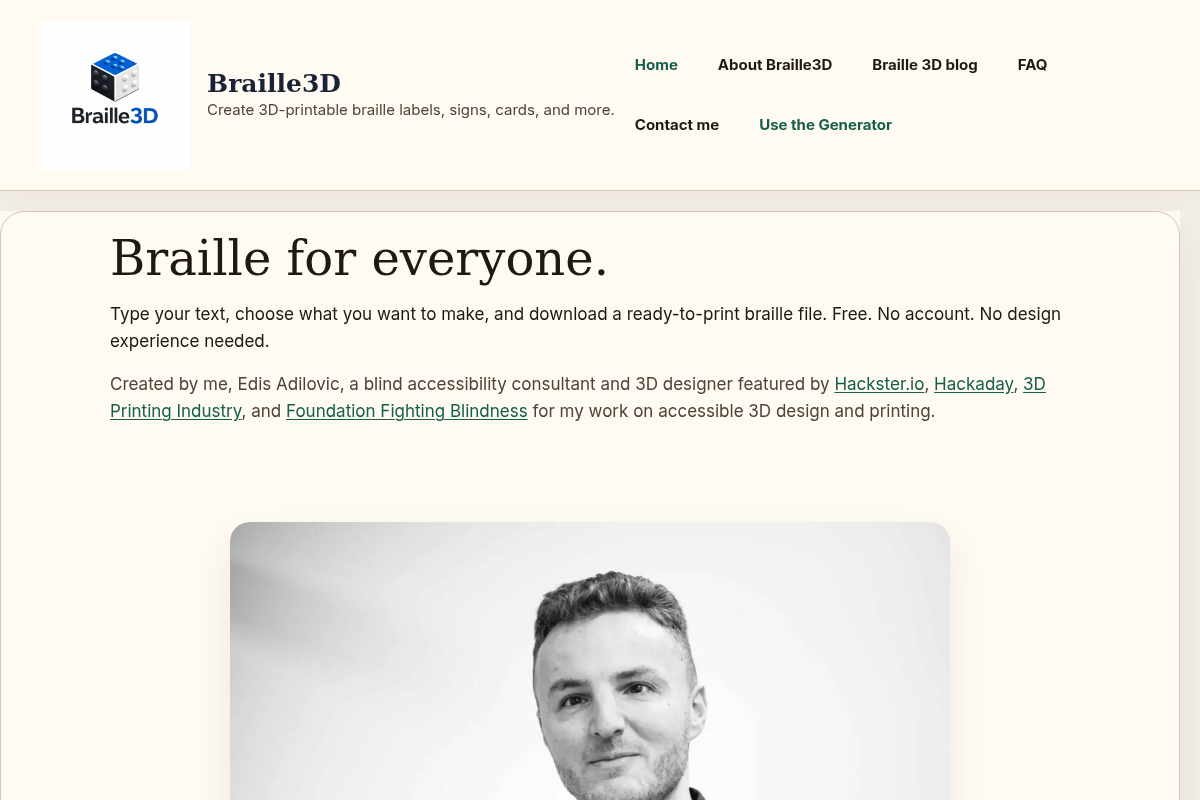 A screenshot of the Braille3D website.
Braille3D is a comprehensive, free online generator that transforms plain text into ready-to-print 3D braille objects. Founded by blind accessibility consultant Edis Adilovic, the platform is designed with a focus on inclusivity and ease of use for those without design experience. It offers a wide range of products, including labels, business cards, signs, and keyrings, all optimized for tactile correctness. The site is a one-person project based in Odense, Denmark, and serves as a vital resource for parents, teachers, and professionals. It is built to be fully compatible with screen readers, ensuring that the creation process is as accessible as the final product.
Key Features & Accessibility:
- Pro: Extensive library of product types beyond simple labels.
- Con: Limited to the specific product templates provided.
- Pricing: Free
#2 Brailio
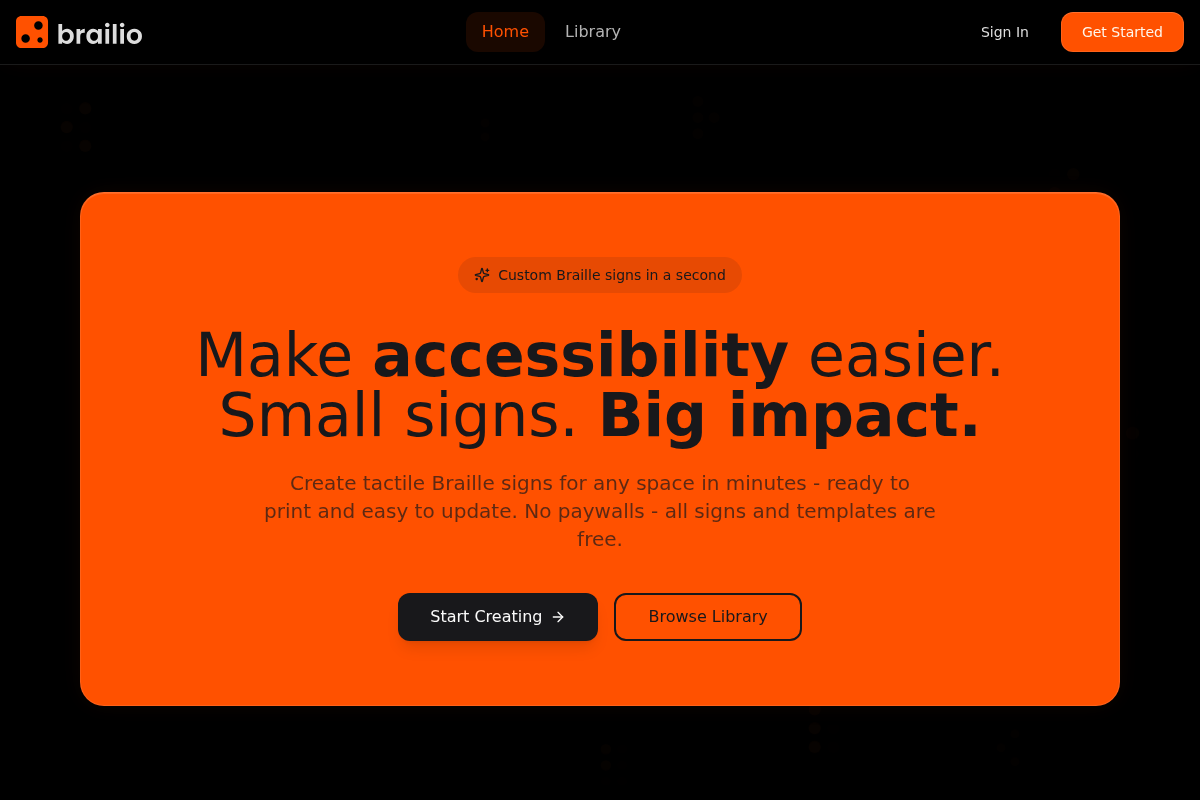 A screenshot of the Brailio website.
Brailio is a specialized web-based tool focused on creating tactile, print-ready braille signs for businesses and public spaces. It simplifies the complex requirements of ADA-compliant signage by allowing users to preview and adjust dot height, spacing, and plate layout in real-time. The platform is particularly useful for schools, clinics, and offices that need to update signage frequently without the high costs of traditional vendors. By exporting files as STL, users can print signs on demand, making it a highly sustainable and cost-effective solution for facility management.
Key Features & Accessibility:
- Pro: Real-time visual preview of braille and tactile elements.
- Con: Focused primarily on signage rather than personal labels.
- Pricing: Free
#3 Makers Making Change
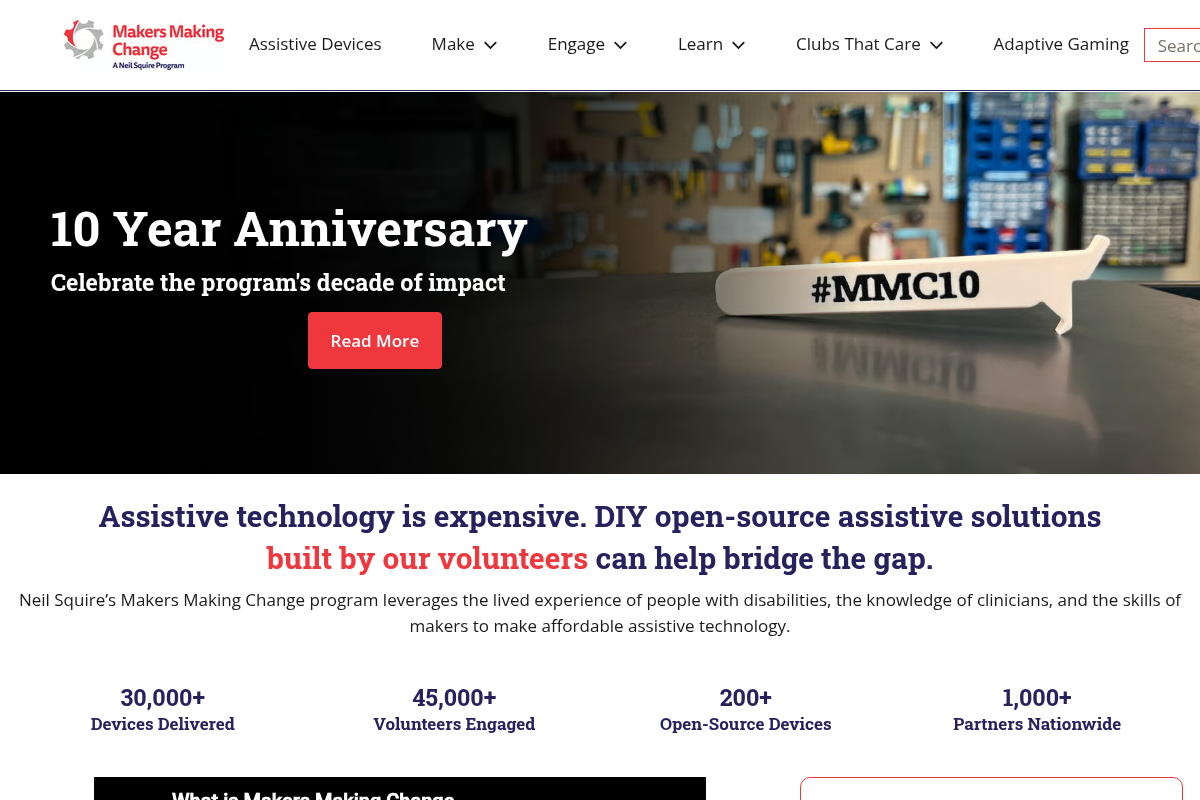 A screenshot of the Makers Making Change website.
Makers Making Change is a non-profit initiative that connects people with disabilities to a community of volunteer makers. Their platform provides a vast library of open-source assistive technology, including 3D-printable braille labels and calculators. Unlike commercial generators, this site focuses on community-driven solutions and DIY empowerment. It is an excellent resource for those looking for specialized, community-tested designs that go beyond standard labeling. The project is supported by the Neil Squire Society, ensuring a reliable and ethical source for your accessibility needs.
Key Features & Accessibility:
- Pro: Access to a wide variety of community-tested assistive designs.
- Con: Requires more manual effort to find and implement specific files.
- Pricing: Free
#4 Accessible3D
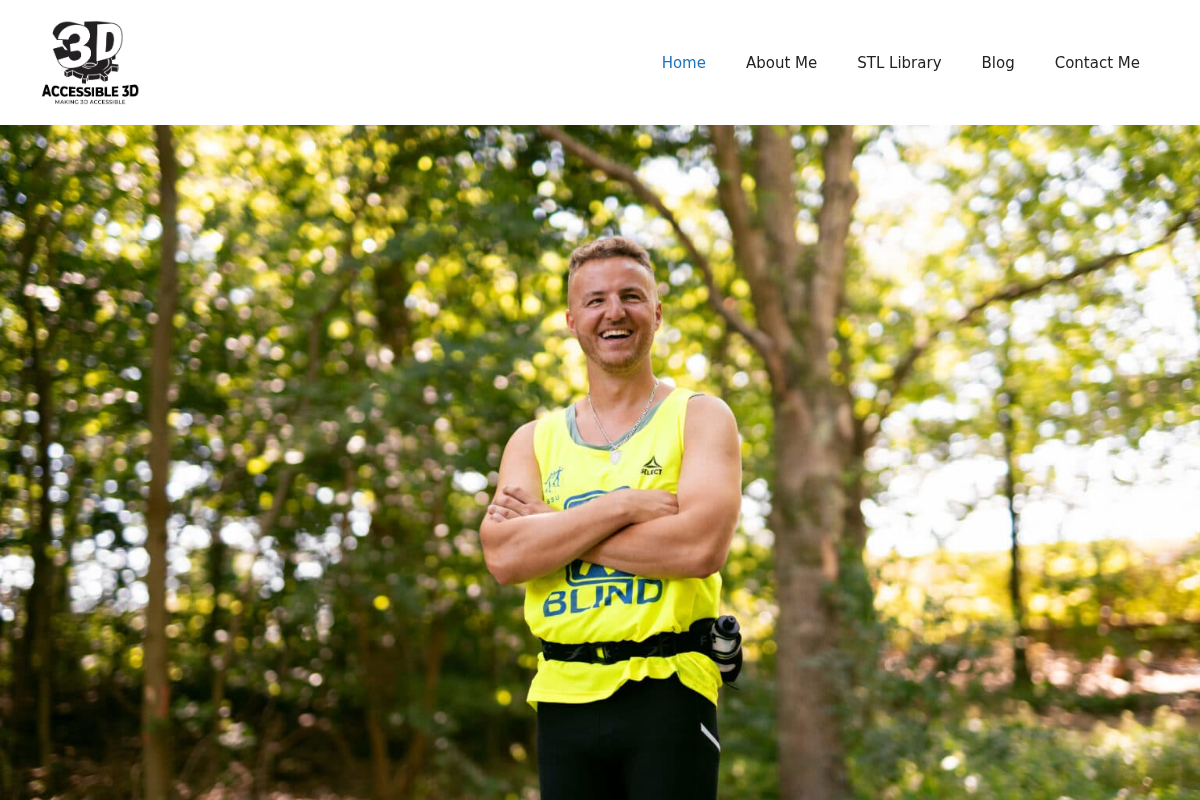 A screenshot of the Accessible3D website.
Accessible3D is the personal platform of Edis Adilovic, showcasing his journey and designs for creating 3D models without sight. It serves as both a portfolio and a repository for free, accessible 3D designs that help the blind and visually impaired navigate the world. The site provides deep insights into the workflow of a blind maker, offering inspiration and practical files for those interested in independent 3D design. It is a highly personal and authentic resource that highlights the potential of 3D printing to solve unique, everyday challenges. The platform encourages users to support the mission through community engagement.
Key Features & Accessibility:
- Pro: Unique, firsthand perspective on accessible design workflows.
- Con: Less of a structured generator and more of a design repository.
- Pricing: Free
#5 TouchSee
 A screenshot of the TouchSee website.
TouchSee is a long-standing online service that converts text into 3D-printable braille labels in over 40 languages. It is designed for simplicity, allowing users to type their text and immediately generate an STL file for download. For those who do not own a 3D printer, the platform integrates with the Treatstock manufacturing network to order physical prints directly. While the interface is older, it remains a functional and widely recognized tool in the accessibility community. It is a reliable option for quick, multi-language label generation.
Key Features & Accessibility:
- Pro: Supports a massive range of languages and braille standards.
- Con: The website interface is dated and occasionally experiences downtime.
- Pricing: Free (file download) / Paid (printing)
Selecting the Right Accessibility Tool
When choosing a platform, consider your specific needs. If you need professional signage for a business, Brailio is your best bet. For personal labels and a wide variety of objects, Braille3D offers the most comprehensive suite. If you are looking for community support or unique assistive devices, check out Makers Making Change. Always ensure the platform supports the specific braille standard required for your region or language.
Automating Your Accessibility Workflow
Many of these platforms allow you to export STL files, which can be integrated into your existing 3D printing workflow. For high-volume needs, consider using platforms that offer bulk generation or API-like functionality. By keeping your designs digital, you can update your labels and signs instantly as your needs change, saving both time and material costs in the long run.
The Verdict
3D printing has fundamentally changed how we approach accessibility, turning once-expensive tasks into simple, free, and digital processes. Whether you are a teacher, a business owner, or an individual looking to make your home more accessible, these five platforms provide the tools you need to get started today. Start small, test your prints for tactile clarity, and join the growing community of makers dedicated to a more inclusive world.