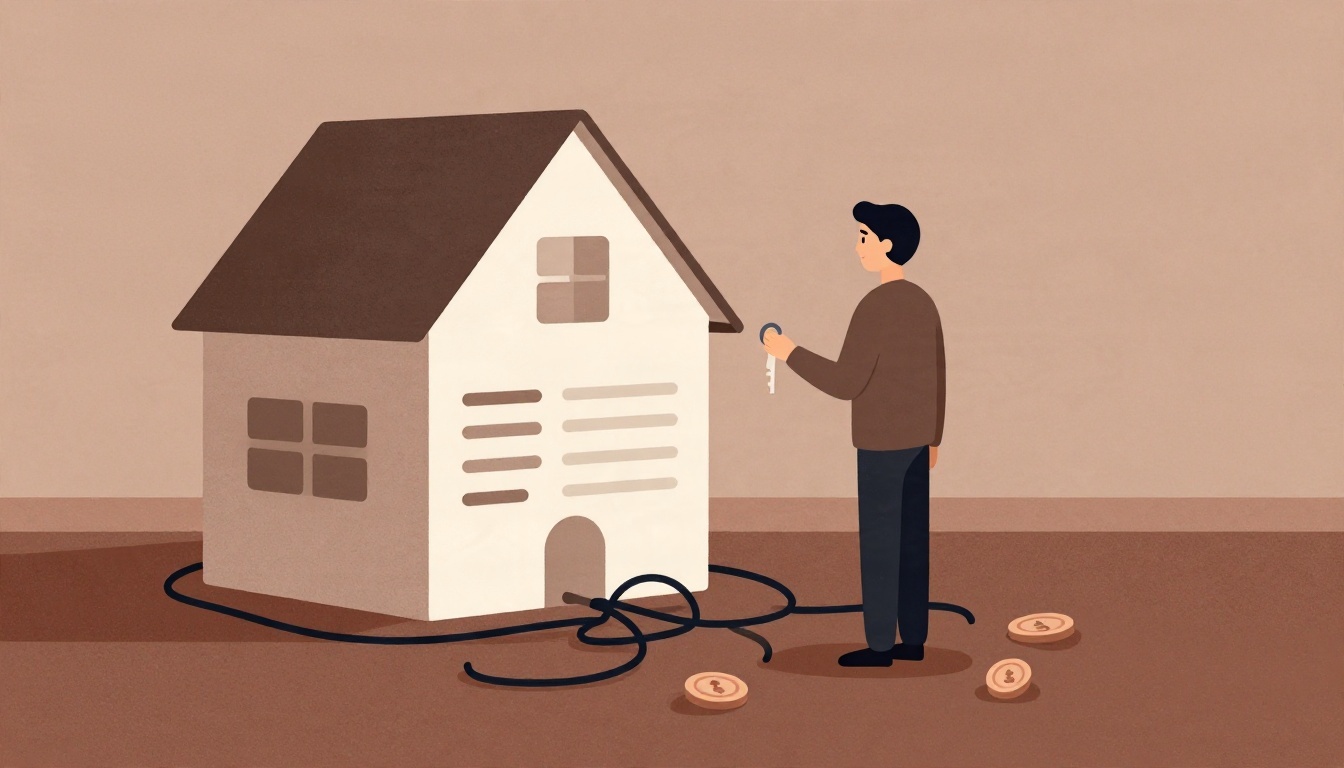
The Problem Underneath the Design
Most advice about small business websites starts with the same premise: if you have the time, build it yourself. For many owners, that advice holds up. But there is a common situation where it quietly stops working, and it rarely has anything to do with how the site looks.
Granite Coast Design, a Maine studio working in web design, logos and photography, described the pattern it sees most often. The typical case is a small business owner who built a site over a weekend and then got stuck. The site usually looks fine. The trouble is underneath: the domain is registered under a relative's email, the renewal is about to lapse, and nobody can get into the Google Business Profile.
As the studio put it, "The real problem is never the design." Instead, "It is that nothing they need is in their own name or connected to anything else."
That distinction matters because it reframes the build-it-yourself question. DIY is a reasonable path when you have the time and the accounts are yours. It stops being reasonable when the site has to tie into booking, invoicing, email and Google all at once — a set of dependencies that a weekend project rarely accounts for.
What the Guides Leave Out
Search for guidance on building a small business site and you will find plenty of comparisons. Templates get ranked, monthly prices get tallied, feature lists get stacked side by side. What those guides tend to skip is the question of who actually controls the assets.
According to the studio, "Almost none tell you to make sure the domain, the hosting and the Google profile are all in your name, not the builder's or the agency's." The consequence is practical rather than abstract: "That one step decides whether you can ever leave or hire someone else."
Ownership is the kind of detail that costs nothing to get right at the start and becomes expensive to untangle later. A domain held in someone else's account, or a Google Business Profile managed by a former contractor, can turn a routine transition into a negotiation.
The second gap the studio names is photography. "Real photos of your people and your work do more for trust than any template," it said. That is a point worth weighing against the instinct to fill a new site with stock imagery — original photos are one of the few elements a template cannot supply.
The Choice People Make Too Fast
If there is one step that gets rushed, it is the platform decision. Owners tend to pick Wix, Squarespace or a custom build before they have worked out what the site actually needs to do.
The studio's framing is straightforward: "If you need online booking and invoices, that points one way. If you need a fast site that ranks and rarely changes, that points another." The recommendation that follows is to "Start with the list of jobs the site has to do, then pick the tool."
That order — requirements first, platform second — is a small change in sequencing with outsized effects. Platform comparisons are easy to find and easy to act on, which may be exactly why they get settled first. But a tool chosen before the job list exists is a guess, and switching later means paying twice.
Practical Takeaways
For owners weighing a DIY build against hiring help, the interview points to a short checklist that has little to do with design taste:
- Confirm ownership before anything else. The domain, the hosting and the Google Business Profile should all be registered in your name, not a relative's, a builder's or an agency's.
- Map the dependencies. If the site needs to connect to booking, invoicing and email, treat it as an integration project rather than a design project.
- Invest in real photography. Photos of your actual people and work carry trust that templates cannot.
- Write the job list first. Decide what the site must do, then choose the platform that does it.
None of this argues against building your own site. It argues for knowing what you are building before you start — and for making sure the accounts underneath it belong to you. For a small business, that is the difference between a site you can hand off and one you are stuck with.