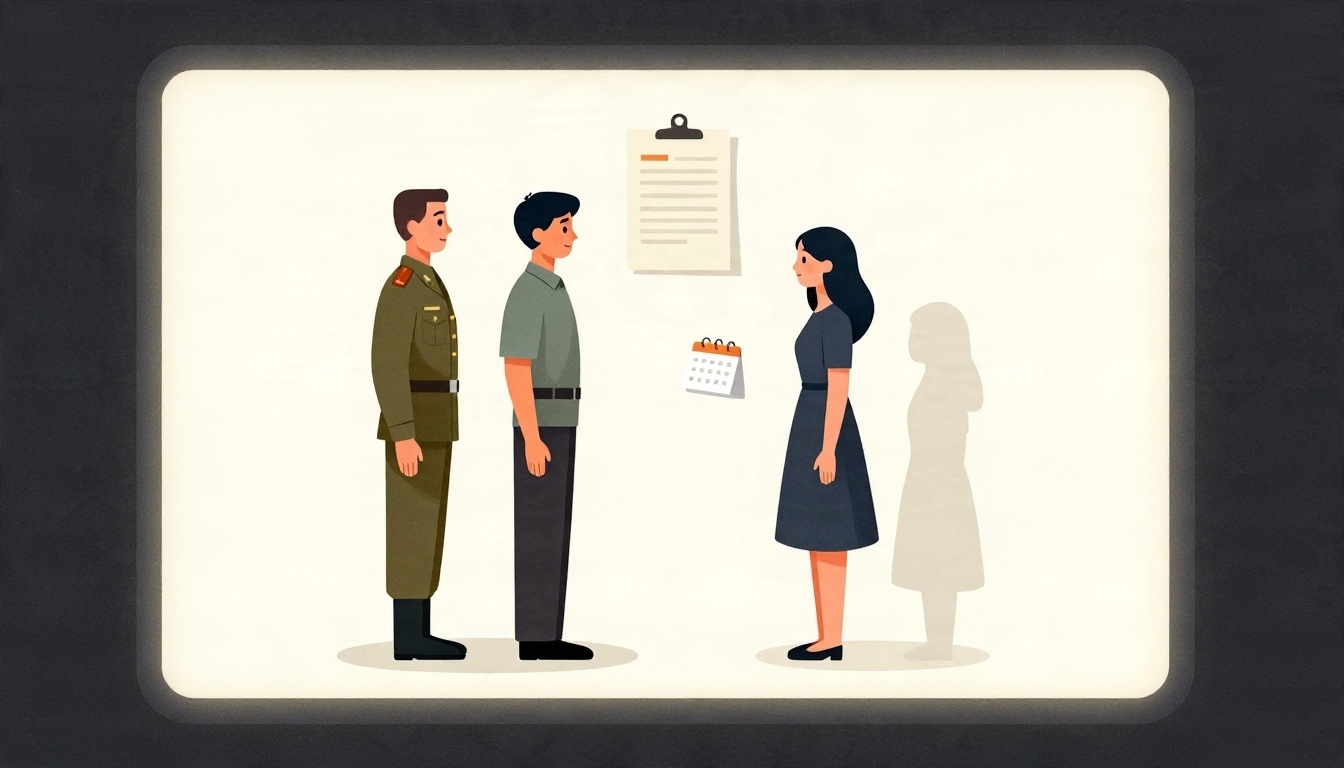
The License, Not the Link, Is the Hard Part
When a couple plans a Zoom wedding and one partner is deployed or stationed elsewhere, the video call is rarely the obstacle. According to Mark Robbins, who runs Vows Online Texas, the surprise is almost always the marriage license.
Texas normally requires both parties to appear at the county clerk's office. If one partner cannot be there, the absent partner must complete an affidavit and have it notarized. Robbins said "finding a notary overseas or on base can take longer than people think." His advice is to start that paperwork first, before worrying about the ceremony itself.
There is one piece of good news for military couples: active duty members do not have to wait the usual 72 hours after the license is issued. After the license is handled, the remaining challenge is usually scheduling. Robbins said "I've had ceremonies where it's morning in Texas and close to midnight for the groom, so we plan around his schedule and his connection, not ours."
Texas Rules That National Guides Skip
Much of the online advice about virtual weddings is written for a national audience and leaves out state-specific requirements. Robbins pointed to several Texas details that come up repeatedly.
A couple needs a Texas license, and that license is valid for 90 days. The original signed license must then be returned to the officiant so it can be filed with the county. Robbins said "Couples forget about the mailing part and end up rushing."
He also noted that many people do not realize Texas does not require witnesses. That gives couples flexibility: they can keep the ceremony private or invite as many as fifty people to join on the link. For readers comparing options, general guides to marriage license requirements and remote notarization can help frame the questions to ask a local clerk.
Two Decisions Couples Make Too Quickly
Robbins identified two common missteps when couples book an online ceremony.
The first is choosing a date before the license is in hand. When the clerk's office or the mail slows things down, couples end up scrambling. The second is booking the cheapest service without ever speaking to the officiant. Robbins said "A legal ceremony is easy. A ceremony that sounds like the two of you takes a phone call or a Zoom chat ahead of time, and that's the part I enjoy most."
That distinction matters for couples who want the day to feel personal rather than merely valid. A short conversation before the ceremony lets the officiant learn about the couple and shape the wording accordingly.
Practical Takeaways for Couples
For couples planning a Texas wedding by Zoom, Robbins's guidance points to a clear order of operations:
- Start with the license. If one partner is absent, begin the affidavit and notarization process early, especially if the partner is overseas or on a base.
- Confirm the timeline. A Texas license is good for 90 days, and the original signed copy must be mailed back to the officiant for filing with the county.
- Plan around the remote partner's schedule. Time zones and connection quality should drive the ceremony time, not the couple's local convenience.
- Decide whether you want witnesses. Texas does not require them, so the guest list can be as small or as large as the couple prefers.
- Talk to the officiant before booking. A pre-ceremony call is what separates a generic legal ceremony from one that reflects the couple.
Robbins summed up his motivation simply: "Honestly, I love love, and I want them to remember the day for the right reasons." For couples navigating a deployment, a cross-country move, or any other reason to marry remotely, those reasons start with the paperwork and end with a ceremony that feels like theirs.