The Consistency Problem: Koushal on What AI Product Videos Still Get Wrong
AI video tools have made it easy to generate a single striking shot. What remains difficult, according to Koushal, the founder of his creative studio, is making a whole commercial hold together. In a written exchange about AI ad creative work, he described where client attempts tend to break down, what his own process adds, and how brands should frame the AI-versus-traditional-shoot decision.
Where Self-Made Product Videos Fall Apart
Many clients arrive having already tried to produce a product video themselves. Asked what they could not get right, Koushal pointed to two related failures: visual continuity and character consistency.
He said "The main problem clients face is keeping the look of multiple shots similar within the same commercial. Also, an important aspect I feel they miss is keeping the characters consistent across every shot."
For product ads, the stakes are concrete. He noted that "the product details must remain the same across all shots." Characters present a similar challenge. Clients told him they find it difficult to keep people consistent from shot to shot, and that "the results often look AI-generated." In other words, the giveaway is rarely a single frame. It is the drift between frames.
What the Guides Leave Out
Koushal's answer to what most AI product video guides omit was direct: pre-production. He said "Pre-production plays an important role. I create a proper plan before generating any video with AI."
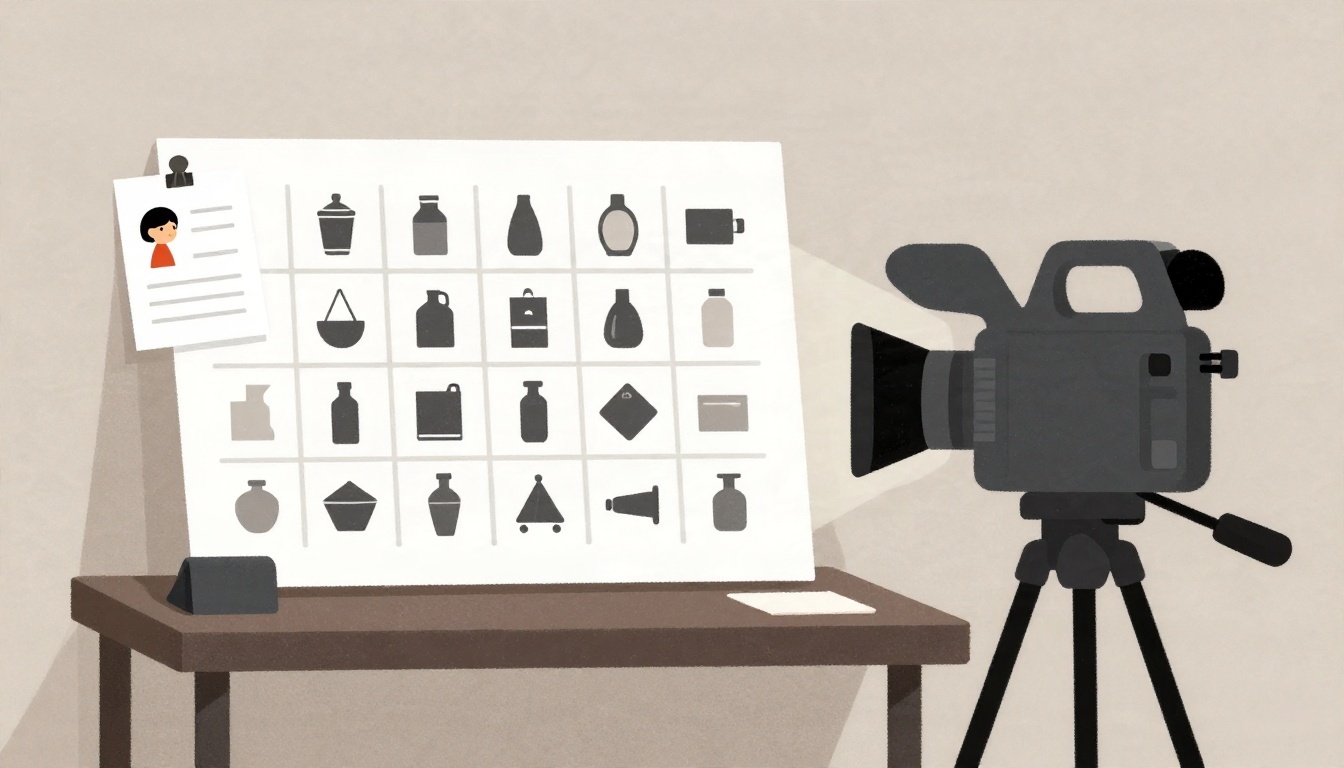
His workflow starts with reference material. He prefers "creating a reference/character sheet of people, objects and locations," then generating "a rough storyboard of the complete script so that the Model gives me a proper output." He also specifies camera movements, lighting, and reflections, which he says helps the videos "look more natural."
Prompting is its own layer. Koushal uses Claude to write prompts and has built a skill file he uploads to generate them. And because generation is iterative, he does not treat the first output as final: he generates multiple versions of a clip and selects the best one.
For readers building their own process, the takeaway is that the visible output is the last step, not the first. Reference sheets, a storyboard, explicit camera and lighting direction, and a selection pass all happen before a usable clip exists.
The Cost Comparison Brands Get Wrong
On the AI-versus-traditional-shoot question, Koushal argued that brands often decide too early on a simple premise. He said "Brands assume AI-generated content is cheaper, while traditional production implies quality."
That framing, he suggested, misses what AI models can do creatively. He cited Seedance as an example and listed the possibilities it opens up: "impossible camera movements, imaginative environments, surreal product interactions and cinematic concepts that would be expensive to achieve traditionally." He also noted that brands tend to "compare the cost of an AI subscription with the cost of traditional productions without considering the creative process."
He was equally clear about AI's limits. He said "products with extreme physical details or real-world shots might benefit from traditional shooting and filming." Rather than treating the choice as binary, he recommended a middle path: "A hybrid option is a better choice, involving combining real-world product footage with AI-generated content."
Practical Takeaways
- Plan before you generate. Reference sheets for people, objects, and locations, plus a rough storyboard of the full script, give the model a clearer target.
- Direct the camera and light. Specifying camera movements, lighting, and reflections is part of getting natural-looking results.
- Generate more than once. Treat clips as iterations and select the strongest output rather than accepting the first.
- Judge the decision on creative scope, not subscription price. Compare what each route can achieve, and consider hybrid production where physical detail matters.
Koushal's studio focuses on AI ad creative, and his answers reflect a production-minded view of the tools: the model is one part of a process that still depends on planning, reference, and selection. For brands weighing an AI-made product film, the useful question may be less about which method is cheaper and more about which shots each method can actually deliver.