A gift that can't ask questions
Most personalized video orders follow a predictable path: the buyer supplies a name and a few details, the remarks get prepared, and the video arrives within three or seven days. Christmas breaks that path in a specific way, because the whole point of the gift is that the recipient doesn't know it's coming.
Asked when a Christmas order stopped fitting the usual package-and-date routine, Kevin, KevinTV's household correspondent, said the answer was the surprise gift. "A lot of Christmas buyers can't ask the recipient for details without ruining the surprise, and some order on 23 December."
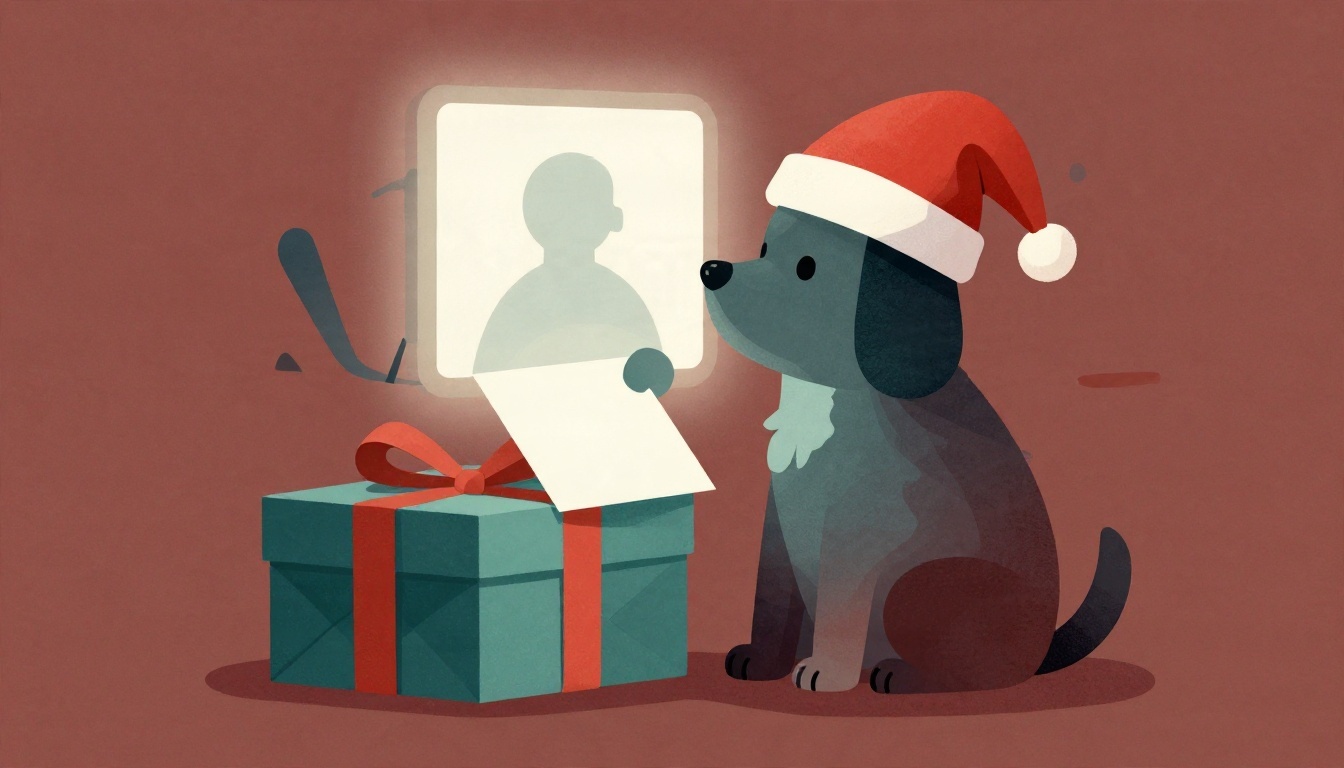
The fix was structural rather than improvised. Every video order now comes with a printable gift card. The buyer hands over the card on Christmas Day, the recipient scans the code and shares details about themselves, and the video follows. The order deadline was removed entirely. As Kevin put it, "Late is not a problem. Late is a procedure."
That reframing is the practical takeaway for anyone selling or buying a time-sensitive personalized gift: the deadline isn't the product, the handover is. A physical card absorbs the calendar pressure that a digital file cannot.
The recipient is usually a stranger
Lists of personalized video gift services tend to compare formats, turnaround and price. What they rarely address is the audience.
"The person watching the video has often never seen me before," Kevin said. "The buyer knows KevinTV, the recipient usually doesn't." The consequence is a strict editorial rule: the video has to work for a complete stranger, with no in-jokes and nothing that requires context. The described standard is "just a dog in a Santa hat saying their name with full seriousness."
Names get their own attention. Unusual names are checked for pronunciation in advance, on the reasoning that "saying someone's name wrong three times in 20 seconds is not a greeting. It is an incident."
For buyers, this is a useful filter. A greeting built on shared history can exclude the one person it was made for. A greeting built on the recipient's name, delivered clearly, travels further.
The details are the product
The third question concerned what buyers decide too quickly. The answer was the brief itself.
"People write 'her name is Anna, she loves dogs' and press order," Kevin said. "That gets a nice video. One real thing gets a much better one: a habit, a running family joke, the year she has had, the name of her dog." The summary was blunt: "The details are the product."
The second rushed decision is the assumption that it's too late. "It isn't," Kevin said. "That decision costs them the gift."
Both points point the same direction. The constraint on a personalized video is rarely production capacity; it's the quality of what the buyer supplies and the buyer's own belief about timing. A single specific detail, offered at the point of order, does more work than a longer list of generic traits.
What the process change suggests
The Christmas adjustments described here are small in scope but telling in design. A printable card, a removed deadline, a pronunciation check and a request for one real detail are all low-cost changes that address failure modes specific to gift giving: the surprise that blocks information gathering, the recipient who lacks context, and the buyer who orders in a hurry or talks themselves out of ordering at all.
For anyone comparing personalized video greeting options, the questions worth asking are less about delivery speed and more about what happens when the recipient opens the gift knowing nothing about the sender. KevinTV's answer is documented at kevinpoodletv.com, where Christmas videos start at $29.
The broader lesson holds beyond the holiday season. A personalized gift is only as specific as the information behind it, and the businesses that survive December are the ones that build their process around that constraint rather than around the calendar.