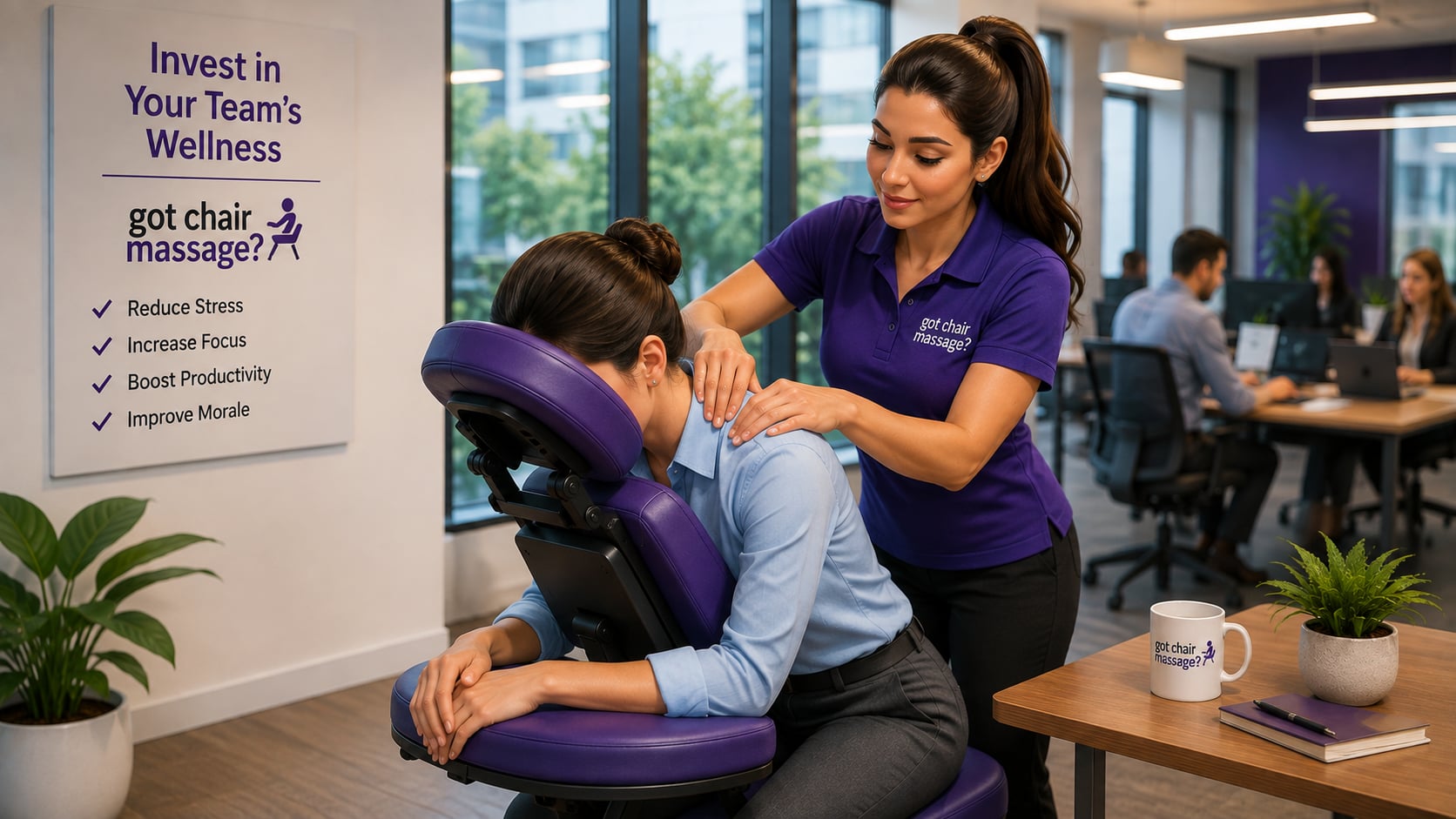
Bringing chair massage into the office sounds like a surefire win: reduced stress, happier employees, and a tangible perk that shows you care. Yet many companies stumble on the same hidden hurdle—not the massage itself, but the planning around it. The most common misstep, according to Got Chair Massage, an on-site chair massage provider serving New Jersey and New York, is misjudging participation.
“What most companies get wrong are the amount of participants,” the team explains. Without a clear headcount, even a well-intentioned wellness day can turn into long wait times, frustrated staff, and therapists scrambling to cover demand. The fix is simpler than you might think: ask before you book.
Why Participation Is So Hard to Predict
Employees often express interest in workplace perks in the abstract, but actual sign-ups are a different story. Some worry about taking time away from work, others forget to schedule, and a few simply don’t want to be touched by a stranger. If you assume that 50% of your workforce will show up, you’re likely to be disappointed—or overwhelmed. The result is either underutilized therapists (wasted budget) or overbooked sessions (wasted morale).
Got Chair Massage recommends a proactive approach: “We always ask if human resources would send an email to their employees letting them know chair massage will be available on a specific date and would they be interested in getting a chair massage.” This simple pre-event survey does double duty—it builds anticipation and gives you real data to plan with.
How to Gauge Interest Effectively
Start by sending a short, clear email from HR or leadership. Mention the date, the duration of sessions (typically 10–15 minutes per person), and that it’s a free perk. Ask employees to reply with a simple “yes” or use a quick poll tool. This isn’t a binding commitment, but it gives you a realistic baseline.
“This helps in figuring out how many chair massage therapists are needed and a time frame,” the team notes.
The Logistics That Follow
Once you have a number, you can plan the space, the flow, and the timing. A quiet corner with a few chairs is enough; chair massage doesn’t require a table or oils, so setup is minimal. But you’ll also need to manage the schedule—whether it’s first-come, first-served or pre-booked slots. Pre-booking reduces chaos and ensures everyone who wants a session gets one.
Also, consider the ripple effect: if you’re offering massage during work hours, you’ll need to cover for employees who step away. Communicate the schedule to managers so they can plan around it. And don’t forget to follow up after the event—a quick feedback form can help you refine future wellness initiatives.
Why This Matters for Your Wellness Program
Getting participation right isn’t just about logistics; it’s about trust. If employees show up and can’t get a session, they’ll feel the perk is hollow. If you overbook and therapists sit idle, you’ll question the ROI. A simple pre-event survey solves both problems, making the experience positive for everyone.
Got Chair Massage has seen this pattern across corporate clients in the tri-state area. Their advice is to treat the survey as a non-negotiable first step. As they put it, the goal is to align expectations with reality—so the massage day actually delivers on its promise of stress relief.
Practical Steps for Your Next Event
- Send a survey at least two weeks ahead. Use a tool like Google Forms or SurveyMonkey to keep it simple.
- Set a cutoff date for responses, then share the plan with your massage provider.
- Book therapists based on the response rate, not your total headcount. A good rule of thumb is to expect 70–80% of respondents to actually show up.
- Create a sign-up sheet or use an online scheduler like Calendly to assign time slots.
- Communicate the schedule to all employees, including those who didn’t respond—they might want to join if there’s space.
By following this approach, you’ll avoid the most common pitfall and turn chair massage into a genuinely appreciated benefit. For more guidance on planning an on-site event, check out Got Chair Massage’s services—they specialize in corporate wellness and can help you tailor the experience to your team’s size and culture.
Remember, the goal isn’t just to offer a massage; it’s to make sure the right people get one at the right time. With a little upfront planning, you can turn a nice idea into a seamless, stress-free experience for everyone involved.