Filling a Local Gap in AI Education
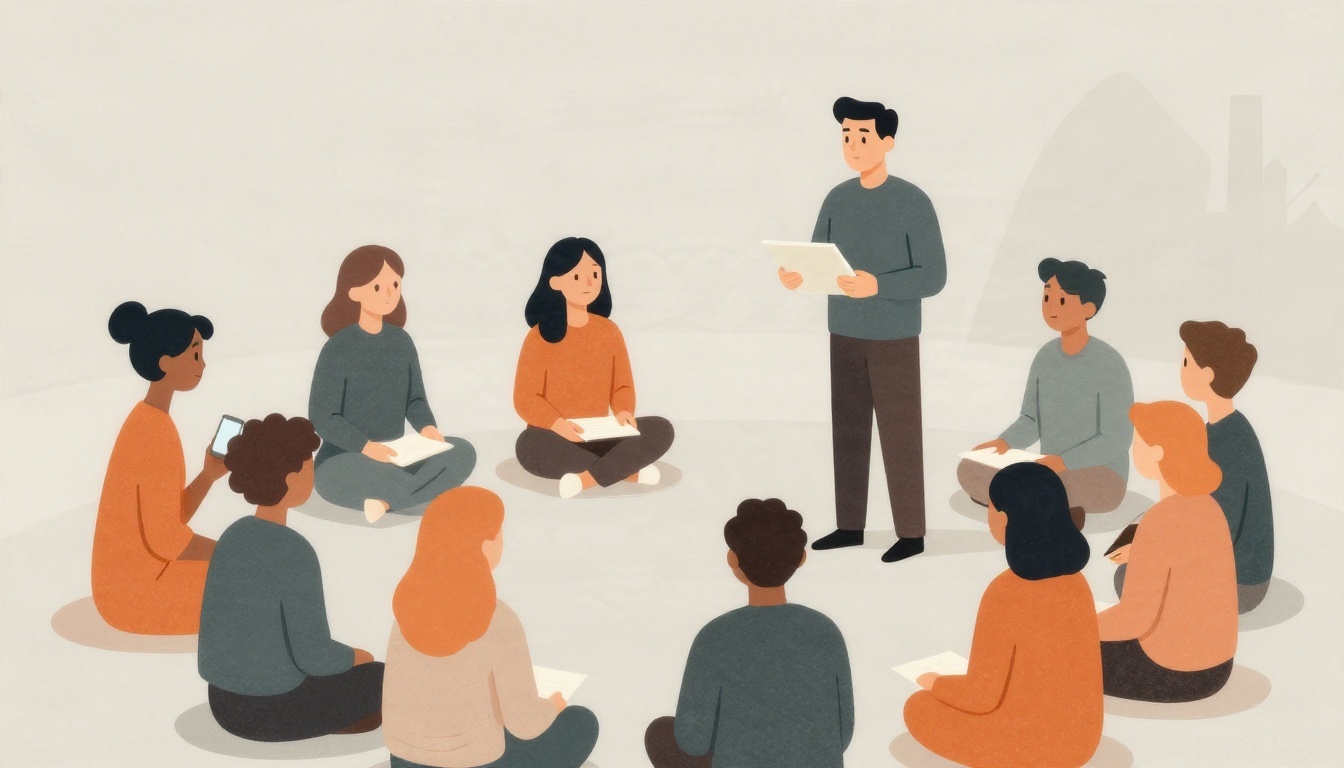
When Gary, the founder of Gary Teaches AI, began teaching introductory AI classes, he wasn't responding to a market trend. He was responding to a local need. "I began teaching introductory AI classes because I saw an unmet need in my community," he says. Living in Hudson, Wisconsin, just across the river from the Minneapolis–St. Paul area, he found that accessible, beginner-level instruction was scarce. "When I started, I could not find comparable introductory classes nearby in western Wisconsin. Some were available in the Twin Cities, but accessible, beginner-level instruction still appeared limited."
That gap has since widened into a broader teaching practice. Gary has been asked to be a regular guest lecturer at the University of Wisconsin–River Falls and will be offering community education classes this spring in the St. Croix Valley. The need, he notes, is great, and the pace of change—both in AI tools and in his own curriculum—is dynamic.
When Generic Advice Falls Short
One recurring situation involves students whose employers are rolling out AI tools like Microsoft Copilot or enterprise versions of ChatGPT and Claude. These learners arrive with questions about using those tools in their specific workplaces, where general advice often fails to account for configuration, access restrictions, or company policies.
To help beginners see where these applications fit, Gary uses Jensen Huang's five-layer explanation of AI, which breaks the stack into applications, models, the cloud, chips, and energy. "I want students to recognize that AI is an expanding collection of tools, including applications built into systems they already use," he explains. He is also clear about the limits of his expertise: he teaches foundational skills that apply across tools, but doesn't claim to know every application or every employer's implementation. This winter, he plans a more advanced class focused primarily on agentic AI systems that can carry out multistep tasks using connected tools.
The Google Paradox
A recurring challenge in Gary's classes is something he calls "the Google paradox." On one hand, using Google has given people confidence in asking a computer for information. On the other hand, years of searching have accustomed many to entering a few keywords with very little context. That habit can limit what they get from an AI chatbot.
"Explaining their goal, situation, audience, and constraints often produces a more useful response," Gary says. "The key is relevant context, rather than simply adding more words." Beginners are therefore learning a new tool while also unlearning an old habit. That transition, he argues, deserves more attention than it gets in the AI newsletters and beginner guides he reads. "Most of focus I see is on the technology and increasingly we need to better teach the tools most of us will soon be using."
The First Answer Is Not the Finished Answer
When people first get started with AI, Gary sees a common mistake: deciding that the first answer is the finished answer. Students get excited when Gemini, Claude, or ChatGPT immediately produces something that sounds polished and useful. They may accept it before considering whether they explained their needs clearly, whether the response fits their situation, or whether its factual claims are accurate.
That's why part of his class focuses on prompting and revision. He encourages students to begin with their goal, provide relevant context, and then refine the response through follow-up questions. He also emphasizes that a confident answer is not necessarily a correct answer. "AI can help investigate claims, but it should not be treated as an unquestionable authority," he says. "AI is not a fact checker. Important facts still need to be checked against reliable sources."
Feedback and Continuous Improvement
Gary's teaching is informed by direct feedback. Everyone who takes his class completes a participant reflection survey, which asks students to rate everything from room layout and pace to whether they feel more confident taking a next step with AI tools. Along with questions and discussions during class, these assessments provide valuable feedback about what students find useful and where they need more help.
That loop matters because the subject itself keeps changing. As employers adopt new tools and as AI systems become more capable, the questions beginners bring to class evolve. Gary's approach—grounded in foundational skills, clear about limits, and focused on context and revision—offers a practical model for anyone trying to teach or learn AI in community settings.
For libraries and community groups looking to offer beginner-friendly AI help, Gary's experience suggests that the most useful instruction may not be about the technology itself, but about the habits and judgment needed to use it well.