Teacher Ana on Ukulele in the Early Years Classroom: Mistakes, Silence and Choosing the Right First Song
Bringing a live instrument into an early years classroom can feel like a risk for teachers who do not consider themselves musicians. Teacher Ana, whose Early Years Ukulele Songbook is built for exactly that audience, says the goal is to make music accessible and fun for teachers who might feel they aren't "musical enough" for the classroom.
In this interview, she describes a circle time that did not go as planned, the fears teachers raise most often, and the choices that shape a first song.
When the Plan Meets the Real Group
Songs that look simple on paper can fall apart with a real group of children. Ana recalls an end-of-day wind-down song built on movements the children already knew. The children were distracted, watching the door for their families.
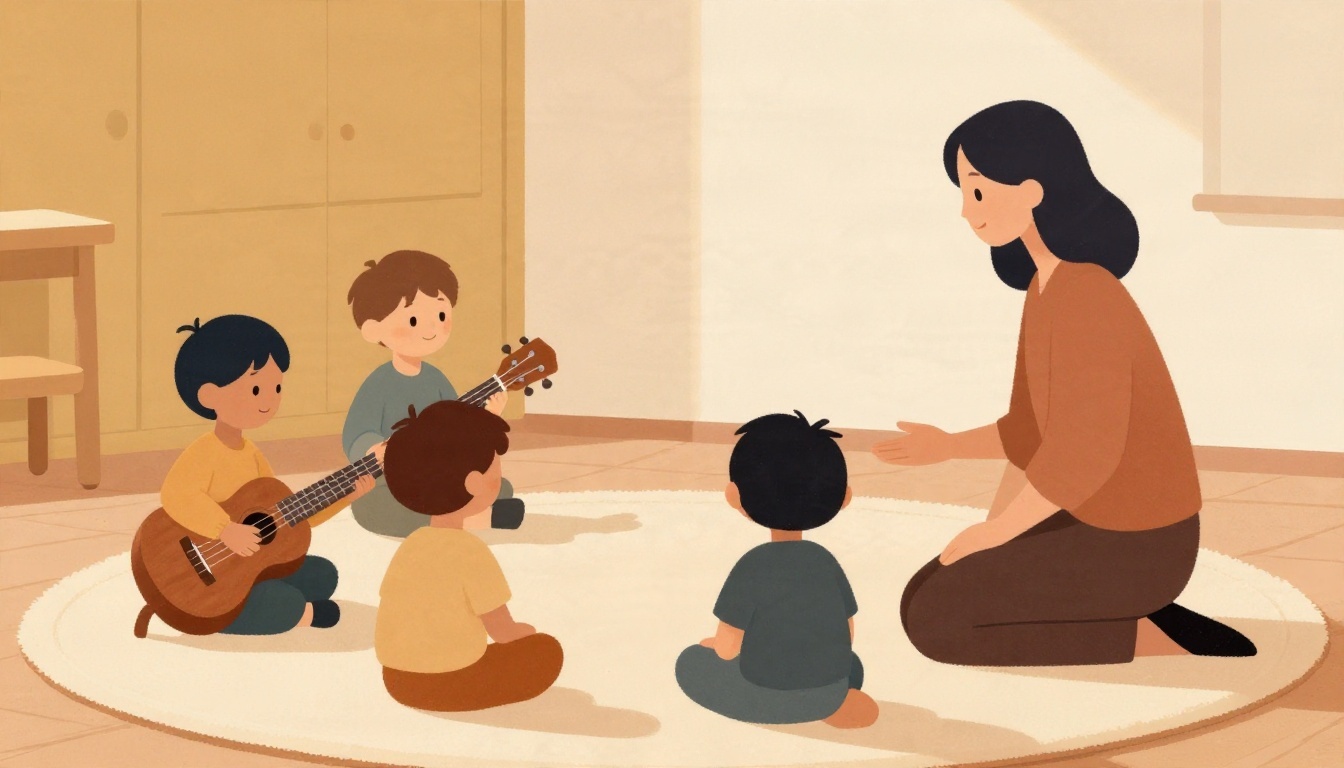
She changed course immediately. She stopped singing, went silent, and gently plucked the ukulele strings one by one, asking in a mysterious voice: "Would you like to try playing it?"
The circle refocused. They did not end up singing, but the children were hooked and calm for a while, working on patience and respect for the instrument. The takeaway for teachers is that a song is not the only tool in the room; sometimes the instrument itself, offered quietly, does the regulating work.
"You Don't Need to Be a Music Expert"
When teachers say they are not musical enough to lead songs, Ana hears a fear of getting it wrong or of not being engaging enough. Her response is direct: "you don't need to be a music expert to play something—I'm definitely not one!"
She treats mistakes as part of the method. "I make mistakes all the time, and that's actually a great thing," she says, because letting children see adults improvise and make mistakes teaches them that it is completely normal.
She also draws a contrast with screen-based music. Putting on a YouTube video is easy, but a live instrument stimulates children, keeps them active, and protects them from passive screen time. That reasoning is what led her to create the songbook in the first place.
What Teachers Decide Too Quickly
Ana is candid about her own early habits. Teachers tend to choose songs they remember from their own childhood, or very basic and familiar ones, out of fear of uncertainty. She admits she used to do this with classics like "Hello, hello, can you clap your hands?"
Two problems follow. Teachers often pick songs that are too long, so children lose focus halfway through. And they pick songs where children simply imitate the teacher rather than engaging in true bodily play where they stay actively involved.
For readers building a first circle-time repertoire, her answers point to a practical checklist: watch the group rather than the plan, keep songs short enough to hold attention, and favour participation over imitation. Resources on child development through music and early childhood music education can support that planning.
The Case for a Live Instrument
Across all three answers, the same idea returns: the value of the ukulele in an early years room is not technical proficiency. It is presence. A teacher willing to pause, go quiet, pluck a string, and invite a child to try is already leading music, mistakes included.
Ana's songbook, available through Teacher Ana's Corner, is designed around that premise, for educators who want a live instrument in the room without needing to be experts first.