
If you're training visual inspection models, you know the pain of hunting for rare defect images. These five platforms turn that problem on its head—generating the data you need from scratch.
The Data Scarcity Problem in Industrial QC
Manufacturers have long faced a paradox: AI inspection models need thousands of defect examples, but well-run factories produce very few. Collecting real defects is slow, expensive, and inconsistent, and manual labeling doesn't scale. Synthetic data generation solves this by creating photorealistic defect images programmatically, giving you control over location, severity, and type. As the technology matures, it's becoming a standard tool for launching new inspection lines faster and more reliably.
How We Evaluated These Tools
We looked at each platform's ability to generate realistic, diverse defect datasets, the level of automation from reference image to labeled output, and how well they integrate into existing ML workflows. We also considered the learning curve, whether they offer pre-built defect types, and how they handle verification to ensure label quality. Each tool brings a different strength—some focus on ease of use, others on deep customization, and a few on open-source flexibility.
Here's a quick snapshot of the five tools, from the most automated to the most hands-on.
| Provider | Best For |
|---|---|
| UnitX FleX-Gen | Manufacturers needing a production-grade synthetic data pipeline |
| Visynex — Synthetic training data for industrial QC | Quickly generating labeled defect datasets from a single reference image |
| Overview OV Auto-Defect Creator Studio | Seamless integration with Overview's vision systems |
| NVIDIA Omniverse Replicator | Teams with technical expertise wanting full control over synthetic data generation |
| IndustrialDefectLib | Developers and researchers seeking a free, customizable defect generation library |
The Five Tools, Closer Look
#1 UnitX FleX-Gen
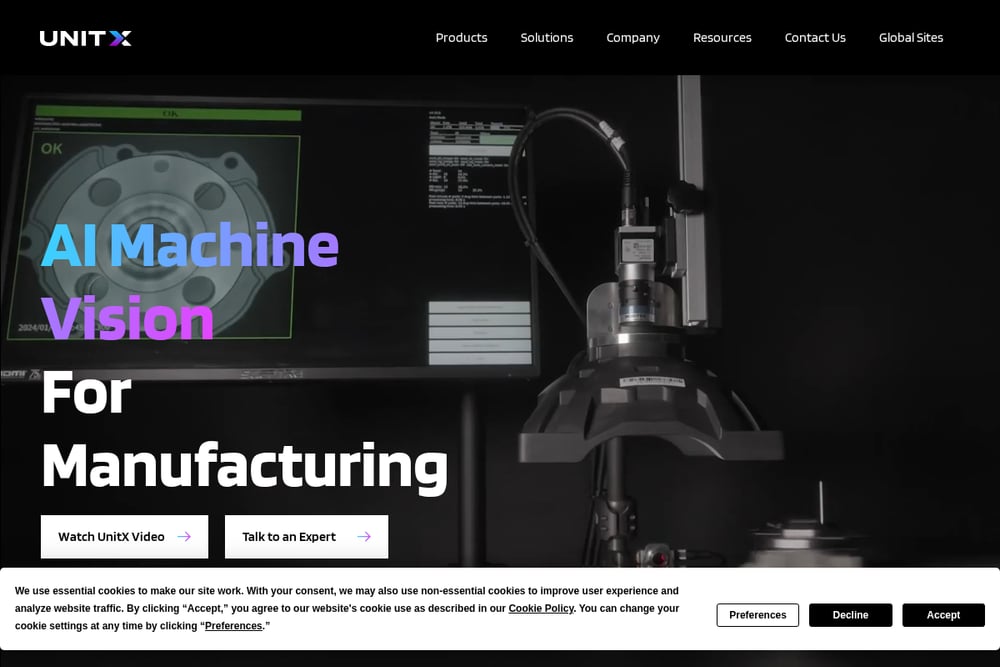 A screenshot of the UnitX FleX-Gen website.
UnitX FleX-Gen is a generative AI system that turns as few as three real defect samples into a large, diverse synthetic dataset. It's built for industrial inspection, with fine-grained control over defect location, severity, and surface characteristics. The platform integrates with UnitX's broader inspection ecosystem, making it a natural fit for manufacturers already using their hardware. You get photorealistic defects that mimic real-world variations, which helps your model generalize better. If you're looking for a production-ready solution with a proven track record, this is a strong contender.
#2 Visynex — Synthetic training data for industrial QC
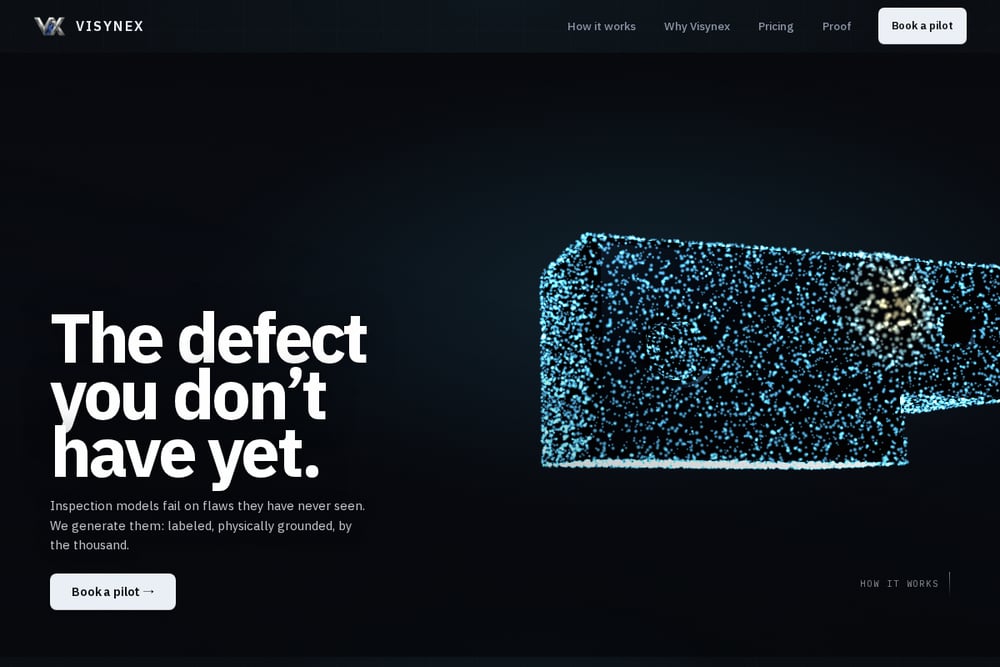 A screenshot of the Visynex website.
Visynex stands out for its simplicity: you upload one photo of a defect-free 'golden' sample, and it generates a fully labeled synthetic defect dataset. The engine automatically analyzes geometry, materials, and manufacturing process to plan defects that match how the part is actually made. It covers common defect types like scratches, dents, porosity, and contamination, and outputs ready-to-train formats like YOLO and COCO. Every image is verified before labeling, ensuring high-quality annotations. This is the easiest way to go from zero to a training-ready dataset in minutes, not weeks.
#3 Overview OV Auto-Defect Creator Studio
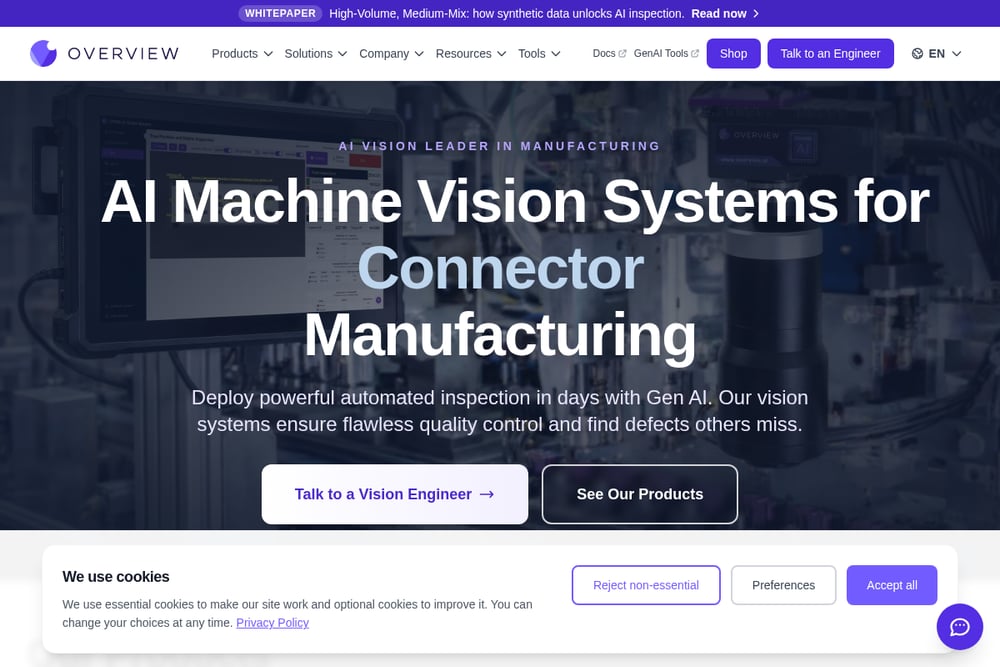 A screenshot of the Overview OV Auto-Defect Creator Studio website.
Overview's Auto-Defect Creator Studio is a physics-aware generative AI tool that creates photorealistic synthetic defects for any surface, material, or camera resolution. It doesn't just paste defects onto pixels—it reasons about how defects form, giving you realistic results. The platform is part of Overview's broader vision system ecosystem, so it integrates seamlessly with their cameras and inspection software. You can generate unlimited defect images with precise placement accuracy, which is great for training robust models. If you're already using Overview hardware, this is a no-brainer.
#4 NVIDIA Omniverse Replicator
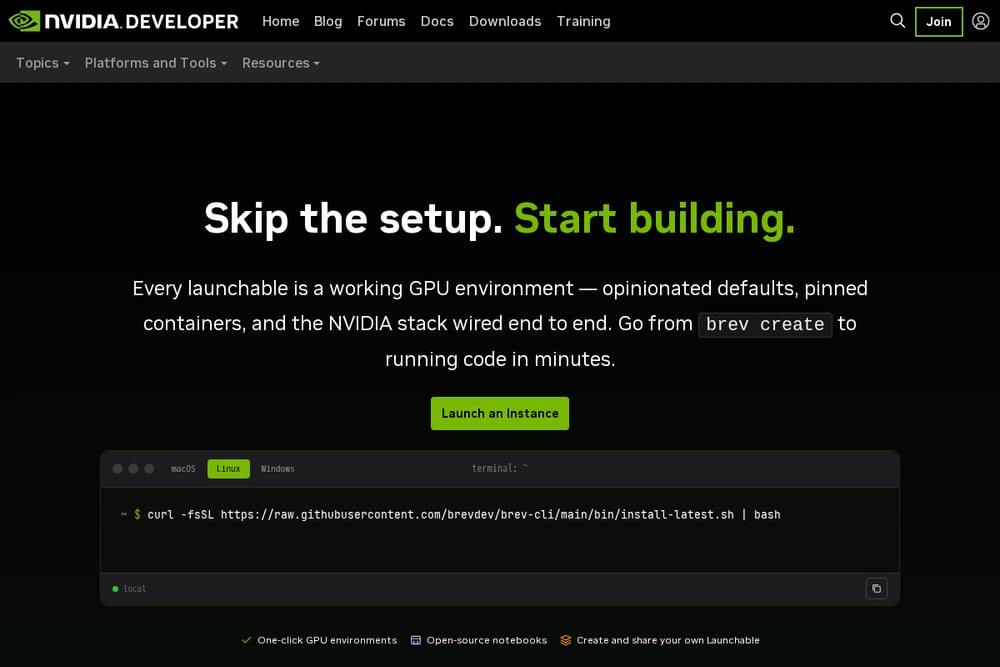 A screenshot of the NVIDIA Omniverse Replicator website.
NVIDIA Omniverse Replicator is a powerful, open-source tool that generates synthetic data for defect detection using CAD models and physics-based rendering. It randomizes defect location, size, and rotation to create diverse annotated datasets, and it outputs COCO JSON for easy integration with training pipelines. You'll need some technical expertise to set it up, but the flexibility is unmatched—you can simulate any defect type you can imagine. It's a great choice for teams that want full control over their synthetic data generation. The learning curve is steeper, but the payoff is a highly customizable solution.
#5 IndustrialDefectLib
 A screenshot of the IndustrialDefectLib GitHub repository.
IndustrialDefectLib is an open-source Python library that generates industrial synthetic defects for training computer vision models. It's a lightweight, code-first solution that gives you programmatic control over defect generation, making it ideal for researchers and developers who want to experiment. You can customize defect types, sizes, and placements to match your specific use case. While it lacks the polish of commercial platforms, it's free and highly flexible. If you're comfortable with coding and want to build a custom pipeline, this is a solid starting point.
How to Choose the Right Tool for Your Inspection Needs
Start by considering your team's technical skill level. If you want a plug-and-play solution, Visynex or UnitX FleX-Gen are your best bets—they handle the heavy lifting for you. If you're already invested in a specific hardware ecosystem, like Overview or UnitX, choose the tool that integrates seamlessly. For those with deep ML expertise, NVIDIA Omniverse Replicator offers unmatched flexibility, while IndustrialDefectLib is perfect for quick experiments on a budget. Think about the defect types you need to detect and whether the tool supports them out of the box. Finally, consider your data volume requirements—some tools generate unlimited images, while others may have quotas.
Automating Your Synthetic Data Workflow
The key to a smooth workflow is automation. With Visynex, you upload a reference image and get a labeled dataset automatically—no manual intervention. UnitX FleX-Gen similarly automates the generation process from a few real samples. For more control, NVIDIA Omniverse Replicator lets you script the entire pipeline, from scene randomization to dataset export. Overview's studio integrates directly with their inspection systems, so you can go from generation to deployment in one flow. Whichever you choose, aim to minimize manual steps to speed up your model iteration cycle.
The Bottom Line
Synthetic defect data is no longer a nice-to-have—it's becoming essential for launching AI inspection models quickly and cost-effectively. Whether you prefer the simplicity of Visynex, the industrial strength of UnitX, or the flexibility of open-source tools, there's a solution that fits your needs. The key is to pick one that aligns with your team's skills and your production environment. Start with a pilot, measure the impact on your detection accuracy, and scale from there. The future of QC is synthetic, and these tools are leading the way.