
When a weird ache or a sudden fever hits, you want answers fast—without the panic. These five symptom checker apps help you make sense of what your body is telling you, so you can decide your next move with confidence.
The Symptom Checker Landscape in 2026
Symptom checker apps have become a first stop for millions of Americans. They promise quick, structured guidance before you ever step into a clinic. The market is crowded, but the best tools stand out by balancing medical accuracy, user experience, and privacy. Some lean on AI and vast databases, while others focus on simplicity and offline access. As telehealth grows, these apps are evolving from simple triage tools into companions that prepare you for real doctor visits. The challenge is finding one that fits your needs without overwhelming you with jargon or false alarms.
How We Evaluated These Apps
We looked at each app's core approach to symptom analysis, how clearly it communicates results, and whether it respects your data. We also considered the range of conditions covered and how easy it is to get started. For each app, we noted what stood out—whether that's a unique offline feature, a doctor-built knowledge base, or a focus on rare diseases. No single factor dominated; we weighed the overall experience you'd have as a user.
Here's a quick snapshot of the five symptom checkers we're diving into, from the most feature-rich to the most straightforward.
| Provider | Best For |
|---|---|
| Ada | Comprehensive AI-driven symptom analysis |
| GP diagnosis | Privacy-focused offline symptom guidance |
| WebMD Symptom Checker | Quick reference with a body map interface |
| Isabel Symptom Checker | Doctor-trusted accuracy with rare disease coverage |
| Symptomate | Structured interviews that prepare you for doctor visits |
The Five Symptom Checkers, Up Close
#1 Ada
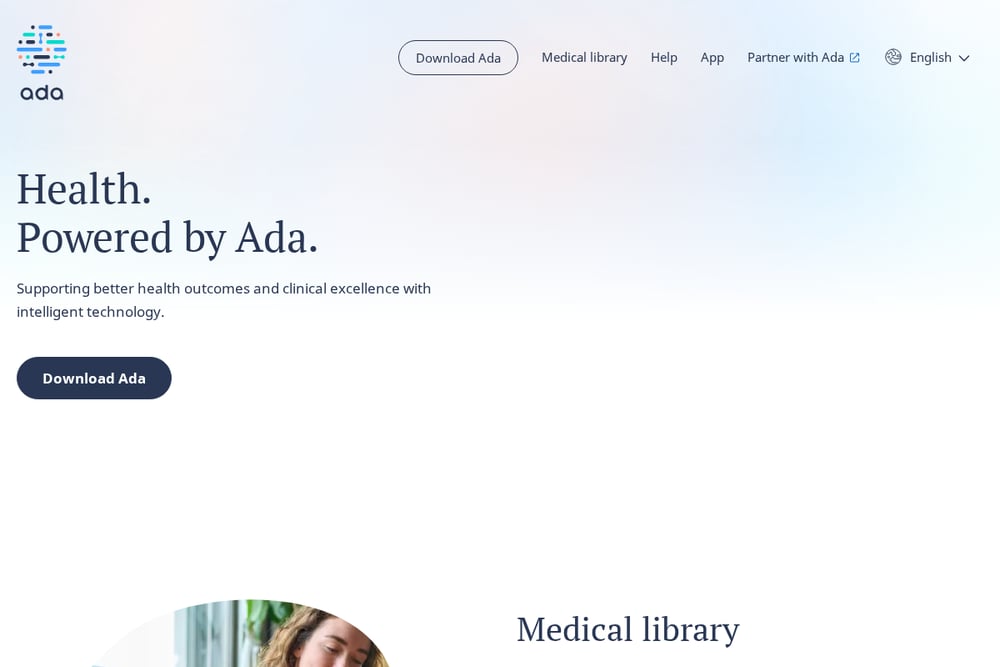 A screenshot of the Ada website.
Ada is a heavyweight in the symptom checker space, with over 15 million users and 30 million assessments completed. It uses AI and clinical evidence to guide you through a personalized interview, asking questions about your symptoms and risk factors. Studies cited on its site show it's one of the most accurate apps available, and it's trusted by users who rate it 4.75/5 on Android and 4.8/5 on iOS. The app is free, confidential, and available in seven languages, making it accessible to a broad audience. If you want a thorough, AI-driven assessment that feels like a conversation, Ada is a solid choice.
#2 GP diagnosis
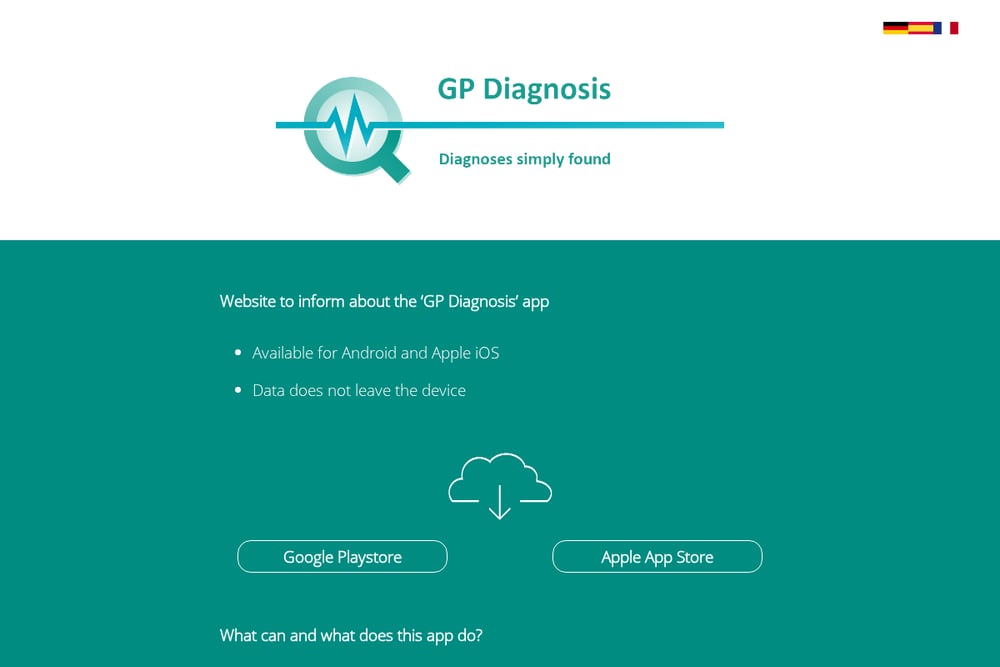 A screenshot of the GP diagnosis website.
GP Diagnosis is a mobile app built by Dr. Andreas Roth, a physician with 35 years of experience. It focuses on common family-practice conditions in temperate climates, linking hundreds of symptoms to likely diagnoses in just four steps. The entire process runs offline, meaning your medical data never leaves your device—a rare privacy feature. The app uses plain language, avoiding medical jargon, so you can quickly understand what might be going on. It also includes information on vaccinations and preventive care, adding practical value beyond symptom checking. This is a great option if you value privacy and want a straightforward, no-frills tool that respects your data.
#3 WebMD Symptom Checker
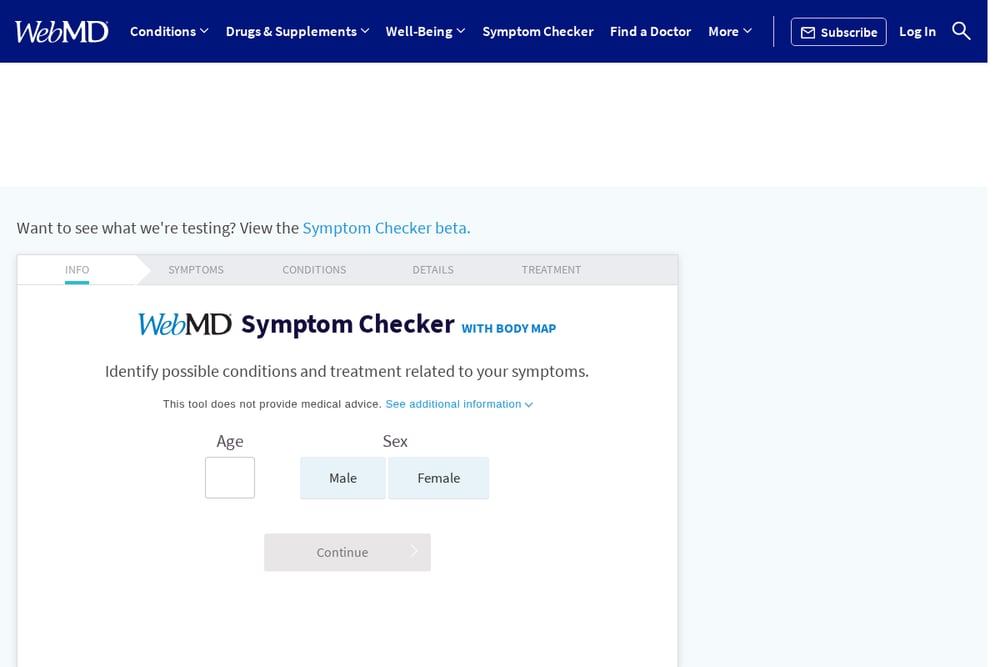 A screenshot of the WebMD Symptom Checker website.
WebMD's Symptom Checker is a familiar name in health information, and its tool lets you select symptoms on a body map to see possible conditions. It's integrated with WebMD's vast library of articles, so you can dive deeper into any condition that comes up. The tool is free and easy to use, but it's more of a reference than a personalized assessment—it doesn't ask follow-up questions. It's a good starting point if you already have a hunch and want to explore possibilities. Just remember, it's not a substitute for professional advice, as the site itself notes.
#4 Isabel Symptom Checker
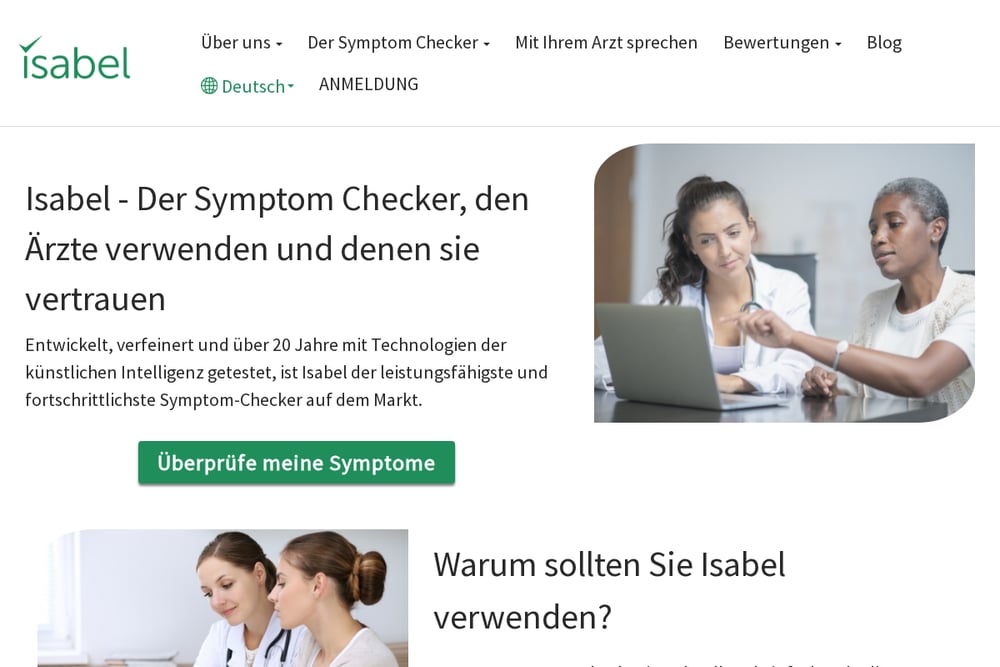 A screenshot of the Isabel Symptom Checker website.
Isabel is a symptom checker that's been used by doctors in leading hospitals since 2001, giving it a professional pedigree. It's designed to be fast and simple—you enter as many symptoms as you want without endless questions. The tool is known for its accuracy, covering both common and rare conditions, which is a plus if you're worried about something unusual. It's available in multiple languages and offers a free registration to get started. If you want a tool that mirrors what clinicians use, Isabel is worth a look.
#5 Symptomate
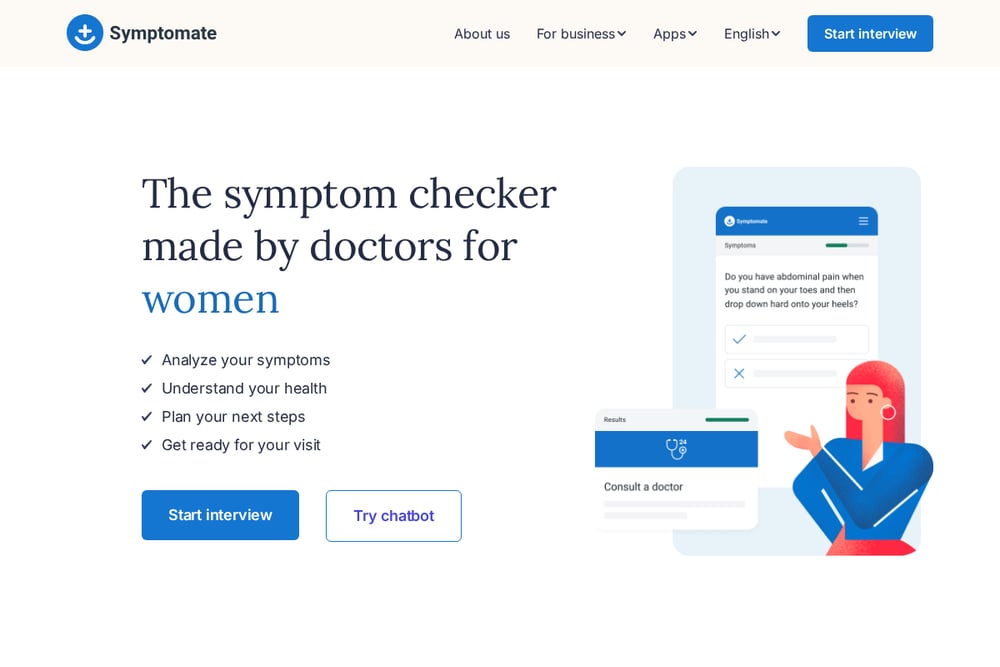 A screenshot of the Symptomate website.
Symptomate is a self-service symptom checker created by doctors, with over 27 million interviews performed to date. It guides you through a structured interview, asking about risk factors and symptoms, then provides a list of likely conditions with explanations and recommended care levels. The app is available on iOS and Android, and it's also used by healthcare businesses for triage. It's particularly strong for preparing for a doctor's visit, as you can share the results with your physician. If you like a guided, step-by-step approach, Symptomate delivers.
How to Choose the Right Symptom Checker for You
Start by thinking about what you value most. If privacy is your top concern, look for apps that process everything offline, like GP Diagnosis. If you want the most comprehensive AI-driven analysis, Ada might be your best bet. Consider whether you prefer a simple body map or a detailed interview—WebMD and Symptomate offer different experiences. Also, think about the range of conditions you're likely to encounter; Isabel covers rare diseases, while GP Diagnosis focuses on common GP cases. Finally, check if the app is free or has a subscription, and whether it's available on your device. The right app is one that you'll actually use without hesitation.
Automating Your Health Triage
Symptom checkers automate the initial triage process, turning a vague symptom into a structured list of possibilities. You enter your symptoms, answer a few questions, and the app's algorithm matches them against a database of conditions. This saves you from the chaos of search engine results and gives you a clear starting point. For minor issues, it can reassure you that a doctor visit isn't urgent. For serious symptoms, it can prompt you to seek care faster. The best part is that many of these apps work offline, so you can use them anywhere without worrying about data leaks.
The Bottom Line on Symptom Checkers
Symptom checkers are powerful tools, but they're not replacements for professional medical advice. They work best as a first step—helping you understand your symptoms, calm your nerves, and prepare for a doctor's visit. Each of these five apps has its strengths, from Ada's AI depth to GP Diagnosis's offline privacy. The key is to pick one that matches your comfort level and needs. Try a couple, see which interface feels right, and keep it handy for those 2 a.m. worries. Your future self will thank you.