
If your team is still turning ethnographic gold into static PDFs, you're driving with a rearview mirror. These five platforms are redefining how you capture, analyze, and act on human insights.
The Shift from Static Reports to Living Intelligence
Strategic research is at a crossroads. Traditional methods—think months-long studies and hundred-page decks—are too slow for a world that changes overnight. Meanwhile, AI tools promise speed but often sacrifice methodological rigor. The result? Leaders make decisions on assumptions, not evidence. Enter a new wave of platforms that blend ethnographic depth with AI-powered analysis. They promise not just faster coding, but living intelligence that evolves as your market does. For enterprise and non-profit research teams, this means moving from hindsight to foresight.
How We Evaluated These Platforms
We looked at each platform through the lens of a research leader who needs both depth and speed. Key factors included: the range of ethnographic methods supported, the rigor of AI analysis (does it follow a methodology or just pattern-match?), the clarity of evidence trails, and how easily insights translate into strategic action. We also considered pricing transparency and how well each platform fits into existing research workflows. Each platform brings a different strength to the table, and we've highlighted what stood out for each.
Here's a quick snapshot of the five platforms we're diving into. Each one takes a distinct approach to turning human stories into strategic assets.
| Provider | Best For |
|---|---|
| Indeemo | In-context mobile ethnography at enterprise scale |
| Fugue Foresight Engine — Strategic Research Intelligence | AI-powered grounded theory analysis with full traceability |
| Praxie | Integrating research insights into operational workflows |
| EthosApp | AI-assisted qualitative analysis that keeps the human in the loop |
| Yazi | High-engagement mobile ethnography via WhatsApp |
The Five Platforms, Up Close
#1 Indeemo
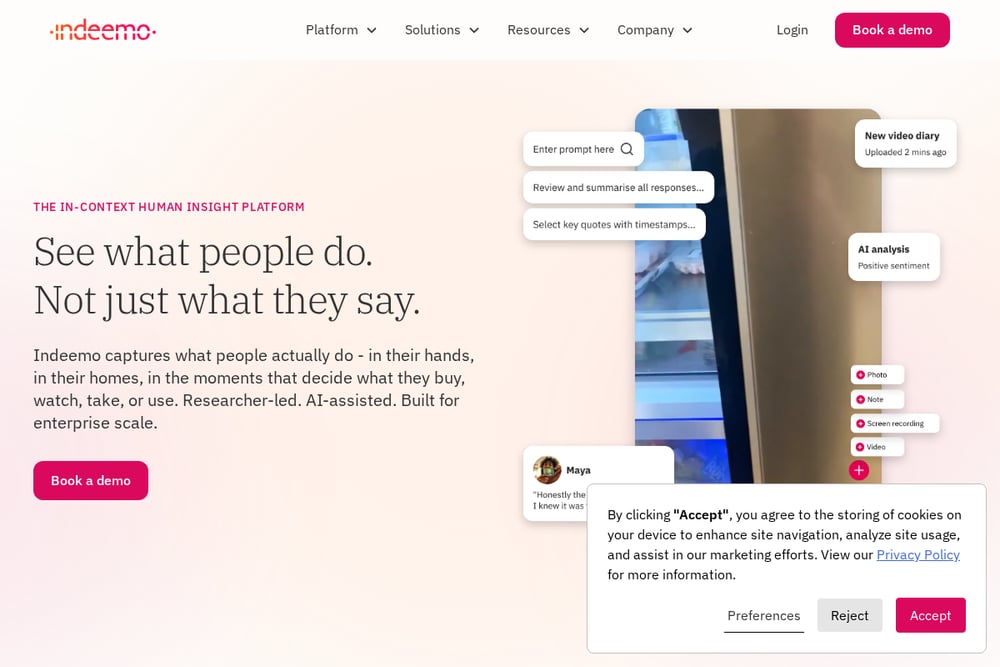 A screenshot of the Indeemo website.
Indeemo is a mobile ethnography powerhouse that lets you capture real-life behavior on participants' own phones—think videos, photos, screen recordings, and text, all in the moment. It's built for regulated industries and global enterprises, with SOC2, ISO 27001, and HIPAA compliance, so you can run studies without security headaches. You can flex from a one-day sprint to a multi-month diary study, making it ideal for tracking behavior shifts over time. The platform is trusted by brands like Manchester City and Lloyds Bank, proving its chops in high-stakes research. If you need ethnographic depth at scale across dozens or hundreds of participants, Indeemo delivers. It's the go-to for teams that want in-context richness without the logistics of in-person visits.
#2 Fugue Foresight Engine — Strategic Research Intelligence
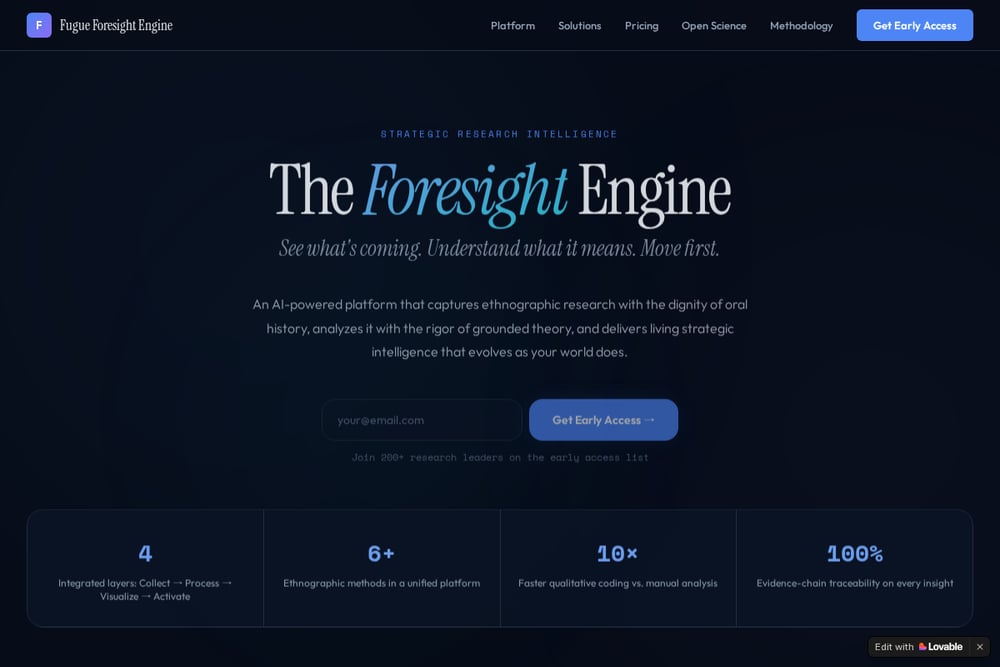 A screenshot of the Fugue Foresight Engine website.
Fugue Foresight Engine is an AI-powered research intelligence platform that captures ethnographic data with the dignity of oral history and analyzes it with grounded theory rigor. It unifies interviews, observations, journals, and cultural probes into a single pipeline, then uses AI to code with methodological discipline—not just pattern matching. Every insight comes with 100% evidence-chain traceability, so you can trace any conclusion back to the raw data. The platform promises 10x faster qualitative coding than manual analysis, and it's built for enterprise and non-profit research teams that need living strategic intelligence. If you're tired of insights that gather dust, Fugue turns your research into a nervous system that senses what's coming. It's the only platform here that explicitly fuses ethnographic depth with grounded theory and AI, making it a standout for rigorous foresight.
#3 Praxie
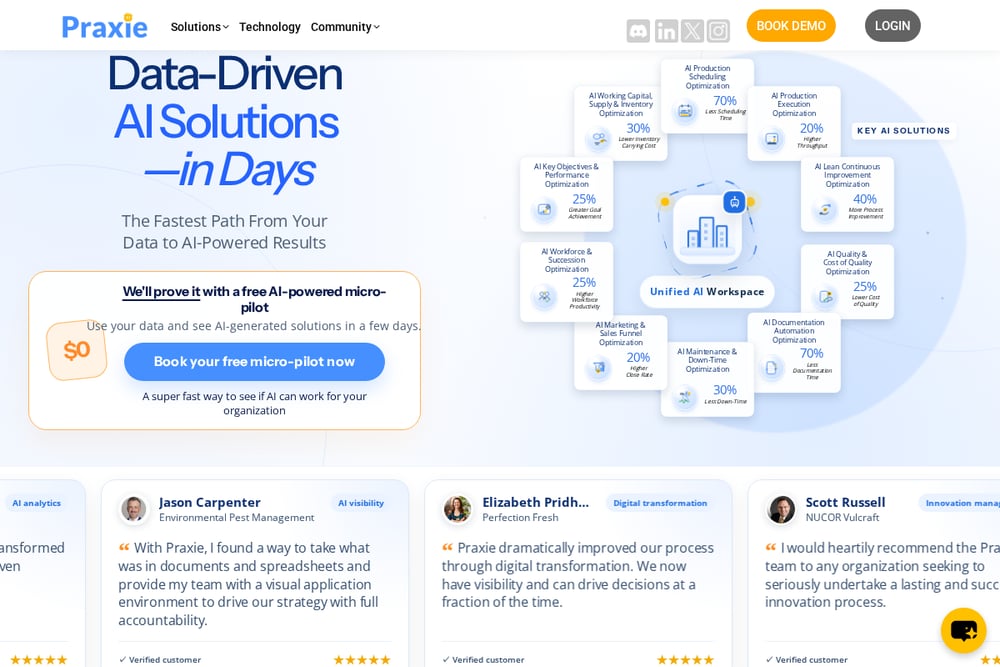 A screenshot of the Praxie website.
Praxie is an all-in-one AI platform for orchestrating business operations, and its ethnographic research tools are part of a broader innovation suite. It offers templates and software for ethnographic research, but it's really built for teams that want to integrate research into their operational workflows. You get AI-powered process automation, KPI dashboards, and project management alongside your research tools, so insights can directly feed into action. Praxie is less about the depth of ethnographic capture and more about connecting research to business execution. If you're looking for a platform that bridges research and operations, Praxie is a solid choice. It's a bit of a Swiss Army knife, which can be great if you want everything in one place.
#4 EthosApp
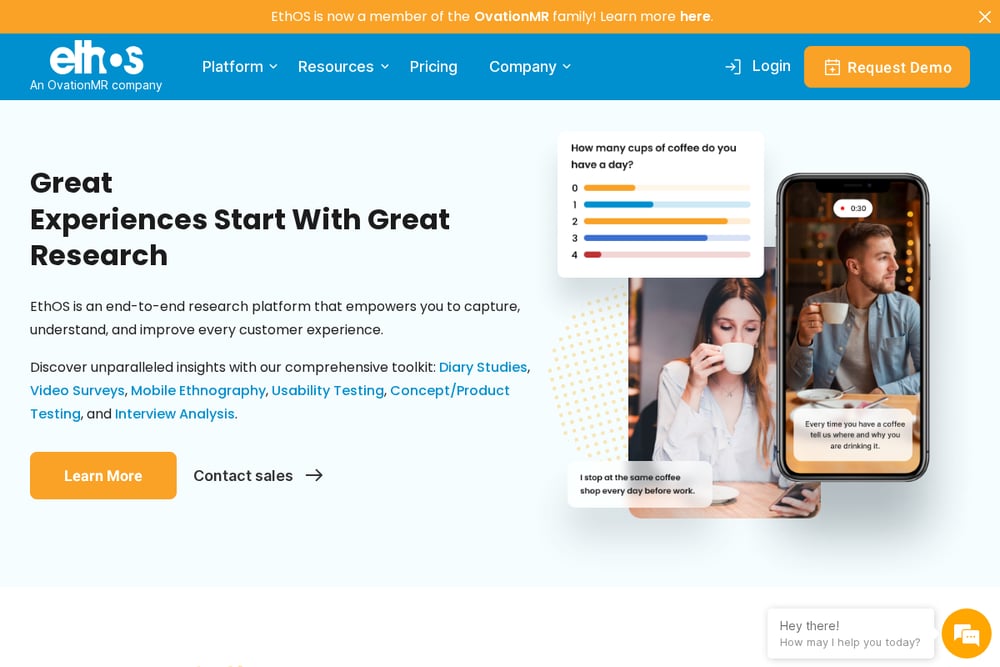 A screenshot of the EthosApp website.
EthosApp is a platform that integrates AI into ethnographic research, acting as a co-analyst rather than a replacement for human ethnographers. It helps you collect and organize scattered data sources—transcripts, audio, video, photos, and field notes—with AI-powered tools like speech-to-text. The platform is designed to enhance your capabilities, not replace your judgment, which is a refreshing take in the AI space. It's particularly useful for teams that want to maintain the essence of qualitative inquiry while speeding up analysis. EthosApp supports methods like mobile diary studies, IDI/focus group pre-tasking, and photovoice, making it versatile. If you're a researcher who wants AI to handle the grunt work while you focus on interpretation, this is your tool.
#5 Yazi
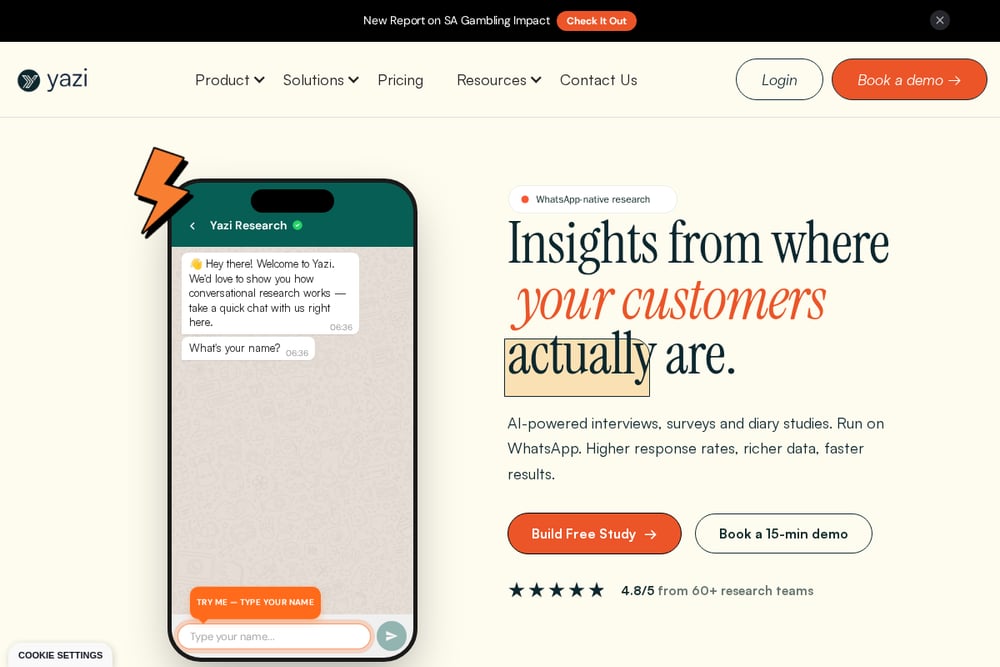 A screenshot of the Yazi website.
Yazi takes a clever approach to mobile ethnography by running entirely inside WhatsApp, which means no app downloads and sky-high response rates—typically 75-85%. It's a qualitative research platform with an AI-powered interviewer that can handle scaled depth conversations, making it perfect for emerging markets where WhatsApp is ubiquitous. You can run diary studies, surveys, and even AI-moderated interviews without any friction for participants. Yazi is a game-changer for teams that need to reach diverse, global audiences quickly. If you're tired of low engagement and clunky apps, Yazi's simplicity is a breath of fresh air. It's the most accessible platform on this list, and it delivers surprisingly rich data.
How to Choose the Right Platform for Your Team
Start by asking what your biggest bottleneck is. If you're drowning in raw data and need rigorous analysis, Fugue's grounded theory approach will save you weeks. If you need to capture behavior in the moment across many participants, Indeemo's mobile ethnography is unmatched. For teams that want to embed research into daily operations, Praxie's all-in-one suite is a fit. If you're a purist who wants AI as a helper, not a boss, EthosApp is your ally. And if you're targeting hard-to-reach populations, Yazi's WhatsApp-based model will boost your response rates. Also, consider your compliance needs—Indeemo is built for regulated industries, while Fugue emphasizes evidence-chain traceability. Finally, think about your team's tech comfort: Yazi is dead simple, while Fugue and Praxie have steeper learning curves. Choose based on where you feel the most pain.
Automating the Research-to-Insight Pipeline
The real magic happens when you automate the journey from raw stories to strategic action. Start with collection: use tools like Indeemo or Yazi to capture in-context data automatically, with participants uploading via their phones. Then, feed that data into an AI analysis engine like Fugue, which codes with grounded theory rigor and flags patterns without human bias. EthosApp can transcribe and organize your audio and video automatically, saving hours of manual work. Once you have coded themes, platforms like Praxie can push those insights into dashboards and project plans, so your strategy updates in real time. The key is to set up a pipeline where data flows seamlessly from capture to analysis to activation, with every step traceable. That's how you turn research into a living intelligence system, not a one-off report.
The Bottom Line: From Rearview to Telescope
The days of static PDFs and expensive guesswork are numbered. These five platforms each offer a different path to strategic foresight, but they all share a common goal: helping you see what's coming and act before competitors do. Whether you choose Fugue for its methodological rigor, Indeemo for its scale, or Yazi for its reach, the key is to stop navigating with a rearview mirror. Start with a pilot project, measure the speed and depth of your insights, and then scale. Your strategy deserves a nervous system, not a filing cabinet. The future is moving fast—are you ready to sense it?