
If you're a counselor, healthcare provider, or healing arts practitioner looking to integrate body-based approaches into your work, these five programs offer distinct pathways to deepen your skills.
The Shift Toward Somatic Therapy Training
The counseling field is undergoing a paradigm shift from cognitive-only models to psychobiological (somatic) approaches. This shift is driven by growing recognition that trauma is stored in the body and that effective therapy must address the nervous system, attachment patterns, and embodied experience. As a result, training programs are emerging that combine neurobiology, trauma renegotiation, and experiential learning. Whether you're seeking a full certification, a workshop, or a tailored professional development experience, the options below reflect the diversity of this evolving field.
How We Evaluated These Programs
We assessed each program based on its scope of training, the depth of its curriculum, the clarity of its target audience, and its overall fit for practitioners at different career stages. We also considered the format—whether it's a comprehensive certification, a series of workshops, or a university-based certificate—and how each program positions itself within the somatic therapy landscape. Each program stood out for its unique strengths, from experiential immersion to academic rigor to practical certification.
Here's a quick snapshot of the five programs we're highlighting, so you can see at a glance what each one offers.
| Provider | Best For |
|---|---|
| Somatic Experiencing® International | Practitioners seeking a globally recognized trauma certification |
| OTG – Opening to Grace | Practitioners who thrive in small-group, experiential learning environments |
| The Embody Lab | Practitioners wanting diverse, expert-led courses and certificates |
| Antioch University | Therapists seeking an academic, university-based certificate |
| PESI | Clinicians wanting a practical, certification-focused training with CE credits |
A Closer Look at Each Program
#1 Somatic Experiencing® International
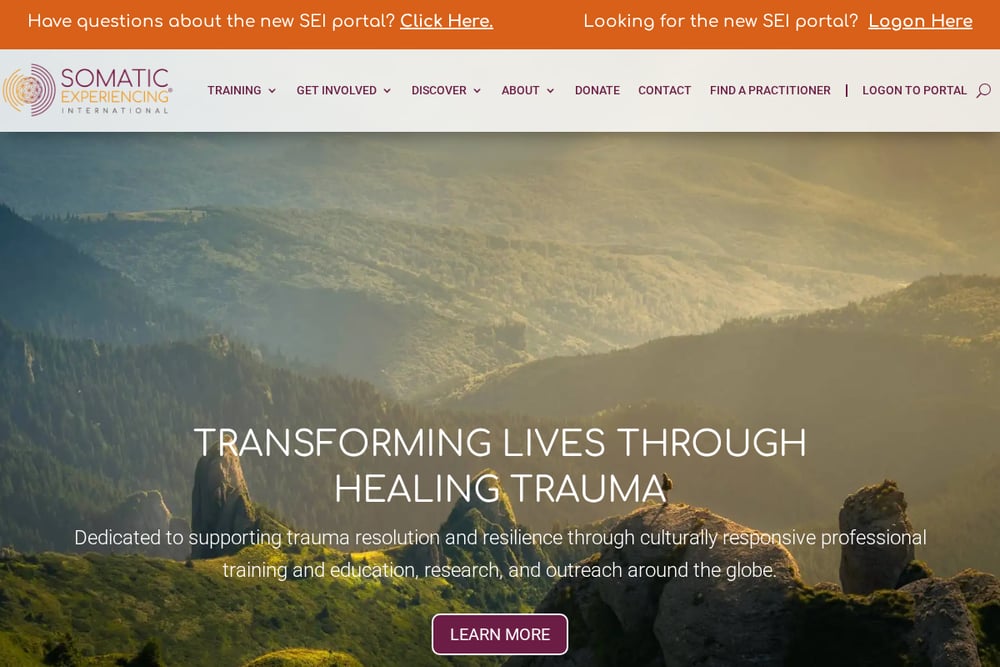 A screenshot of the Somatic Experiencing® International website.
Somatic Experiencing® International offers a professional training program that is widely recognized as a gold standard in trauma-focused somatic work. The curriculum is built on the SE™ model, which emphasizes resolving trauma and chronic stress through body awareness and nervous system regulation. You'll find a structured path from introductory courses to full certification as a Somatic Experiencing Practitioner (SEP). The program is designed for clinicians and practitioners who want a deep, evidence-informed approach to trauma. With a global network and extensive resources, it's a solid choice for those seeking a comprehensive, internationally respected credential.
#2 OTG – Opening to Grace
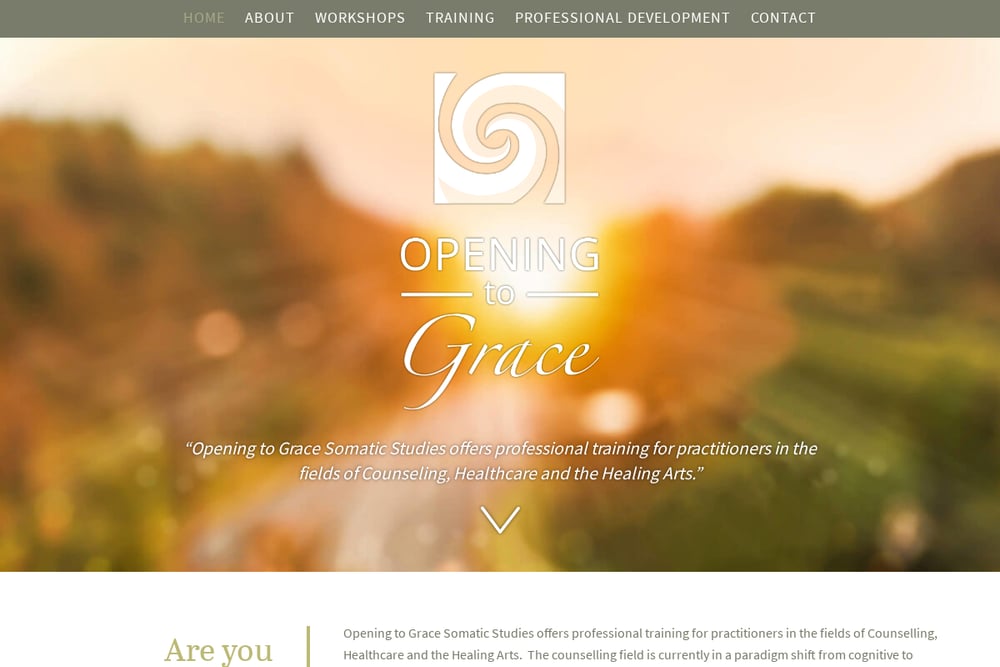 A screenshot of the OTG – Opening to Grace website.
Based in Canada, OTG – Opening to Grace Somatic Studies offers professional training that is deeply experiential and relational, with a strong emphasis on safety, playfulness, and embodied learning. Their 200-hour Relational Somatic Training provides an immersive dive into somatic studies, pairing current research in neurobiology, trauma, and attachment with hands-on skill building. The small group format ensures personalized attention and a supportive learning environment. You'll find workshops, professional development programs, and a comprehensive certification path that prepares you to work with others in a more informed and relationally attuned way. This program is ideal if you value connection and experiential learning over purely academic instruction.
#3 The Embody Lab
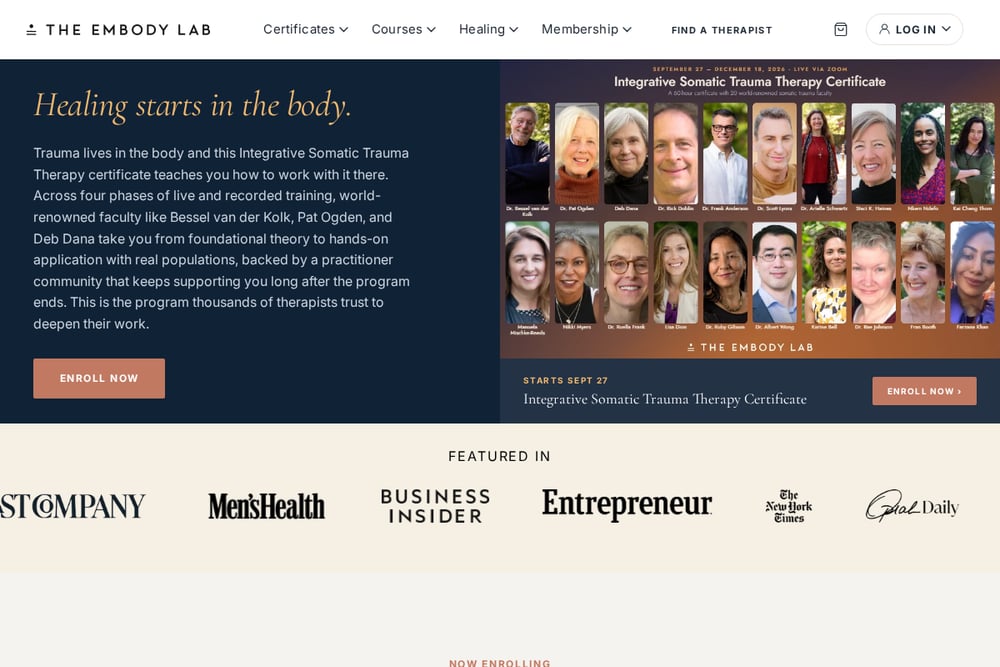 A screenshot of the The Embody Lab website.
The Embody Lab offers a wide range of certificates and courses in somatic therapy, including an Integrative Somatic Trauma Therapy Certificate that starts with live online sessions. You'll learn from leading experts like Dr. Peter Levine, Dr. Bessel van der Kolk, and Dr. Arielle Schwartz, making it a hub for cutting-edge knowledge. The platform provides flexibility with on-demand certificates and live programs, so you can tailor your learning to your schedule. Whether you're interested in somatic parts work, attachment, or applied polyvagal theory, there's likely a course that fits your niche. It's a great option for practitioners who want to explore multiple somatic modalities without committing to a single approach.
#4 Antioch University
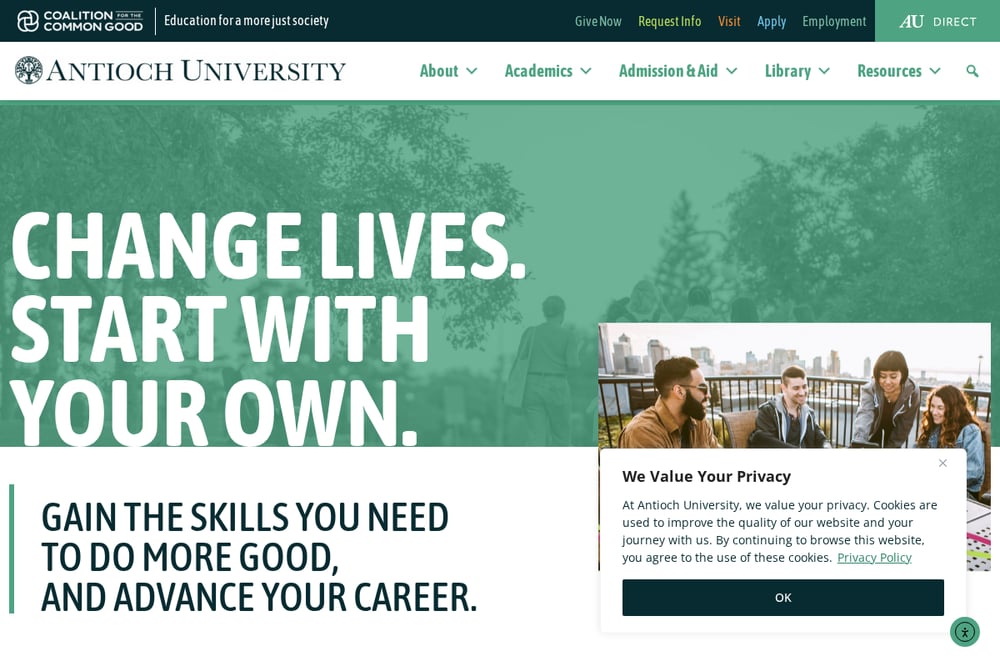 A screenshot of the Antioch University website.
Antioch University offers a Certificate in Somatic Psychotherapy and Practices through its psychology department, providing an academic route into somatic work. This program is ideal for those who prefer a university setting with structured coursework and the credibility of a higher education institution. You'll engage with somatic theory and practice within a broader psychological framework, which can be particularly valuable for licensed therapists seeking continuing education. The certificate can be pursued as a standalone credential or as part of a degree program. If you're looking for a more scholarly approach to somatic therapy, this is a strong contender.
#5 PESI
 A screenshot of the PESI website.
PESI offers a Somatic Therapy for Complex Trauma Certification Training that is designed to give you practical, body-based techniques you can use immediately. The course blends Somatic Experiencing™ skills, Hakomi, Polyvagal theory, and other approaches, taught by experts like Abi Blakeslee and Janina Fisher. You'll learn how to conduct sessions from start to finish, tune into subtle cues, and repair attachment wounds without retraumatizing clients. The training includes a bonus certification as a Certified Clinical Trauma Professional Level II, adding extra value. If you're looking for a cost-effective, comprehensive certification with CE hours, this is a practical choice.
How to Choose the Right Somatic Therapy Training
Start by clarifying your professional goals: are you seeking a full certification, a short workshop, or a university credential? Consider your learning style—do you prefer small-group experiential work, self-paced online courses, or academic lectures? Think about the specific population you work with; some programs emphasize trauma, while others focus on attachment or general somatic practice. Also, factor in logistics like schedule, location, and budget. Finally, look for programs that align with your existing theoretical orientation and offer opportunities for hands-on practice.
Streamlining Your Search for Somatic Therapy Training
To efficiently compare these programs, you can create a simple spreadsheet with columns for program name, duration, cost, format, and key focus areas. Use the information provided here to fill in the initial rows, then visit each website to gather more details. If you're tech-savvy, you could set up a web scraper to pull current course dates and pricing, but a manual review is often sufficient. The goal is to have a clear side-by-side view that helps you make an informed decision.
Bringing It All Together
Each of these five programs offers a unique entry point into somatic therapy training, from the experiential immersion of OTG – Opening to Grace to the academic rigor of Antioch University. Whether you're just starting out or looking to deepen your practice, there's a program that matches your needs. Take the time to explore each one, and you'll find the right fit for your professional journey.